Basic Algebra and Word Problems
Not sure you’re ready?
Take the ~3-minute readiness diagnostic and see where you stand.
Consider the human body’s relentless drive for homeostasis—a delicate, continuous balancing act where fluid intake must precisely match fluid output, and blood pH must remain stubbornly fixed between 7.35 and 7.45. If the balance tips, systems fail. Basic algebra is the exact mathematical equivalent of this biological homeostasis. An algebraic equation asserts mathematical equality between two distinct expressions. It is a statement that two seemingly different collections of numbers and variables exist in a state of perfect balance. In healthcare, understanding how to manipulate and maintain this balance is not a mere academic exercise. It is the fundamental mechanics behind ensuring a patient receives exactly 250 milligrams of a life-saving medication—no more, and no less.

Mathematics is a language, and like any language, it has an agreed-upon grammar. If a physician writes an order, we need universal rules to ensure every clinician interprets it identically. In mathematics, we evaluate expressions using a strict hierarchy.
Evaluating an algebraic expression requires substituting known numerical values for the corresponding letter variables. When you do this, caution is required: substituted negative values should be placed inside parentheses to prevent sign errors during evaluation. For example, if you are evaluating the expression x2−4 and x=−3, writing −32−4 yields −13 (which is incorrect), whereas putting the negative in parentheses as (−3)2−4 yields 9−4=5 (which is correct).
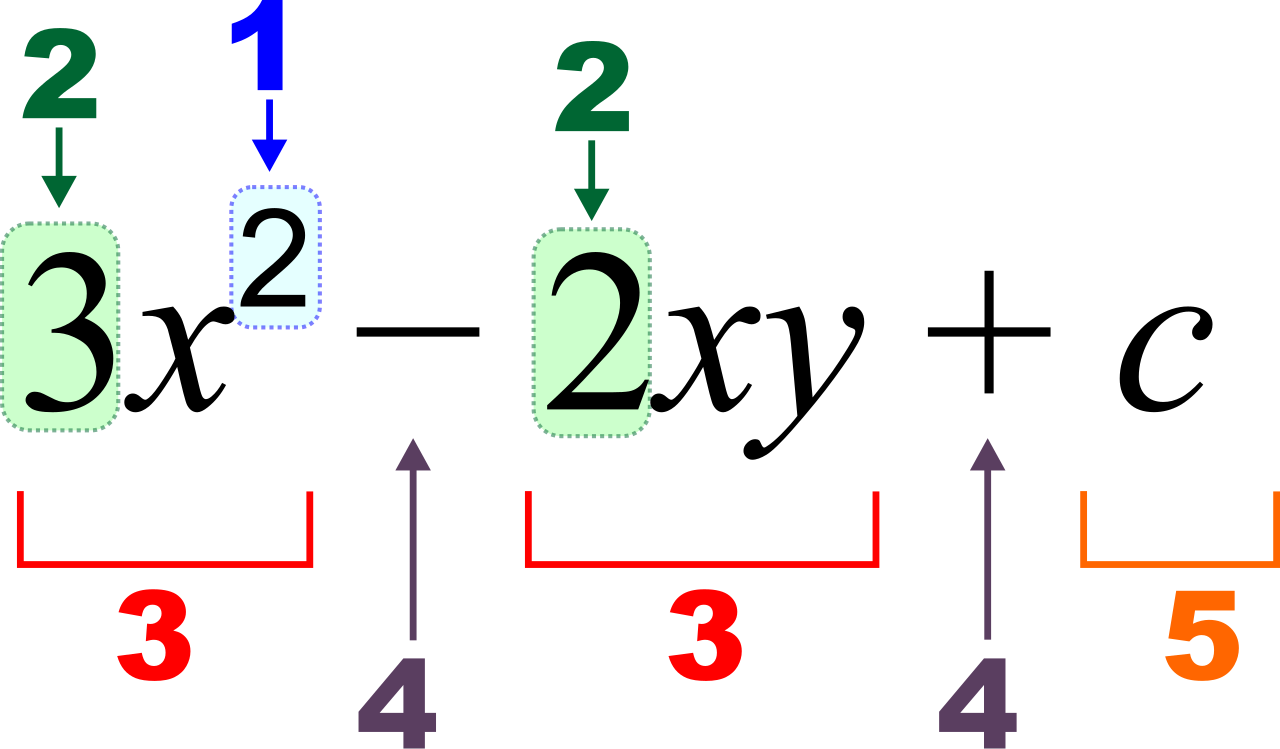
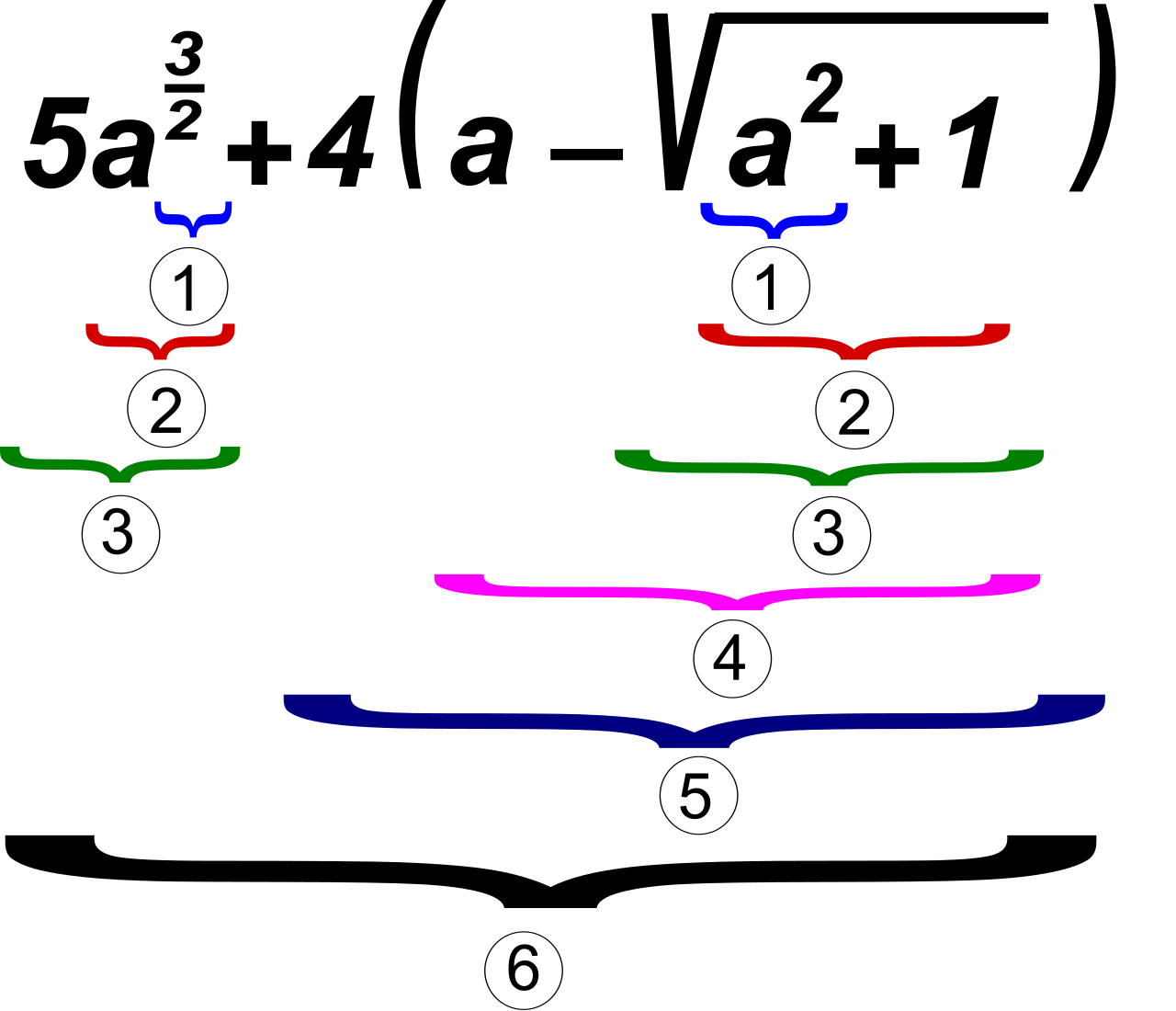
Once you substitute your values, you must process the math in the correct sequence. The acronym PEMDAS stands for Parentheses, Exponents, Multiplication, Division, Addition, Subtraction. However, treating PEMDAS as six distinct steps often leads to errors. It is better visualized as four strict tiers:
- Parentheses: The order of operations dictates that expressions inside parentheses or brackets must be evaluated first. This includes the numerators and denominators of large fractions, which act as implied brackets.
- Exponents: Exponents and roots must be evaluated immediately after parentheses in the order of operations.
- Multiplication and Division: These share equal rank. Multiplication and division must be performed from left to right after evaluating exponents. Do not automatically multiply before dividing if the division appears first on the left.
- Addition and Subtraction: These also share equal rank. Addition and subtraction must be performed from left to right as the final step in evaluating an algebraic expression.
If evaluating an expression is reading the language of math, solving an equation is having a conversation with it.
Solving a linear equation requires isolating the unknown variable on one side of the equal sign. Imagine a classic pan balance scale resting in perfect equilibrium. To find the weight of the unknown variable, you must clear away everything else on its side of the scale.
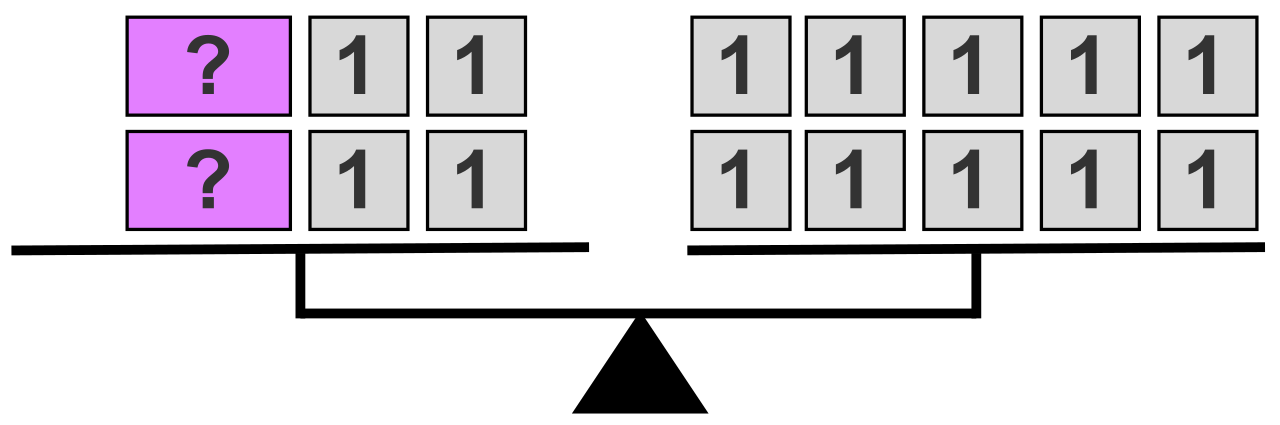
The Golden Rule of Algebra Any arithmetic operation performed on one side of an equation must be performed on the opposite side to maintain strict equality.
To clear away unwanted numbers, we use inverse operations. Inverse operations must be used to cancel out numerical values and isolate a target variable. They act as mathematical "undo" buttons.
- The inverse operation of mathematical addition is mathematical subtraction.
- The inverse operation of mathematical multiplication is mathematical division.
Managing Complex Equations
Often, the equation will look messy before you can start isolating the variable. You must organize the equation using a few vital tools:
1. The Distributive Property If an equation features a multiplier outside of a grouped expression, the distributive property must be applied to multiply a single term by every individual term located inside a set of parentheses.
- Example: 3(x+4) becomes 3x+12.
2. Combining Like Terms You cannot add milligrams to milliliters. Similarly, in algebra, combining like terms requires adding or subtracting the coefficients of variables that possess the exact same letter and exponent.
- Example: In the expression 4x+2y−x, you can combine 4x and −x to get 3x, but the 2y remains separate.
3. Clearing Decimals and Fractions When preparing for clinical math, you want to eliminate visual clutter that can cause arithmetic mistakes.
- Fractions: To clear fractions from a linear equation completely, every term must be multiplied by the least common denominator (LCD). If you have 21x+41=3, multiplying every single term by the LCD (4) transforms the equation into the much simpler 2x+1=12.
- Decimals: To clear decimals from a linear equation, every term must be multiplied by a power of ten corresponding to the greatest number of decimal places. If you have 0.05x+1.2=3.45, the greatest number of decimal places is two (0.05 and 3.45). Multiplying every term by 102 (or 100) shifts all decimal points two places to the right, yielding 5x+120=345.
In clinical practice, math does not present itself as neatly packaged equations. It arrives as a patient scenario: "A patient weighing 165 pounds requires 5 milligrams of medication per kilogram of body weight..." Variables in clinical word problems frequently represent specific patient weights, medication volumes, or time intervals.
To build the equation, you must act as an interpreter. Look for these specific trigger words to map English onto algebra:
| English Word / Phrase | Mathematical Translation | Example in Context |
|---|---|---|
| Sum | The word 'sum' in a mathematical word problem indicates an addition operation. | The sum of fluid intake from IV and oral routes. |
| Difference | The word 'difference' in a mathematical word problem indicates a subtraction operation. | The difference between the baseline heart rate and current rate. |
| Product | The word 'product' in a mathematical word problem indicates a multiplication operation. | The product of the dose and the patient's weight. |
| Quotient | The word 'quotient' in a mathematical word problem indicates a division operation. | The quotient of total volume divided by time. |
| Per | The word 'per' in a mathematical word problem indicates a division operation. | 15 drops per minute. |
| Of | The word 'of' in a mathematical word problem frequently translates to a multiplication operation. | Administer half of the 500 mL bag. |
| Is | The word 'is' in a mathematical word problem typically translates to an equal sign. | The total dose is 50 mg. |
A Crucial Trap: "Less Than" Subtraction is not commutative; order matters heavily. The phrase 'less than' requires reversing the order of the terms when translating a phrase into an algebraic expression.
- If a problem states "5 less than a patient's weight (w)", it translates mathematically to w−5, not 5−w.
The most critical application of algebra you will utilize in allied health is proportional reasoning. A proportion equates two independent mathematical ratios to solve for a single missing quantity. It is the statement that two fractions are absolutely equal to one another.
Solving Proportions
Before you calculate, check your labels. Units of measurement must match on corresponding sides of a proportion before mathematically solving for an unknown variable. You cannot equate a ratio of grams-to-milliliters with a ratio of milligrams-to-milliliters. Convert first.
Once units match, cross-multiplication is used to isolate and solve for a variable when an equation consists of two equal fractions. This works flawlessly because the product of the extreme terms equals the product of the mean terms in any valid mathematical proportion.
If we have the proportion: Denominator 1Numerator 1=Denominator 2Numerator 2
The "extremes" (Numerator 1 and Denominator 2) multiplied together will perfectly equal the "means" (Denominator 1 and Numerator 2). Setting up this new, flat equation instantly clears your fractions and allows you to isolate the unknown variable using basic inverse operations.
The Universal Clinical Standard: Desired Over Have
While proportions can solve any medication problem, the clinical world has optimized this process into an incredibly efficient standard formula.
The Clinical Dosage Formula The basic nursing dosage calculation formula is: (Desired Dose divided by Available Dose) multiplied by Quantity.
Let us explore the architecture of this formula:
- The Ratio: The 'Desired Over Have' formula calculates medication dosage by dividing the physician's ordered dose (what you desire) by the available dose concentration (what you have in the vial or pill).
- The Multiplier: A concentration is meaningless without knowing the volume it sits in. The result of the 'Desired Over Have' division must be multiplied by the available medication quantity to find the final administered dosage.
Example Scenario: A physician orders 400 mg of Ibuprofen. The pharmacy sends liquid Ibuprofen labeled as 100 mg per 5 mL.
- Desired Dose: 400 mg
- Available Dose (Have): 100 mg
- Quantity: 5 mL
Divide the Desired by the Available: 400/100=4. Multiply by the Quantity: 4×5=20. The patient receives 20 mL.

Every time you manipulate an algebraic equation, substitute a value, or translate a clinical word problem into a dosage calculation, you are using the precise laws of mathematics to protect human life. Master these foundational operations, and you transform abstract numbers into concrete, life-saving clinical care.