Military Time and Roman Numerals
Not sure you’re ready?
Take the ~3-minute readiness diagnostic and see where you stand.
A patient’s chart reads: Administer dose at 8:00. In a clinical setting, this ambiguity is not merely an inconvenience; it is a liability. Does the physician mean 8:00 in the morning or 8:00 at night? The difference is twelve hours—more than enough time for a drug's therapeutic window to slam shut. This is why the medical field completely rejects formats that leave room for assumption, relying instead on standardized systems designed to eliminate misinterpretation. Standardizing the expression of time and quantity removes the cognitive load of guessing and the fatal risk of miscommunication. Military time and Roman numerals are not archaic mathematical trivia; they are essential, high-precision tools for conveying exact meaning without fail.
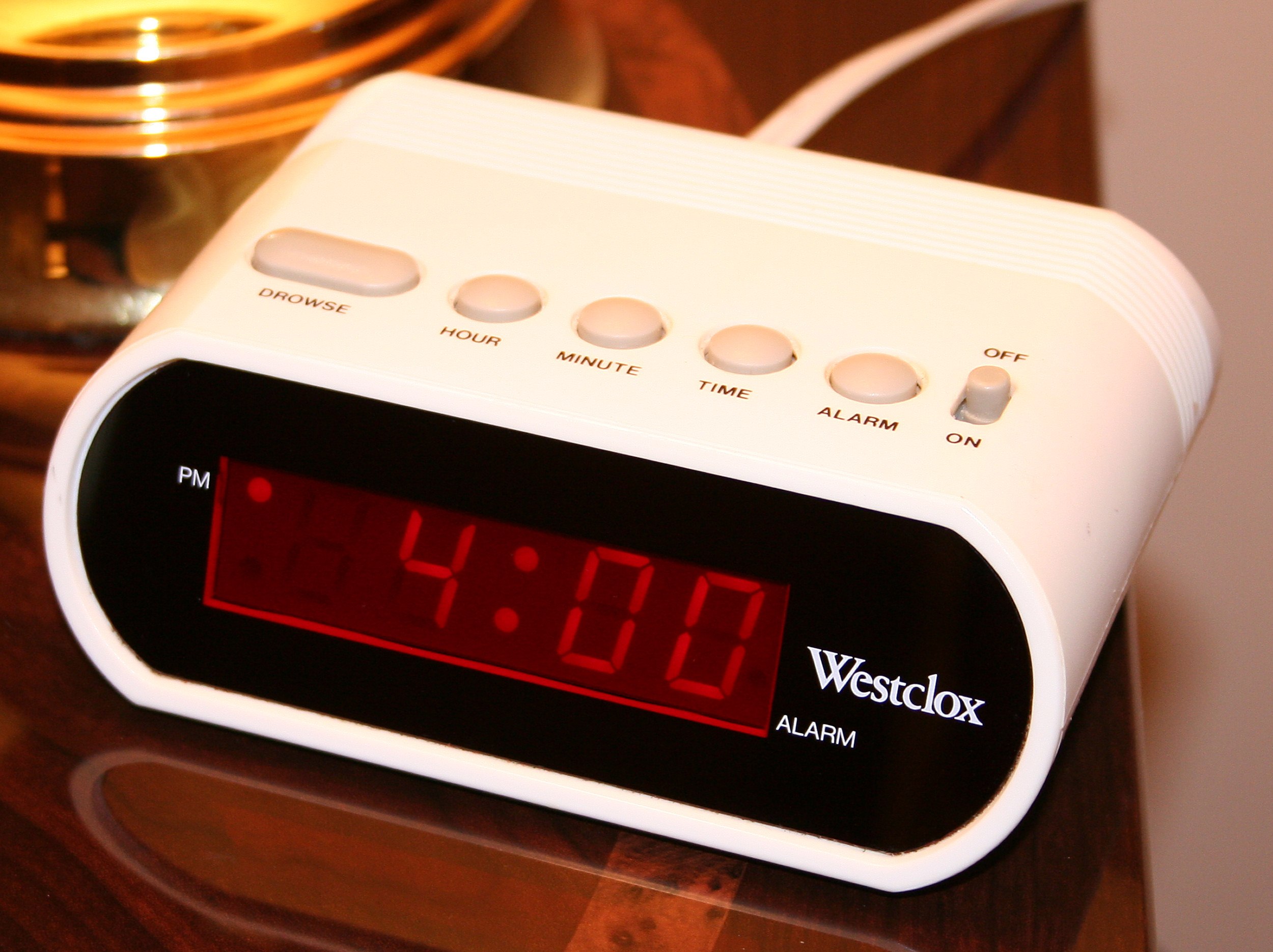
The standard 12-hour clock is an artifact of ancient civilizations splitting daylight and nighttime. For healthcare, splitting the day into two repeating 12-hour halves labeled "a.m." and "p.m." creates unnecessary danger. To solve this, the military time format uses a 24-hour cycle to express time, ensuring every minute of the day has a unique identifier.
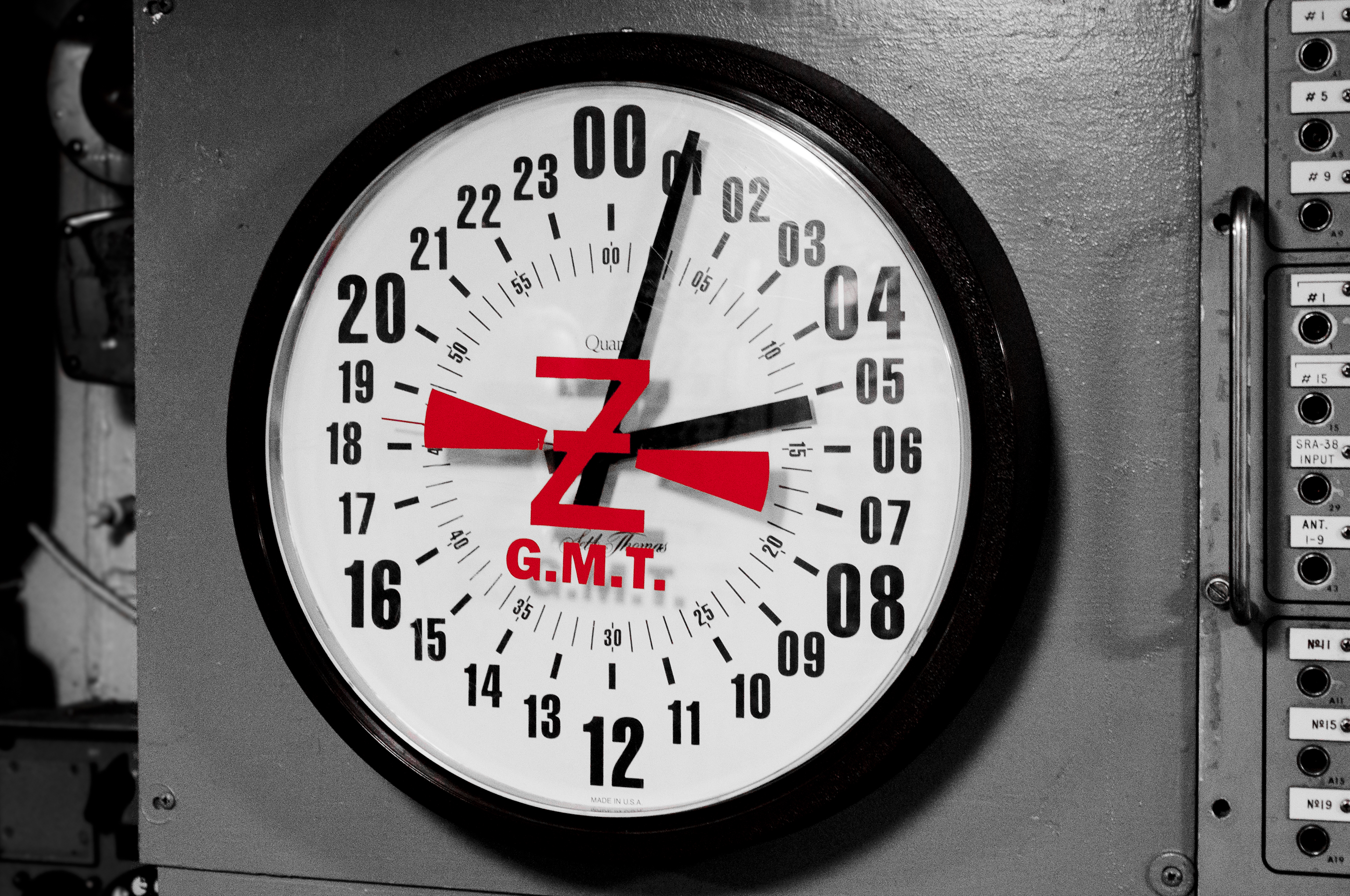
The Anatomy of Military Time
Standard military time strips away everything that is not strictly necessary for communicating hours and minutes.
The Structural Rules of Military Time
- The standard military time format consists of exactly four digits.
- The first two digits in a standard military time represent the hour.
- The last two digits in a standard military time represent the minutes.
- Standard military time does not use a colon to separate the hour digits and the minute digits.
- Standard military time does not use a.m. or p.m. labels.
Because military time merely changes how we track the hours of the day, the minute digits remain exactly the same when converting between a 12-hour clock and a 24-hour military clock. If it is 45 minutes past the hour in one system, it is 45 minutes past the hour in the other.
Navigating the Axis: Noon and Midnight
Before translating specific hours, we must anchor ourselves at the two points where the standard clock resets: noon and midnight.
Noon on a 12-hour clock corresponds to 1200 in standard military time. The day is exactly half over.
Midnight represents the transition between days. Because it is the "zero hour" of a new day, midnight in standard military time is most commonly expressed as 0000. However, because it also marks the absolute completion of the previous 24-hour cycle, midnight in standard military time can also be validly expressed as 2400. Both are correct, though 0000 is standard practice in charting to emphasize the start of a fresh cycle.
Translating from 12-Hour to 24-Hour Time
Converting times from a civilian clock to a military clock requires observing where the time falls in the day. Notice how the rules perfectly partition the day.
The Morning (a.m.) Rules:
- The Midnight Hour (12:00 a.m. to 12:59 a.m.): To convert a 12-hour time from 12:00 a.m. to 12:59 a.m. into military time, change the hour digits from 12 to 00 and remove the colon and a.m. label. (e.g., 12:15 a.m. becomes 0015).
- Single-Digit Mornings (1:00 a.m. to 9:59 a.m.): To convert a 12-hour time from 1:00 a.m. to 9:59 a.m. into military time, add a leading zero to the hour and remove the colon and a.m. label. (e.g., 8:30 a.m. becomes 0830).
- Double-Digit Mornings (10:00 a.m. to 11:59 a.m.): To convert a 12-hour time from 10:00 a.m. to 11:59 a.m. into military time, remove the colon and the a.m. label without changing any digits. (e.g., 11:45 a.m. becomes 1145).
The Afternoon & Evening (p.m.) Rules:
- The Noon Hour (12:00 p.m. to 12:59 p.m.): To convert a 12-hour time from 12:00 p.m. to 12:59 p.m. into military time, remove the colon and the p.m. label without changing any digits. (e.g., 12:20 p.m. becomes 1220).
- The Rest of the Day (1:00 p.m. to 11:59 p.m.): To convert a 12-hour time from 1:00 p.m. to 11:59 p.m. into military time, add 12 to the hour digits and remove the colon and p.m. label. (e.g., 3:45 p.m. becomes 1545).
Translating from 24-Hour to 12-Hour Time
To read a military chart and translate it back to civilian time, we simply reverse the logic.
| If the Military Hour is... | Conversion Rule to 12-Hour Clock | Example |
|---|---|---|
| 0000 to 0059 | To convert a military time from 0000 to 0059 into a 12-hour clock time, change the first two digits to 12, insert a colon before the minutes, and add an a.m. label. | 0030 → 12:30 a.m. |
| 0100 to 1159 | To convert a military time from 0100 to 1159 into a 12-hour clock time, remove any leading zero, insert a colon before the minutes, and add an a.m. label. | 0715 → 7:15 a.m.<br>1045 → 10:45 a.m. |
| 1200 to 1259 | To convert a military time from 1200 to 1259 into a 12-hour clock time, insert a colon before the minutes and add a p.m. label. | 1225 → 12:25 p.m. |
| 1300 to 2359 | To convert a military time from 1300 to 2359 into a 12-hour clock time, subtract 12 from the hour digits, insert a colon before the minutes, and add a p.m. label. | 1845 → 6:45 p.m. |
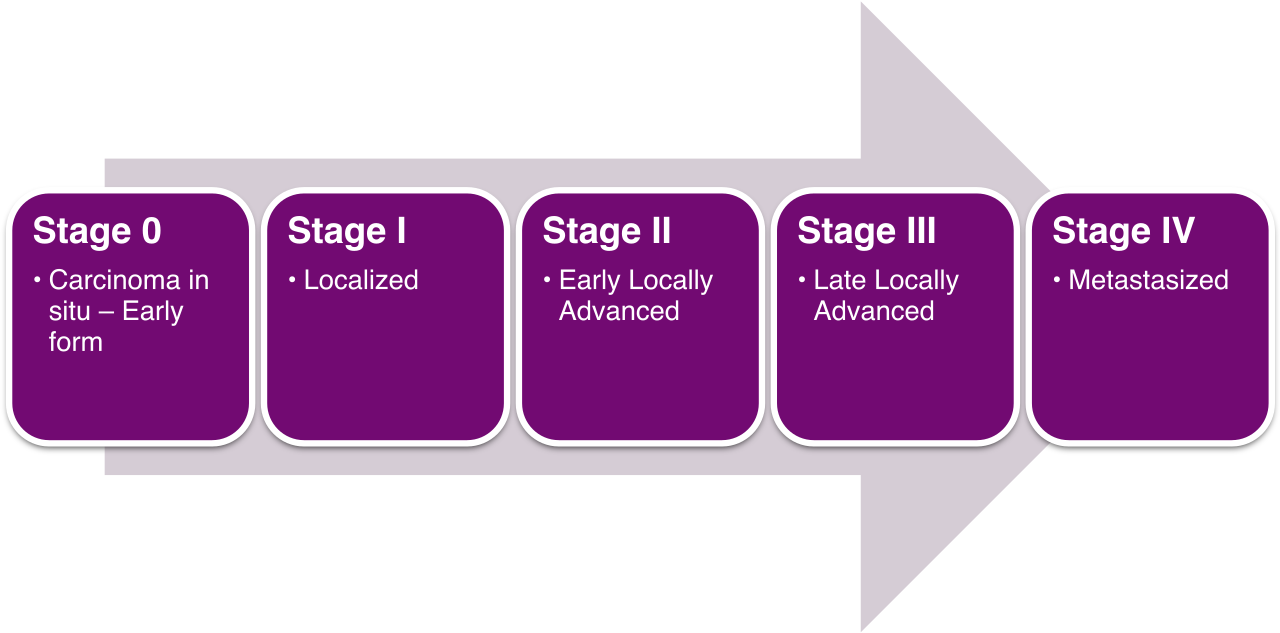
Why do we still use Roman numerals? In modern clinical settings, you will encounter them in cranial nerve designations (e.g., Cranial Nerve V), EKG leads (Lead II), cancer staging (Stage IV), and occasionally in older pharmacology notation (apothecary systems). They are preserved precisely because they look fundamentally different from our standard Arabic numbers (1, 2, 3), thereby preventing visual mix-ups in complex charts.
The Foundation of the System
Unlike our standard decimal system, which relies on place value (where a '5' means fifty if it is in the tens column), Roman numerals are an additive and subtractive language based on specific letters.
Crucially, Roman numerals do not include a symbol for the number zero. The Romans had no need to mathematically represent "nothing" in this system; if they had no sheep, they simply didn't write down a symbol for sheep.
There are seven fundamental symbols you must commit to memory:
- The Roman numeral I represents the number 1.
- The Roman numeral V represents the number 5.
- The Roman numeral X represents the number 10.
- The Roman numeral L represents the number 50.
- The Roman numeral C represents the number 100.
- The Roman numeral D represents the number 500.
- The Roman numeral M represents the number 1000.
The Logic of Addition and Subtraction
Roman numerals are read left to right. The position of a smaller numeral relative to a larger one dictates whether you add or subtract.
1. The Rule of Addition: When a smaller Roman numeral is placed immediately after a larger Roman numeral, the smaller value is added to the larger value.
- VI = 5 + 1 = 6.
- LX = 50 + 10 = 60.
2. The Rule of Subtraction: When a smaller Roman numeral is placed immediately before a larger Roman numeral, the smaller value is subtracted from the larger value.
- IX = 10 - 1 = 9.
- XC = 100 - 10 = 90.
The Rules of Limitation
If you understand why the Romans built their system this way, the rules of formatting will seem like obvious logical constraints rather than arbitrary memorization.
The Rule of Three: A single Roman numeral symbol cannot be repeated more than three times consecutively in standard Roman numeral formatting. You cannot write "IIII" for 4. You must pivot to subtraction and write IV (5 minus 1).
The "Half-Step" Restrictions (V, L, D): Look at the symbols for 5 (V), 50 (L), and 500 (D). These are "half-steps" between the base units of 10, 100, and 1000.
- No Repeating: The Roman numeral V is never repeated consecutively in standard formatting. Why? Because VV would be 10, and we already have a symbol for 10 (X). Likewise, the Roman numeral L is never repeated consecutively (LL would just be C), and the Roman numeral D is never repeated consecutively (DD would just be M).
- No Subtracting: Because these are half-steps, they are never used as subtractors. The Roman numeral V cannot be subtracted from any larger Roman numeral. The Roman numeral L cannot be subtracted from any larger Roman numeral. The Roman numeral D cannot be subtracted from any larger Roman numeral. (e.g., You cannot write "VX" to mean 5; you just write V).
The Specificity of Subtraction: You cannot jump across massive magnitudes when subtracting. You can only step up to the next two highest values.
- The Roman numeral I can only be subtracted from the Roman numerals V and X.
- The Roman numeral IV represents the number 4.
- The Roman numeral IX represents the number 9.
- The Roman numeral X can only be subtracted from the Roman numerals L and C.
- The Roman numeral XL represents the number 40.
- The Roman numeral XC represents the number 90.
- The Roman numeral C can only be subtracted from the Roman numerals D and M.
- The Roman numeral CD represents the number 400.
- The Roman numeral CM represents the number 900.
Scaling Up: The Vinculum
In rare cases where massive quantities are needed, the Roman system introduces an elegant multiplier. Placing a horizontal bar directly over a Roman numeral multiplies the value of that Roman numeral by 1000.
- An V with a bar over it (V) represents 5,000.
- An X with a bar over it (X) represents 10,000.
Putting It All Together
When you encounter a complex Roman numeral, break it into its place values: thousands, hundreds, tens, and ones.
Let's convert 1944 into Roman numerals:
- Thousands: 1000 is M.
- Hundreds: 900 requires subtraction. 100 less than 1000 is CM.
- Tens: 40 requires subtraction. 10 less than 50 is XL.
- Ones: 4 requires subtraction. 1 less than 5 is IV.
Combine them sequentially: MCMXLIV.
By applying these precise, unbending rules, you eliminate guesswork. Whether you are titrating a critical drip at 0200 or identifying pathology in Cranial Nerve IX, mastery of these systems ensures you are speaking the exact, uncompromising language of modern healthcare.