Bonding and Compounds
Not sure you’re ready?
Take the ~3-minute readiness diagnostic and see where you stand.
A bag of normal saline and a syringe of synthetic insulin represent two fundamentally different ways the universe binds matter together. The salt in the saline is governed by a harsh, complete exchange of atomic parts that generates electrical currents in the human body. The insulin, a sprawling protein, relies on a delicate, shared partnership of atoms that dictates its exact three-dimensional shape. To understand how medications dissolve in the bloodstream, how electrical signals fire across the myocardium, or why cellular membranes behave the way they do, we must strip chemistry down to its foundational mechanics: how atoms bond.
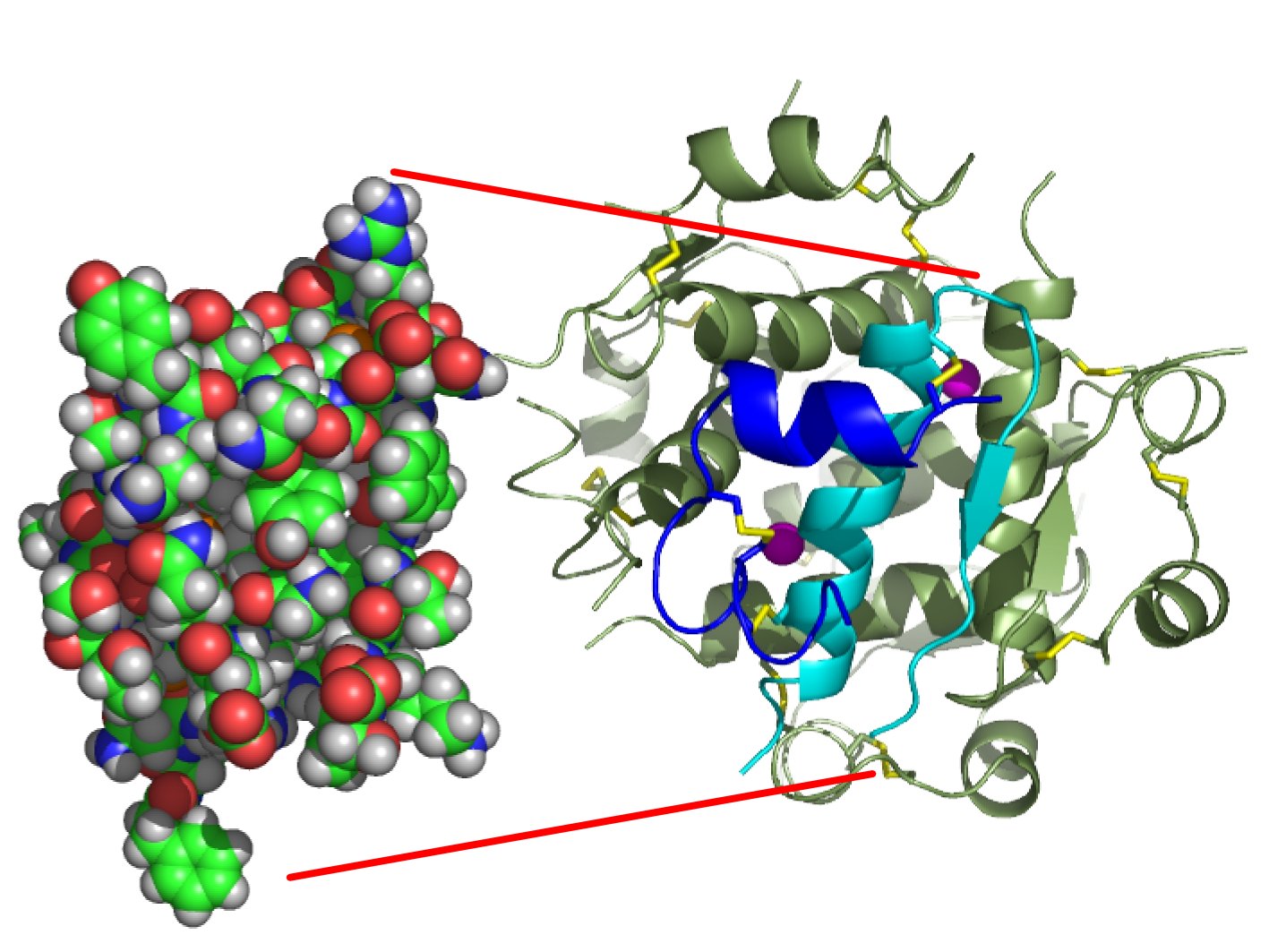
Every atom is composed of a dense nucleus surrounded by clouds of electrons. But when it comes to chemistry—the actual interaction between atoms—only the outermost electrons matter. Valence electrons are the electrons located in the outermost shell of an atom. They are the currency of chemical reactions.
Why do atoms interact at all? Atoms form chemical bonds to achieve a full outer electron shell. Nature prefers stability, and in the atomic world, stability means a full exterior.
The Octet Rule: Atoms are most stable when possessing eight valence electrons.
When you look at the rightmost column of the periodic table, you find the noble gases (like Neon and Argon). Noble gases have full valence electron shells naturally. Because their outer shells are already complete, they are famously unreactive. Every other element on the periodic table is constantly seeking, trading, or sharing electrons to achieve the exact same stability as a noble gas.
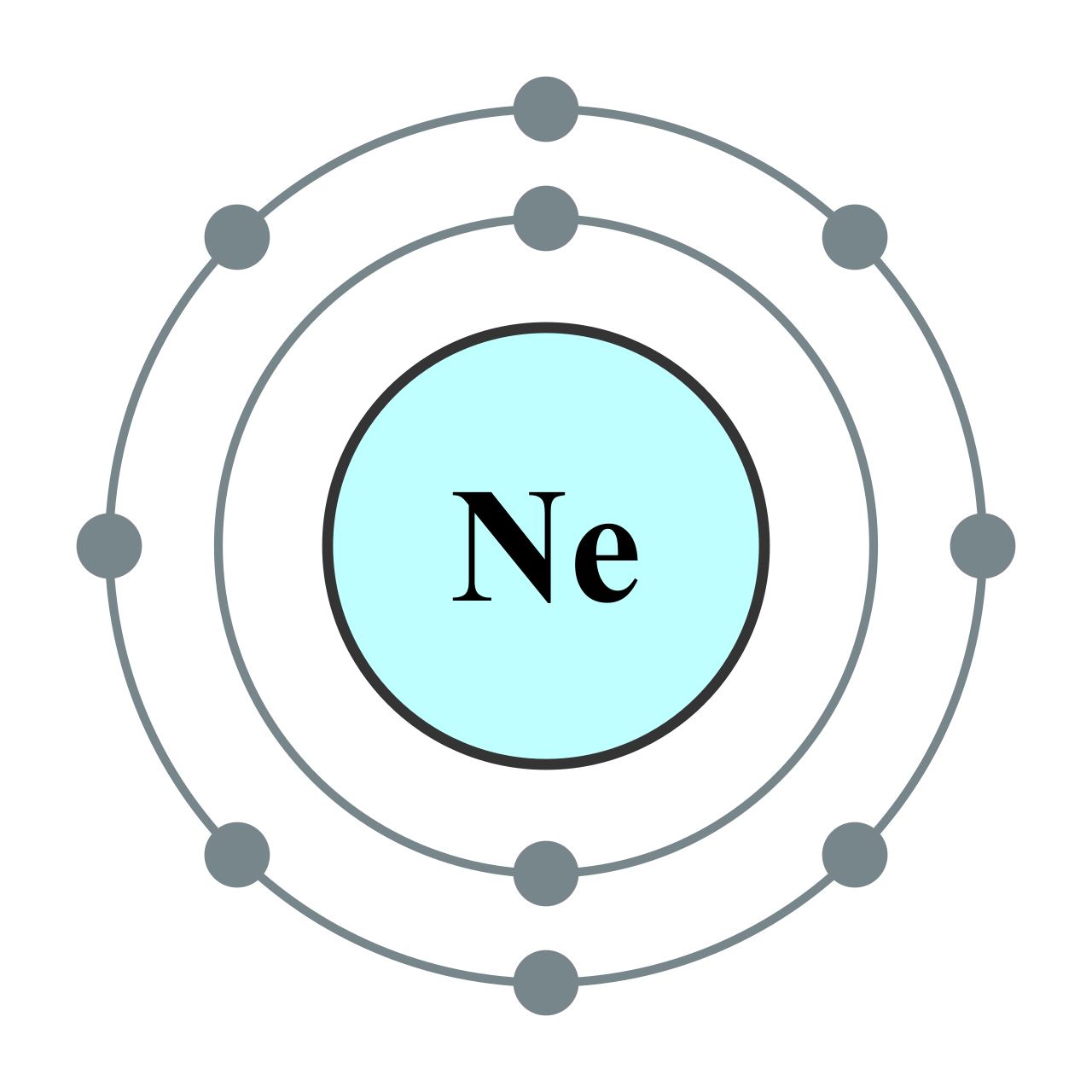
Fortunately, the periodic table offers a cheat code for knowing exactly how many valence electrons an element has: elements in the same group (column) of the periodic table have the same number of valence electrons. For example, everything in Group 1 (like Sodium and Potassium) has exactly one valence electron.
There is a minor but critical exception to the octet rule: the smallest atoms. Because the very first atomic shell can only hold two electrons, Hydrogen is completely stable with only two valence electrons. Likewise, Helium is completely stable with only two valence electrons.
When atoms with drastically different needs collide, they do not share. They trade completely.
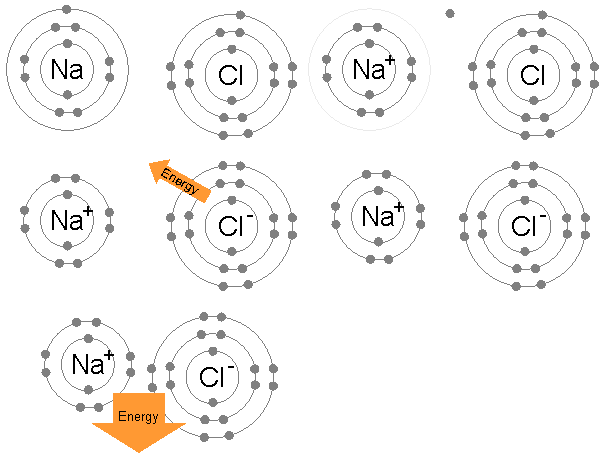
Ionic bonds form through the complete transfer of valence electrons from one atom to another. This is a transaction. Think of an atom with only one valence electron—it is much easier to give that single electron away and let the full shell underneath become the new outer shell, rather than trying to scrounge up seven more electrons.
Metals (found on the left side of the periodic table) typically lose electrons to form cations. Nonmetals (found on the right side) typically gain electrons to form anions. Therefore, ionic bonds generally occur between a metal and a nonmetal.
Let's look at the mechanics of this transfer:
- Cations are positively charged ions. Electrons carry a negative charge. Atoms that lose electrons become cations because they now have more positively charged protons in their nucleus than negative electrons orbiting them.
- Anions are negatively charged ions. Atoms that gain electrons become anions because they have added excess negative charge to their structure.
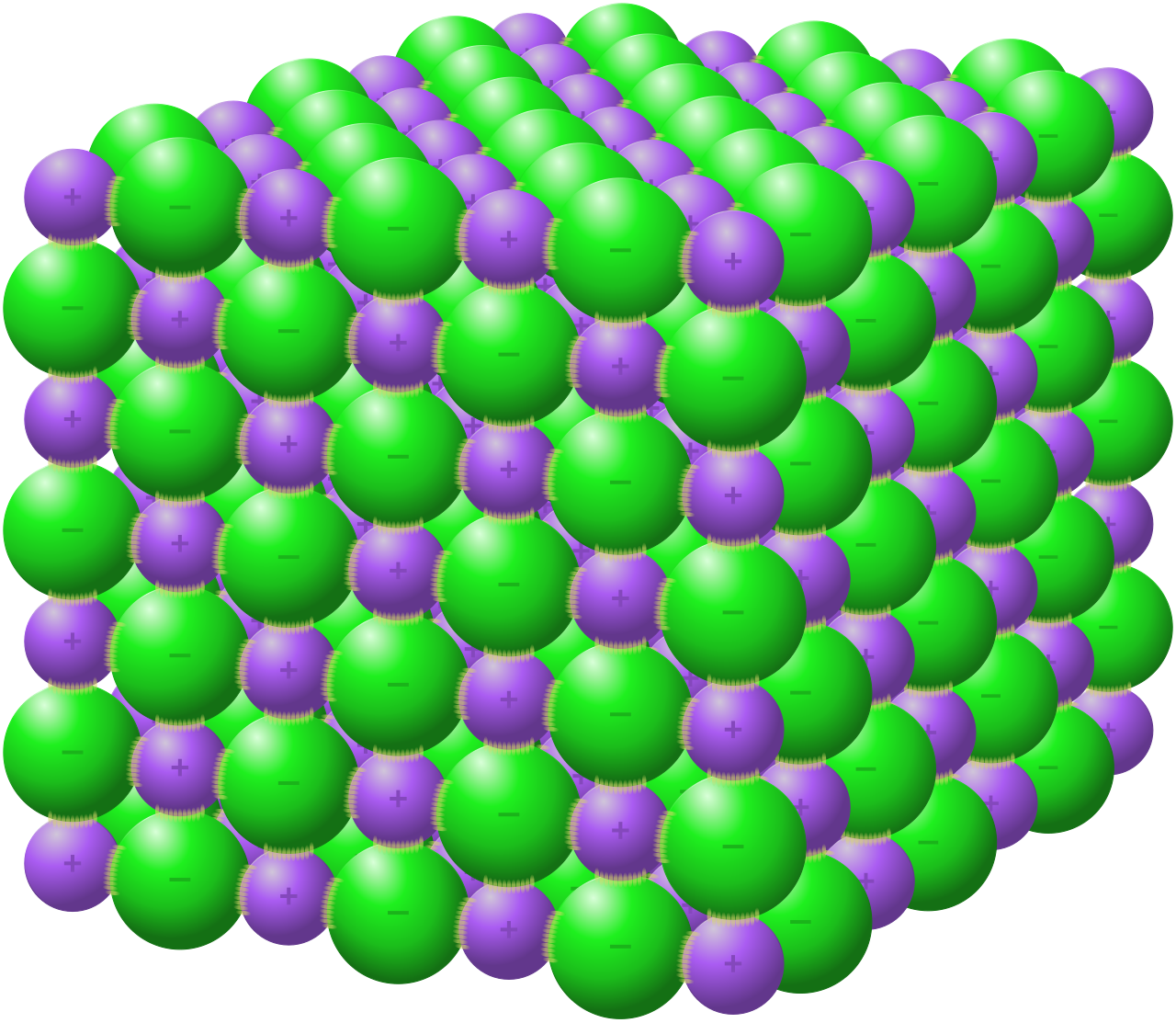
The transfer of electrons in an ionic bond creates oppositely charged ions. Once the metal becomes positive and the nonmetal becomes negative, basic physics takes over. Electrostatic attraction between oppositely charged ions holds an ionic bond together. It is exactly like two powerful magnets snapping together.
The Properties of Ionic Compounds
Because the electrostatic forces pulling these ions together are incredibly strong, ionic compounds share distinct macroscopic properties:
- Structure: Ionic compounds form solid crystalline lattice structures at room temperature. They don't exist as isolated pairs; they stack into massive, repeating 3D grids.
- Melting and Boiling: It takes massive thermal energy to break these grids apart. Thus, ionic compounds generally have high melting points and high boiling points.
- Conductivity: Solid ionic compounds do not conduct electricity because the ions are locked rigidly in their lattice. However, if you break that lattice—ionic compounds conduct electricity when dissolved in water or when melted into a liquid state.
Why this matters to a nurse: When table salt (NaCl) dissolves in a patient’s blood plasma, it separates into free-floating sodium cations (Na⁺) and chloride anions (Cl⁻). Because they carry charges and can move freely in fluid, they can conduct electrical currents. This is why we call them electrolytes. Without ionic compounds dissolving into ions in water, the human heart could not beat, and the nervous system could not transmit a single signal.
What happens when two atoms both need electrons, and neither is willing to give theirs away entirely? They are forced into a compromise.
Covalent bonds form when two atoms share one or more pairs of valence electrons. Because both atoms want to acquire electrons to fulfill the octet rule, covalent bonds generally occur between two nonmetal atoms.
When atoms are bound in this way, they form discrete, independent packages of matter. Molecular compounds are composed of atoms held together by covalent bonds. A molecule of water (H₂O) or a molecule of oxygen (O₂) floats around as a distinct, measurable unit, unlike the infinite crystalline grid of an ionic compound.
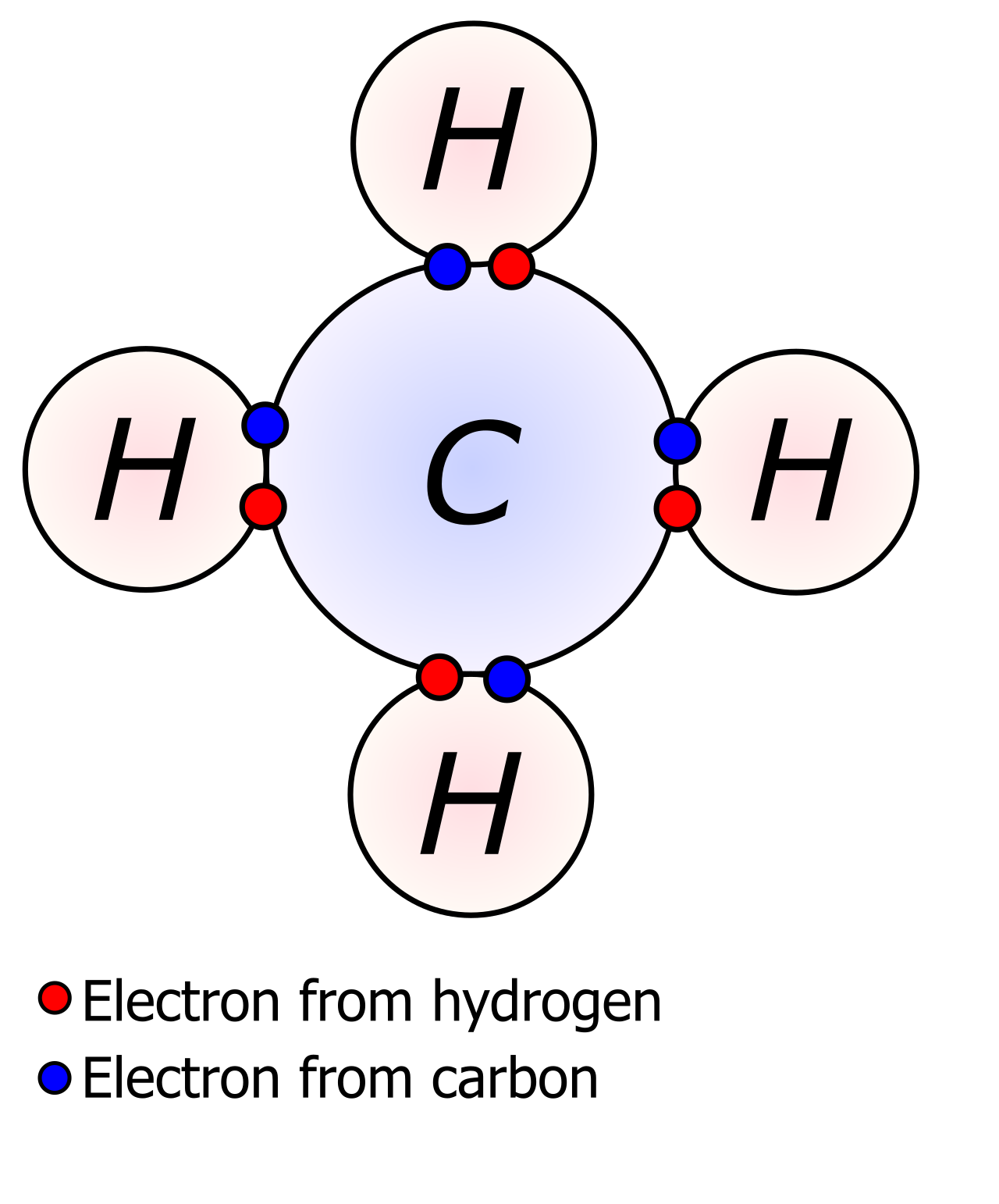
Because the attraction between separate molecules is relatively weak (even if the covalent bonds inside the molecules are strong), molecular compounds have very different physical properties compared to ionic compounds:
- Melting and Boiling: Molecular compounds generally have lower melting points and lower boiling points than ionic compounds. Many are liquids (water) or gases (carbon dioxide) at room temperature.
- Conductivity: Because they do not break apart into charged ions, molecular compounds generally do not conduct electricity when dissolved in water.
The Mechanics of Sharing
Sharing electrons isn't always limited to a single pair. Depending on how many electrons an atom needs to reach an octet, atoms can form multiple bonds:
- A single covalent bond involves the sharing of exactly two electrons (one pair).
- A double covalent bond involves the sharing of exactly four electrons (two pairs).
- A triple covalent bond involves the sharing of exactly six electrons (three pairs).
Why this matters to a nurse: Most of the biological world is built entirely on covalent bonds. Carbohydrates, lipids, proteins, DNA, and nearly all pharmaceutical medications are molecular compounds. They are stable, intricate structures explicitly because covalent bonds allow atoms to form complex branching chains and rings.
To truly master covalent bonding, we must understand that sharing is almost never perfectly equal.
Imagine two dogs playing tug-of-war with a rope. If the dogs are identical, the flag in the center of the rope stays dead center. But if a mastiff is playing against a poodle, the rope is going to spend most of its time near the mastiff.
In chemistry, the dogs are atoms, the rope is the shared pair of valence electrons, and the strength of the dog is called electronegativity.
Electronegativity is the measure of an atom's ability to attract shared electrons in a chemical bond.
Some atoms are fiercely electronegative; they pull shared electrons aggressively toward their own nuclei. Fluorine is the most electronegative element on the periodic table, and electronegativity generally increases as you move up and to the right on the periodic table.
This creates two distinct types of covalent bonds:
1. Nonpolar Covalent Bonds
A nonpolar covalent bond forms when electrons are shared equally between two atoms. This happens when the two atoms have the exact same or very similar electronegativity (like two oxygen atoms bonding to form O₂, or carbon and hydrogen bonding). Because the electrons spend equal time around both atoms, the molecule has a neutral, evenly distributed electrical charge.
2. Polar Covalent Bonds
A polar covalent bond forms when electrons are shared unequally between two atoms. A large difference in electronegativity between two covalently bonded atoms results in a polar covalent bond.
Because electrons carry a negative charge, the atom that pulls the electrons closer to itself ends up feeling slightly negative, while the atom that lost the tug-of-war is left feeling slightly exposed and positive.
- The atom with higher electronegativity in a polar bond develops a partial negative charge.
- The atom with lower electronegativity in a polar bond develops a partial positive charge.
Why this matters to a nurse: Water (H₂O) is held together by highly polar covalent bonds. Oxygen is highly electronegative; hydrogen is weak. The oxygen side of a water molecule is partially negative, and the hydrogen side is partially positive. Because water is polar, it acts like a magnet, easily dissolving other polar substances and ionic compounds (like blood sugar and salt). By contrast, nonpolar molecular compounds (like fats, oils, and certain lipid-based drugs) will never dissolve in water because they have no partial charges for the water to grab onto. Understanding polarity is the key to understanding drug solubility, intravenous compatibility, and cell membrane absorption.

Quick Comparison: HESI A2 Summary Table
To rapidly recall these principles for the exam, visualize this comparison of the two primary realms of chemistry:
| Feature | Ionic Compounds | Molecular Compounds |
|---|---|---|
| Bonding Mechanism | Complete transfer of valence electrons. | Sharing pairs of valence electrons. |
| Participants | Metal + Nonmetal | Nonmetal + Nonmetal |
| Internal Structure | Electrostatic attraction between oppositely charged ions (Cations and Anions). | Covalent bonds (Polar or Nonpolar, Single, Double, or Triple). |
| State at Room Temp | Solid crystalline lattice. | Varies (Can be solid, liquid, or gas). |
| Melting / Boiling Points | Generally high. | Generally lower than ionic compounds. |
| Electrical Conductivity | Conducts when dissolved in water or melted (not as a solid). | Generally does not conduct electricity in water. |