Reactions, Equations, and Stoichiometry
Not sure you’re ready?
Take the ~3-minute readiness diagnostic and see where you stand.
Every breath a patient takes, every metabolized drop of an intravenous medication, and every firing neuron is governed by a microscopic ledger that must balance perfectly. At the cellular level, the human body is not a static machine but a dynamic chemical reactor, constantly rearranging atoms to harvest energy, build tissues, and neutralize toxins. To understand pharmacology, physiology, and pathology, one must first understand the fundamental grammar of these microscopic changes. When a nurse administers a precise dosage of sodium bicarbonate to correct metabolic acidosis, they are relying on the inviolable laws of stoichiometry and the conservation of mass. The molecules will interact in exact, predictable ratios—nothing is left to chance, and no atom is ever lost. Mastering how to read a chemical equation, identify its type, and calculate its proportions is not merely a mathematical exercise; it is the blueprint for understanding how life sustains itself through constant, measured change.
To study a chemical reaction is to study a transformation. We begin with one set of substances and end with another, but the universe is a strict accountant.
Reactants are the starting substances present before a chemical reaction occurs, much like the raw ingredients on a kitchen counter before baking. As the reaction proceeds, bonds are broken and atoms are rearranged. Products are the new substances formed as a result of a chemical reaction.
However, nature does not create matter from nothing, nor does it let matter vanish. This absolute rule is formalized in the Law of Conservation of Mass, which states that matter cannot be created or destroyed in an isolated system. Consequently, the total mass of the reactants must exactly equal the total mass of the products in a chemical reaction. If you begin with 100 grams of material, you must end with exactly 100 grams of material, even if it has transformed from a solid pill into dissolved ions and gases.
The Mechanics of Balancing Equations
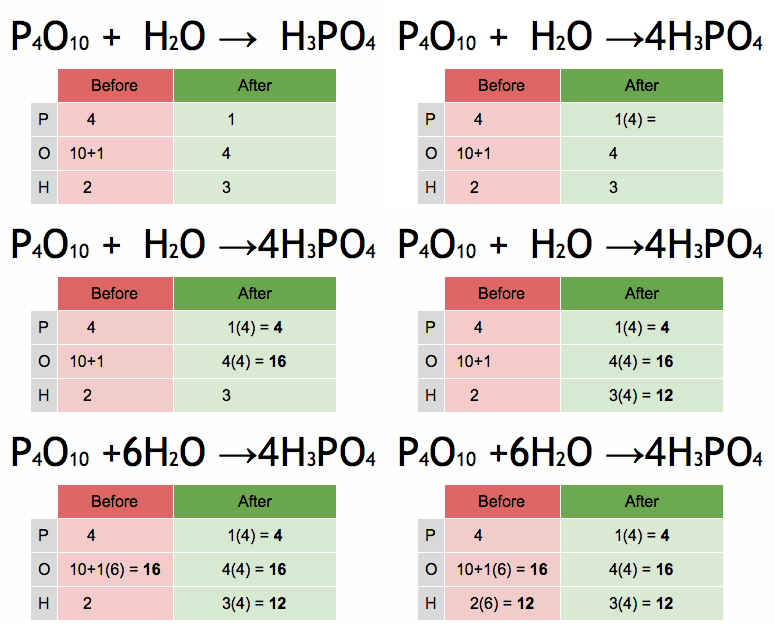
Because atoms are conserved, a chemical equation must reflect reality. A balanced chemical equation has an equal number of atoms for each element on both the reactant and product sides. We achieve this balance using two distinct numbers in a chemical formula: coefficients and subscripts.
Coefficients are the whole numbers placed directly in front of chemical formulas to balance a chemical equation.
Subscripts are the small numbers within a chemical formula indicating the number of atoms of a specific element in a molecule.
The distinction between these two numbers is a matter of life and death in clinical chemistry. Consider water (H2O) and hydrogen peroxide (H2O2). The subscript is the only difference. Changing the subscript of an element in a chemical formula changes the fundamental chemical identity of that substance. You can safely hydrate a patient with H2O; administering H2O2 intravenously would be fatal.
Therefore, a cardinal rule of chemistry emerges: Only coefficients can be adjusted when balancing a chemical equation, while subscripts must never be altered when balancing a chemical equation. You may change how many molecules you have (the coefficient), but you may never change what the molecule is (the subscript).
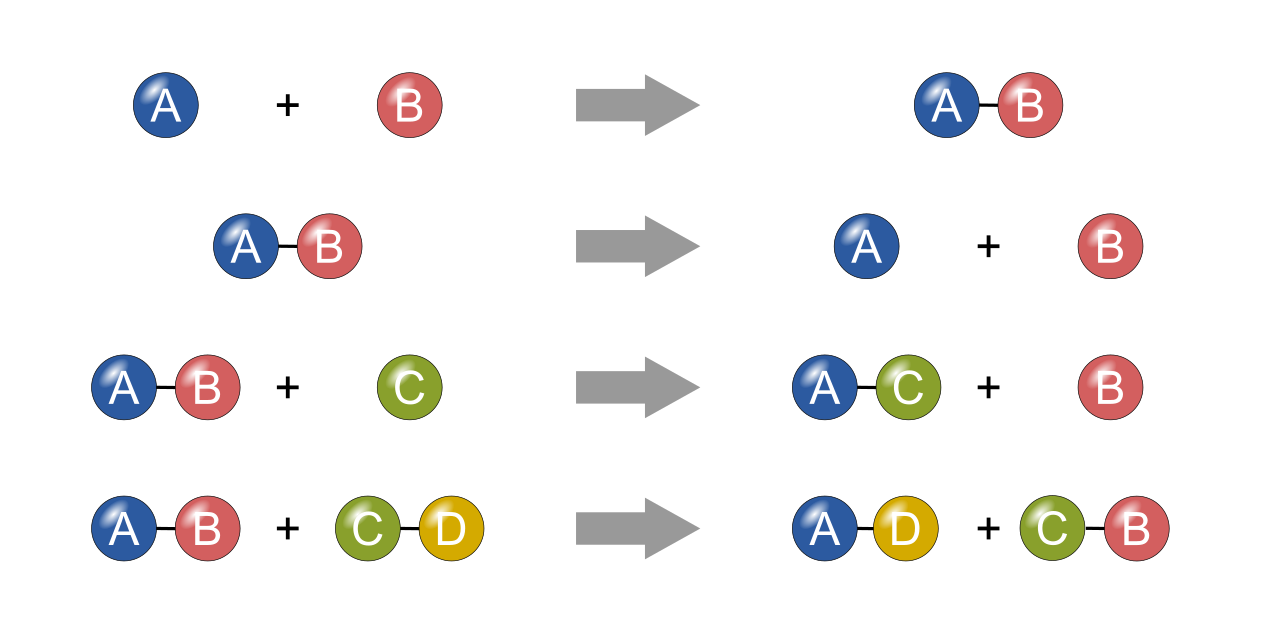
Nature rearranges atoms using a few predictable, recurring patterns. By recognizing the structure of a chemical equation, you can predict what products will form—a vital skill when anticipating drug interactions or metabolic byproducts.
| Reaction Type | Description | General Format |
|---|---|---|
| Synthesis | A synthesis reaction occurs when two or more reactants combine to form a single product. Think of bone calcification, where calcium and phosphate combine to form complex hydroxyapatite. | A+B→AB |
| Decomposition | A decomposition reaction occurs when a single reactant breaks down into two or more simpler products. The digestion of complex proteins into individual amino acids is a massive cascade of decomposition. | AB→A+B |
| Single Replacement | A single replacement reaction occurs when one element replaces another element in a chemical compound. | A+BC→B+AC |
| Double Replacement | A double replacement reaction occurs when the positive and negative ions of two ionic compounds exchange places to form two new compounds. | AB+CD→AD+CB |
Special Cases of Replacement and Oxygen
Some reactions are so critical they warrant their own specific categories.
An acid-base neutralization reaction is a specific type of double replacement reaction. When stomach acid (hydrochloric acid, HCl) causes heartburn, a patient might take an antacid like magnesium hydroxide. They undergo a double replacement, neutralizing the corrosive acid. Clinically, you must know that an acid-base neutralization reaction typically produces water and an ionic salt.
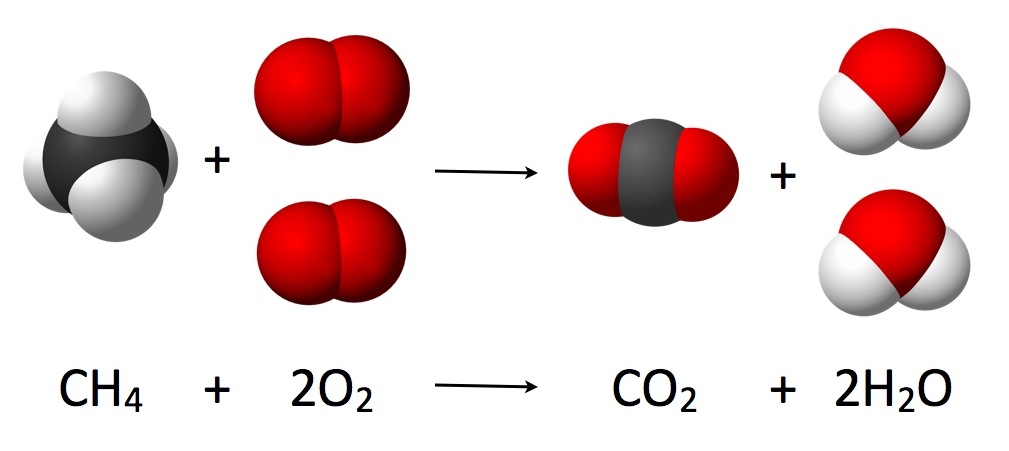
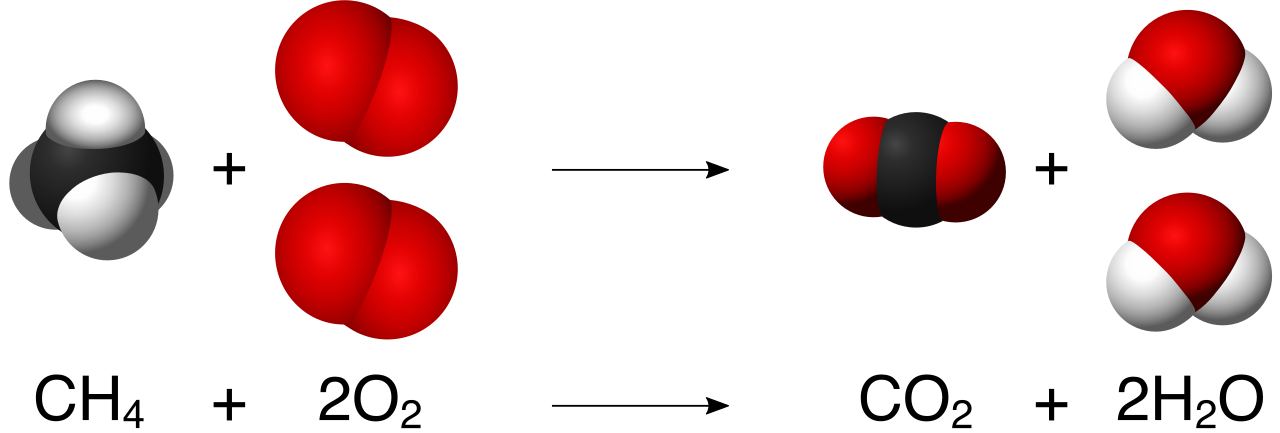
Another vital classification involves our primary atmospheric gas. A combustion reaction occurs when a substance reacts rapidly with oxygen gas. When we burn fuels, the chemical bonds break and reform in a way that drops the molecules into a lower energy state. Therefore, a combustion reaction generally releases energy in the form of heat and light. In the specific case of organic fuels, the complete combustion of a hydrocarbon always produces carbon dioxide and water as products. (Cellular respiration is essentially a highly controlled, slow-motion combustion of glucose, releasing biological energy instead of outright fire).
The Transfer of Electrons
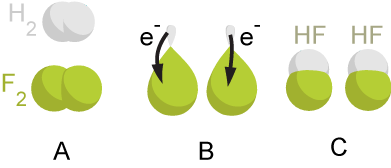
Beyond swapping partners, atoms frequently swap actual pieces of themselves. An oxidation-reduction reaction involves the transfer of electrons between two chemical species. Commonly referred to as "redox" reactions, these drive the electron transport chain in every mitochondria of a patient's body.
- Oxidation is the loss of one or more electrons by a chemical species.
- Reduction is the gain of one or more electrons by a chemical species.
Because electrons carry a negative charge, gaining an electron "reduces" the overall charge of the atom—hence the term. A standard mnemonic in the sciences is OIL RIG: Oxidation Is Loss, Reduction Is Gain.
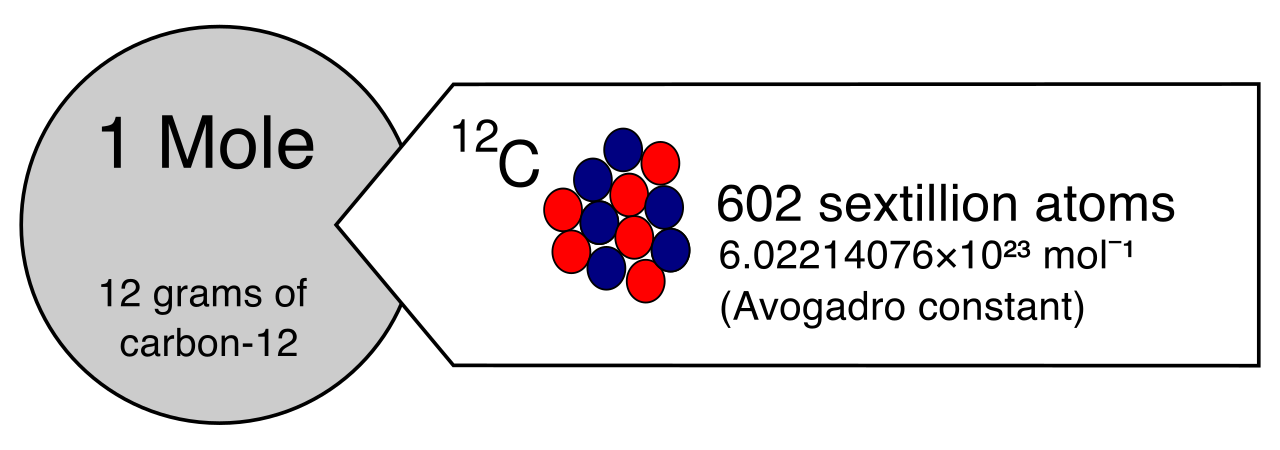
A single drop of blood contains roughly 1.5×10²¹ atoms. Atoms are staggeringly tiny. We cannot put a single atom of potassium on a hospital scale. We need a bridge between the invisible microscopic world of atoms and the macroscopic world of grams and liters. That bridge is the mole.
The mole is the standard scientific unit for measuring large quantities of very small entities like atoms or molecules. Just as a "dozen" always means exactly 12 of something, a mole always means exactly Avogadro's number, which has a value of 6.022×10²³.
One mole of any substance contains exactly 6.022×10²³ representative particles of that substance. A mole of carbon contains 6.022×10²³ carbon atoms. A mole of aspirin contains 6.022×10²³ aspirin molecules.
How do we weigh this? We use molar mass. Molar mass is the mass of one mole of a given chemical substance. It bridges the gap perfectly because the molar mass of an element is numerically equal to the atomic mass of that element.
If you look at the periodic table, Carbon has an atomic mass of 12.01. That means one single atom of Carbon weighs 12.01 atomic mass units (amu). But miraculously, one mole of Carbon weighs exactly 12.01 grams. Therefore, molar mass is typically expressed in units of grams per mole (g/mol).
Once we understand balanced equations and the mole, we can mathematically predict the exact outcomes of any chemical reaction. Stoichiometry is the mathematical calculation of relative quantities of reactants and products in chemical reactions.
Stoichiometric calculations require a properly balanced chemical equation to determine accurate reactant and product relationships. You cannot calculate the exact dosage of a neutralizing agent if your initial chemical blueprint is unbalanced.
The engine driving stoichiometry is the mole ratio.
- A mole ratio is the ratio of moles of one substance to the moles of another substance in a reaction.
- A mole ratio is derived directly from the coefficients of a balanced chemical equation.
If the balanced equation is N2+3H2→2NH3, the mole ratio of hydrogen gas to ammonia is 3:2. Mole ratios are used as mathematical conversion factors to calculate unknown quantities of substances in a chemical reaction.
Limits and Yields: Real-World Chemistry
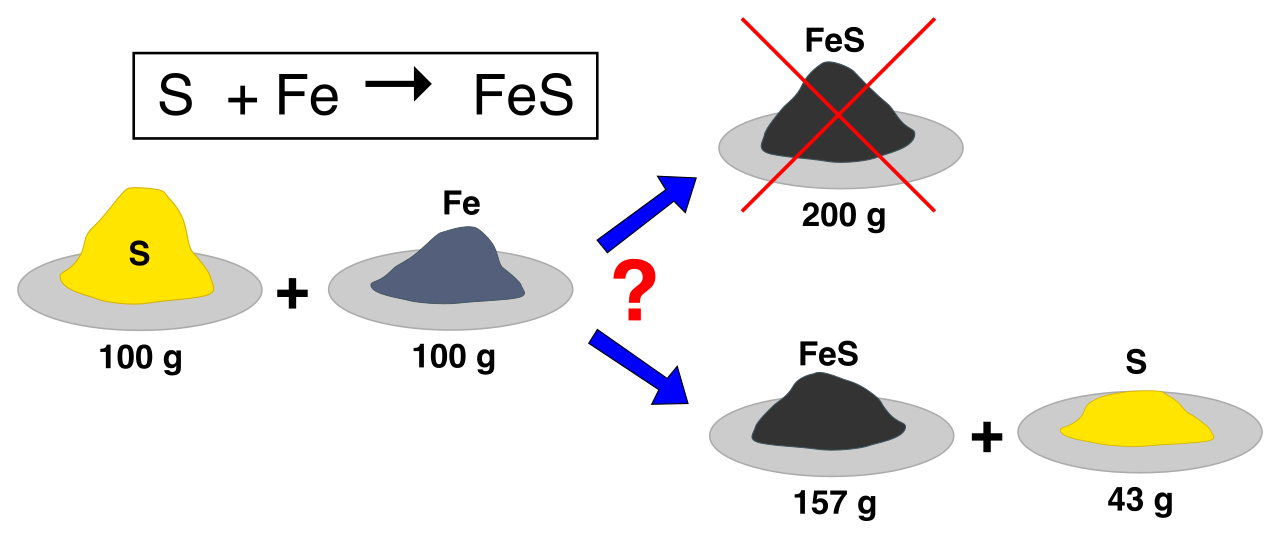
In a perfect world, we mix exact amounts of chemicals, and they all perfectly convert into products. In reality, one ingredient usually runs out first.
Imagine you are assembling pre-packaged emergency medical kits. Each kit requires 1 tourniquet and 4 gauze pads. If you have 100 tourniquets but only 40 gauze pads, you can only make 10 complete kits. The gauze pads limit your production.
In chemistry, a limiting reactant is the starting material that is completely consumed first during a chemical reaction. Because it dictates when the reaction must stop, the limiting reactant completely determines the maximum amount of product that can be formed in a chemical reaction. Conversely, an excess reactant is a starting material that is not completely consumed when a chemical reaction goes to completion (in our analogy, the 90 leftover tourniquets).
By calculating the limiting reactant, we find our ideal target: the theoretical yield.
- Theoretical yield is the maximum calculated amount of product that can be generated from a given amount of limiting reactant. It exists only on paper—it is the flawless, mathematical ideal.
- Actual yield is the measured amount of product practically obtained from conducting a chemical reaction. In a lab or a human body, side reactions occur, heat is lost, and transfers are imperfect. The actual yield is almost always lower than the theoretical yield.
To measure the efficiency of a reaction, we compare the two: Percent yield is calculated by dividing the actual yield by the theoretical yield and multiplying the result by 100.
Chemical reactions do not happen in a vacuum; they interact with the thermal energy of their environment.
- An endothermic chemical reaction absorbs heat energy from the surrounding environment. (Think of an instant cold pack cracked open by a nurse; the chemical reaction inside draws heat away from the patient's sprained ankle, making the pack feel cold).
- An exothermic chemical reaction releases heat energy into the surrounding environment. (Think of the heat radiating from a burning match).
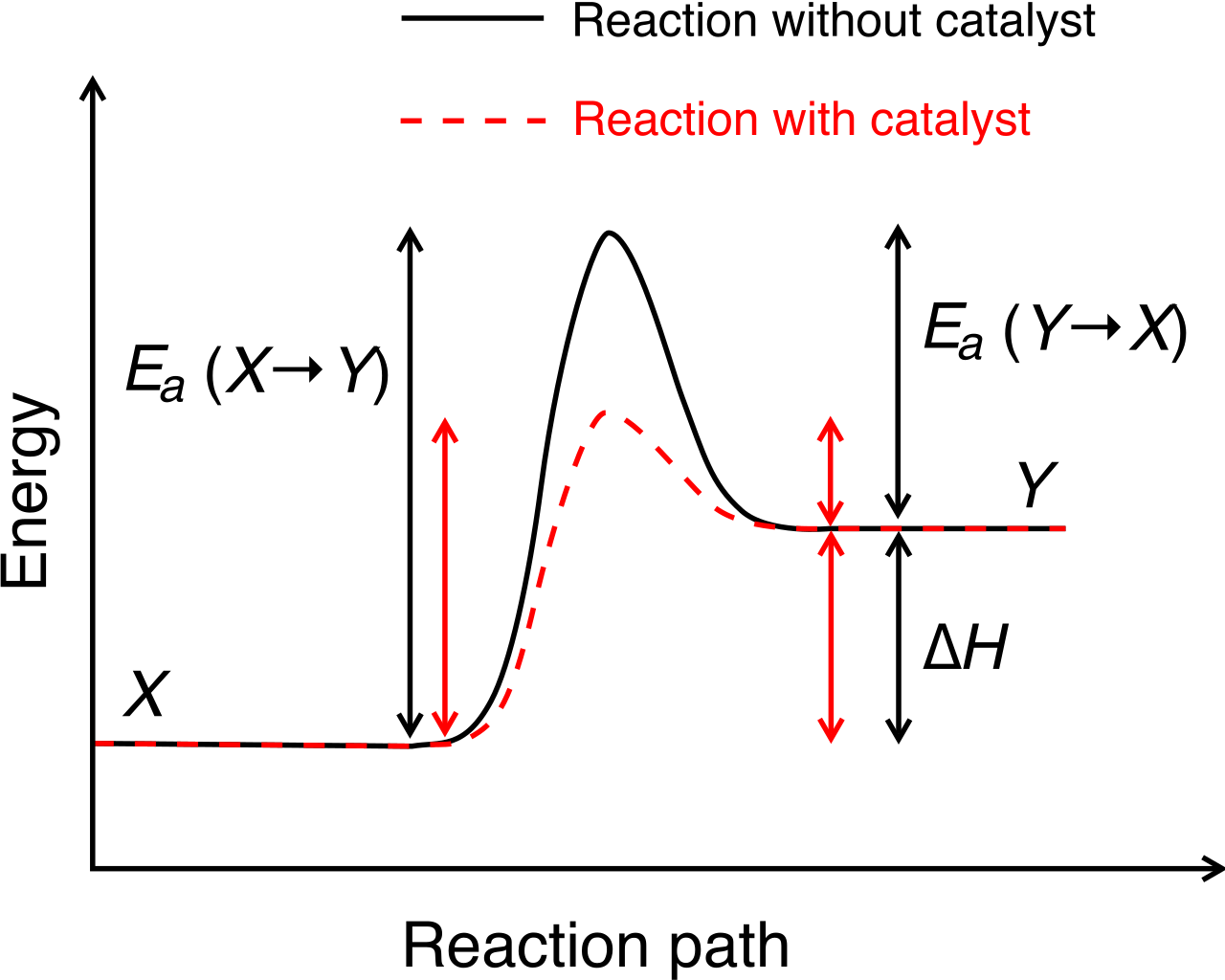
Yet, even highly exothermic reactions do not happen spontaneously without a push. A piece of paper will not burst into flames sitting on a desk. It requires a spark. Activation energy is the minimum amount of energy required to initiate a chemical reaction.
In the human body, relying on high heat to overcome activation energy would cook our cells alive. To survive, biological systems require chemical workarounds to speed up reactions at normal body temperatures. Enter the catalyst.
A catalyst is a substance that increases the rate of a chemical reaction by lowering the activation energy.
Biological catalysts, known as enzymes, provide a specialized physical scaffolding that brings reactants together perfectly, allowing bonds to break and form with vastly less energy. Crucially, a catalyst is not consumed or permanently altered during the course of a chemical reaction. Once the reaction is complete, the catalyst releases the product and is immediately ready to facilitate the next reaction, tirelessly balancing the microscopic ledger of life.