Energy, Work, and Momentum
Not sure you’re ready?
Take the ~3-minute readiness diagnostic and see where you stand.
When a 250-pound patient suddenly loses their balance and falls toward the clinical floor, the nurse reflexively steps in to cushion the impact. In that fraction of a second, the mechanics of physics cease to be classroom abstractions and become an urgent, physical reality. The nurse’s body must generate a precise counter-force to safely alter the patient's momentum without causing injury to either person. Understanding how mass moves, how energy is transferred, and how forces interact over time is not just a requirement for the HESI A2 exam; it is the fundamental vocabulary of human movement and patient safety.
To master the concepts of energy, work, and momentum, we must view the physical world as a strict accounting system. Nothing is gained for free, nothing is lost without a trace, and every physical action—from pushing a bariatric bed to hanging an IV bag—obeys unbreakable mathematical laws.
To understand mechanics, we begin with energy, which is broadly defined as the quantitative property that must be transferred to a body or physical system to perform work on the body. It is the fuel of physical change. But energy alone is just potential; to actually do something in the physical world, we must perform work.
Work is the measure of energy transfer that occurs when an object is moved over a distance by an external, parallel force. It requires both effort and a result.
Formula for Mechanical Work: Work=Force×displacement (W=F×d)
The standard unit of both energy and work in the International System of Units (SI) is the Joule (J). Mathematically, one Joule is equal to one Newton multiplied by one meter (1 J=1 N⋅m). If you push a stretcher with a force of 10 Newtons and move it 5 meters down the hallway, you have transferred 50 Joules of energy.
However, the definition of work contains strict conditions that often trick students:
- Work is zero if an object does not experience displacement regardless of the magnitude of the force applied. If you push against a locked hospital bed with all your might for ten minutes, you will sweat, and you will burn calories, but from a physics perspective, you have done zero mechanical work because the displacement is zero.
- Work is zero if the applied force is perfectly perpendicular to the direction of the object's displacement. Remember that the force must be parallel to the motion. If you carry a heavy medical tray and walk forward at a constant speed, your upward force to hold the tray is perpendicular to your forward motion. Therefore, the mechanical work done on the tray by your lifting force as you walk is zero.
Power: The Rate of Work
While work measures how much energy is transferred, Power tells us how fast that transfer occurs. Power is defined as the rate at which work is performed over time.
Formula for Power: Power=timeWork (P=tW)
The standard unit of power in the International System of Units is the Watt (W). One Watt is strictly equal to one Joule of work performed per second. If two nurses push identical beds down identical hallways, they do the exact same amount of work. But if Nurse A finishes in 10 seconds and Nurse B finishes in 20 seconds, Nurse A exerted twice as much power.
The universe operates under the law of conservation of energy. This foundational rule states three things: energy cannot be created, energy cannot be destroyed, and energy can only be transformed from one form into another form.
In mechanical physics, we observe this transformation as a constant dance between two primary types of energy: kinetic and potential.
Kinetic Energy (The Energy of Motion)
Kinetic energy is the specific energy that an object possesses due exclusively to the object's motion. If an object is moving, it has kinetic energy.
Formula for Kinetic Energy: KE=21mv2 (where m is mass and v is velocity)
This formula reveals two critical relationships:
- Kinetic energy is directly proportional to the mass of an object. A 100 kg patient in a wheelchair has twice the kinetic energy of a 50 kg patient moving at the same speed.
- Kinetic energy is directly proportional to the square of an object's velocity. This is vastly important. Because velocity is squared, speeding up has an exponential effect on energy. Doubling the velocity of a moving object increases the object's kinetic energy by a factor of four. If a motorized stretcher speeds up from 2 m/s to 4 m/s, it now requires four times as much work to bring it to a halt.
Potential Energy (The Energy of Position)
Potential energy is the stored energy an object possesses due to the object's physical position or state. While it can exist in springs or chemical bonds, in healthcare scenarios we are most often concerned with gravitational potential energy—the energy stored in an object strictly as the result of the object's vertical position or height.
Formula for Gravitational Potential Energy: PE=mgh (where m is mass, g is gravitational acceleration, and h is height)
Because of this relationship, an object at a higher vertical elevation possesses more gravitational potential energy than an identical object at a lower vertical elevation. Elevating an IV bag increases its height (h), which increases its potential energy, resulting in a stronger flow of fluids down into the patient's vein when that energy is released.

Mechanical Energy and the Falling Object
Mechanical energy is the arithmetic sum of an object's kinetic energy and potential energy (ME=KE+PE).
Imagine dropping a glass medication vial. As it leaves your hand, the vial obeys a strict physical script:
- In a closed physical system with no external friction, the total mechanical energy of the system remains constant.
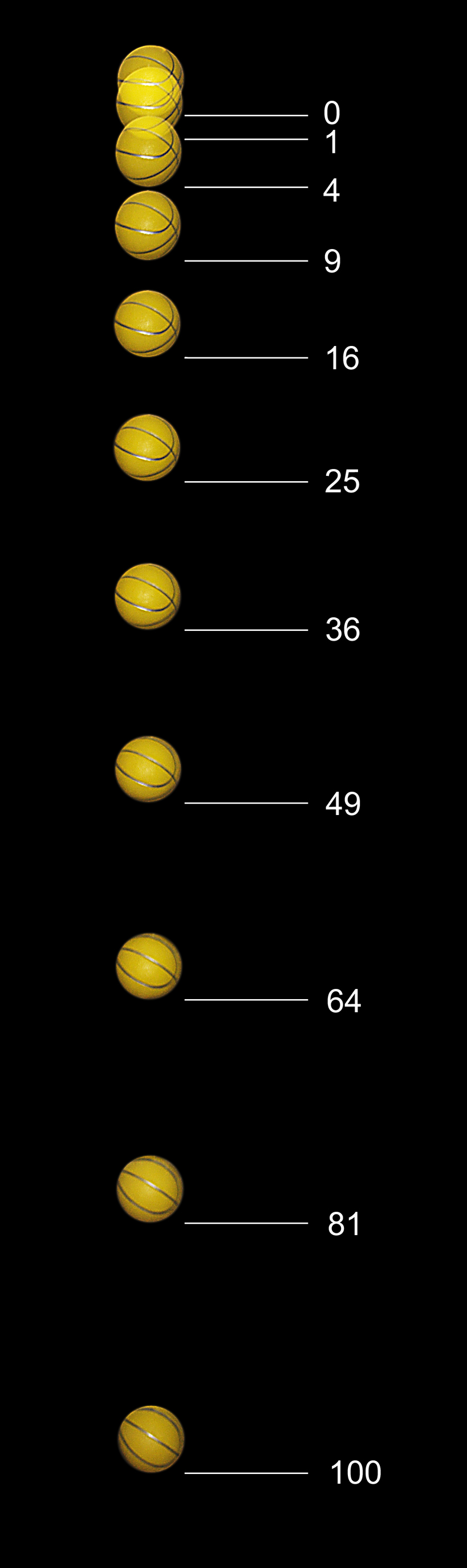
- As the vial falls, its height decreases, meaning the object's potential energy constantly decreases.
- Because energy cannot be destroyed, that lost potential energy must go somewhere. As the vial falls and accelerates, the object's kinetic energy constantly increases.
- If this object falls in a vacuum (removing the friction of air resistance), the loss in potential energy perfectly matches the gain in kinetic energy. The total sum (mechanical energy) never changes.
If energy is the currency of motion, momentum is the quantitative measure of motion that a physical object possesses. It describes how difficult it is to stop a moving object.
Formula for Momentum: p=m×v (where p is momentum, m is mass, and v is velocity)
The standard unit for momentum in the International System of Units is kilogram-meters per second (kg⋅m/s).
Because momentum is calculated using mass, an object with a larger mass has more momentum than an object with a smaller mass traveling at the exact same velocity. It is much harder to stop a fully loaded crash cart than an empty medication cart moving at the same speed.

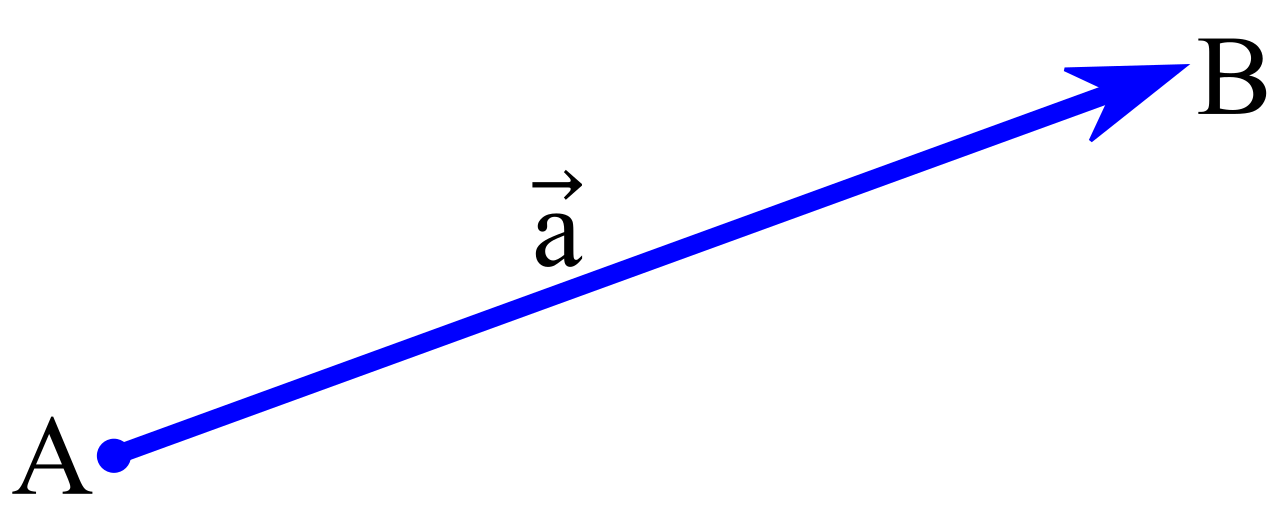
Crucially, momentum is a vector quantity. A vector quantity possesses both magnitude and direction. If two identical carts are moving at the exact same speed but in opposite directions, their momentums are mathematically opposite (e.g., +10 kg⋅m/s and -10 kg⋅m/s).
The Conservation of Momentum
Like energy, momentum is conserved under the right conditions. The principle of conservation of momentum states that the total momentum of a closed, isolated system remains constant regardless of internal collisions.
For this to hold true, the system must be an isolated system—a physical system that does not interact with any external net forces (like friction from the floor or intervention from an outside person). If two gurneys collide in an isolated system, the combined momentum of the two gurneys before the crash is exactly equal to their combined momentum after the crash.
Types of Collisions
While momentum is conserved in all isolated collisions, kinetic energy is not. Collisions are categorized based on what happens to their kinetic energy:
| Collision Type | Conservation of Momentum | Conservation of Kinetic Energy | Description / Example |
|---|---|---|---|
| Perfectly Elastic | Strictly Conserved | Strictly Conserved | Objects bounce off each other with zero energy lost to heat, sound, or deformation. (e.g., ideal billiard balls). |
| Inelastic | Conserved | Not Conserved | Objects bounce off each other, but kinetic energy is lost (transformed into sound, heat, or structural damage). |
| Perfectly Inelastic | Conserved | Not Conserved | Occurs when colliding objects physically stick together immediately after impact, moving as a single mass afterward. |


We return to our opening scenario: cushioning the fall of a patient. When a patient hits the ground, their velocity drops to zero, meaning their momentum goes to zero. This change in momentum is physically inevitable. How the nurse alters how that momentum reaches zero is the difference between an uninjured patient and a fractured hip.
This brings us to Impulse, mathematically defined as the precise change in momentum of a physical object.
Formula for Impulse: Impulse=Force×Δt (where Δt is the precise time interval over which the force is applied)
The foundational rule bridging these concepts is the impulse-momentum theorem, which states that the net impulse applied to an object exactly equals the change in the object's momentum.
Because Impulse equals the Change in Momentum (Δp=F×Δt), we can see exactly why "cushioning" works. The change in momentum (Δp) for the falling patient is a fixed number based on their mass and falling speed. To safely execute that change, the nurse extends the time interval (Δt) of the impact by lowering the patient gradually. By mathematically increasing the time (t), the force (F) exerted on the patient's body must proportionally decrease to yield the same total impulse.
In physics, and in clinical practice, time mitigates force.
HESI A2 Quick Review Checklist
Before taking your exam, ensure you can mentally recite the following absolute rules:
- Did the object move? If not, Work = 0.
- Is the force perpendicular to motion? If so, Work = 0.
- Did the speed double? If so, Kinetic Energy quadrupled.
- Are two objects colliding and sticking together? That is a perfectly inelastic collision.
- Is an object falling? Its Potential Energy is decreasing and its Kinetic Energy is increasing, but its total Mechanical Energy remains constant.