Forces, Gravity, and Newton's Laws
Not sure you’re ready?
Take the ~3-minute readiness diagnostic and see where you stand.
When you attempt to move a bariatric patient resting in a hospital bed, the profound resistance you feel is not a biological phenomenon, but a purely physical one. The interactions governing the patient's stillness, the effort required to initiate movement, and the continuous push needed to overcome the friction of the stretcher’s wheels are dictated by immutable laws of motion. In healthcare, a foundational understanding of forces, mass, and acceleration is not merely an academic hurdle for the HESI A2; it is the mechanical reality of patient transport, biomechanics, and physiological fluid dynamics. To master this module, we must strip away our intuition about how things appear to move and look strictly at the underlying rules of the physical universe.
At its most basic level, a force is a push or pull upon an object resulting from the object's interaction with another object. It is the invisible agent of change in the physical world.
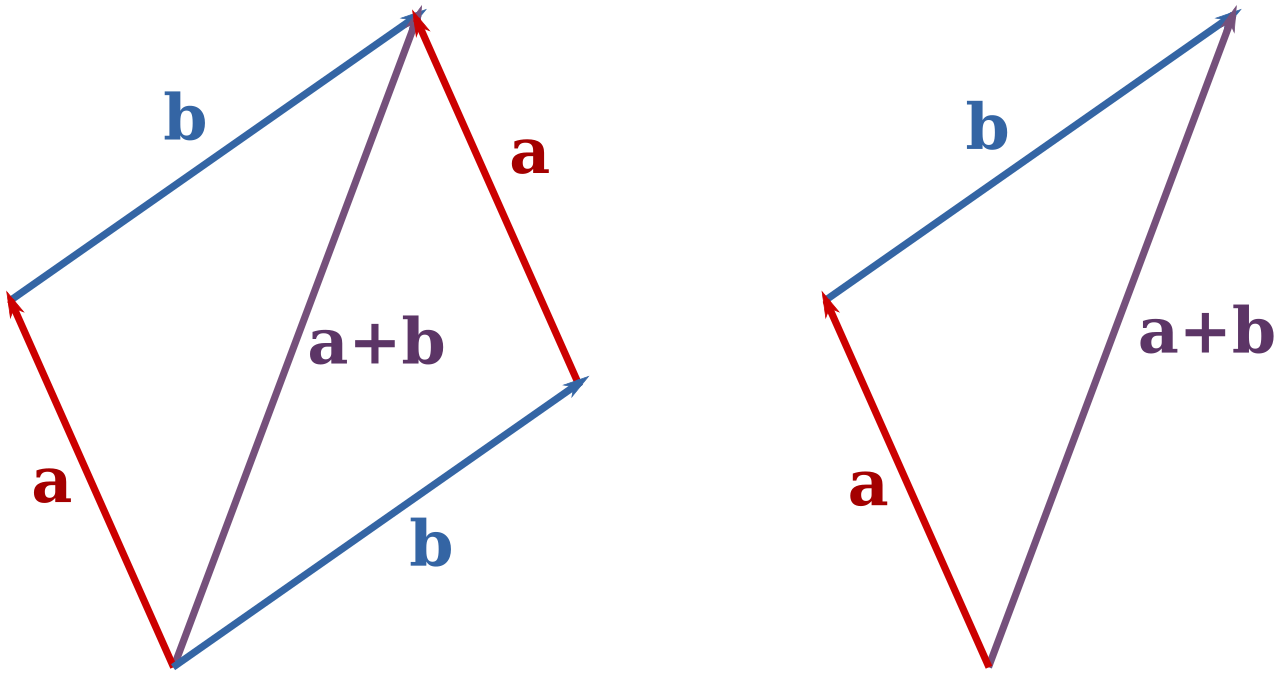
To analyze forces accurately, we must recognize that force is a vector quantity having both magnitude and direction. Pushing a stretcher forward with 50 units of effort is fundamentally different from pulling it backward with the same effort. Because multiple forces usually act on a body at once—you pushing a cart, the floor resisting the cart, gravity pulling it down—we rely on the concept of a net force. The net force on an object is the vector sum of all the individual forces acting upon the object.
The Unit of Force The standard international unit of force is the Newton (N). By definition, one Newton is the force required to accelerate a one-kilogram mass at a rate of one meter per second squared.
What happens if you calculate the vector sum of all forces on an object and the result is exactly zero? A net force of zero can mean an object is completely at rest. However, our everyday intuition often misses a crucial secondary truth: a net force of zero can mean an object is moving with a constant velocity. If you are pushing a gurney down a flat hospital corridor at a perfectly steady speed of 2 m/s, the force of your push is exactly canceling out the forces of mechanical resistance. The net force is zero.
Mass vs. Weight: A Critical Distinction
In everyday conversation, people use "mass" and "weight" interchangeably. In physics, conflating the two will cause you to fail the exam.
| Concept | Definition & Characteristics |
|---|---|
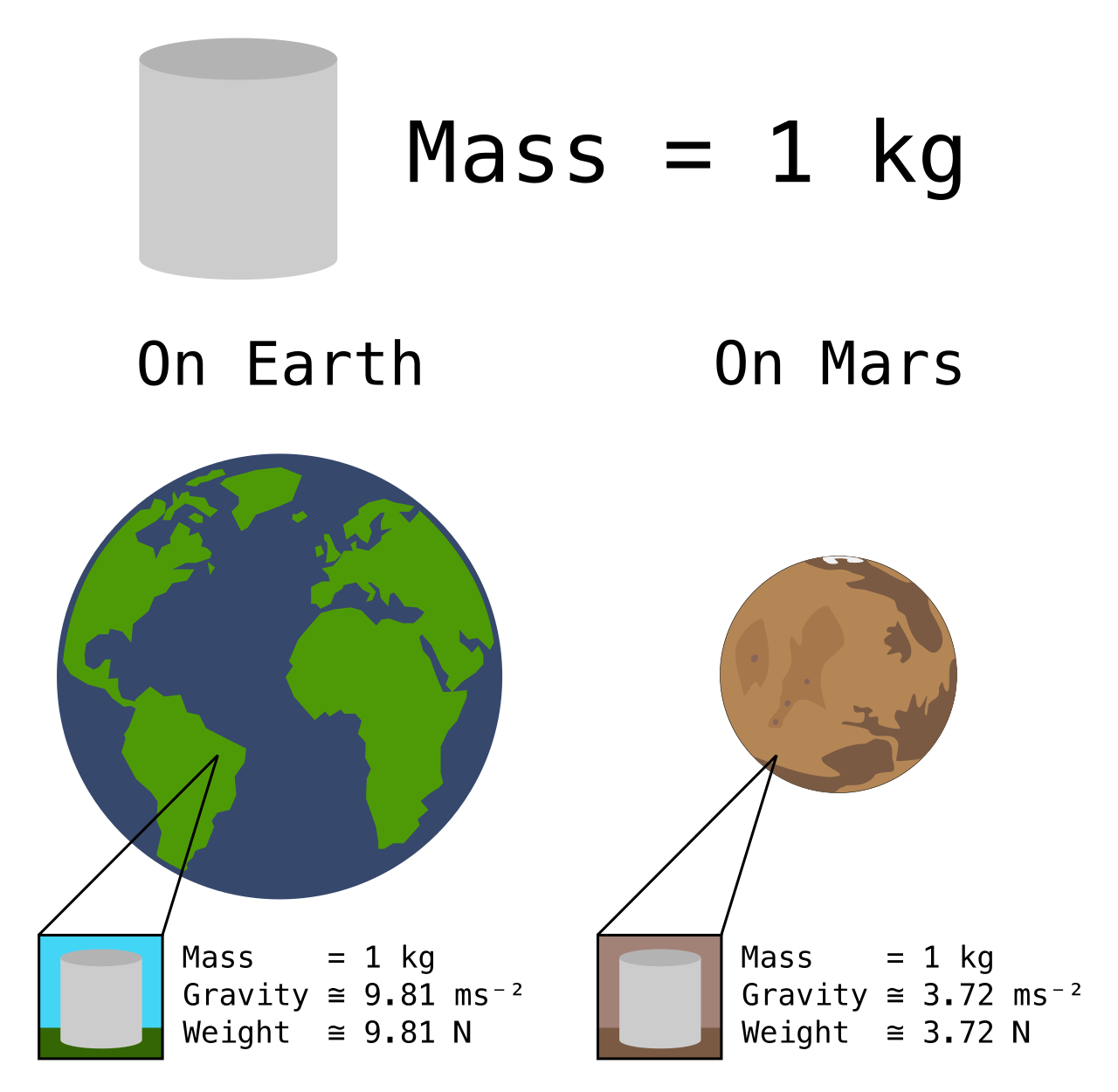
| Mass | Mass is a scalar quantity representing the amount of matter in an object. It does not change based on location. A 50 kg patient has a mass of 50 kg on Earth, on the Moon, and in deep space. |
| Weight | Weight is a vector quantity representing the force exerted on an object by gravity. It changes depending on the local gravitational field. |
Because weight is a force, the weight of an object is calculated by multiplying the object's mass by the acceleration due to gravity. (W=mg).
Sir Isaac Newton formalized the relationship between forces and motion into three elegant laws. These laws govern everything from the trajectory of a dropped scalpel to the forces required to perform effective CPR.
The First Law: The Law of Inertia
Newton's first law of motion states that an object at rest stays at rest unless acted upon by an unbalanced force. Conversely, Newton's first law of motion states that an object in motion stays in motion with the same speed and in the same direction unless acted upon by an unbalanced force.
This law introduces the concept of inertia. Inertia is the resistance of any physical object to any change in the object's state of motion. How do we measure this stubbornness? The mass of an object is a quantitative measure of the object's inertia. A heavy MRI machine (large mass) has tremendous inertia; it is incredibly difficult to start moving, and once moving, it is incredibly difficult to stop.
The Second Law: F=ma
If the First Law tells us what happens when forces are balanced, the Second Law tells us exactly what happens when they are unbalanced.
Newton's second law of motion states that the acceleration of an object is directly proportional to the net force acting upon the object. Push harder, and the object speeds up faster. Furthermore, Newton's second law of motion states that the acceleration of an object is inversely proportional to the mass of the object. If you push a massive bariatric bed and a lightweight pediatric crib with the exact same force, the massive bed will accelerate much less.
The Master Equation The mathematical equation for Newton's second law of motion is force equals mass times acceleration: F=ma
The Third Law: Action and Reaction
Newton's third law of motion states that for every action force there is an equal and opposite reaction force.
This law is often misunderstood. People mistakenly believe that if action and reaction are equal and opposite, they should cancel each other out, resulting in no movement. The critical insight here is that action and reaction forces act on two different objects simultaneously.
When you walk down the hall, your foot pushes backward on the floor (the action force). The floor pushes forward on your foot with an exactly equal and opposite force (the reaction force). The forces do not cancel out because the action acts on the floor, and the reaction acts on you, propelling you forward.
In a perfect textbook universe, an ice puck glides forever. In a clinical environment, surfaces resist movement. Friction is a force resisting the relative motion of solid surfaces sliding against each other. By its very nature, frictional force always acts in a direction opposite to the direction of motion or intended motion.
The magnitude of friction depends on the nature of the surfaces and how hard they are being pressed together.
Normal Force and the Coefficient of Friction
To calculate friction, we must look at the perpendicular forces. The normal force is the support force exerted upon an object that is in contact with another stable object. If a monitor rests on a desk, gravity pulls the monitor down, and the desk pushes up. That upward push is the normal force, and the normal force is always perpendicular to the contact surface.
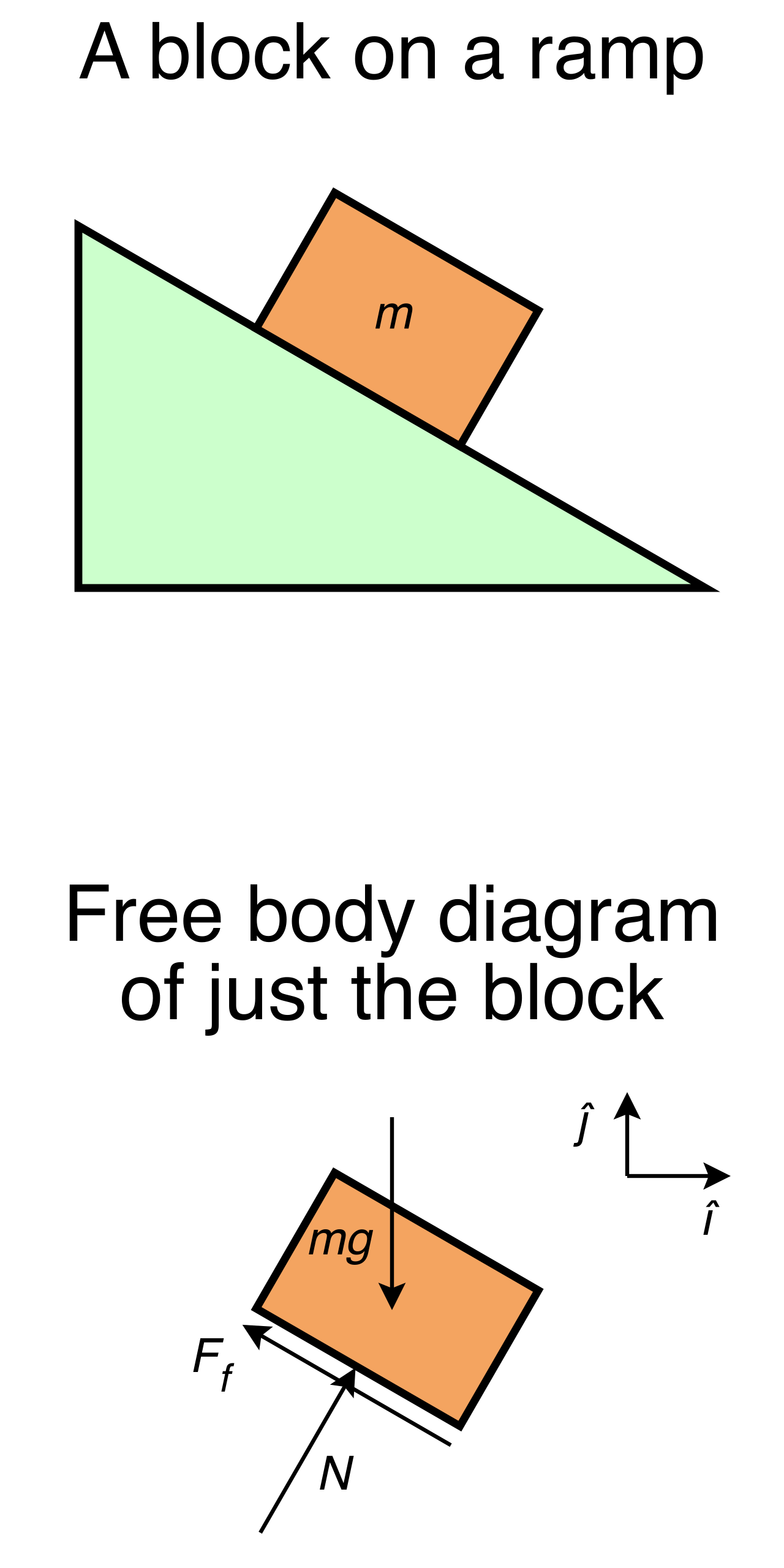
The "stickiness" or "slickness" of the two materials is quantified by μ (mu). The coefficient of friction is a dimensionless scalar value representing the ratio of the force of friction between two bodies to the normal force pressing the bodies together.
Static vs. Kinetic Friction
Friction behaves differently depending on whether an object is already moving.
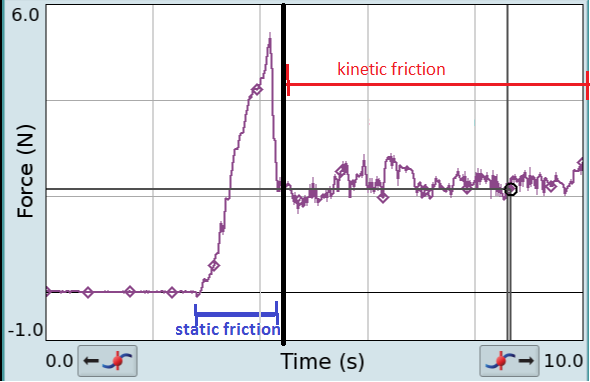
- Static friction operates between two surfaces that are not moving relative to each other. This is the force keeping a heavy box of IV fluids anchored to the floor when you lean on it slightly.
- Kinetic friction operates between two surfaces that are moving relative to each other. This is the force you fight continuously while sliding that box across the room.
Crucially, the maximum force of static friction is generally greater than the force of kinetic friction for the same two surfaces. This explains a common physical sensation: it takes a tremendous, straining push to "break" a heavy cart loose from a standstill (overcoming maximum static friction), but once it is sliding, it requires significantly less effort to keep it moving (maintaining velocity against kinetic friction).
What is gravity? At a cosmic scale, gravity is a fundamental interaction causing mutual attraction between all things with mass.
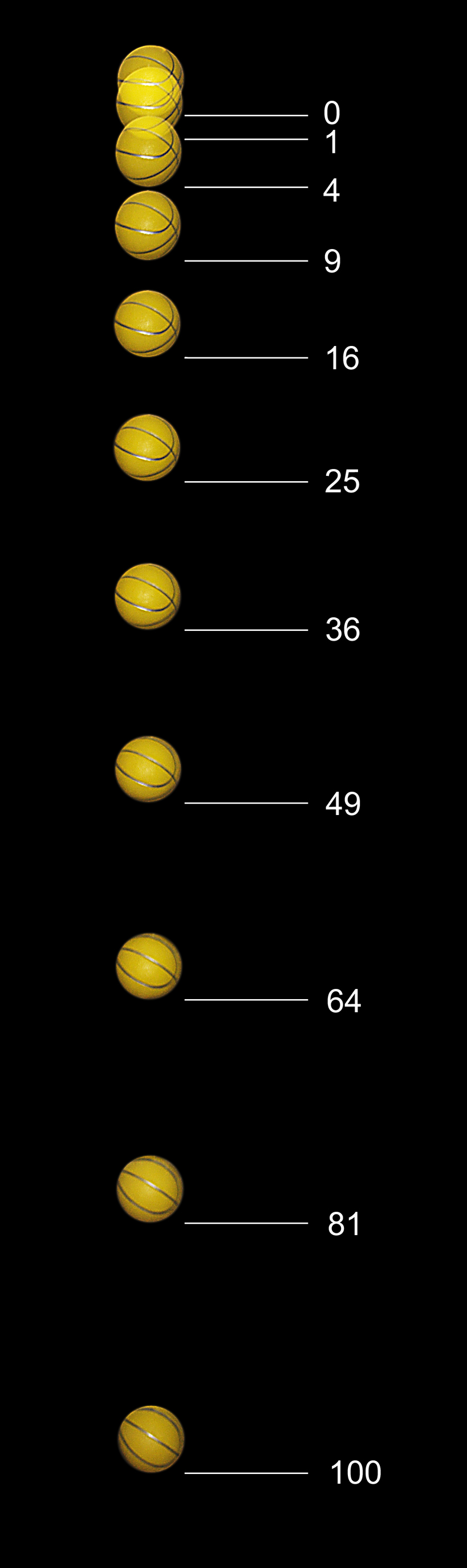
Newton's law of universal gravitation states that every particle attracts every other particle in the universe with a force proportional to the product of the particles' masses. This means you are gravitationally attracted to the device you are reading this on, though your masses are so tiny that the force is imperceptible. However, the Earth has tremendous mass.
The law also dictates distance: Newton's law of universal gravitation states that the gravitational force between two objects is inversely proportional to the square of the distance between the objects' centers. As you move further away, gravity drops off exponentially.
For the purpose of terrestrial healthcare and the HESI A2, we operate on the surface of our planet. Here, the standard acceleration due to gravity on the surface of the Earth is approximately 9.8 meters per second squared (9.8 m/s2). All falling objects, regardless of their mass, accelerate toward the Earth at this exact rate (ignoring air resistance).
In everyday life, motion is rarely restricted to simple straight lines. Objects fly through the air and spin in circles.
Projectile Motion
If you toss a roll of medical tape to a colleague across the room, it follows a distinct arching path. Projectile motion is a form of motion experienced by an object moving along a curved path under the action of gravity.
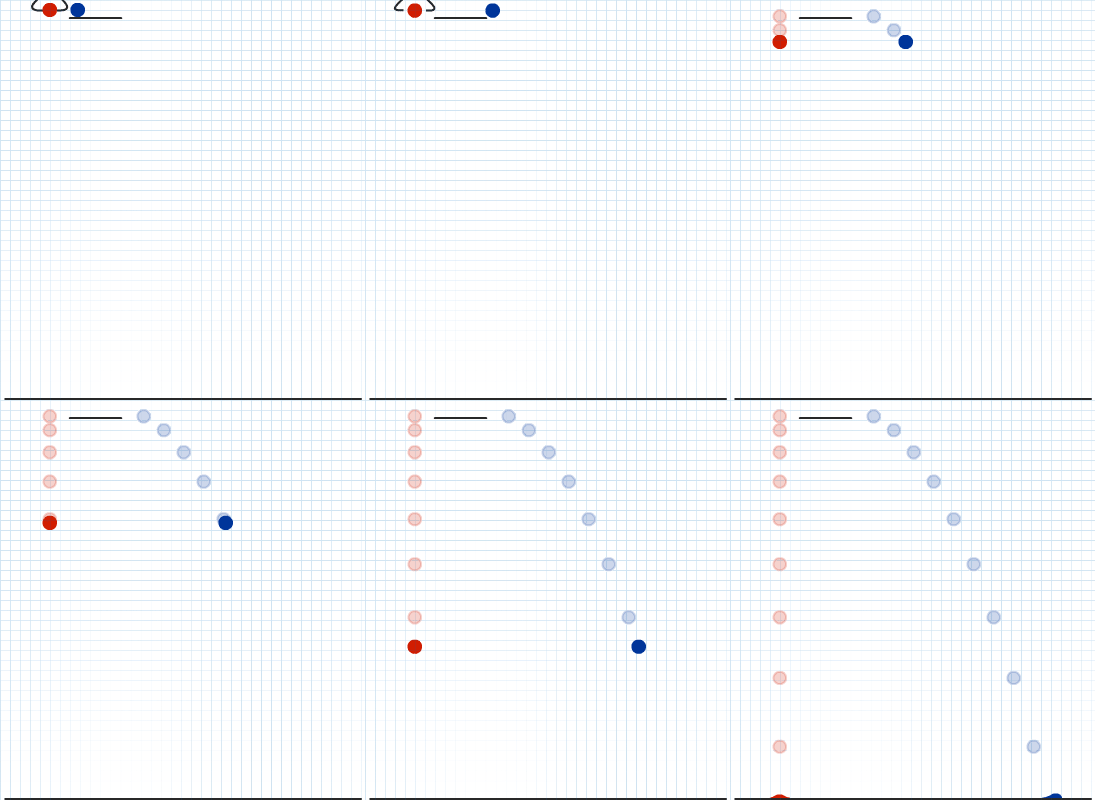
The most beautiful and unintuitive truth of projectile motion is its separation of dimensions: The horizontal and vertical motions of a projectile are completely independent of each other.
- Horizontal: Gravity pulls straight down, not sideways. Therefore, the horizontal velocity of a projectile in an ideal vacuum remains constant throughout the flight.
- Vertical: The tape acts exactly as if it were simply dropped. The vertical acceleration of a projectile in an ideal vacuum is constantly equal to the acceleration due to gravity.
Because it is moving forward at a constant rate while simultaneously accelerating downward, the trajectory of a projectile under ideal conditions forms a mathematical shape called a parabola. If you were to drop a pill bottle from a table, and simultaneously flick another pill bottle horizontally off the same table at high speed, both bottles would hit the floor at the exact same time. Their vertical drop is independent of their horizontal travel.
Uniform Circular Motion and Centripetal Force
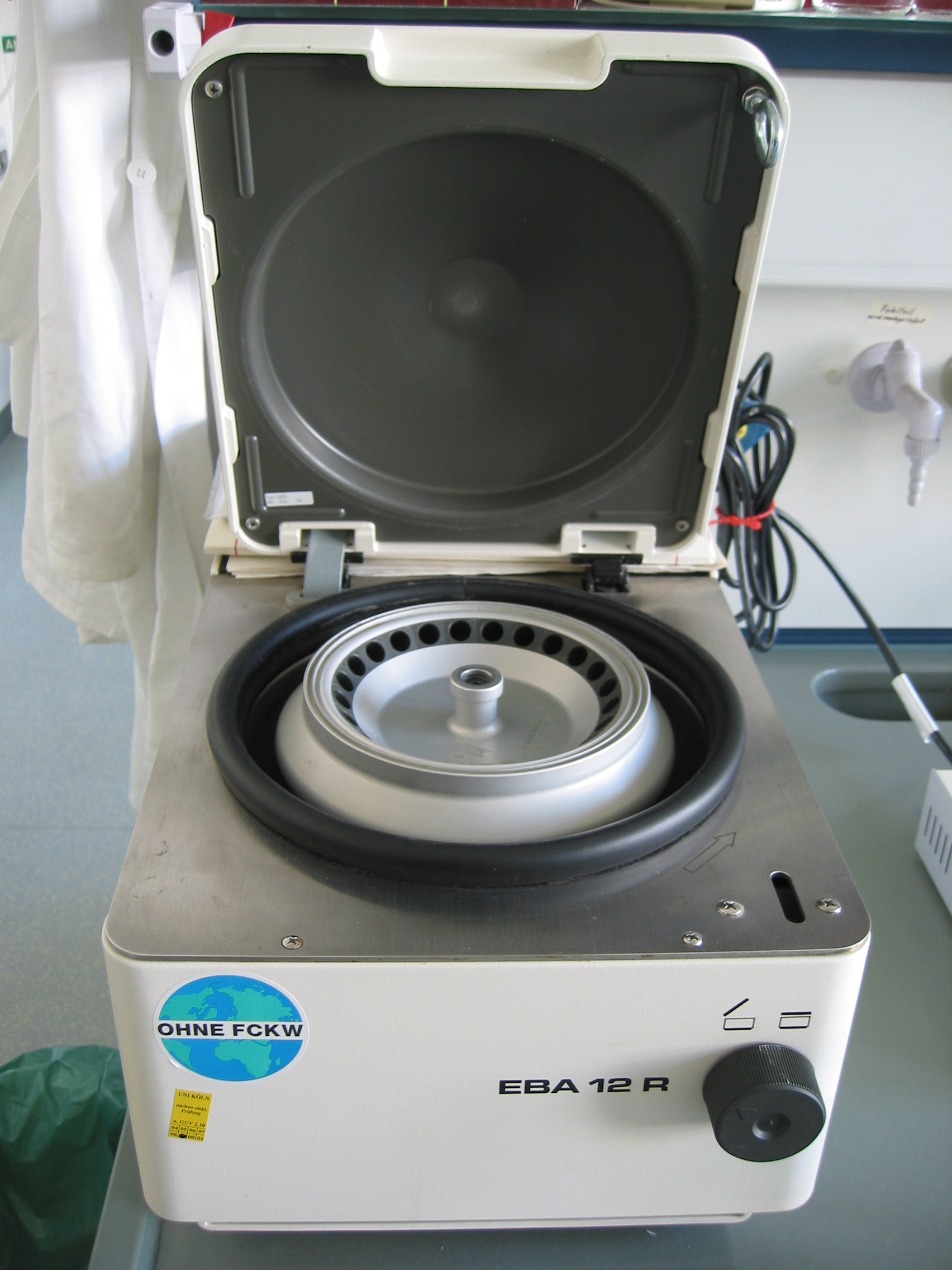
Consider a laboratory centrifuge spinning blood samples. Uniform circular motion describes the motion of a body traversing a circular path at a constant speed.
Wait—if the speed is constant, is it accelerating? Yes. Remember that velocity is a vector (speed and direction). Because the test tube is constantly turning, its direction is constantly changing. Therefore, an object in uniform circular motion constantly accelerates due to the continuous change in travel direction.
According to Newton's Second Law, if there is acceleration, there must be a net force causing it. Centripetal force is the net force causing an object to move in a circular path. This force pulls the object inward, preventing it from flying off in a straight line. Accordingly, the direction of centripetal force is always directed toward the center of the circular path.
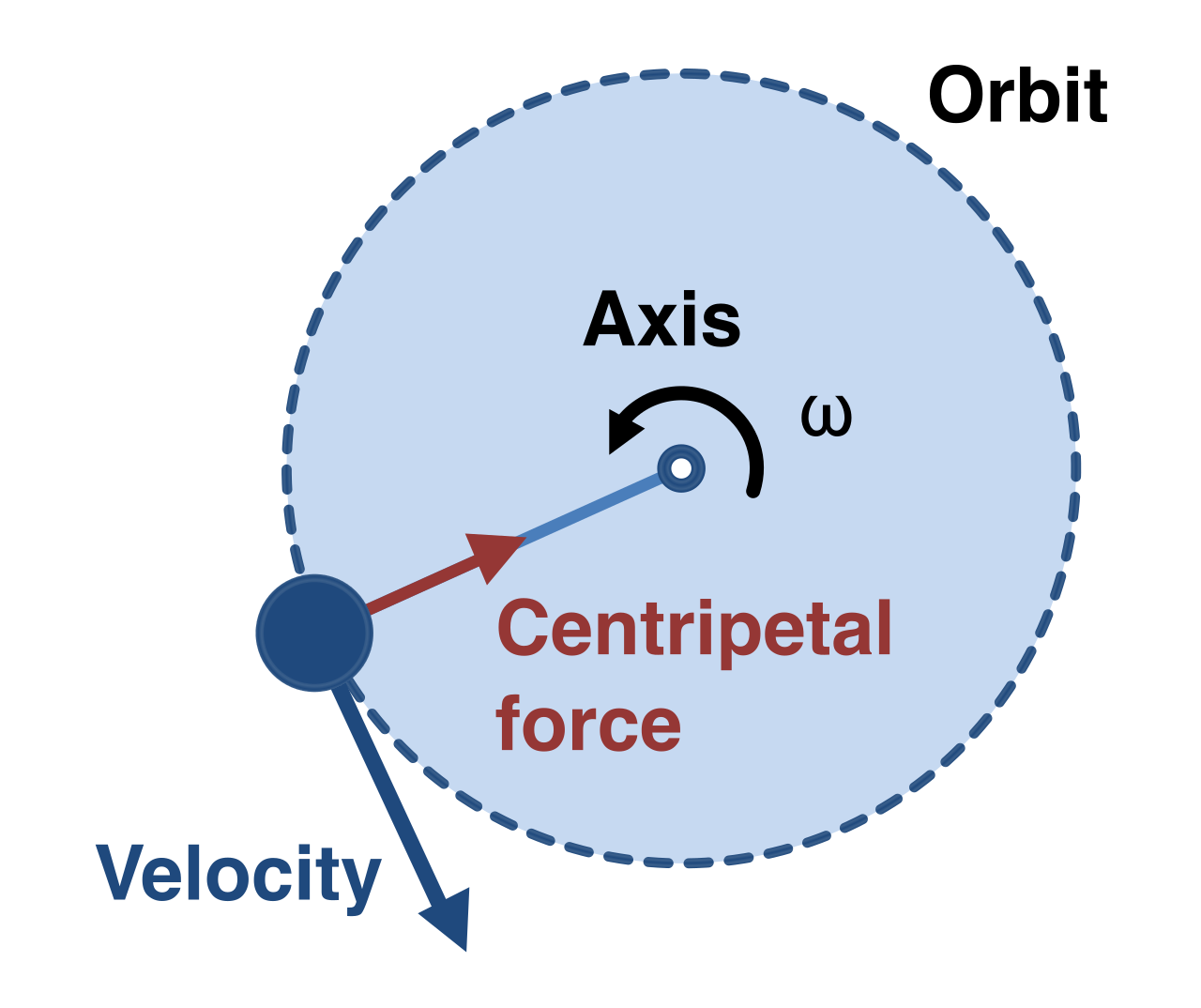
The acceleration caused by this force has a specific name: Centripetal acceleration is the rate of change of tangential velocity directed toward the center of the circle. In a centrifuge, the solid walls of the rotor provide the centripetal force that forces the vials into a circular path, ultimately allowing heavy cellular components to separate from plasma due to their distinct inertial properties.