Motion and Kinematics
Not sure you’re ready?
Take the ~3-minute readiness diagnostic and see where you stand.
A trauma team rushing a patient down a hospital corridor represents a complex choreography of physical variables: the precise location of the operating room, the pace of the gurney, the physical acceleration required to weave through swinging doors, and the time elapsed since the injury. Before we can treat the physiological systems inside the body, we must often master the physical realities of moving the body itself. This is the domain of kinematics—the mathematical description of motion. In nursing and allied health, mastering motion and kinematics translates to reading the flow of fluids, managing the safe transport of critical patients, and understanding the physical forces acting upon the human structure.
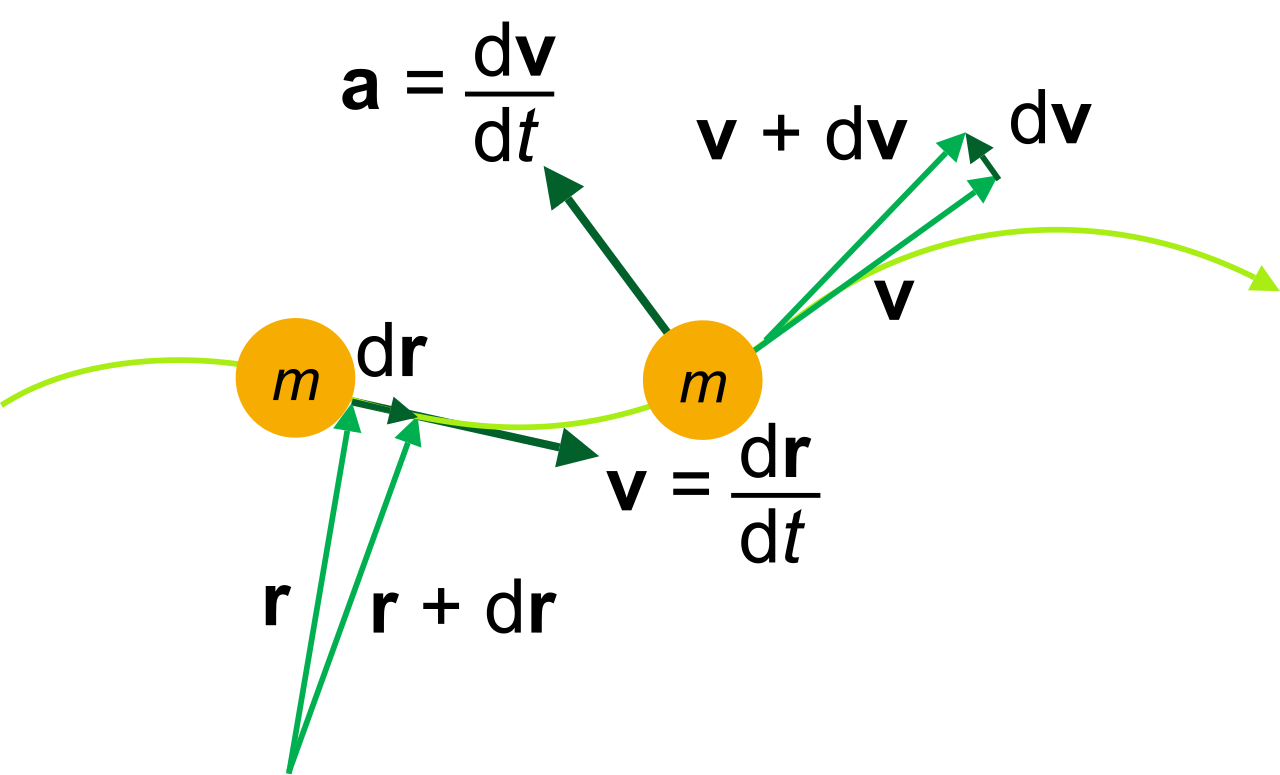
To measure motion, we first establish a reference frame, which is a coordinate system used to measure the positions and velocities of objects. Within this frame, position is defined as the location of an object relative to a chosen reference point. If the nurse's station is our reference point, every patient room, crash cart, and exit door has a definable, mathematical position.
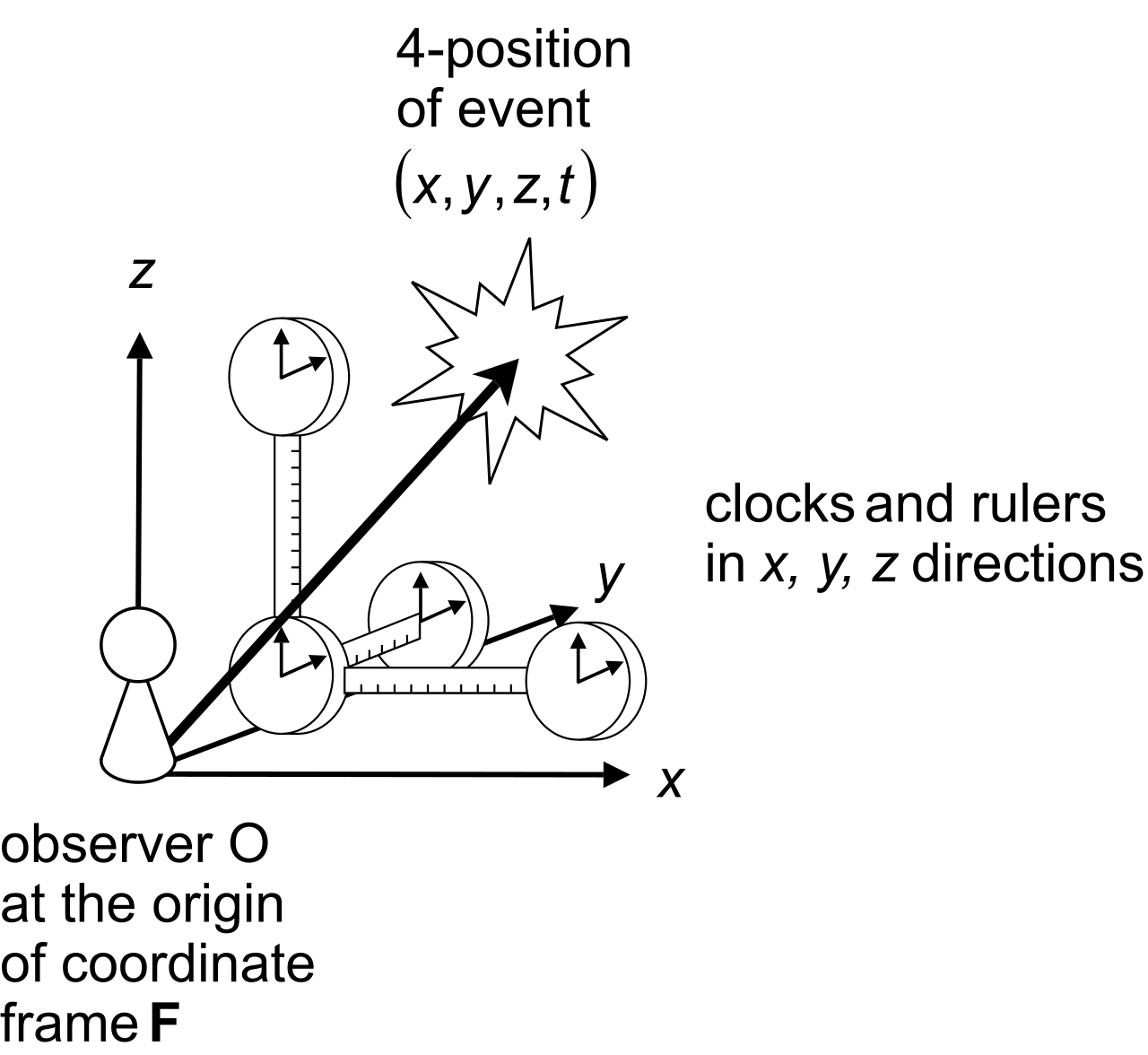
When objects move between these positions, we measure their movement using two fundamentally different types of numbers: scalars and vectors.
- Scalar quantities have only a magnitude (an amount). They tell you "how much" but never "which way."
- Vector quantities have both a magnitude and a direction. They tell you both "how much" and "where to."
Understanding this distinction is not a mere academic exercise; it is the difference between knowing a patient is moving and knowing if they are moving toward safety or away from it. Time is a scalar quantity—a 12-hour shift simply has a magnitude of twelve hours; it points in no physical direction.
Distance vs. Displacement
The difference between scalars and vectors becomes starkly clear when we look at how much ground an object covers.
Distance is the total path length traveled by an object. If you pace back and forth down a long hallway while monitoring a patient, every single step adds to your total distance. Because it cares only about the total amount of ground covered and not the direction you walked, distance is a scalar quantity.
Displacement is the straight-line difference between an initial position and a final position. Because displacement captures exactly where you ended up relative to where you started, displacement includes the specific direction of motion. Consequently, displacement is a vector quantity.
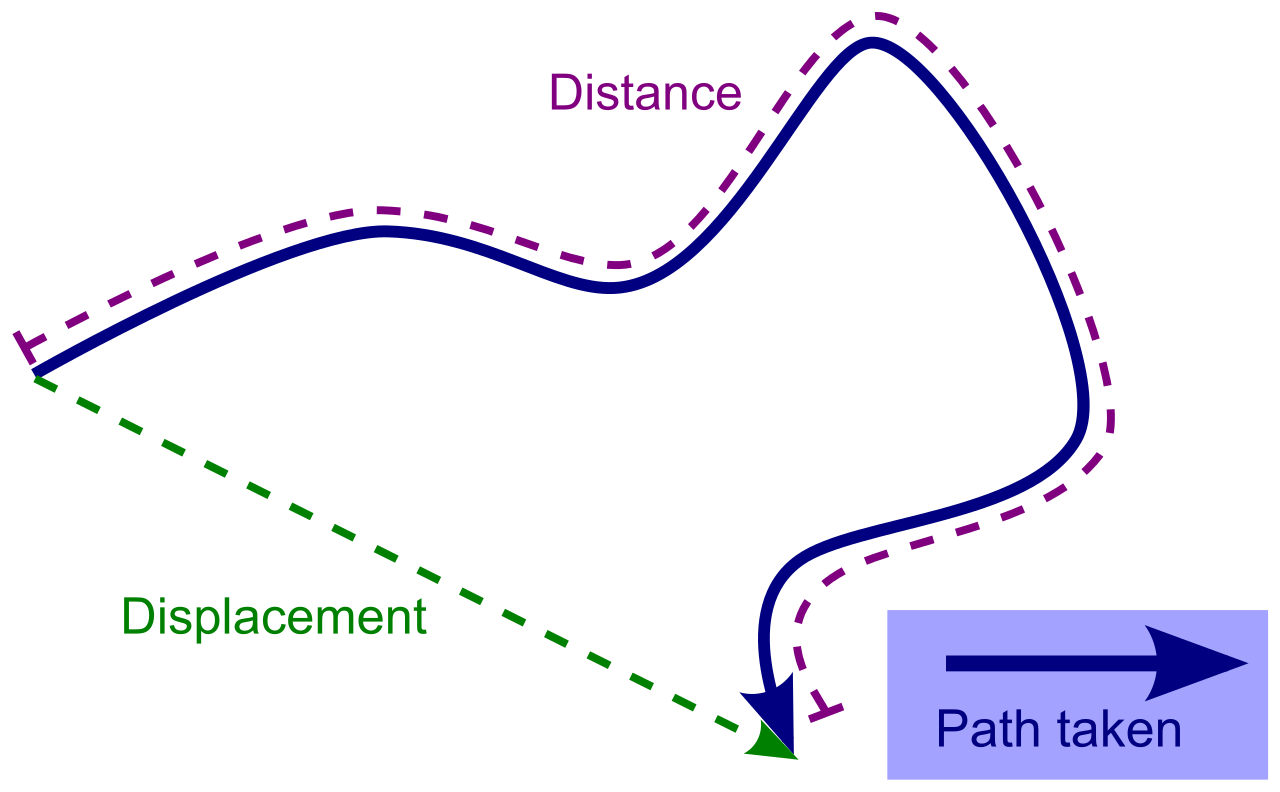
The 12-Hour Shift Paradox Imagine walking exactly 5 miles during a grueling hospital shift. At the end of the shift, you sit down in the exact same chair at the charting computer where you started your day. Your distance traveled is 5 miles. However, because your starting position and final position are identical, your displacement can equal zero even if the total distance traveled is greater than zero.
If distance and displacement are fundamentally different, then the rate at which they change must also be different.
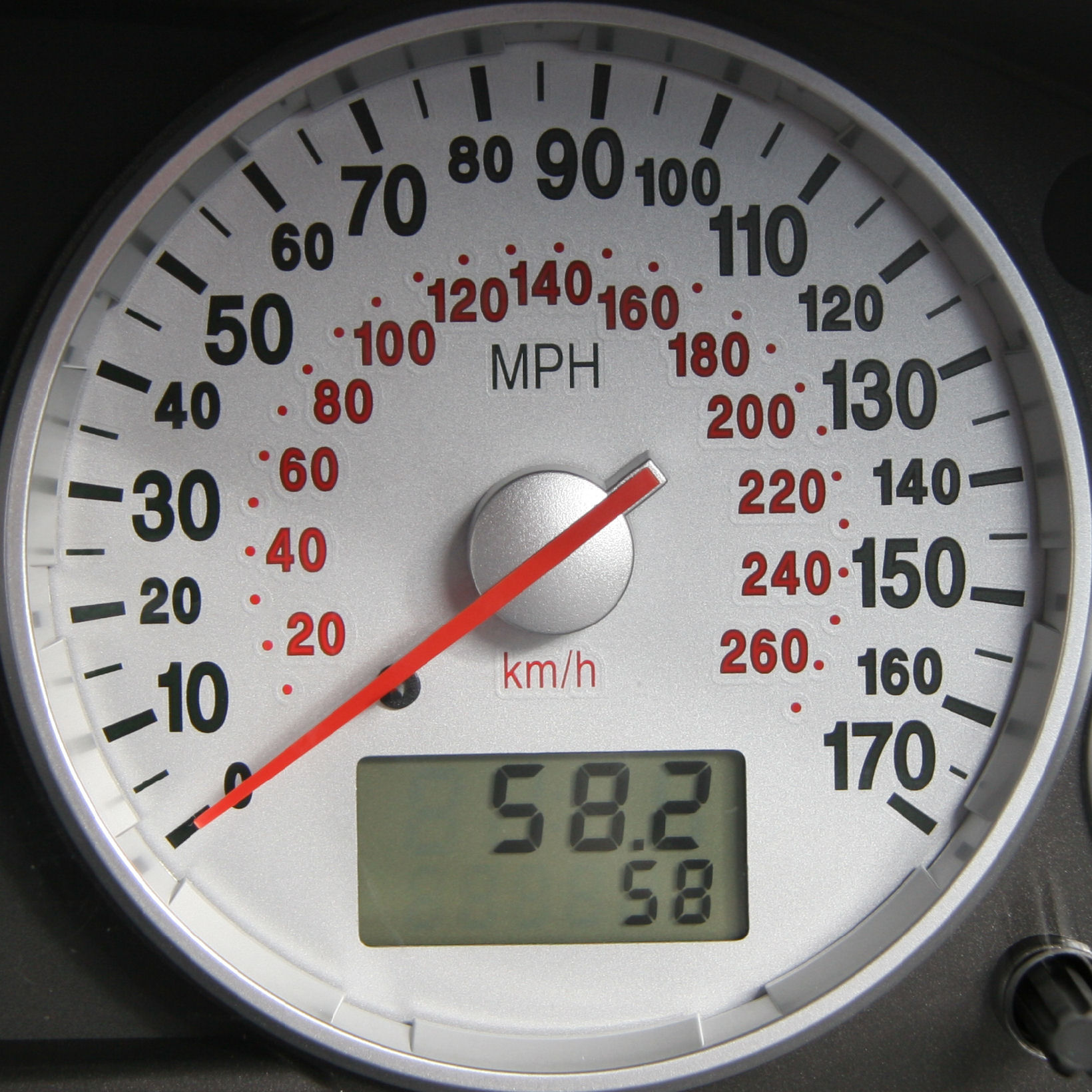
Speed is a scalar quantity. It measures how fast you are covering distance, completely ignoring direction. We calculate average speed by looking at the entire journey: average speed is calculated by dividing the total distance traveled by the total time elapsed. If you check the speedometer on an ambulance exactly as it turns a corner, you are reading its instantaneous speed, which is the speed of an object at one specific moment in time.
Velocity is a vector quantity. It measures how fast your displacement is changing, which means it fundamentally depends on direction. Average velocity is calculated by dividing the total displacement by the total time elapsed. Instantaneous velocity is the velocity of an object at one specific moment in time, capturing both how fast it is moving and the exact direction it is heading at that split second.
In the sciences, consistency in measurement is critical. The standard unit of velocity in the International System of Units is meters per second (abbreviated as m/s).
| Feature | Speed | Velocity |
|---|---|---|
| Type of Quantity | Scalar (Magnitude only) | Vector (Magnitude + Direction) |
| Based Upon | Total Distance | Total Displacement |
| Formula (Average) | Distance ÷ Time | Displacement ÷ Time |
When an ambulance driver hits the gas pedal, hits the brakes, or turns the steering wheel, the velocity of the vehicle changes. In physics, this phenomenon is captured by a single concept: acceleration is defined as the rate of change of velocity over time.
Because velocity is a vector, and acceleration measures the change in a vector, acceleration is a vector quantity.
In everyday conversation, we use "accelerate" exclusively to mean speeding up. But physics is far more precise. Because velocity includes both speed and direction, a change in either one constitutes acceleration. Therefore, three distinct events qualify as acceleration:
- An object accelerates when the object speeds up.
- An object accelerates when the object slows down.
- An object accelerates when the object changes its direction of motion. (A gurney rounding a corner at a perfectly steady speed of 2 m/s is mathematically accelerating because its directional heading is constantly changing).
When an object slows down—such as a stretcher coming to a halt—we often use a specific term. Deceleration is a form of acceleration where the magnitude of an object's velocity decreases over time.
To calculate how drastically velocity is changing over an interval, average acceleration is calculated by dividing the change in velocity by the change in time. Because we are dividing meters per second (velocity) by seconds (time), the standard unit of acceleration in the International System of Units is meters per second squared (m/s2).
When an object accelerates at a steady, unchanging rate—such as a motorized hospital bed smoothly powering up to its maximum speed—we can predict its exact location and speed at any future moment. However, there is a strict rule: the kinematic equations only apply to scenarios where acceleration remains constant.
These four equations are the definitive toolkit for one-dimensional motion. You choose which equation to use based on which variable you are missing.
1. The Velocity-Time Equation vf=vi+at The first kinematic equation states that final velocity equals initial velocity plus the product of acceleration and time. (Use this when you don't know the displacement).
2. The Position-Time Equation d=vit+21at2 The second kinematic equation states that displacement equals initial velocity multiplied by time plus one-half the product of acceleration and the square of time. (Use this when you don't know the final velocity).
3. The Velocity-Position Equation vf2=vi2+2ad The third kinematic equation states that the square of final velocity equals the square of initial velocity plus twice the product of acceleration and displacement. (Use this when you don't know the time).
4. The Average Velocity Equation d=2vi+vft The fourth kinematic equation states that displacement equals the average of the initial and final velocities multiplied by time. (Use this when you don't know the acceleration).
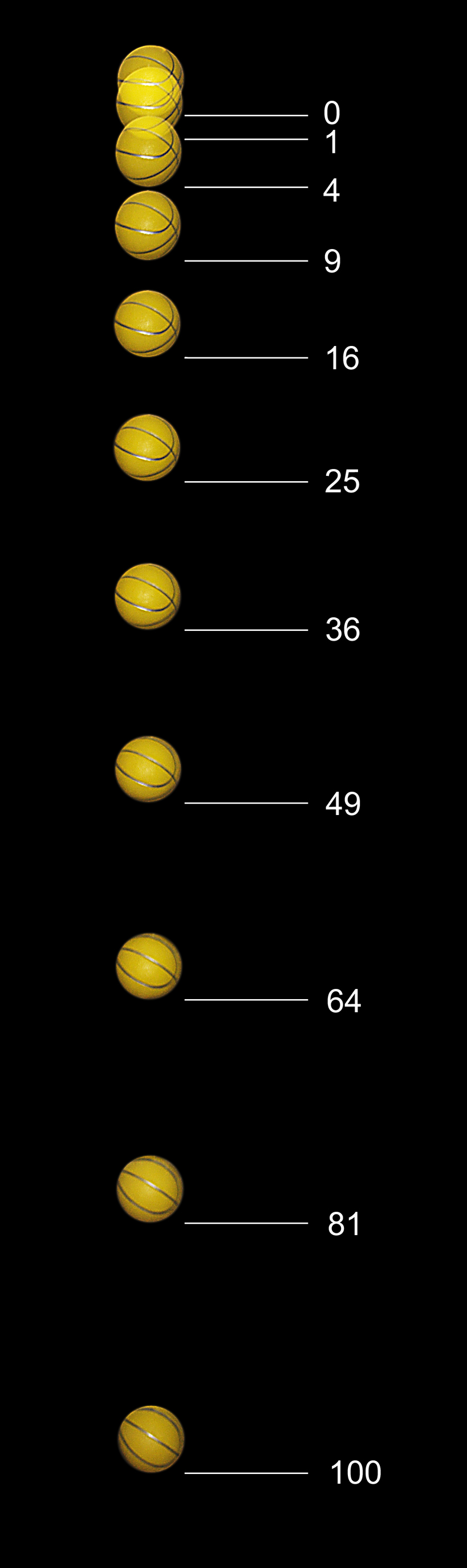
The most common example of constant acceleration in our daily lives is gravity. When an object is dropped, it enters a highly predictable state. Free fall is a type of motion where gravity is the only force acting upon an object.
In the real world, a dropped feather flutters to the ground because the air pushes back against it. But to understand the pure mathematics of gravity, ideal free fall calculations ignore the effects of air resistance.
Under ideal free fall, every object—whether it is a dropped syringe or a heavy piece of diagnostic machinery—accelerates downward at the exact same rate. The acceleration due to gravity on Earth is approximately 9.8 meters per second squared. Because gravity pulls us toward the ground, the acceleration due to gravity is always directed downward toward the center of the Earth.
What happens if an object is moving forward while it falls? Imagine tossing a roll of medical tape across the room to a colleague. You are observing projectile motion. Projectile motion is a form of two-dimensional motion occurring under the influence of gravity alone.
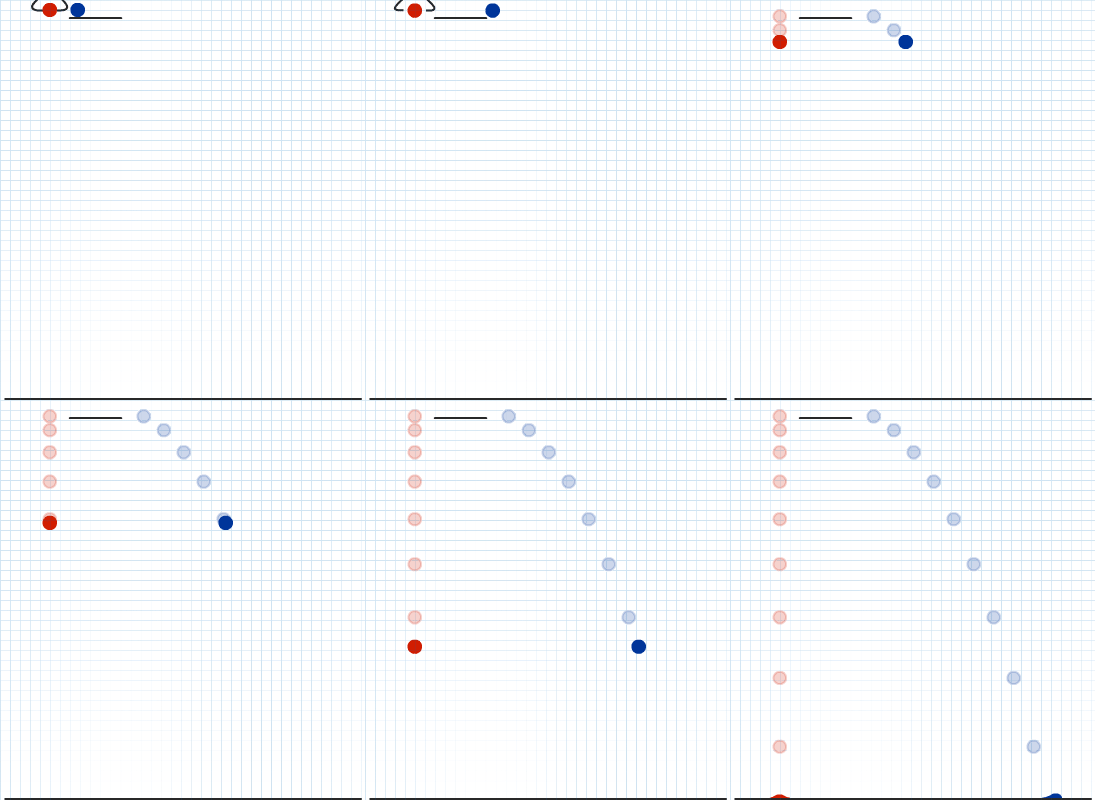
The profound and beautiful secret of kinematics is this: the horizontal motion and vertical motion of a projectile are completely independent of each other. The horizontal reality has no idea what the vertical reality is doing.
The Vertical Reality (Falling)
Vertically, the flying roll of tape acts exactly like an object dropped straight down. An ideal projectile experiences a constant downward vertical acceleration due to gravity (our familiar 9.8 m/s2). As the object flies upward in its arc, gravity slows it down until it stops rising. Therefore, the vertical velocity of a projectile at the highest point of its trajectory is exactly zero meters per second. After this split second of vertical stillness, gravity begins accelerating it back downward.
The Horizontal Reality (Coasting)
Horizontally, gravity does not pull sideways. If we ignore air resistance, there is absolutely no force pushing or pulling the object left or right once it leaves your hand. Therefore, an ideal projectile experiences zero horizontal acceleration. Because there is no horizontal acceleration to change its pace, the horizontal velocity of an ideal projectile remains constant throughout the entire flight.
The Bridge Between Dimensions
If the horizontal and vertical motions are totally independent, how do they create a single, graceful arc through the air? They are bound together by a single scalar quantity. Time is the only mathematical variable shared between the horizontal and vertical components of projectile motion. The roll of tape will continue to coast horizontally at a constant speed for exactly the amount of time it takes for gravity to pull it vertically down to the floor.
By mastering these rules—understanding exactly how to separate scalars from vectors, and vertical motion from horizontal motion—you gain the analytical foundation required for the biological and mechanical sciences you will encounter every single day in clinical practice.