Matter, Solutions, and pH
Not sure you’re ready?
Take the ~3-minute readiness diagnostic and see where you stand.
Consider the simple act of pushing an intravenous medication or drawing arterial blood for a gas analysis. Every clinical intervention relies on the fundamental behavior of atoms and molecules. A patient’s survival hinges on maintaining an exquisite chemical balance—ensuring fluids dissolve the right compounds, gases exchange under correct pressures, and blood acidity remains tightly controlled. To master the clinical sciences, we must first understand the foundational physical rules governing the substances we treat.
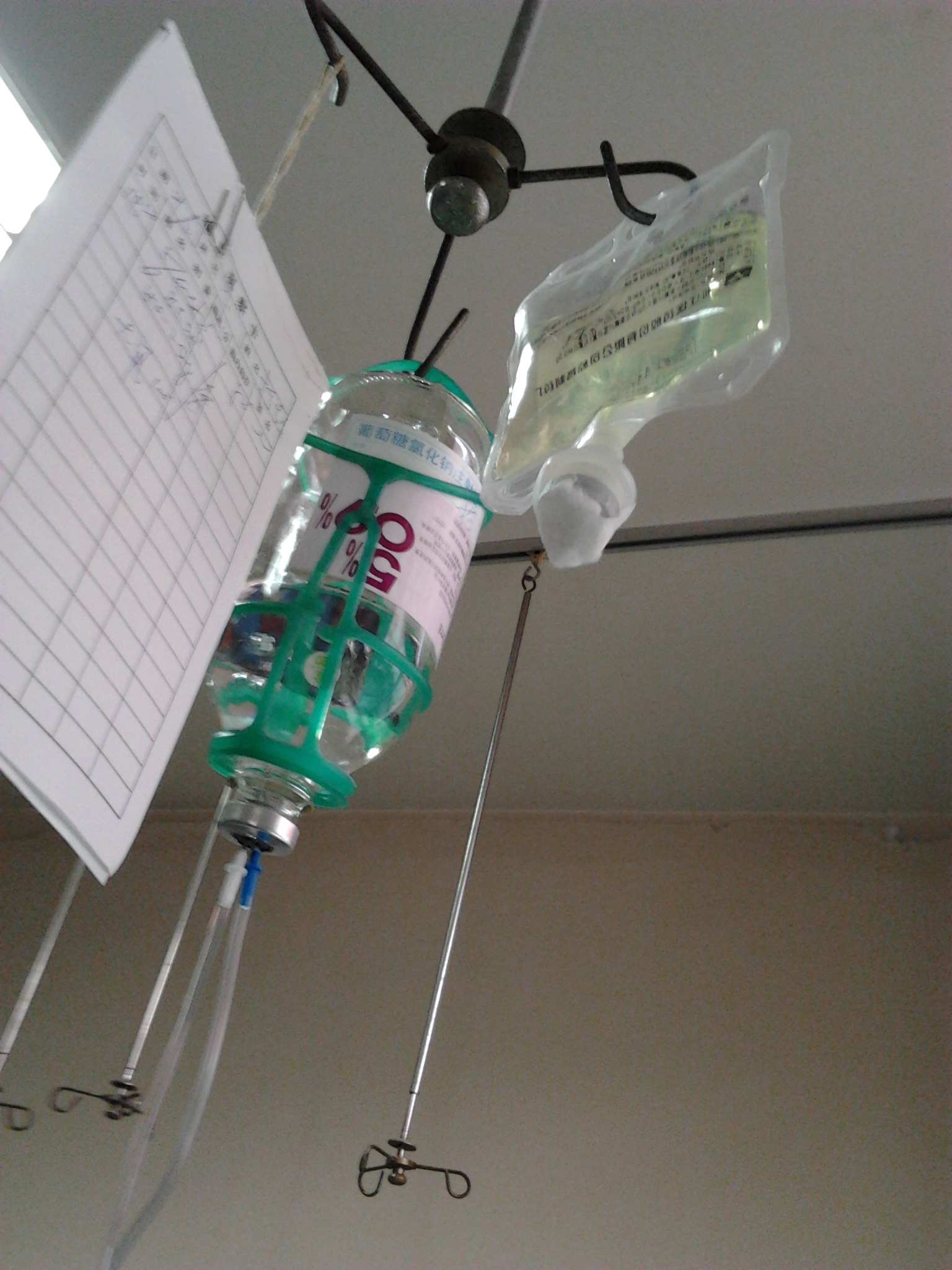
Here, we will dismantle the architecture of matter, explore the mechanics of solutions, and decode the strict mathematical laws governing acidity and buffers.
At the most fundamental level, matter is defined as anything that possesses mass and occupies space. Whether it is the oxygen in a ventilator circuit, the titanium in a joint replacement, or the plasma circulating through a patient's veins, it is all matter.
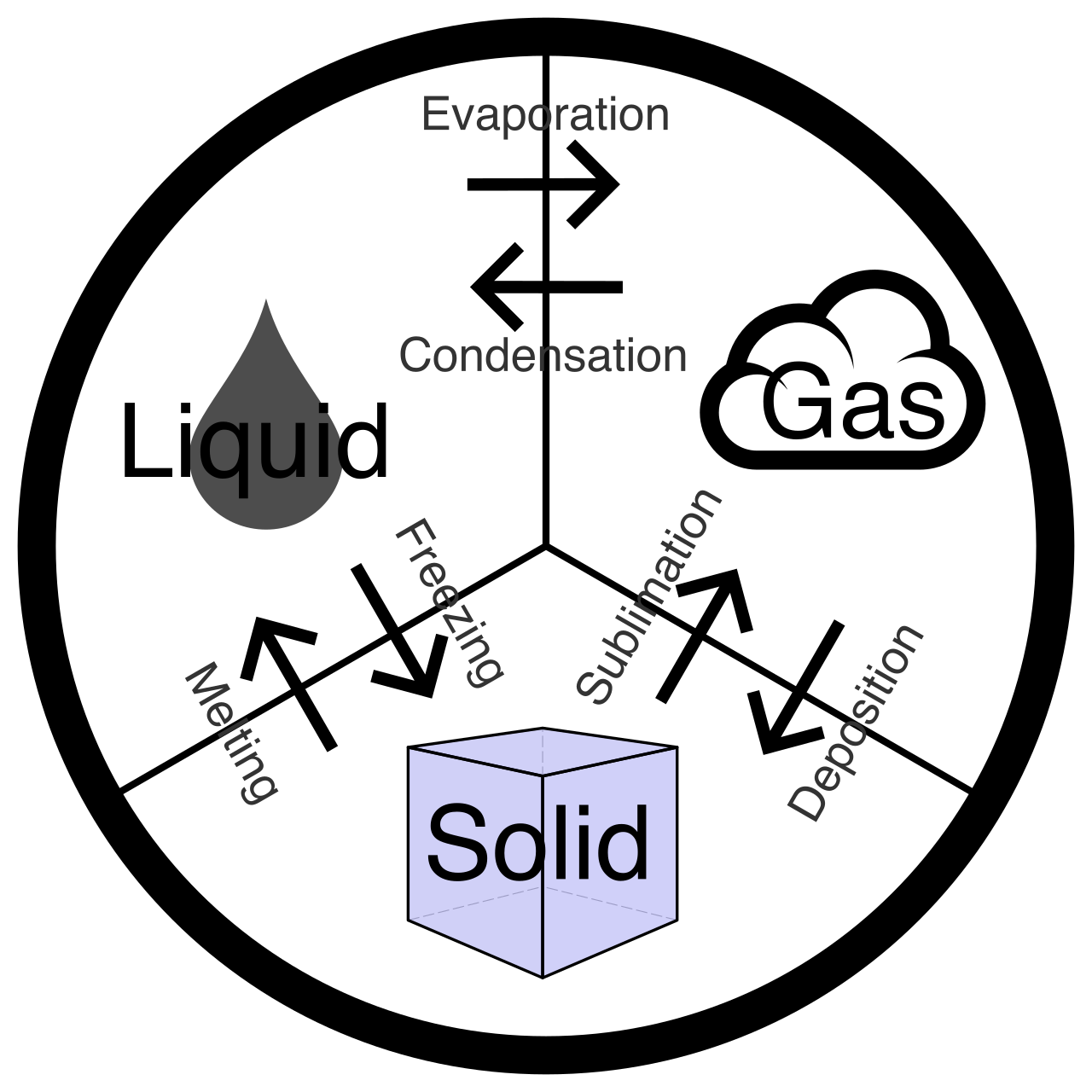
Matter exists in distinct states, each governed by how tightly its molecules are bound and how much energy they possess:
- Solids: The molecules in a solid are locked into a rigid structure. Consequently, a solid state of matter has a definite fixed shape and a definite fixed volume.
- Liquids: When solids gain enough energy, their molecular bonds loosen. A liquid state of matter has a definite fixed volume, meaning you cannot easily compress it, but it conforms to the shape of the container the liquid occupies. This is why exactly 1,000 milliliters of saline will fill an IV bag, a beaker, or a basin, taking the shape of whichever vessel holds it.
- Gases: Add even more energy, and molecules break free from one another completely. Therefore, a gas state of matter lacks a definite fixed shape and lacks a definite fixed volume. Gases will expand indefinitely to fill whatever space they are given.
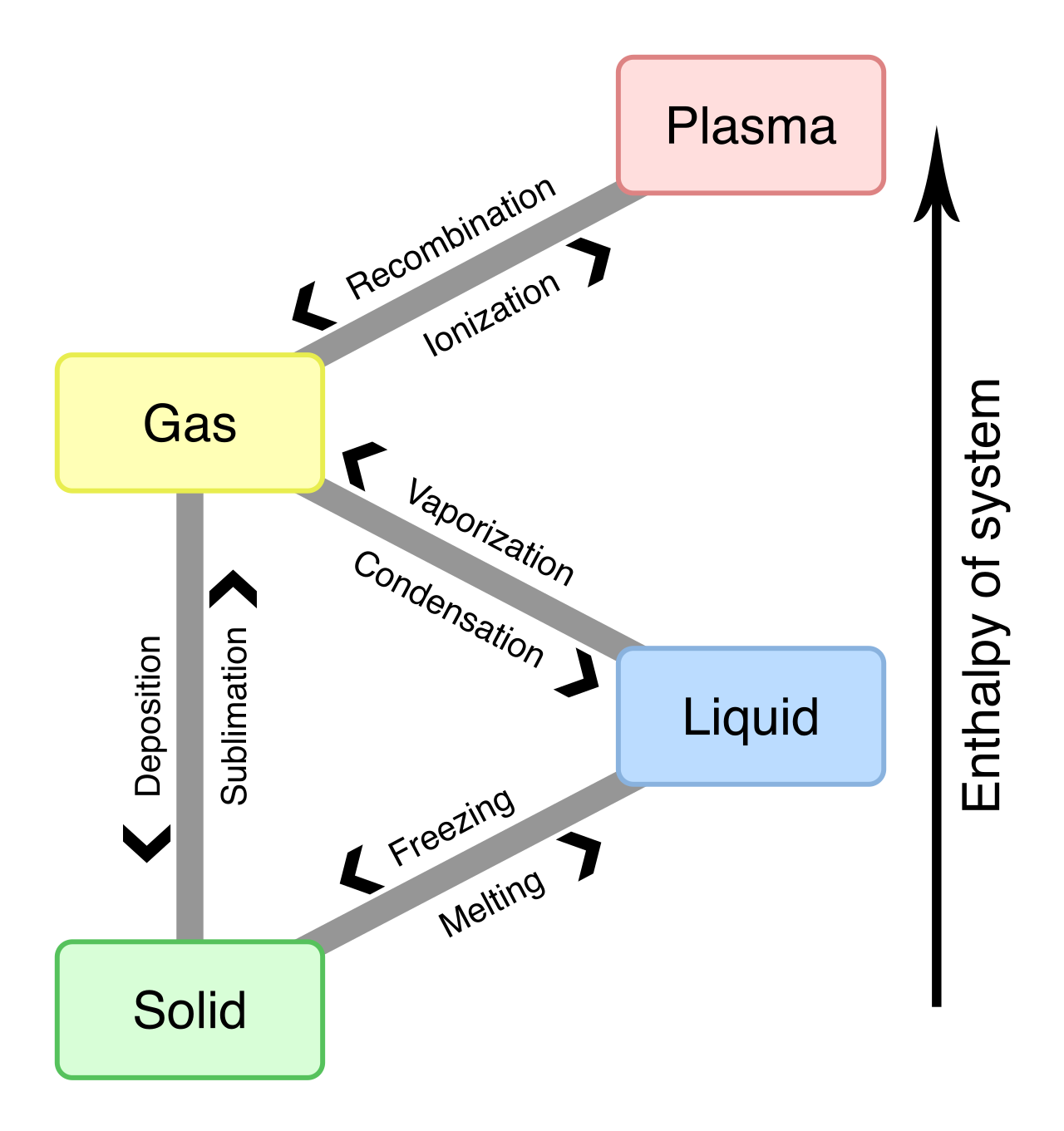
- Plasma: In extreme conditions, electrons are stripped entirely from their atomic nuclei. Plasma is a highly energetic state of matter consisting of ionized gas molecules. While rare in everyday life, you encounter plasma in the spark of a defibrillator, neon lights, and the sun.
Changes in Matter: Form vs. Identity
Matter is constantly undergoing transformation, but not all transformations are equal.
A physical change alters the form or appearance of matter without changing the chemical identity of the matter. If you take a block of ice and apply heat, the H₂O molecules move apart, but they remain H₂O. Therefore, melting solid ice into liquid water is an example of a physical change.
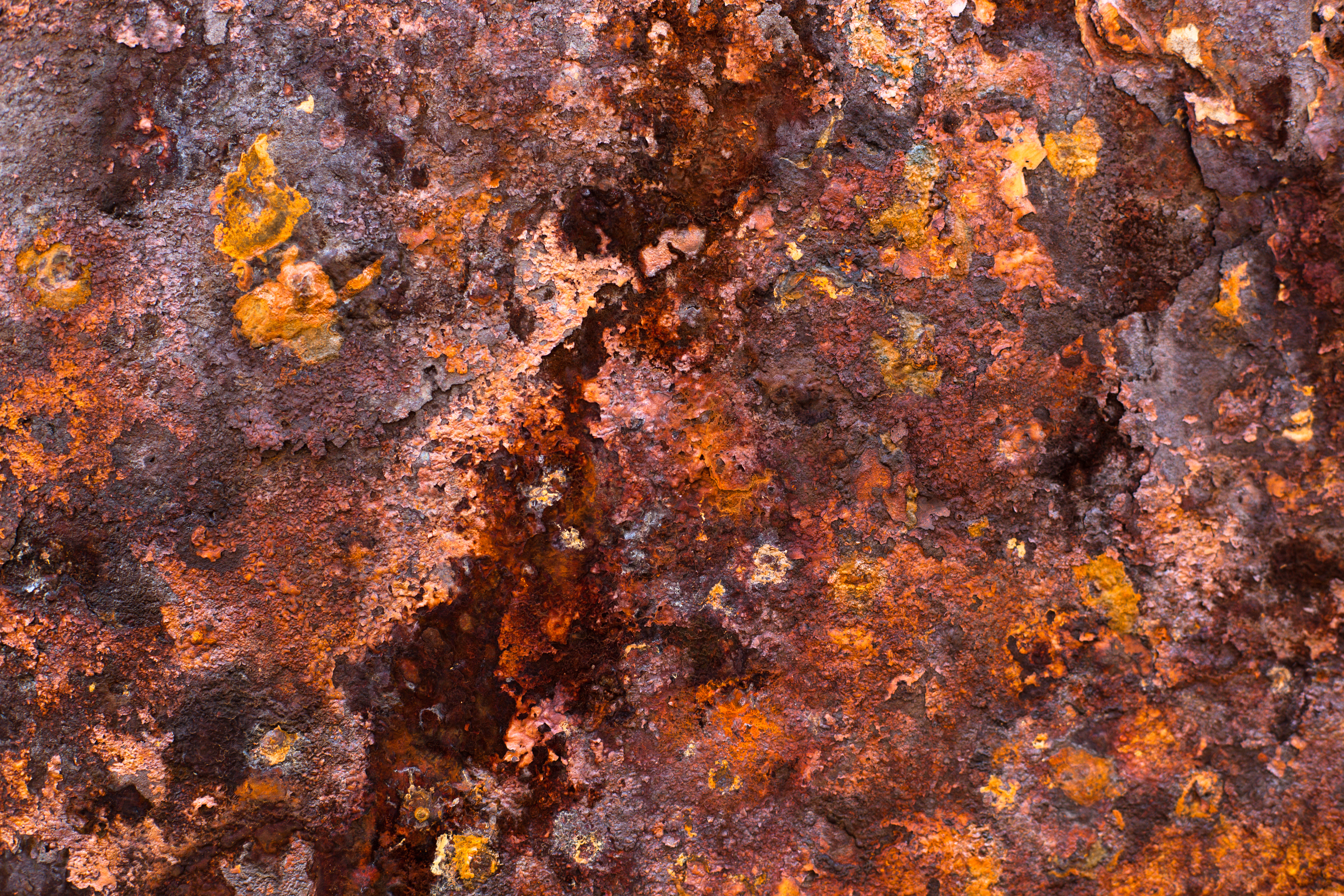
Conversely, a chemical change results in the formation of one or more entirely new chemical substances. Bonds are broken, and atoms are rearranged. For example, the rusting of iron is an example of a chemical change, because elemental iron reacts with oxygen to form an entirely new compound: iron oxide.
The Six Phase Changes
When matter undergoes a physical change between its states (solid, liquid, and gas), we use precise terminology to describe the transitions:
| Phase Change | Transition | Example |
|---|---|---|
| Melting | The phase change from a solid state to a liquid state. | Ice turning to liquid water. |
| Freezing | The phase change from a liquid state to a solid state. | Liquid water turning to ice. |
| Vaporization | The phase change from a liquid state to a gas state. | Boiling water turning to steam. |
| Condensation | The phase change from a gas state to a liquid state. | Water vapor forming droplets on a cold mirror. |
| Sublimation | The phase change directly from a solid state to a gas state without becoming a liquid. | Solid carbon dioxide (dry ice) turning directly into gas. |
| Deposition | The phase change directly from a gas state to a solid state without becoming a liquid. | Water vapor freezing instantly into frost on a windshield. |
To work with matter chemically or medicinally, we must classify its purity.
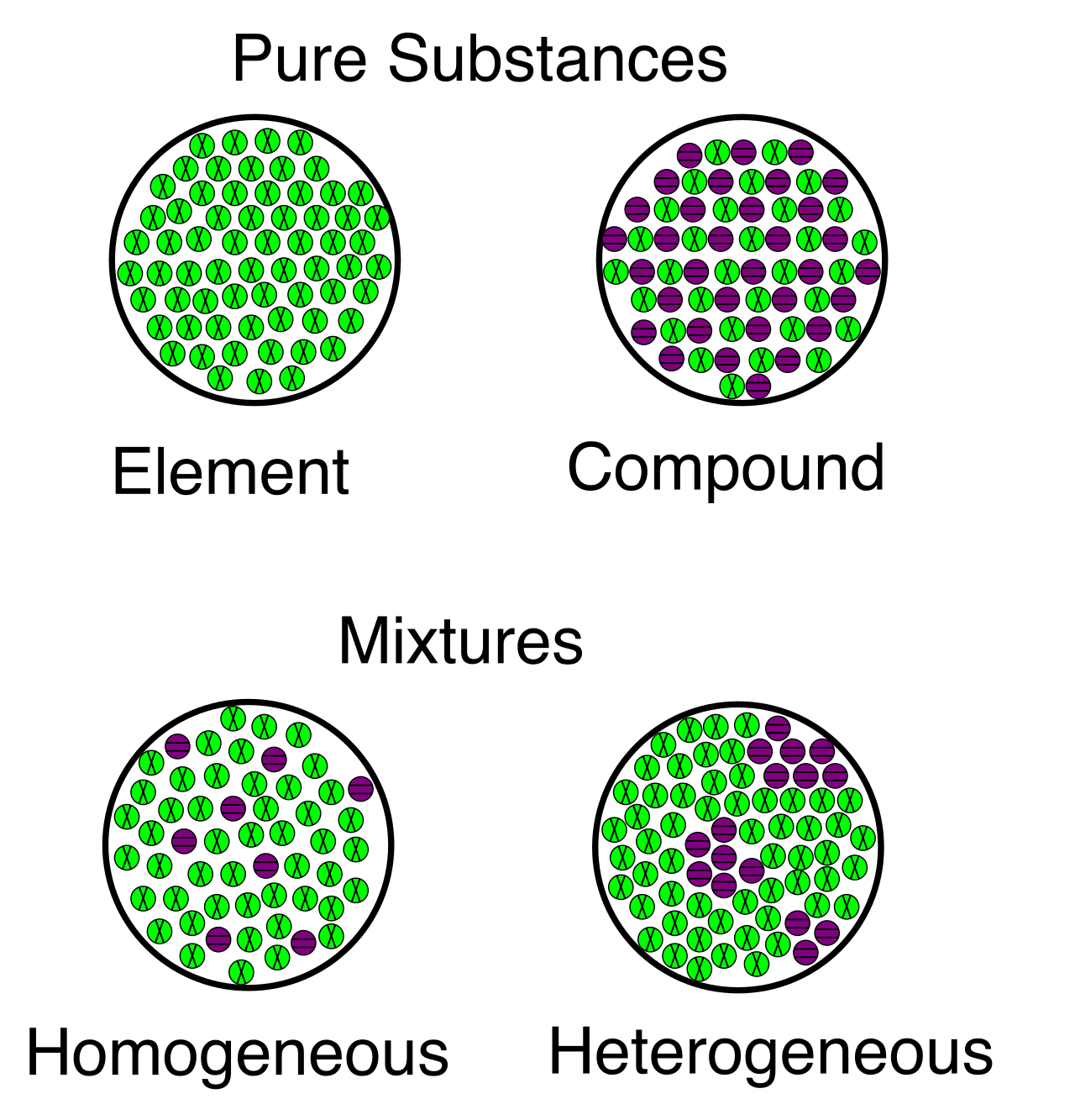
A pure substance consists of only one type of element or one type of compound. Pure sterile distilled water or a block of pure 24-karat gold are pure substances.
However, in biology and medicine, pure substances are rare. Most things are mixtures. A mixture is a physical combination of two or more substances that retain individual chemical properties. Mixtures do not involve chemical bonding between their components, which means they can usually be separated by physical means like filtration or centrifugation.
- A heterogeneous mixture has a non-uniform composition with visible distinguishable parts. Think of whole blood; if you leave it in a test tube, the heavy red blood cells settle to the bottom, leaving the lighter plasma on top. The parts are distinct.
- A homogeneous mixture has a uniform composition throughout the entire mixture. If you dissolve salt in water and stir it perfectly, every drop of that water has the exact same ratio of salt to water.
The Anatomy of a Solution
In the clinical world, the homogeneous mixtures we care most about are solutions. A solution is a type of homogeneous mixture composed of two or more substances.
Every solution has two fundamental components:
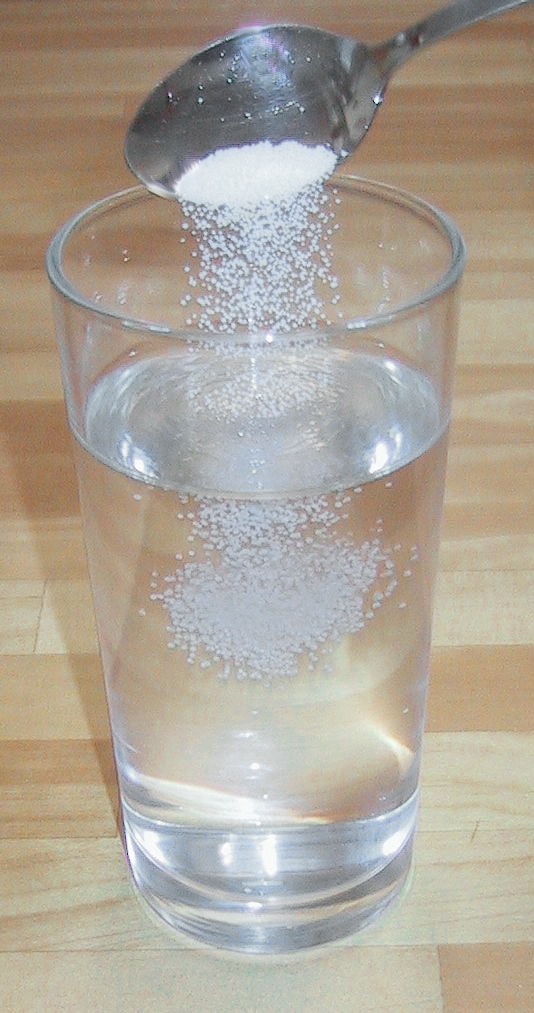
- A solute is the substance that gets dissolved in a solution. (e.g., the sodium chloride crystals).
- A solvent is the substance that dissolves the solute in a solution. (e.g., the water).
Because of its unique molecular geometry and polarity, water is commonly referred to as the universal solvent due to the ability of water to dissolve many different substances. When water is doing the dissolving, we give the resulting mixture a special name: an aqueous solution is any solution where water acts as the primary solvent. Blood plasma, urine, tears, and intravenous fluids are all aqueous solutions.
Quantifying Solutions: Concentration and Molarity
To administer the correct dose of a medication, a clinician must know how much active drug is floating in the liquid. Concentration refers to the amount of solute present in a given quantity of solvent or solution.
In chemistry, we require a highly standardized way to express this. We use molarity. Molarity is a measure of concentration defined as the number of moles of solute per liter of solution. If a physician orders a highly concentrated electrolyte drip, they are relying on the rigorous mathematics of molarity to ensure the exact number of molecules reaches the patient's bloodstream.
There is a physical limit to how much solute a solvent can hold. Solubility is the maximum amount of a solute that can dissolve in a specific amount of solvent at a given temperature.
We categorize solutions based on how close they are to this physical limit:
- An unsaturated solution contains less than the maximum amount of dissolved solute possible at a specific given temperature. If you add a pinch of salt to a gallon of water, it dissolves instantly. There is plenty of room for more.
- A saturated solution contains the maximum amount of dissolved solute possible at a specific given temperature. If you keep dumping salt into a glass of water, eventually, the salt will simply pile up at the bottom. The water can hold no more.
- A supersaturated solution contains more dissolved solute than is typically possible at a specific given temperature. This is an unstable state, usually achieved by heating a saturated solution, dissolving more solute, and cooling it very carefully.
What Drives Solubility?
Solubility is not a fixed number; it is highly dependent on environmental conditions, particularly temperature and pressure.
Increasing the temperature of a liquid solvent generally increases the solubility of solid solutes. This is why sugar dissolves vastly better in hot tea than in iced tea. The increased kinetic energy of the hot water molecules allows them to tear apart the solid lattice of the sugar more effectively.
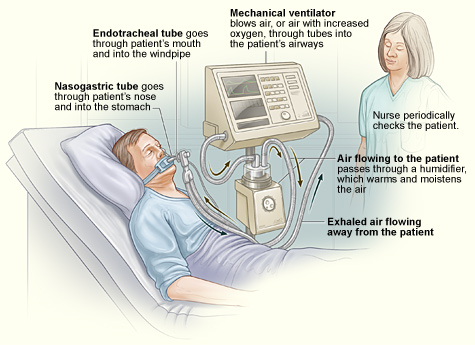
Conversely, gases behave differently under pressure. Increasing the pressure above a liquid solvent increases the solubility of gas solutes in the liquid solvent. This is the physical mechanism behind respiratory therapy. When we place a patient on positive pressure ventilation, we are artificially increasing the pressure of oxygen in the alveoli to force more of that gas to dissolve into the liquid blood.
Finally, the chemical nature of the molecules dictates what can dissolve in what. The principle 'like dissolves like' describes the tendency of solvents to dissolve solutes of similar molecular polarity.
- Polar solvents readily dissolve polar solutes. (Water dissolves salts and sugars).
- Nonpolar solvents readily dissolve nonpolar solutes. (Oils dissolve fats). This principle is why fat-soluble vitamins (A, D, E, K) require dietary fats to be absorbed by the body, whereas water-soluble vitamins (B, C) dissolve directly into the bloodstream.
Perhaps the most tightly regulated chemical parameter in the human body is the balance between acids and bases. To understand why, we must look at how acids and bases behave at the molecular level. Chemists rely on two primary definitions to categorize them.
The Arrhenius Framework (The Water-Centric View):
- An Arrhenius acid is a substance that produces hydrogen ions when dissolved in water. (H+)
- An Arrhenius base is a substance that produces hydroxide ions when dissolved in water. (OH−)
The Brønsted-Lowry Framework (The Action-Centric View): Because not all reactions happen in water, a broader definition focuses on the transfer of protons (since a hydrogen ion is essentially just a single bare proton).
- A Brønsted-Lowry acid is a substance that donates a proton to another substance during a chemical reaction.
- A Brønsted-Lowry base is a substance that accepts a proton from another substance during a chemical reaction.
Physical Properties and Neutralization
Historically, before molecular structures could be seen, chemists identified acids and bases by their sensory and reactive properties:
- Acids typically possess a sour taste. (Think of the citric acid in lemons or acetic acid in vinegar).
- Bases typically possess a bitter taste. (Think of baking soda or black coffee).
- Bases generally possess a slippery or soapy physical feel. (This is because bases react with the oils on your skin to literally form soap).
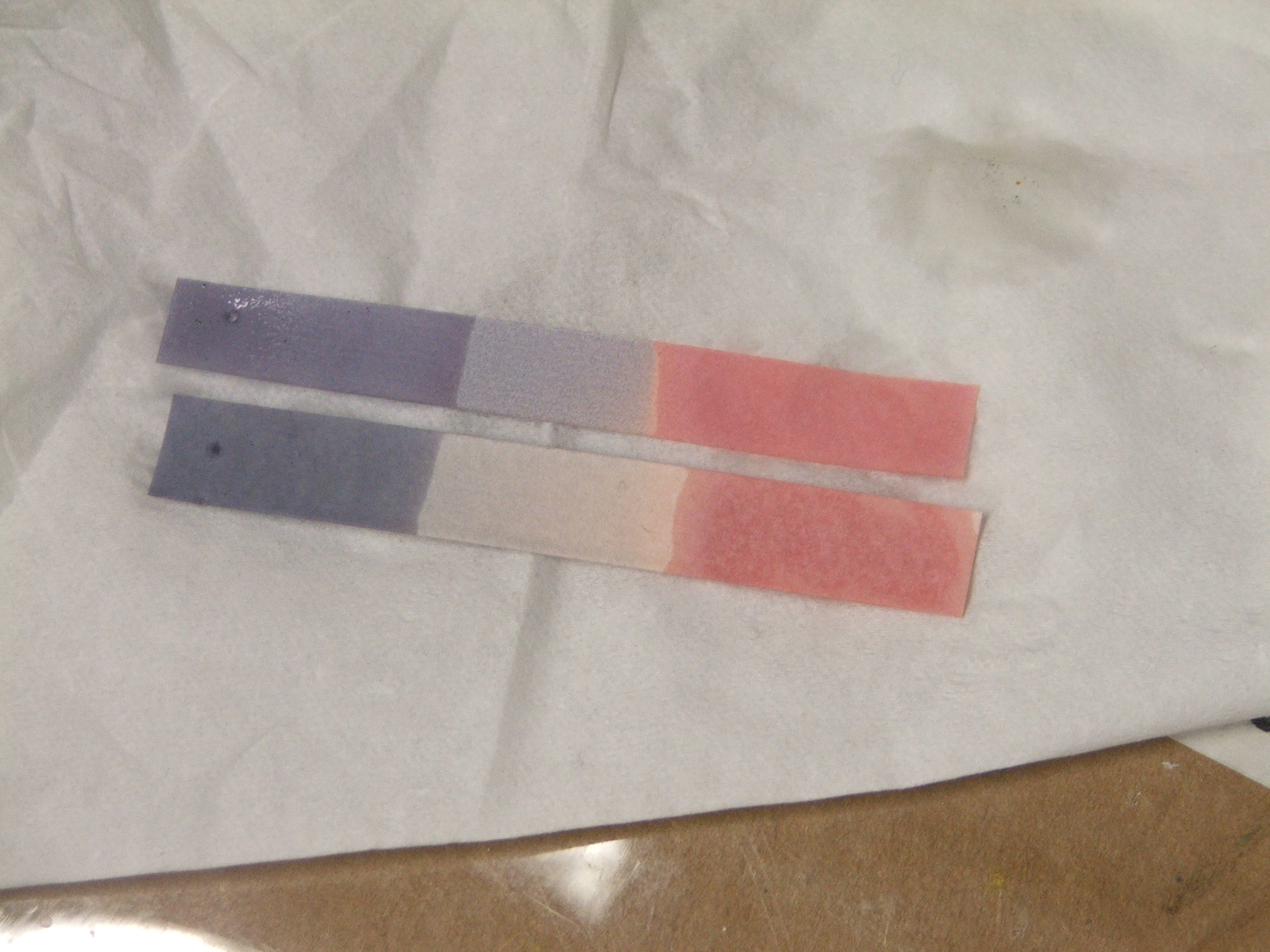
We also use indicator dyes to test for them. The most famous is litmus:
- Acids turn blue litmus paper red.
- Bases turn red litmus paper blue.
When you mix an acid and a base together, they destroy each other's distinct properties in a highly predictable way. A neutralization reaction occurs when an acid and a base react together to form water and a salt. The damaging hydrogen ions (H+) and hydroxide ions (OH−) combine to form harmless H2O.
Because hydrogen ions are highly reactive, they can rapidly alter the shapes of proteins and enzymes. To quantify this danger, we use the pH scale.
The pH scale measures the hydrogen ion concentration of an aqueous solution.
- The standard pH scale ranges from zero to fourteen.
- A pH value of exactly seven indicates a completely neutral solution. At this midpoint, the concentration of hydrogen ions perfectly equals the concentration of hydroxide ions.
- Crucially, pure water has a pH of exactly seven at a temperature of twenty-five degrees Celsius.
- A pH value strictly less than seven indicates an acidic solution.
- A pH value strictly greater than seven indicates a basic or alkaline solution.
Notice the inverse relationship here:
- Lower pH scale values correspond to higher hydrogen ion concentrations.
- Higher pH scale values correspond to lower hydrogen ion concentrations.
The Mathematics of pH
The most misunderstood feature of the pH scale is its underlying math. The pH scale operates on a base-ten logarithmic scale. It is not linear like a ruler; it is exponential, like the Richter scale for earthquakes.
Because of this logarithmic nature, a change of exactly one unit on the pH scale represents a tenfold change in hydrogen ion concentration.
Why this matters: If a liquid goes from a pH of 7.0 to a pH of 6.0, it does not become slightly more acidic; it becomes ten times more acidic. If it drops from 7.0 to 5.0, it becomes one hundred times (10 × 10) more acidic. This is why a drop in a patient’s blood pH from 7.40 to 7.30 is a massive, life-threatening crisis. The total burden of floating hydrogen ions in their bloodstream has spiked dramatically.
Chemical Strength and the Lifesaving Power of Buffers
Not all acids and bases pose the same threat to a solution's pH. Their strength depends on how willingly they break apart (dissociate) into their constituent ions when placed in water.
- Strong acids completely dissociate into constituent ions when placed in an aqueous solution. (e.g., Hydrochloric acid. If you put 100 molecules of HCl in water, you get 100 free H+ ions).
- Weak acids only partially dissociate into constituent ions when placed in an aqueous solution. (e.g., Acetic acid. If you put 100 molecules in water, maybe only 1 or 2 give up their H+ ions).
- Similarly, strong bases completely dissociate into constituent ions when placed in an aqueous solution.
- Weak bases only partially dissociate into constituent ions when placed in an aqueous solution.
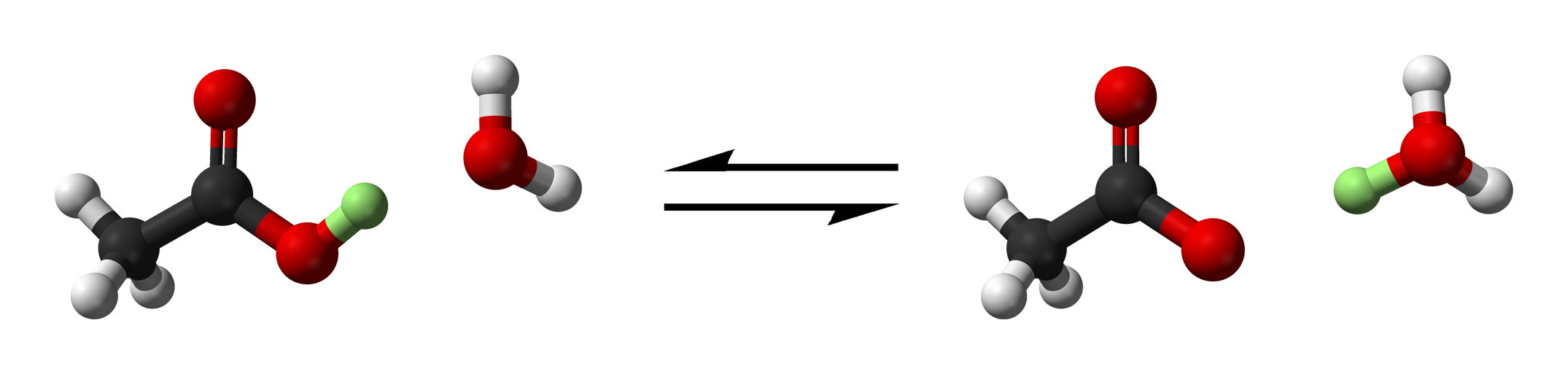
To protect itself from wild, fatal swings in pH, the human body utilizes chemical shock absorbers known as buffers.
Buffer solutions resist drastic changes in pH levels when small amounts of a strong acid or strong base are added.
How do they work? A buffer solution typically consists of a weak acid and the corresponding conjugate base of that specific weak acid. Because both components are present in the same solution, the buffer is armed and ready for either threat. If a sudden surge of acid enters the blood, the conjugate base neutralizes it. If a sudden surge of base enters, the weak acid neutralizes it. It is this elegant chemical defense mechanism that ensures our internal environment remains stable, allowing the cellular machinery of life to keep running.