Modifiers, Word Order, and Misused Words
Not sure you’re ready?
Take the ~3-minute readiness diagnostic and see where you stand.
Imagine reading a patient’s chart that notes: Rushing down the hall, the medication cart struck the nurse. Taken literally, this sentence suggests a sentient piece of metal and plastic is sprinting through the hospital ward to assault the staff. In clinical practice, grammar and syntax are not stylistic luxuries; they are vital safety protocols. A misplaced word or a confused term can alter a diagnosis, change a medication order, or completely obscure the sequence of medical events.

To master the HESI A2 exam—and more importantly, to communicate with the absolute precision required in healthcare—you must understand the mechanics of language. We are going to deconstruct standard word order, map the rules of descriptive modifiers, and untangle the English language's most stubbornly confused words.
Before we can decorate a sentence with descriptions, we must build its foundation. Standard English sentence structure follows a Subject-Verb-Object pattern. The subject performs the action, the verb is the action, and the object receives the action.
Consider the sequence: The nurse (Subject) administered (Verb) the medication (Object). If you scramble this architecture, the fundamental reality of the event changes. If The medication administered the nurse, the meaning collapses.
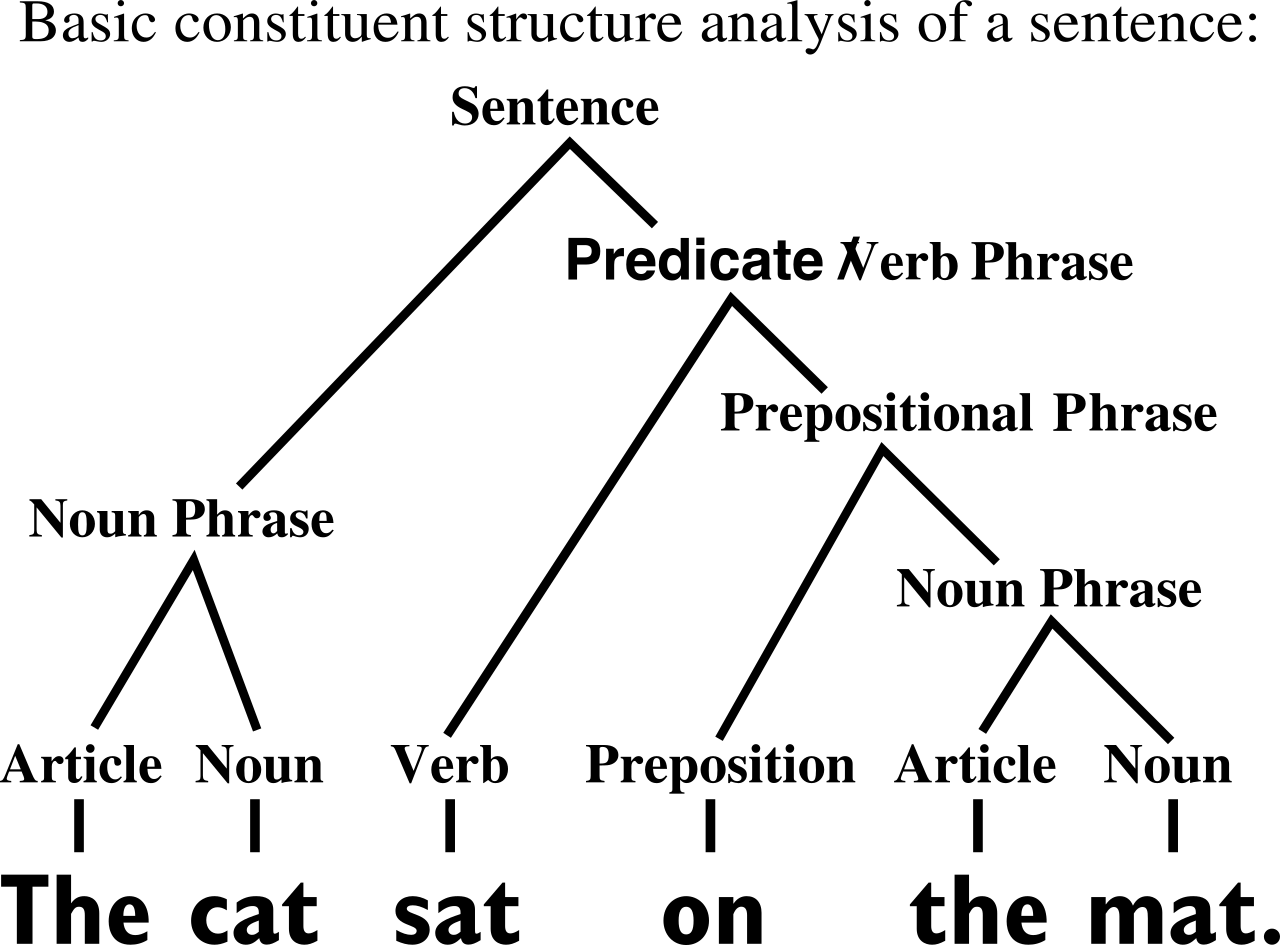
To add detail to this structure, we use adjectives and adverbs.
- Adjectives typically precede the noun the adjectives modify in English word order. We say the sterile scalpel, not the scalpel sterile.
- Adverbs must be placed adjacent to the specific verb, adjective, or adverb the adverbs modify. If a patient breathes heavily, the adverb "heavily" sits right next to the verb it acts upon.
The Interrogative Shift: There is one major exception to the Subject-Verb-Object rule. Subject-verb inversion occurs in English interrogative sentences. When asking a question, we flip the architecture. Instead of The patient (Subject) is (Verb) resting, we ask, Is (Verb) the patient (Subject) resting?
If the Subject-Verb-Object structure is the skeleton of a sentence, modifiers are the connective tissue. By definition, a modifier is a word, phrase, or clause that describes another word in a sentence. Put another way, a modifier is a word, phrase, or clause that clarifies another word in a sentence.
Because modifiers act as directional arrows pointing to specific nouns or verbs, their physical placement in a sentence is critical. When they drift away from their targets, sentences fail.
Misplaced Modifiers
A misplaced modifier is positioned too far from the specific word the modifier is intended to describe. Because it has wandered off, it accidentally attaches itself to the nearest available word. Ultimately, a misplaced modifier creates grammatical ambiguity regarding which word in the sentence is being described.
- Ambiguous: The physician examined the patient with a broken arm. (Wait, does the physician have a broken arm, or does the patient?)
- Correcting a misplaced modifier requires moving the modifying phrase as close as possible to the intended target word.
- Corrected: The physician examined the patient who had a broken arm.
The "Only" Rule: Precision is highly vulnerable to the word only. The limiting modifier 'only' must immediately precede the specific word or phrase being modified.
Dangling Modifiers
A dangling modifier is an even more severe structural failure. A dangling modifier is a descriptive phrase that applies to a subject that is entirely missing from the sentence.
- Dangling: While reviewing the lab results, the alarms began to sound. (Alarms do not have eyes; they cannot review lab results. The person doing the reviewing is entirely missing).
- Correcting a dangling modifier requires rewriting the sentence to explicitly include the missing subject.
- Corrected: While the doctor was reviewing the lab results, the alarms began to sound.
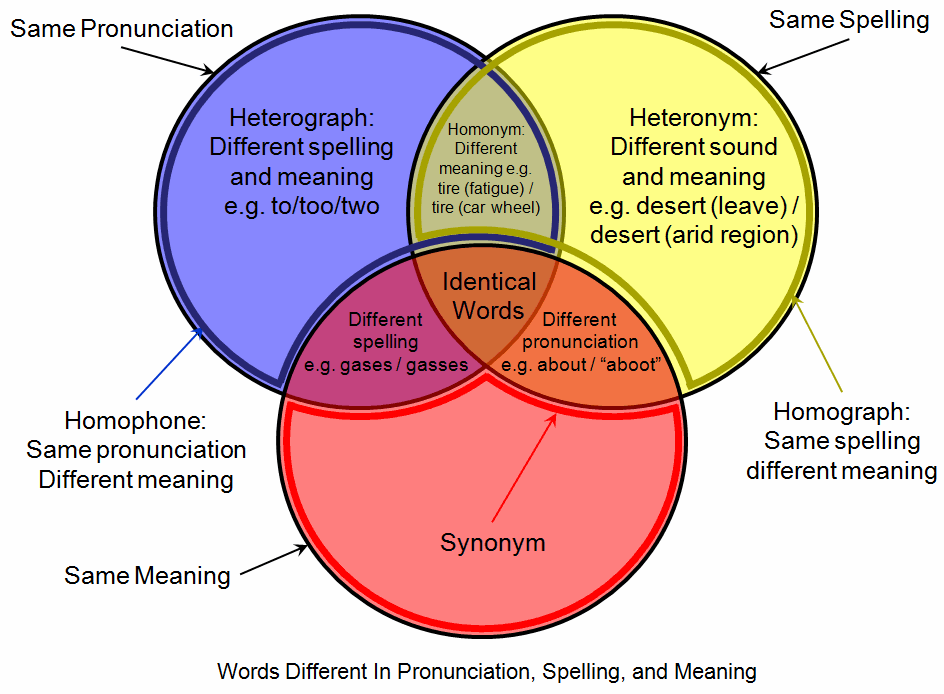
The English language is littered with homophones and near-twins—words that sound identical but perform vastly different functions. On the HESI A2, your ability to distinguish between these terms will be heavily tested. We can categorize these into logical, functional groups.
1. Cause, Effect, and Emotion
The most universally confused pair in the English language boils down to action versus outcome.
- Affect: The word 'affect' is usually a verb meaning to influence or produce a change. (The dosage will affect the patient's heart rate.) However, in a clinical setting, you must know its rare alternate form: The word 'affect' can function as a noun in psychology to describe a person's emotional expression. (The psychiatric patient presented with a flat affect.)
- Effect: The word 'effect' is usually a noun meaning the result or outcome of an action. (The medication had a calming effect.) But just to keep you on your toes, the word 'effect' can function as a verb meaning to bring about or accomplish a specific goal. (The new hospital administrator hopes to effect change in the ER.)
2. Actions and Positions
Physical movement and positioning have strict vocabulary rules.
Direction of Movement:
- Bring: The verb 'bring' implies the movement of an object toward the speaker. (Please bring the chart to me.)
- Take: The verb 'take' implies the movement of an object away from the speaker. (Please take this sample to the lab.)
Resting vs. Placing (Lie vs. Lay): This pair gives even seasoned writers trouble. The secret is knowing whether the verb requires a direct object to receive the action.
- Lie: The word 'lie' is an intransitive verb meaning to recline or rest. Because it is intransitive, the intransitive verb 'lie' does not take a direct object. A person simply lies down.
- Lay: The word 'lay' is a transitive verb meaning to put or place something down. Therefore, the transitive verb 'lay' requires a direct object to be grammatically correct. You must lay something down. You lay the scalpel on the tray, but the patient lies on the bed.
3. Measuring the World: Quantity and Distance
How you quantify something depends entirely on whether it can be individually counted.
- Fewer vs. Less: The adjective 'fewer' is used to describe countable nouns. (The patient requested fewer pills.) The adjective 'less' is used to describe uncountable or mass nouns. (The patient requested less water.)
- Number vs. Amount: The exact same logic applies here. The noun 'number' is used to quantify items that can be individually counted (A number of syringes), whereas the noun 'amount' is used to quantify bulk quantities that cannot be individually counted (A large amount of blood).
- Between vs. Among: The preposition 'between' is used when referring to exactly two distinct items or people. (The nurse stood between the two beds.) The preposition 'among' is used when referring to three or more items or people. (The virus spread among the staff.)
- Farther vs. Further: The word 'farther' refers to a measurable physical distance. (The pharmacy is farther down the hall.) The word 'further' refers to a figurative distance, degree, or extent. (We need to look into this matter further.)
- Then vs. Than: The word 'then' is an adverb indicating a sequence of events or a specific time. (Check the vitals, then administer the drug.) The word 'than' is a conjunction used to compare two different things. (Heart rate is higher than normal.)
4. Pronouns and Contractions
Contractions use an apostrophe to indicate missing letters. Possessive pronouns never use an apostrophe. This single rule solves half the grammar errors on the HESI A2.

| Word | Function / Definition |
|---|---|
| Their | The word 'their' is a possessive pronoun indicating ownership by a group. (Their vital signs.) |
| There | The word 'there' is an adverb indicating a specific physical or abstract place. (Stand over there.) |
| They're | The word 'they're' is a grammatical contraction of the words 'they' and 'are'. (They're waiting in triage.) |
| Its | The word 'its' is a possessive pronoun indicating ownership by a singular entity. (The hospital updated its policies.) |
| It's | The word 'it's' is a grammatical contraction of the words 'it' and 'is'. (It's time for rounds.) |
| Your | The word 'your' is a possessive pronoun indicating ownership by the person being addressed. (Your stethoscope.) |
| You're | The word 'you're' is a grammatical contraction of the words 'you' and 'are'. (You're next in line.) |
Actors and Receivers:
- Who vs. Whom: The word 'who' is a subjective pronoun that performs the action in a sentence. (Who ordered this lab?) The word 'whom' is an objective pronoun that receives the action in a sentence. (To whom should I give these results?)
5. Quality, State, and the Linking Verb Rule
How do you describe how someone is doing? The answer depends entirely on the verb.
- Good vs. Well: The word 'good' is an adjective used exclusively to describe nouns. (That is a good chart.) The word 'well' is an adverb used to describe verbs. (The surgeon operates well.) However, there is a crucial medical exception: The word 'well' functions as an adjective only when describing a person's physical health. (The patient is feeling well.)
- Bad vs. Badly: The word 'bad' is an adjective used to modify nouns or pronouns. (A bad fracture.) The word 'badly' is an adverb used to modify verbs. (His arm is bleeding badly.)
The Linking Verb Rule: Sensory verbs like feel, look, smell, and taste are linking verbs; they connect the subject to a state of being rather than showing an action. Therefore, linking verbs must be followed by the adjective 'bad', not the adverb 'badly'. If a patient says, "I feel badly," they are literally stating that their nervous system is malfunctioning and their fingertips lack the physical sense of touch. They should say, "I feel bad."
6. Sound-Alike Pairs in Practice
Finally, we must memorize the definitions of these common, highly tested homophones:
- Accept / Except: The word 'accept' is a verb meaning to receive or agree to something. (I accept the diagnosis.) The word 'except' is a preposition meaning to exclude or leave out. (Everyone is stable except the trauma patient.)
- Advice / Advise: The word 'advice' is a noun meaning a suggestion or guidance. (I need your advice.) The word 'advise' is a verb meaning to offer a suggestion or provide guidance. (I advise you to rest.)
- Ensure / Insure: The verb 'ensure' means to make certain that an event will happen. (Ensure the IV is secure.) The verb 'insure' means to provide or obtain financial coverage against loss. (The clinic will insure the new MRI machine.)
- Elicit / Illicit: The verb 'elicit' means to draw out a response or reaction from someone. (The doctor tried to elicit a reflex.) The adjective 'illicit' means forbidden by law, rules, or custom. (Illicit drugs.)
- Compliment / Complement: The word 'compliment' refers to an expression of praise or admiration. (The supervisor gave a compliment.) The word 'complement' refers to something that completes or enhances something else. (Physical therapy is a complement to surgery.)
- Lose / Loose: The verb 'lose' means to misplace something or fail to win a contest. (Do not lose the paperwork.) The adjective 'loose' means not securely attached or not tight-fitting. (The bandages are too loose.)
- Breathe / Breath: The verb 'breathe' refers to the physical act of inhaling and exhaling air. (Breathe deeply.) The noun 'breath' refers to the air taken into or expelled from the lungs. (Take a deep breath.)
- Stationary / Stationery: The adjective 'stationary' means not moving or fixed in one place. (A stationary bike.) The noun 'stationery' refers to writing materials like paper and envelopes. (The clinic's official stationery.)
- Capital / Capitol: The word 'capital' refers to a city serving as a seat of government or refers to wealth and assets (e.g., $50,000 in capital). The word 'capitol' refers to a specific building where a legislature meets.
- Allusion / Illusion: The noun 'allusion' means an indirect or passing reference to a person, place, or thing. (An allusion to past medical history.) The noun 'illusion' means a false idea or a misleading sensory appearance. (An optical illusion.)
- Passed / Past: The word 'passed' is strictly the past tense of the verb 'pass'. (The kidney stone passed.) The word 'past' refers to a previous time and can function as an adjective, noun, preposition, or adverb. (In the past week...)
- Principal / Principle: The noun 'principal' refers to a chief authority figure or a sum of money. It also acts as a modifier: The adjective 'principal' means most important or primary. (The principal symptom.) Conversely, the noun 'principle' refers to a fundamental truth, law, or moral belief. (The principle of do no harm.)
- To / Too / Two: The word 'to' is a preposition indicating direction or is used to form an infinitive verb. (To the lab.) The word 'too' is an adverb meaning also or to an excessive degree. (The heart rate is too high.) The word 'two' is a numerical value representing the integer after one. (Two milligrams.)
When you sit for the HESI A2, treat these grammatical structures exactly as you would treat a biological system. Sentences have a specific anatomy. Words have distinct physiological functions. Master the mechanics, respect the rules, and you will not only conquer the exam—you will guarantee the clarity that exceptional patient care demands.