Concepts of Management
Not sure you’re ready?
Take the ~3-minute readiness diagnostic and see where you stand.
Welcome to the beautiful, chaotic, highly-engineered system we call the modern healthcare setting!
Listen, if you look at a hospital from the outside, it seems impossible. Hundreds of professionals, thousands of medications, endless alarms—how does anyone get better? It works because of management. And as a Registered Nurse, you aren’t just passing pills. You are the conductor of a massive, interdisciplinary orchestra. If you don't know exactly what the brass section does, or how to get the strings to stop fighting with the percussion, the music sounds terrible.
In this guide, we are going to break down the mechanics of clinical management for the NCLEX-RN. We’ll look at who does what, how we transfer information without dropping it, and how we handle the inevitable friction of human beings working under pressure. Let’s dive in!
To orchestrate care, you must know the exact scope of every person on your team. The NCLEX absolutely loves testing you on delegation and interdisciplinary roles. Why? Because assigning the wrong task to the wrong person isn't just inefficient—it’s dangerous.
The Nursing Hierarchy: RN, LPN, and UAP
Let's look at the nursing team first. Think of nursing responsibilities on a spectrum of complexity and clinical judgment.
1. The Registered Nurse (RN) The RN is the architect. You are legally responsible for anything requiring deep clinical judgment, synthesis of data, or initial creation of care strategies. Remember the rule of "Initials."
- The Registered Nurse is responsible for developing the initial client plan of care.
- The Registered Nurse is responsible for completing the comprehensive initial client assessment.
- Teaching also falls to you: The Registered Nurse provides client education regarding new medical diagnoses and provides initial client education regarding new medication prescriptions.
2. The Licensed Practical Nurse (LPN) If the RN is the architect, the LPN is the highly skilled builder. They execute complex tasks but operate under the blueprint you created.
- Assessment: While you do the initial deep-dive, the Licensed Practical Nurse monitors ongoing client clinical findings following the Registered Nurse's initial assessment.
- Medications: The Licensed Practical Nurse can administer oral and intramuscular medications to stable clients.
- Procedures: The Licensed Practical Nurse can perform sterile dressing changes for assigned clients and can administer enteral tube feedings to stable clients.
Crucial NCLEX Keyword: Notice the word stable. LPNs care for clients with predictable outcomes. If a patient is crashing, the RN takes over.

3. Unlicensed Assistive Personnel (UAP) The UAPs (nursing assistants, techs) are the foundation of basic client functioning.
- Unlicensed Assistive Personnel assist clients with basic activities of daily living (feeding, bathing, ambulating).
- They also measure and record routine vital signs for clinically stable clients.
The Interprofessional Specialists
No single human brain can master all of medicine. We segment expertise into specific disciplines. Your job as the RN is to know exactly who to call when a specific problem arises.
| The Specialist | Their Superpower in the Hospital |
|---|---|
| Social Worker | They assist clients in managing complex psychosocial issues (like family distress or abuse) and help clients coordinate community support resources prior to hospital discharge. |
| Case Manager | The logistical mastermind. A case manager coordinates client care to ensure cost-effective and high-quality clinical outcomes across the health care continuum. They get the patient from the ICU, to the floor, to rehab, smoothly and affordably. |
| Physical Therapist (PT) | The "below the waist" / large muscle experts. A physical therapist assists clients to improve mobility and lower extremity physical strength. |
| Occupational Therapist (OT) | The "above the waist" / ADL experts. An occupational therapist assists clients to regain fine motor skills needed for daily living activities (like brushing teeth or holding a fork). |
| Speech-Language Pathologist (SLP) | The throat and mouth experts. A speech-language pathologist provides therapy for client communication and speech impairments, and critically, they evaluate and treat client swallowing disorders (dysphagia). |
| Registered Dietitian | The fuel scientists. A registered dietitian designs therapeutic diets based on individual client nutritional needs. |
| Respiratory Therapist (RT) | The airway wizards. A respiratory therapist administers specific breathing treatments and will manage mechanical ventilation equipment for critically ill clients. |
Having a team of geniuses is utterly useless if they don't talk to each other. Information in a hospital is like water in a desert—it’s precious, and you can’t afford to spill a single drop.
The RN as the Ultimate Connector
Because nurses are at the bedside 24/7, the Registered Nurse acts as the primary liaison between the client and the interprofessional healthcare team. What does a liaison actually do?
A health care liaison facilitates interdisciplinary communication to ensure the entire team understands the client's treatment preferences.
If the client tells you they don't want a feeding tube, you are the one who ensures the SLP, the Dietitian, and the MD all know this before they walk into the room.
Standardizing the Language: SBAR
When you pass the baton of care, you don't just ramble about the patient. You use a highly structured formula. The SBAR framework stands for Situation, Background, Assessment, and Recommendation.
Why do we force everyone to speak this way? Because under stress, human memory fails. Healthcare professionals use the SBAR framework to standardize clinical communication during client care transitions. It ensures that whether you are talking to a surgeon at 3:00 AM or a physical therapist at noon, everyone expects the data in the exact same format.
Consultations vs. Referrals
These two concepts sound similar, but they operate completely differently in practice. Understand the distinction:
- A clinical consultation involves requesting the expertise of another specialist to help manage a specific client problem. (Think of this as asking for advice. The primary team still owns the patient, but we want the Cardiologist's opinion on an EKG).
- A clinical referral involves transferring the responsibility for a specific aspect of client care to another provider. (Think of this as handing over a piece of the puzzle. You refer the patient to an outpatient wound clinic, and they take over the wound care entirely).
When these orders are placed, the RN has two distinct, critical jobs:
- The Registered Nurse ensures that updated client medical records are available to consulting healthcare providers. (You can't expect a specialist to give good advice if you haven't given them the latest lab work!)
- The Registered Nurse verifies that the client understands the primary purpose of a specialist referral. (Patients get terrified when new doctors suddenly appear. It is your job to explain why they are going).
Let’s be honest. Put a bunch of highly educated, sleep-deprived, passionate professionals in a high-stakes environment, and they are going to butt heads. Conflict is inevitable. How you manage it defines your success as a leader.
Anatomy of a Conflict
Before you can fix a fight, you have to know what kind of fight it is.
- Intrapersonal conflict: This occurs within a single individual when facing competing personal values or ethical dilemmas. (e.g., A nurse personally believes in holistic healing but must administer aggressive chemotherapy).
- Interpersonal conflict: This occurs between two or more individuals holding differing goals or beliefs. (e.g., Two nurses arguing over who gets the holiday shift off).
- Intergroup conflict: This occurs between two or more distinct groups or organizational departments. (e.g., The Emergency Department fighting with the Intensive Care Unit over admission delays).
The Five Resolution Styles
Imagine two nurses, Alex and Jamie, both want Thanksgiving off. Only one can go. How do they resolve this? There are five classic styles:
- Avoiding: This involves withdrawing from the conflict situation entirely. Alex just ignores Jamie and calls in sick on Thanksgiving. The problem? The avoiding conflict resolution style fails to resolve the underlying issue causing the disagreement. The schedule is still broken, and now Jamie is working short-staffed.
- Accommodating: This involves one party sacrificing personal goals to satisfy the other party's desires. Alex sighs and says, "Fine, you take it. I'll work." Jamie wins, Alex loses.
- Competing: This involves one party pursuing individual goals at the direct expense of others. Alex goes over Jamie's head to the manager and demands the time off because of seniority. Alex wins, Jamie loses.
- Compromising: This requires each opposing party to give up something of value to reach a mutual agreement. Alex takes Thanksgiving morning, Jamie takes Thanksgiving evening. Neither gets exactly what they wanted, but both get something.
- Collaborating: This involves both parties working together to find a completely new and mutually satisfying solution. Alex and Jamie realize they both just want time with their kids. They collaborate to establish a new rotating holiday schedule system for the whole unit that guarantees everyone gets equitable family time.
The Gold Standard: Collaboration is considered the most effective conflict resolution strategy for long-term problem solving in healthcare settings. It takes the most time, but it actually fixes the system.
Steps to Resolve and Evaluate Conflict
If you are the nurse manager stepping into a warzone, where do you begin? You don't start by issuing commands. The first step in resolving an active conflict among staff members is to clearly identify the root cause of the disagreement. You have to find out why the gears are grinding before you apply the oil.
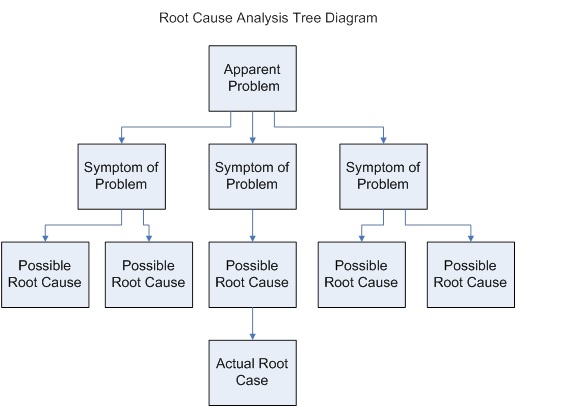
Once you implement a solution, your job still isn't done. You must act like a scientist and evaluate your results! How?
- Subjective data: A nurse manager evaluates conflict management outcomes by formally assessing staff satisfaction following the intervention. (Are the nurses actually happier? Do they feel heard?)
- Objective data: A nurse manager evaluates conflict management outcomes by monitoring changes in client safety and quality metrics. (Did medication errors go down after we fixed the scheduling fight?)
Why go through all this trouble? Because effective conflict resolution directly improves overall healthcare team functioning and unit productivity. When the orchestra isn't fighting over who gets the solo, they can finally get back to doing what they do best: making incredible music and saving lives.