Continuity of Care
Not sure you’re ready?
Take the ~3-minute readiness diagnostic and see where you stand.
The Ultimate NCLEX-RN Guide to Continuity of Care
Imagine a world-class relay team. You have four of the fastest runners on the planet. The starting gun goes off, the first runner sprints with blazing speed, reaches the next runner, and… drops the baton. What happens? They lose. It doesn’t matter how fast they were; if the transition fails, the whole race fails.

Nursing is the ultimate relay race. You can provide the most phenomenal, evidence-based care during your twelve-hour shift, but if you drop the "baton"—the vital information about your patient—during a handoff, admission, transfer, or discharge, the patient's safety crashes.
This critical concept is what we call Continuity of Care. It is the art and science of ensuring seamless transitions in healthcare. Let's break down exactly how you, as a soon-to-be Registered Nurse, are going to master this relay race for the NCLEX and, more importantly, for your patients.
When you hand off a patient to the next nurse, you aren't just chatting about your day. You are transferring responsibility. Historically, nurses would pass along whatever they remembered, which led to disastrous mistakes.
Because human memory is incredibly fallible, The Joint Commission mandates the implementation of standardized handoff communication protocols. Why? Because having a rigid structure to follow forces us to hit every critical detail. Quite simply, standardized handoff communication reduces the risk of omitted clinical information.
The Language of Handoffs: SBAR and I-PASS
To make sure we don't forget anything, we use acronyms. The most famous one is SBAR. You will see this everywhere because SBAR serves as a standardized communication framework during healthcare transitions. It stands for:
| Letter | Stands For | What it Means |
|---|---|---|
| S | Situation | What is going on with the patient right now? |
| B | Background | What is the clinical context or history? |
| A | Assessment | What do I think the problem is? |
| R | Recommendation | What would I do to correct it? |
Feynman Tip on SBAR: Pay special attention to the "R". The Recommendation component of SBAR is used to propose specific actions for unresolved client issues. It’s not just "I recommend you watch him." It’s "I recommend we order a STAT chest x-ray and call respiratory therapy."
Another excellent tool you need to know is I-PASS. I-PASS is an acronym utilized for structured handoff communication in both pediatric and adult healthcare (Illness severity, Patient summary, Action list, Situation awareness/contingency planning, and Synthesis by receiver). Both SBAR and I-PASS do the same beautiful thing: they build a foolproof track for the baton to travel on.
Where and How We Give Report
Where should this magical exchange of information happen? At the desk? In the breakroom? No! We do it at the bedside.
Bedside reporting allows the client to participate actively in the shift handoff process. Patients hear their care plan, ask questions, and correct misunderstandings. Furthermore, bedside reporting enables the oncoming nurse to visually verify the client's physical condition. If the departing nurse says, "The IV is patent and the dressing is dry," you can look right at the arm and verify it. Trust, but verify!
What Belongs in the Report (And What Doesn't)
When giving a nursing handoff report, precision is everything.
- DO include: The patient's current baseline physical assessment. The oncoming nurse needs to know what "normal" looks like for this patient today so they can spot any deviations.
- DO include: The unknowns. Pending diagnostic test results at shift change must be explicitly communicated to the oncoming nurse. If a CT scan was done at 6:00 PM and the results aren't back by 7:00 PM, the oncoming nurse must know to hunt down that report.
- DO NOT include: Gossip. A nursing handoff report must exclude the departing nurse's personal opinions about the client. Stick to objective clinical data. Saying "The patient is a complainer" biases the next nurse. Saying "The patient has requested pain medication every exactly two hours" is objective data.
Admission isn't just paperwork; it is the establishment of the patient's entire clinical baseline. If you get the admission wrong, every subsequent decision is built on a faulty foundation.
First things first: Who is this person? The admission process requires the nurse to verify the client's identity using two unique identifiers (usually name and date of birth). Never rely on room numbers!
Next, we establish the clinical baseline. Remember this rule for the NCLEX: An initial physical assessment must be completed by a registered nurse upon client admission. You cannot delegate the initial assessment to an LPN/LVN or unlicensed assistive personnel (UAP). The RN must lay the groundwork.
During the admission interview, you must tackle three crucial elements:
- Home Medications: A nursing admission history must include an inventory of the client's current home medications. You need the exact names, dosages, and frequencies of everything they pop, swallow, or inject at home, including over-the-counter supplements.
- Advance Directives: The nurse must assess the client's advance directive status during the admission process. We need to know their wishes regarding life-sustaining treatment before an emergency happens.

- Discharge Planning: This sounds like a paradox, but discharge planning formally begins at the exact time of client admission. Why? Because the moment they arrive, our ultimate goal is getting them safely out. We need to know their home living situation immediately to anticipate what they'll need upon exit.
Let’s talk about one of the most dangerous points of a patient’s journey: medication errors during transitions. To fight this, we use Medication Reconciliation.
Think of this as an auditing process. Medication reconciliation compares the client's home medications with newly prescribed facility medications. We are looking for omissions, duplications, dosing errors, or dangerous interactions.
When do we do this? At every major transition!
- Admit: Medication reconciliation must be completed upon client admission to a healthcare facility.
- Transfer: Medication reconciliation must be updated during client transfer between different facility units (e.g., from the ICU down to the medical-surgical floor).
- Discharge: Medication reconciliation must be finalized prior to client discharge from the facility.
If you remember nothing else about meds, remember that reconciliation is your primary shield against polypharmacy disasters.

Sometimes, a patient needs a different level of care. Maybe they are going from the Emergency Department to the ICU, or from your hospital to a specialized rehabilitation center.
If you are transferring a patient to another unit, communication happens before motion. A verbal transfer report must be provided to the receiving nurse before a client is physically moved. You would never shove a fragile package through a doorway without warning the person on the other side to catch it!
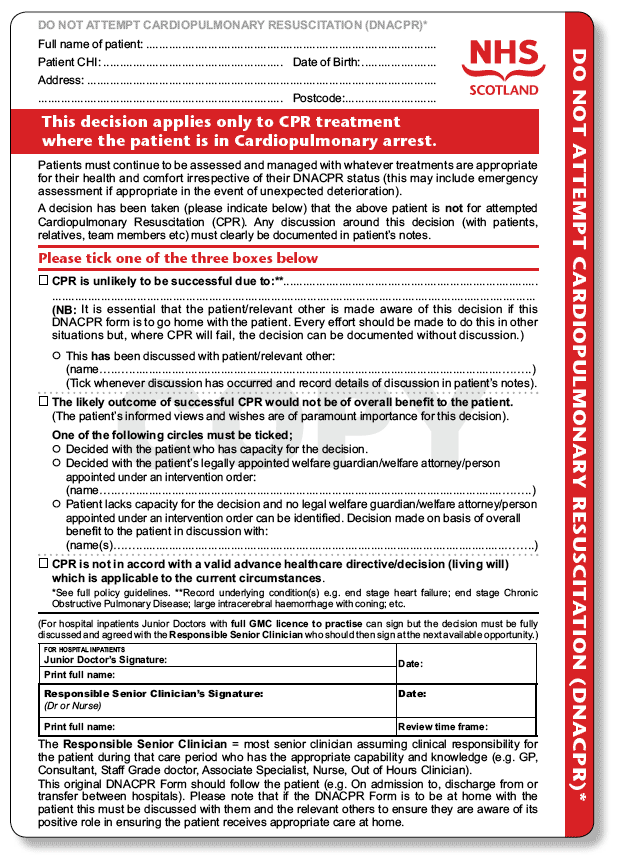
During this verbal report, a transfer report must explicitly state the client's current resuscitation code status. The receiving nurse must know instantly whether this patient is a Full Code or a Do Not Resuscitate (DNR) the moment they roll through the double doors.
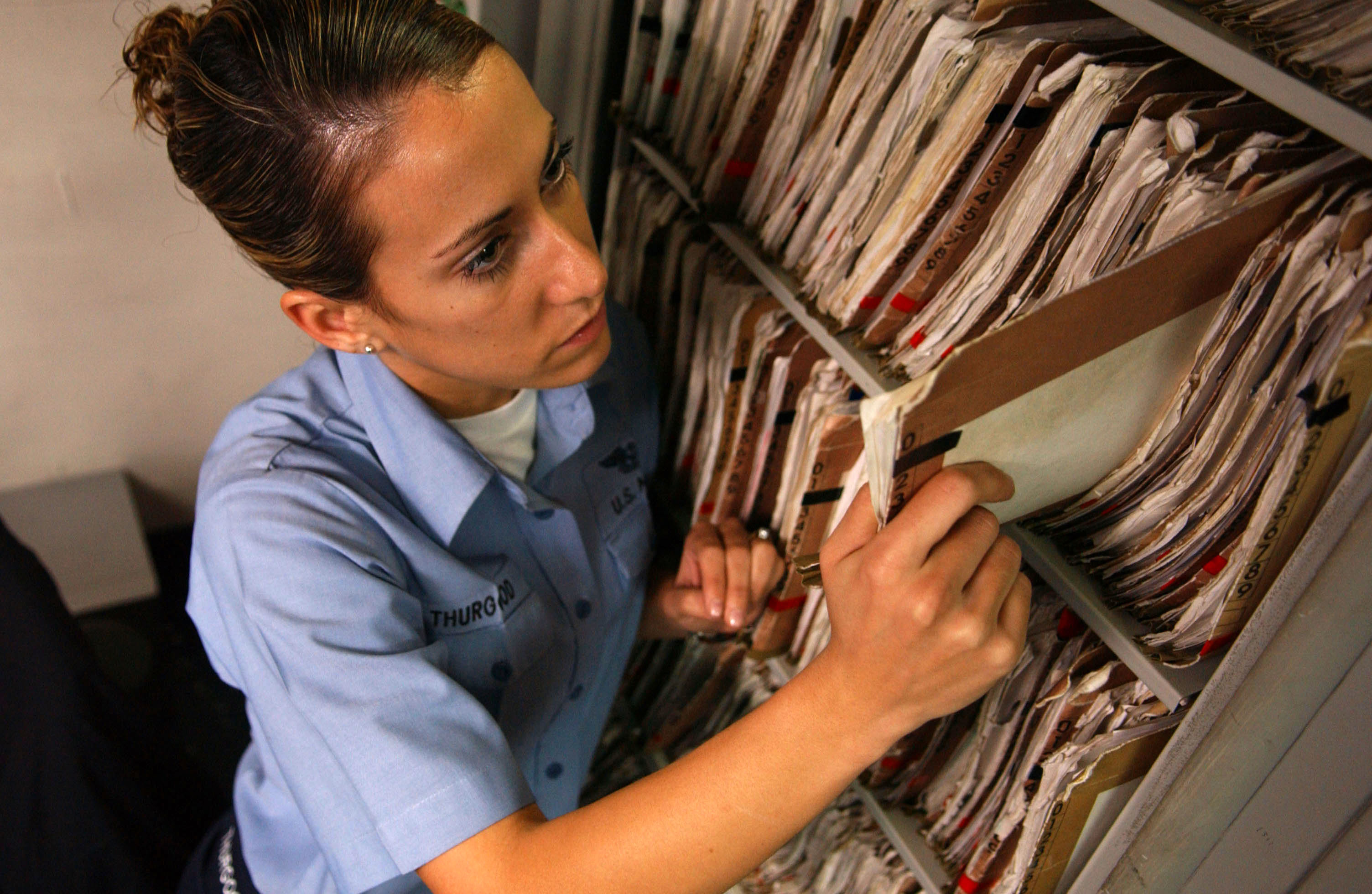
What if they are leaving your building entirely? Interfacility transfers require a complete copy of the client's medical record to accompany the client. The receiving facility needs the whole map of the patient's journey, not just a summary.
We've treated the patient, they are stable, and it's time to go home. But continuity of care doesn't end at the exit doors. A failed discharge results in a readmission, which is a massive failure of the healthcare system.
To safely discharge a patient, you must communicate in a way they actually understand. Discharge instructions must be provided in the client's preferred primary language. If they speak Spanish, handing them an English pamphlet is practically clinical negligence. Use an interpreter service to provide the instructions.
Furthermore, these instructions cannot be vague. Written discharge instructions must list specific signs or symptoms requiring immediate medical attention. Don't just write "Call the doctor if you feel bad." Write, "Call 911 if you experience shortness of breath at rest, or if your incision drains yellow pus."

Finally, teaching isn't teaching unless learning has occurred. The nurse must document the client's comprehension of the provided discharge instructions. (Hint: Use the "teach-back" method, and document that the patient successfully demonstrated understanding).
Nature abhors a vacuum, and nursing abhors a loose end. You will often encounter abnormal findings that require immediate action, or situations where care stalls. Continuity of care means you follow through.
Critical Lab Values
When the lab calls you with a critically abnormal result (like a potassium of 6.5 mEq/L), the clock is ticking.
- The nurse must report critical laboratory values directly to the primary healthcare provider. You cannot leave a voicemail or tell the secretary and assume it's handled.
- The nurse must document the exact time a critical laboratory value was communicated to the provider.
- The nurse must document the name of the specific provider receiving a critical result report.
Feynman Translation: If it goes to court, "I told a doctor around 2 PM" is useless. "I gave the critical potassium value of 6.5 to Dr. John Smith directly via phone at 14:15" proves you did your job.
Unresolved Pain and Consults
Suppose you give a patient IV morphine for severe pain, and an hour later, they are still crying in agony. Unresolved client pain must be reassessed and communicated to the prescribing healthcare provider. You do not wait for the next shift; you advocate for a new intervention now.
Similarly, if the doctor orders a cardiology consult in the morning, you don't just assume cardiology will show up. The nurse must independently verify the completion of pending specialty consults ordered by the provider. You are the hub of the patient's care wheel. You track the spokes.
The Chain of Command
What happens if you do everything right? You get the critical lab, you call the doctor, you report the unresolved pain... and the doctor brushes you off, or refuses to order a necessary intervention?
This is where you become a fierce advocate. The nurse must initiate the facility chain of command if a provider fails to address a critical client issue.
The Chain of Command typically looks like this: You (The Staff Nurse) → Charge Nurse → Nursing Supervisor / Unit Manager → Chief Nursing Officer (CNO) / Medical Director.
You never accept "no" if "no" puts your patient in danger. You escalate the issue up the ladder until the patient is safe.
Continuity of care is not about doing paperwork to keep administrators happy. It is the architectural framework that keeps patients alive. From verifying their identity at the moment of admission, to meticulously reconciling their medications, to giving a flawless SBAR handoff, and finally to providing crystal-clear discharge instructions in their native language—every single step is an unbroken link in a chain.
Hold the baton tight. Pass it cleanly. Advocate fiercely. That is how you master Continuity of Care for the NCLEX and your entire nursing career.