Emergency Response Plan
Not sure you’re ready?
Take the ~3-minute readiness diagnostic and see where you stand.
Welcome, colleagues! Gather round. Today we are going to explore one of the most intense, demanding, and philosophically radically different areas of nursing: Disaster Planning and Emergency Response.
Normally, when you and I walk onto the hospital floor, our goal is simple and singular: Save the patient in front of us. We throw every resource, every medication, and every ounce of technology at one individual to maximize their specific outcome. But what happens when the math changes? What happens when you have fifty patients, or five hundred, and only a handful of nurses? What happens when the hospital itself is on fire?
Nature, accidents, and chaos do not wait for the end of shift change. When the unthinkable happens, we cannot rely on panic; we must rely on preparation. Let's break down exactly how we think, move, and decide during a disaster so that when the alarm sounds, you are the calmest, most effective person in the room.
To fight an enemy, you first have to know where it is coming from. We categorize emergencies into two main arenas based on origin:
- The Internal Disaster: Think of this as the call coming from inside the house. An internal disaster is an event occurring within the healthcare facility that threatens client or staff safety. The danger is literally in your workspace. Facility fires and severe power outages are examples of internal disasters.
- The External Disaster: This is when the chaos is outside, but the consequences are headed straight for your emergency department doors. An external disaster is an event occurring outside the healthcare facility that causes a sudden influx of casualties. Natural disasters and mass transit accidents are examples of external disasters.
_for_Mass_Casualty_Incidents.jpg)
The Playbook: The Emergency Operations Plan
Whether the disaster is a hurricane or a blown generator, you cannot invent a plan on the fly. This is why nursing staff must know the exact physical or digital location of the facility Emergency Operations Plan. If the Wi-Fi is down, you need to know exactly which binder on which shelf holds the blueprint for survival.
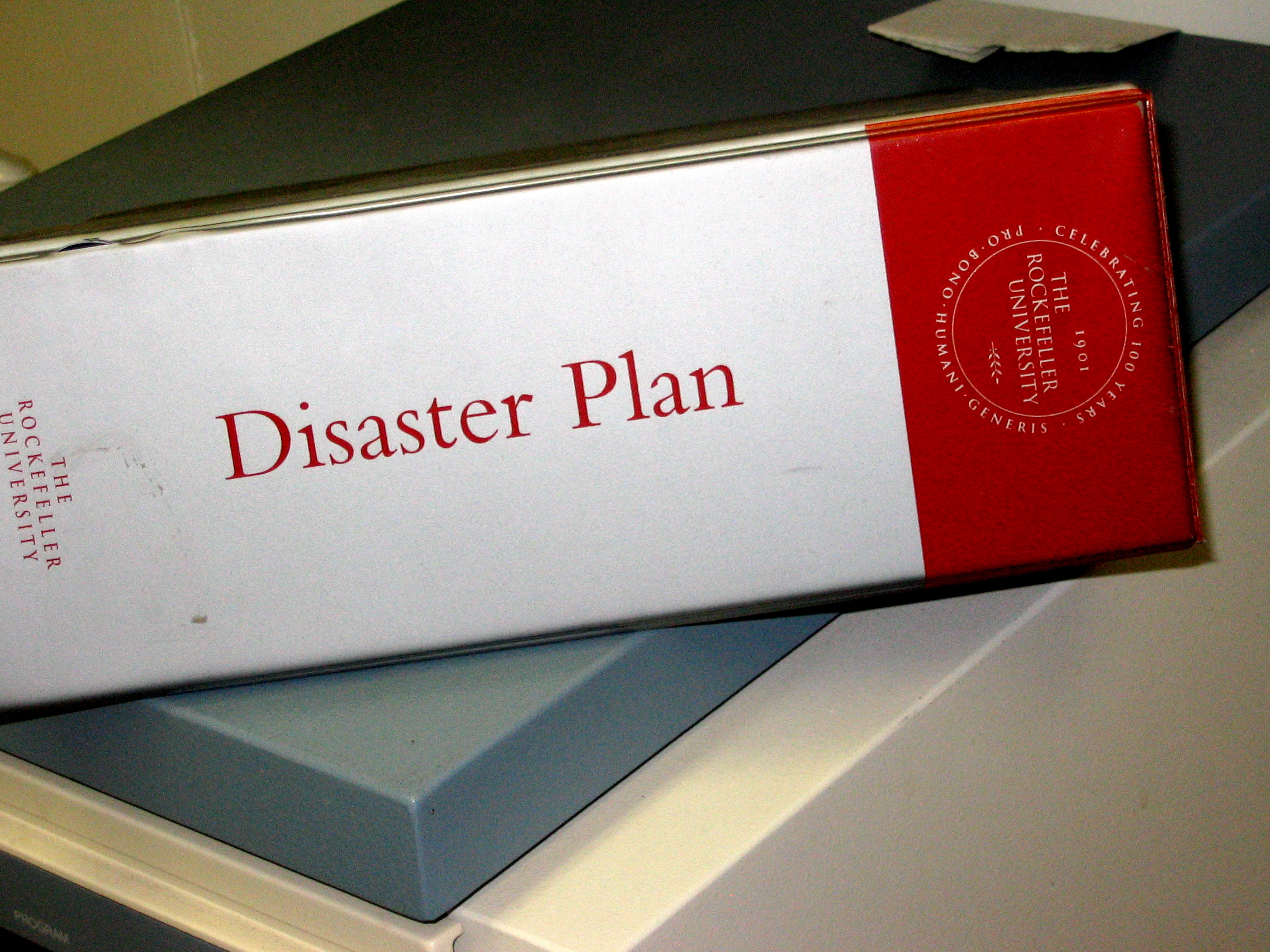
"But Professor, how do we remember a complex manual during a crisis?"
You don't memorize it; you engrain it into your muscles. Mandatory participation in disaster drills prepares nursing staff to execute emergency protocols automatically. When the adrenaline hits, your higher-level thinking diminishes, and your training takes over. Because this is so critical, The Joint Commission requires accredited healthcare facilities to practice their Emergency Operations Plan at least twice a year.
Who is in Charge?
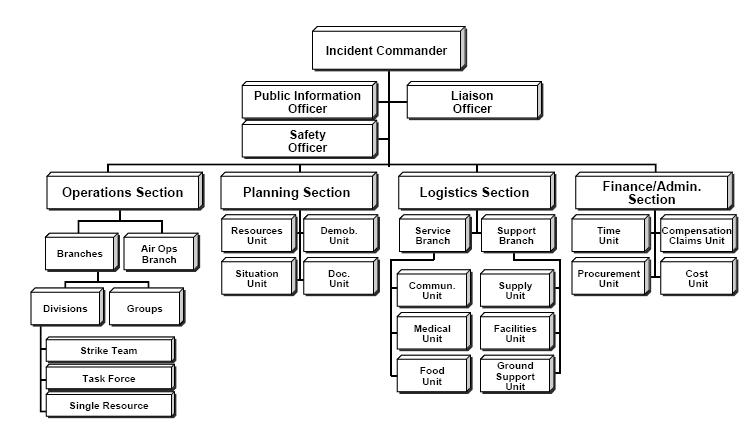
During everyday operations, you might bounce ideas off the charge nurse, the attending physician, or a specialist. In a disaster, that collaborative web transforms into a strict hierarchy.
The Hospital Incident Command System provides a standardized hierarchical structure for managing hospital emergencies. It is a rigid, top-down chain of command modeled after military and firefighting structures. Your role is simple: Nurses must maintain a clear chain of command by reporting to the appointed incident commander during a disaster. You do not self-deploy. You do not go rogue. You follow the commander's blueprint.
I want you to really pay attention here, because this is the hardest psychological hurdle for a nurse to overcome. In everyday nursing, if a patient’s heart stops, we call a Code Blue, gather ten people, and do chest compressions for an hour.
During a mass casualty incident, that logic completely flips. Disaster triage shifts the clinical focus from maximizing individual outcomes to doing the greatest good for the greatest number of people. If you spend an hour doing CPR on one catastrophic trauma victim, ten other people with treatable injuries will bleed to death. The math is brutal, but it is the only way to save the majority.
To make these rapid decisions, we use the START method (Simple Triage and Rapid Treatment). The Simple Triage and Rapid Treatment method categorizes disaster victims into four color-coded groups based on injury severity.
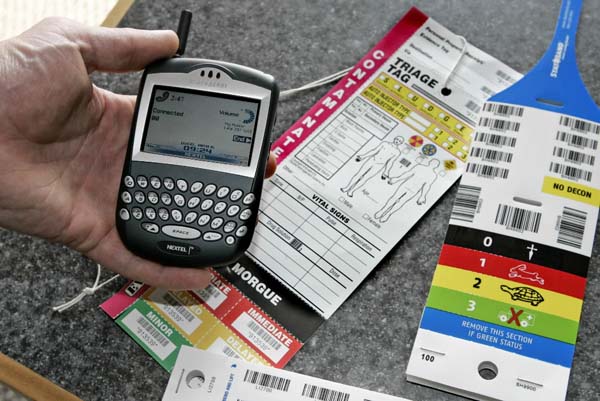
Let’s look at how to tag them:
| Triage Color | Meaning & Action | Clinical Examples |
|---|---|---|
| RED | Immediate: A red triage tag indicates an immediate threat to life requiring rapid medical intervention for survival. These patients will die without you, but they can be saved quickly. | A red triage tag is applied to victims with treatable airway obstructions or uncontrolled hemorrhage. (Apply a tourniquet, open the airway—save a life in 60 seconds). |
| YELLOW | Delayed: A yellow triage tag indicates significant injuries that can wait several hours for treatment without an immediate threat to life. They are hurt, they are in pain, but they are physiologically stable for now. | A yellow triage tag is applied to victims with stable abdominal wounds or major bone fractures. |
| GREEN | Minimal: A green triage tag indicates minor injuries that do not require immediate medical attention. These people can walk, talk, and follow directions. | A green triage tag is applied to ambulatory victims who are commonly referred to as the walking wounded. |
| BLACK | Expectant/Deceased: This is the tragic reality of resource scarcity. A black triage tag indicates injuries that are incompatible with life given the available medical resources. We provide comfort care, but no heroic interventions. | A black triage tag is applied to victims with massive head trauma or victims who are in cardiac arrest upon first responder arrival. |
Think of it like a funnel. You quickly sort the victims. Green goes to a holding area. Black is left in place. Yellow is queued up. Red gets your immediate, life-saving interventions.
Imagine a massive earthquake hits your city (an external disaster). The sirens wail, and you know three hundred patients are on their way to your forty-bed unit. Where do you put them? You have to clear the decks. You need to discharge current patients to create "surge capacity".
But who stays and who goes? It’s not random. We follow a strict algorithm:
- Priority One (The First to Leave): During a hospital emergency, clients who are ambulatory and require minimal care are the first recommended for discharge. If they can walk and just need an oral antibiotic, send them home.
- Priority Two (The Second to Leave): Clients requiring assistance who can be safely managed at home with community support are the second priority for disaster discharge. If they need a little help, but home health or a capable family member can take over, they go.
- Who Must Stay? Here is the unbreakable rule: Unstable clients must not be recommended for discharge during a disaster. Sending them out the door is effectively a death sentence. Furthermore, clients requiring continuous skilled medical care must remain in the hospital during a mass casualty event. If they are on a ventilator, requiring complex IV titrations, or in the ICU, they stay put.
What if the disaster isn’t a bus crash downtown? What if it’s a fire on your unit? Now you aren’t discharging patients; you are evacuating them.
The Fire Protocol
If you see flames or smoke, instinct might tell you to pull the alarm and run. But remember, your patients are hooked to machines or physically unable to run. Therefore, nurses must prioritize rescuing clients in immediate danger before activating the facility fire alarm during a fire event. This is the "R" in the famous RACE acronym (Rescue, Alarm, Confine, Extinguish/Evacuate). Get the patient out of the burning room first, then pull the alarm.
The Physics of Evacuation
When you have to move patients, you have to think about gravity, effort, and bottlenecks. You cannot simply carry an ICU bed down six flights of stairs.
First, nurses must assess client mobility status before making lateral or vertical evacuation decisions. Can they walk? Do they need a wheelchair? Are they bedbound?
Once you know what you are dealing with, follow the golden rule of movement: Hospital evacuation procedures dictate moving clients laterally to a safe area on the same floor before moving clients vertically down stairs. Why? Because modern hospitals are built with heavy fire doors that create "smoke compartments". Moving a patient horizontally through a set of fire doors into the next wing is vastly faster and safer than trying to wrestle a stretcher down a stairwell. You only evacuate vertically when the entire floor is compromised.
If you are only doing a partial evacuation, hospital staff must relocate unstable clients to the most secure area of the facility if a partial evacuation is required. Keep your sickest patients away from windows, structural damage, or fire hazards, but keep them on the monitors!
Let's tie up a few critical, real-world loose ends about nursing in a disaster zone.
Charting in Chaos
Usually, if it isn't documented, it wasn't done. But in a mass casualty event, writing a beautiful, three-paragraph nursing narrative while a patient bleeds out is absurd. Therefore, nurses must utilize abbreviated charting methods during a mass casualty incident to maximize time for direct client care. You write down the vitals, the meds, and the times—often on the triage tag itself—and you move on.
The Legal Boundaries
Does a state of emergency mean you can suddenly start performing appendectomies? Absolutely not. Even when the world feels like it's ending, the law remains intact. Registered nurses must legally practice within their state Nurse Practice Act scope of practice during a declared disaster. You can work faster, you can use abbreviated charting, but you cannot perform skills or administer treatments that you are not legally licensed to perform.
Chemical Nightmares
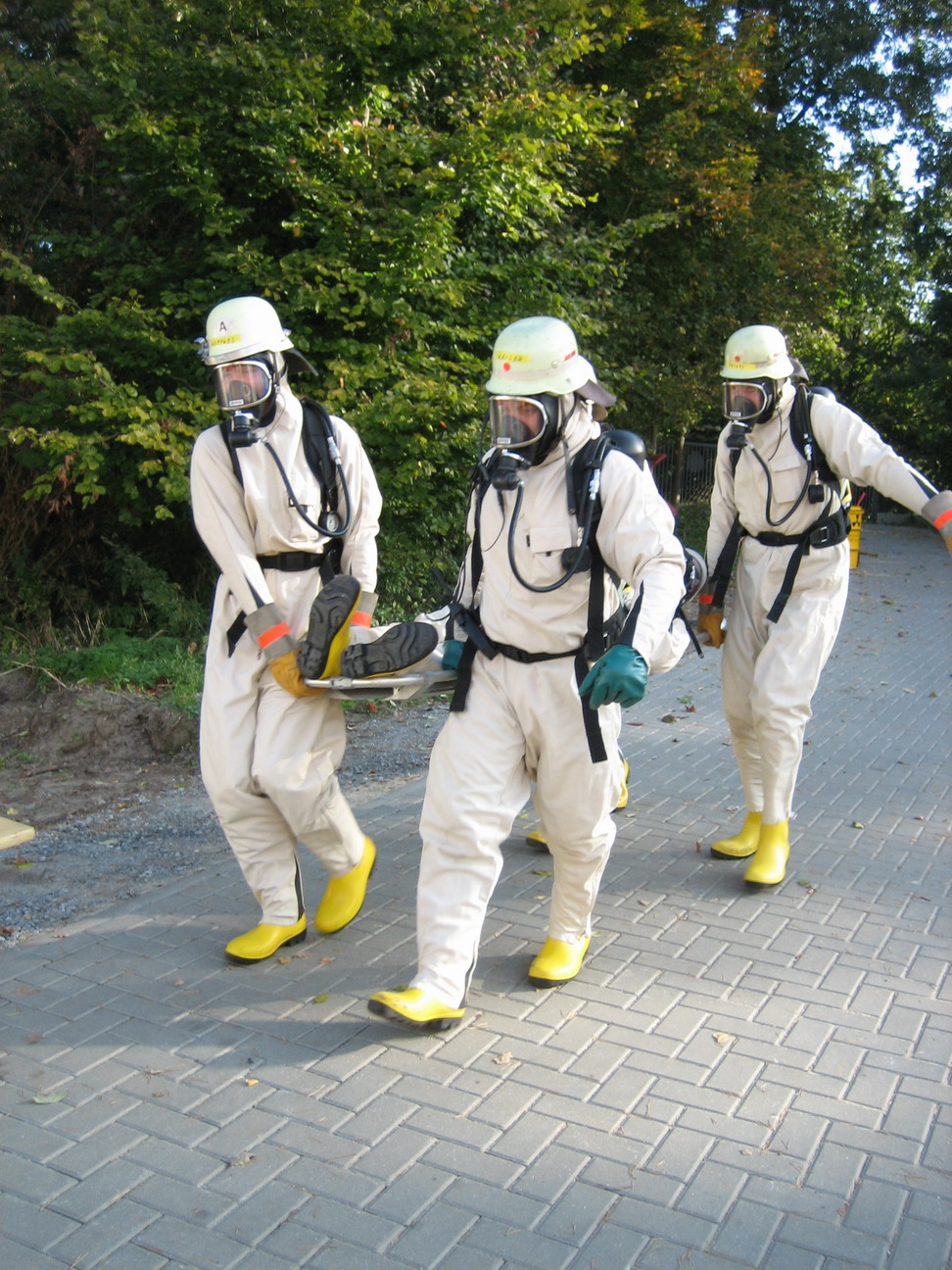
Finally, let's look at a specific type of external disaster: chemical terrorism or a massive industrial spill. Victims are going to flee the scene and rush to your emergency department covered in toxic substances. If you let them walk inside, your hospital ventilation system will pull those chemicals in, and now your entire hospital is contaminated. You have just turned an external disaster into an internal one!
The strict rule: Victim decontamination during a chemical mass casualty event must occur before those victims enter the main hospital facility. Set up the outdoor showers. Cut off the clothing outside. The hazard stays outside the doors, always.
Summary: The Big Picture
Disaster response is all about shifting frameworks. You shift from maximizing individual care to maximizing community survival. You shift from collaborative discussions to an Incident Command structure. You discharge the healthy to make room for the wounded. You evacuate laterally before vertically. And through it all, you remain tethered to your scope of practice, protecting the facility from further harm so it can remain a beacon of hope in the chaos.
Study these principles, understand the why behind them, and you will not only crush your NCLEX—you will be the exact kind of nurse the world needs when the unthinkable happens. Now, let's get back to the floor!