Performance Improvement and Quality Improvement
Not sure you’re ready?
Take the ~3-minute readiness diagnostic and see where you stand.
The Physics of Healthcare: Performance & Quality Improvement
Welcome! If you’ve ever looked at a crowded nursing unit and thought, "There has to be a better way to do this," you are already thinking like a quality improvement engineer.
In nursing, we don’t just treat patients; we treat systems. A brilliantly skilled nurse working in a broken, disorganized system is going to make mistakes. That is the fundamental premise of this topic. We are looking at how to fix the machine of healthcare so that the humans running it can succeed.
Because this is about the big picture of how care is delivered and measured, the National Council of State Boards of Nursing includes performance improvement under the Management of Care section of the NCLEX-RN test plan. It is a massive, heavily tested area because it quite literally saves lives on a population scale. Let’s dive into how it works.
Historically, when something went wrong in a hospital, management wanted to know who did it. Today, we want to know what allowed it to happen. This represents the paradigm shift from Quality Assurance to Quality Improvement.
The Old Way: Quality Assurance (QA)
Quality assurance is an older methodology that is historically retrospective and focuses on discovering individual errors. It asks: Did we meet the bare minimum?
Quality assurance focuses on evaluating care to ensure organizational compliance with established minimum standards. Think of it as a checklist. Did the nurse sign the chart? Were the vitals taken on time? A classic example of this is peer review, which is a quality assurance process where registered nurses evaluate the clinical performance of other registered nurses to ensure minimum standards of practice are upheld.
The New Way: Quality Improvement (QI) & Performance Improvement (PI)
Instead of just checking boxes after the fact, we now focus on systems.
Quality improvement is a continuous, systematic process used to measurably improve healthcare services and patient outcomes. Unlike QA, which is reactive, quality improvement focuses on proactively optimizing systems and clinical processes.
A closely related term you must know is Performance Improvement. Performance improvement is the continuous study and adaptation of healthcare functions to increase the probability of desired clinical outcomes.
If QA is asking "Did we follow the recipe?", QI and PI are asking "How can we write a better recipe so the cake turns out perfectly every single time?"
| Feature | Quality Assurance (QA) | Quality Improvement (QI) |
|---|---|---|
| Focus | Discovering individual errors | Proactively optimizing systems and clinical processes |
| Goal | Compliance with established minimum standards | Measurably improve services and patient outcomes |
| Timeline | Historically retrospective (looking backward) | Continuous and proactive (looking forward) |
Before we can improve quality, we have to define it. The Institute of Medicine defines six domains of healthcare quality as safe, effective, patient-centered, timely, efficient, and equitable.
If a process doesn't hit these six domains, it's a broken process. To fix these broken processes, healthcare borrows heavy-hitting methodologies from the manufacturing world (like Toyota and Motorola):
- The Lean methodology in healthcare focuses on eliminating waste and streamlining processes to improve efficiency. (Think: Moving the supply closet closer to the patient rooms so nurses don't waste time walking back and forth).
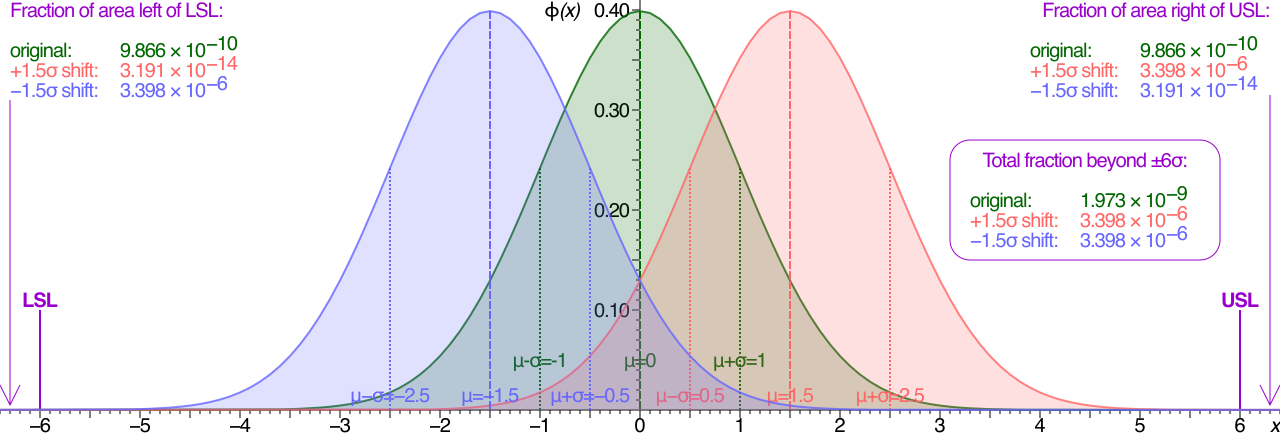
- The Six Sigma methodology in healthcare focuses on reducing variation and eliminating defects in clinical processes. (Think: Standardizing a central line dressing change kit so that every single nurse performs the procedure exactly the same way, reducing the "defect" of infection).
So, you’ve identified a broken process. How do you test a solution without throwing the entire hospital into chaos? You use a scientific framework.
The Plan-Do-Study-Act cycle is a four-step model used for testing quality improvement changes in healthcare settings. It is exactly like the scientific method, tailored for the nursing unit.
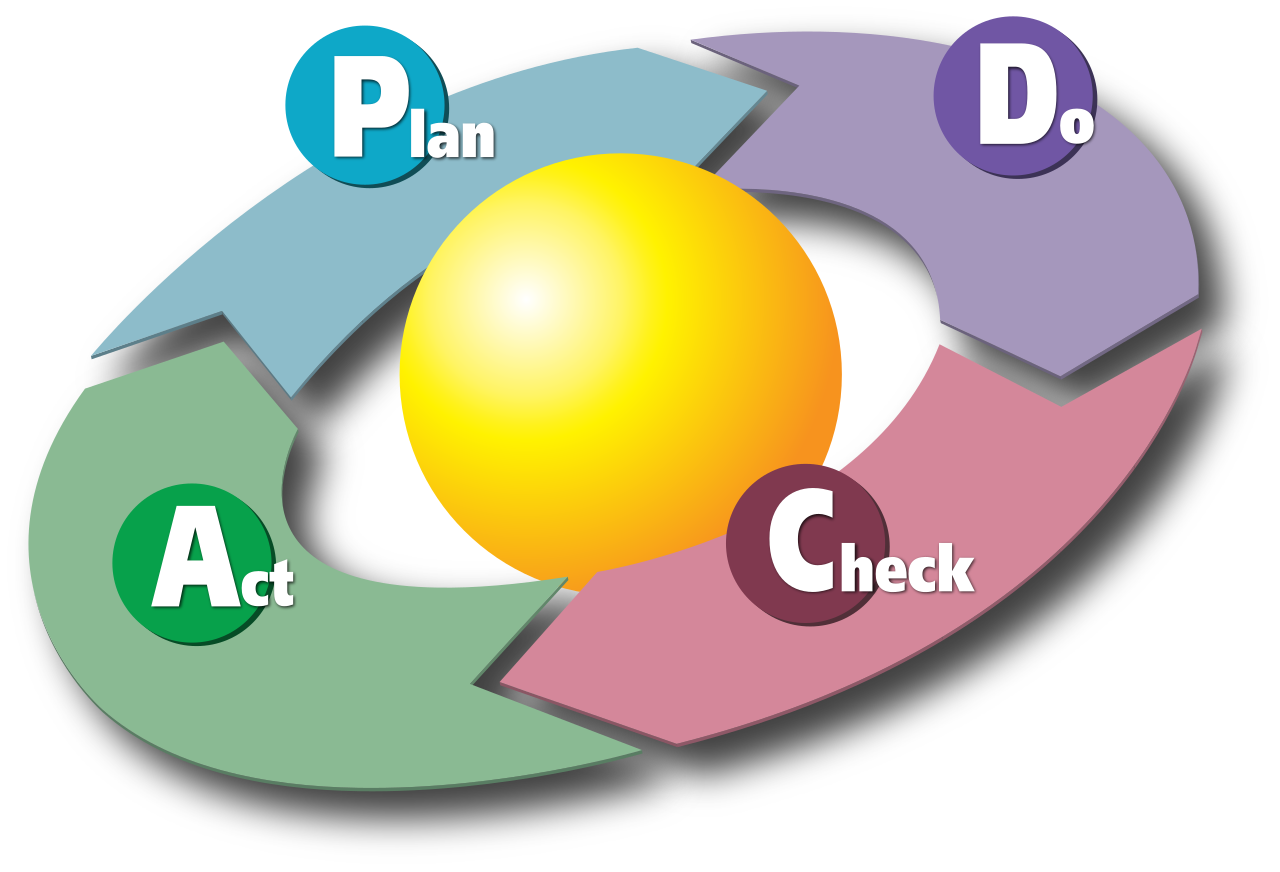
- The Plan phase of the Plan-Do-Study-Act cycle involves identifying a clinical problem and developing a strategy for change. (e.g., "Patients are getting UTIs. We plan to implement a new daily Foley catheter removal checklist.")
- The Do phase of the Plan-Do-Study-Act cycle involves implementing a proposed change on a small scale. (e.g., "We will test this checklist on just the Med-Surg unit for exactly two weeks.")
- The Study phase of the Plan-Do-Study-Act cycle involves analyzing the data collected during the implementation phase. (e.g., "Did the UTI rate actually drop during those two weeks?")
- The Act phase of the Plan-Do-Study-Act cycle involves adopting the change permanently or modifying the strategy based on test results. (e.g., "The checklist worked brilliantly. We are now rolling it out hospital-wide.")
To know if we are doing a good job, we need data. We get this data through audits and benchmarking.
The Three Types of Audits (By Focus)
When we audit care, we can look at the tools we have, the actions we take, or the results we get.
- A structure audit evaluates the physical environment and material resources available for providing client care. (Are the call bells working? Do we have enough IV pumps?)
- A process audit evaluates the actual interventions performed by healthcare providers during client care delivery. (Did the nurse wash their hands before inserting the IV?)
- An outcome audit evaluates the final results of client care activities. Specifically, an outcome audit measures changes in the client's health status related to the provided healthcare services. (Did the patient's wound heal? Did their blood pressure stabilize?)
The Three Types of Audits (By Time)
We can also look at data from different points in time:
- A prospective audit evaluates potential future client care needs and required resources. (Looking ahead: "Flu season is coming; do we have enough vaccines and ventilators?")
- A concurrent audit evaluates client care while the client is actively receiving treatment in the healthcare facility. (Looking right now: A nurse manager checking if current patients have up-to-date care plans).
- A retrospective audit evaluates client care after the client has been discharged from the healthcare facility. (Looking backward: Reviewing charts of patients who went home last month).
Benchmarking
How do we know if an infection rate of 2% is good or bad? We have to compare it. Benchmarking is the process of comparing a healthcare facility's performance metrics against best-performing organizations.
- Internal benchmarking compares performance data between different departments within the same healthcare organization. (e.g., Comparing ICU fall rates to Med-Surg fall rates).
- External benchmarking compares an organization's performance data with data from national databases or other external facilities. (e.g., Comparing our hospital's readmission rate to the national average).
Even with great systems, errors occur. How an organization handles an error determines its future safety.
Building a Safety Culture
We want to catch errors before they hurt people. To do this, nurses must feel safe speaking up. Blame-free organizational cultures encourage healthcare workers to report errors and near misses without fear of punitive action.
Why do we care so much about near misses?
- A near miss is an unplanned event that did not reach the patient.
- However, a near miss is an unplanned event that had the potential to cause patient harm.
If you almost give the wrong medication but catch it at the last second, that is a near miss. By reporting it, we can figure out why the labels look so similar before a patient actually gets hurt! Therefore, quality improvement initiatives utilize incident reports as a primary source of data for identifying systemic risks.
The Worst-Case Scenario: Sentinel Events
Sometimes, the error reaches the patient with catastrophic results.
A sentinel event is an unexpected occurrence involving death or serious physical or psychological injury to a client.
Examples include operating on the wrong body part, an infant being discharged to the wrong family, or a patient suicide in a continuously staffed facility.
When this happens, we don't just write a report and move on. The Joint Commission requires healthcare organizations to conduct a root cause analysis following any sentinel event.
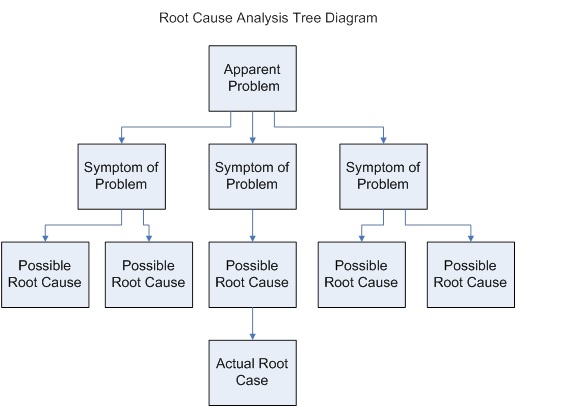
Root cause analysis is a systematic process used for identifying the underlying systemic reasons for a critical incident or error.
We do not do this to fire the nurse. Healthcare organizations use root cause analysis to redesign systems and prevent future occurrences of adverse events. We peel back the layers—like an onion—asking "Why did this happen?" until we find the fundamental system flaw.
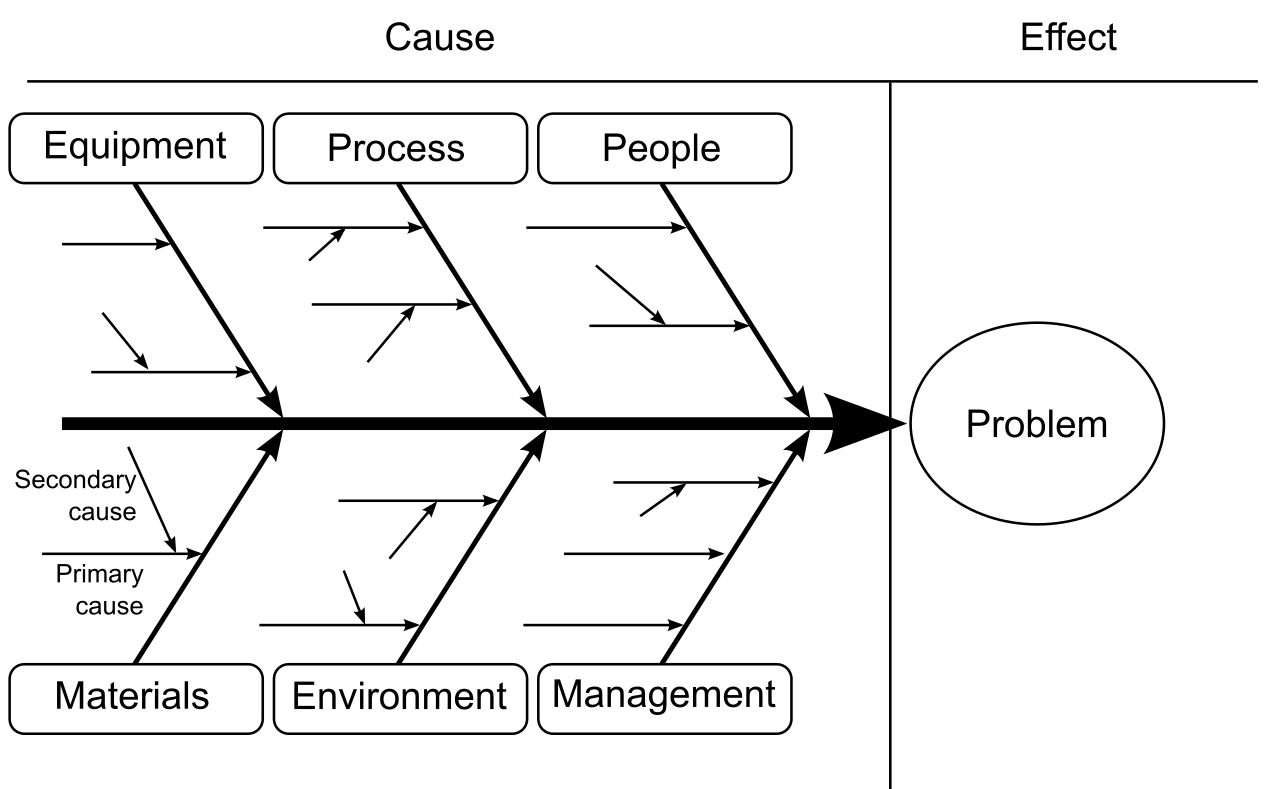
When investigating problems (like in a Root Cause Analysis) or tracking data, QI teams use highly visual tools. You need to know these four:
- A fishbone diagram is a visual tool used in root cause analysis to categorize potential causes of a systemic problem. It looks like the skeleton of a fish. The "head" is the problem (e.g., Medication Error), and the "bones" are categories of causes (Environment, Equipment, Personnel, Procedures).
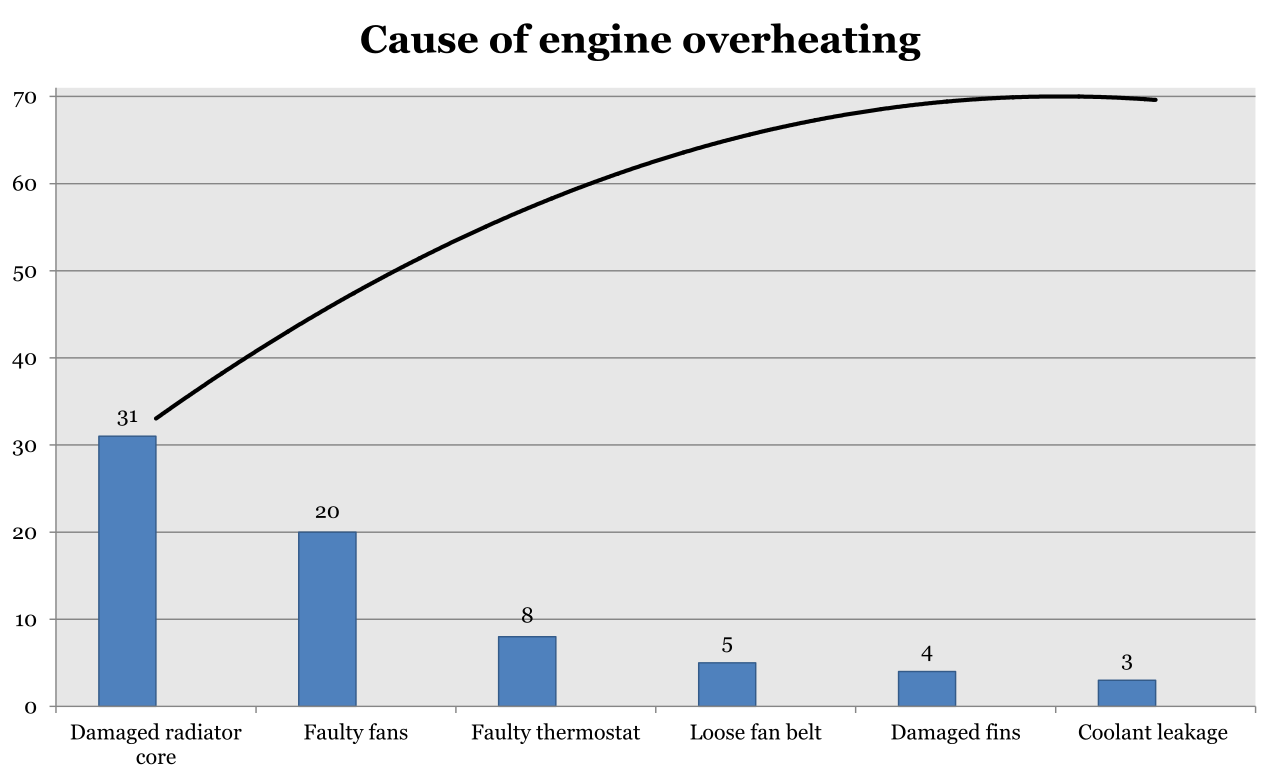
- Pareto charts are bar graphs used in quality improvement to identify the most significant factors contributing to a problem. They are based on the 80/20 rule—helping teams see that 80% of the problems are usually caused by 20% of the root causes, so you know exactly what to fix first.
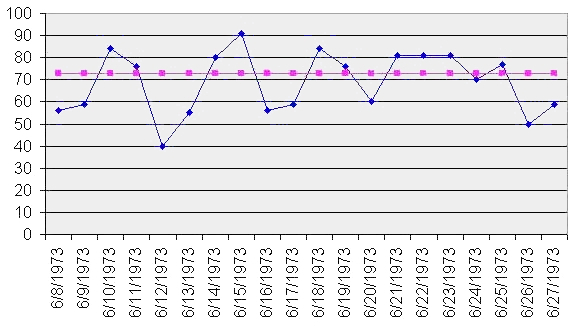
- Run charts display performance data over time to help quality improvement teams identify ongoing trends and patterns. (e.g., A line graph showing the number of falls each month over a year).
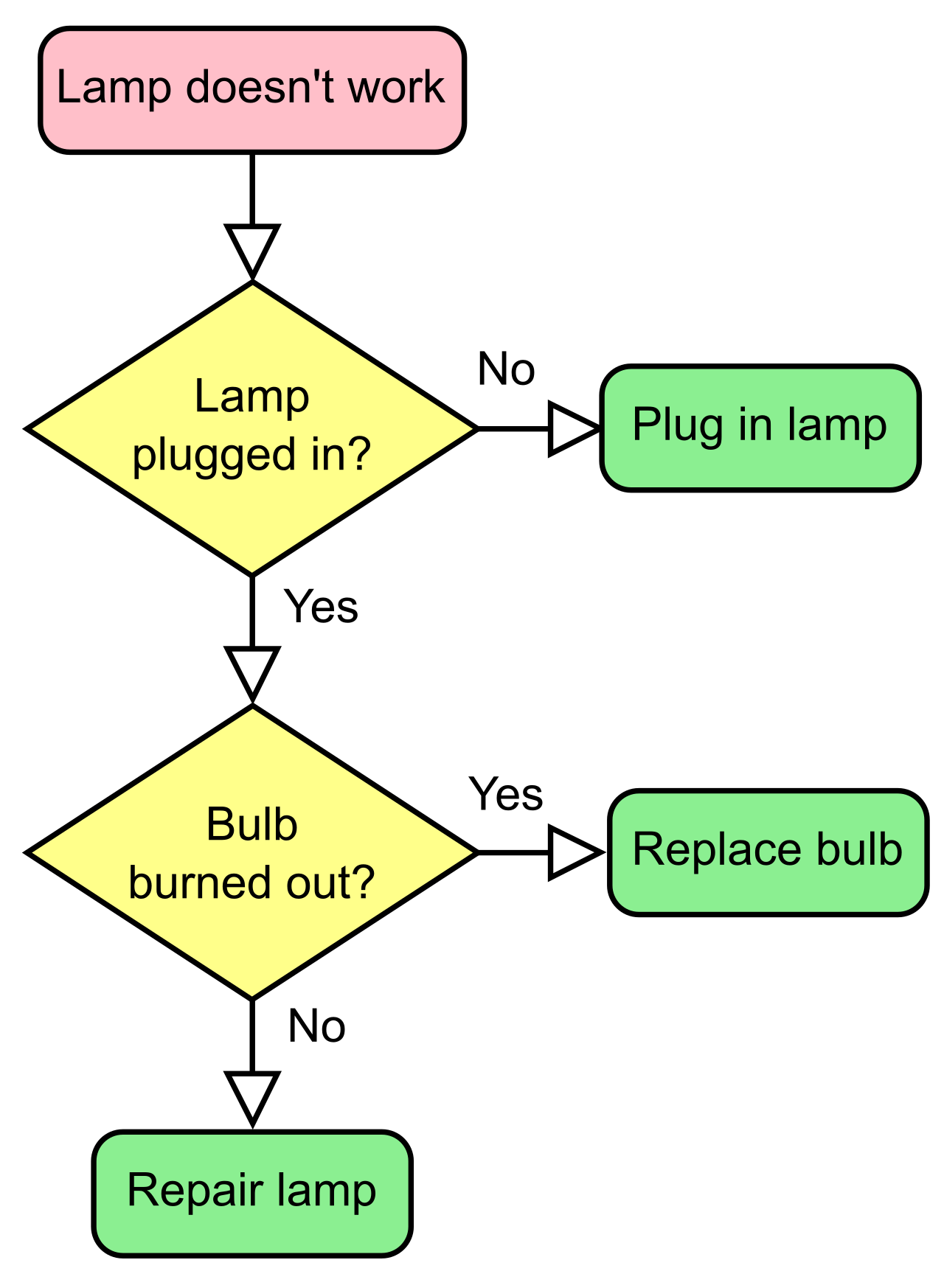
- Flowcharts provide a visual step-by-step map of a clinical process to help teams identify workflow inefficiencies. If your admission process takes 4 hours, drawing a flowchart will quickly show you where the bottleneck is.
You are not a passive bystander in this process. You are the sensory nervous system of the hospital.
Registered nurses participate in quality improvement by identifying recurring clinical problems on the nursing unit. You are the one who notices that the IV pumps keep failing or that patients are confused about their discharge instructions.
Once a problem is identified, registered nurses participate in quality improvement by collecting objective data regarding client outcomes.
Merging QI with Evidence-Based Practice (EBP)
When we decide to change a process, we don't just guess what will work better. We look to the science.
- Evidence-based practice integrates the best current research evidence with clinical expertise and client preferences.
- Therefore, quality improvement teams use evidence-based practice guidelines to establish new standard operating procedures.
Did it Work?
Finally, after all the planning, implementing, and researching, we have to prove that our intervention actually helped. Evaluating the impact of a quality improvement measure requires comparing post-implementation data against pre-implementation baseline data.
If the baseline fall rate was 5 per month, and the post-implementation rate is 1 per month, your QI project was a success!
The Bottom Line for the NCLEX
Remember this above all else: The modern healthcare system views errors as system failures, not moral failures. Whether you are using a run chart, doing a retrospective audit, or sitting on a root-cause analysis team following a sentinel event, your goal is always the same—to proactively build a system where doing the right thing for the patient is the easiest thing to do.