Leadership, Management, and Emotional Intelligence
Not sure you’re ready?
Take the ~3-minute readiness diagnostic and see where you stand.
A ship navigating a treacherous ocean passage requires two distinct, non-overlapping forces to reach its destination. Someone must maintain the structural integrity of the vessel, monitor fuel consumption, and ensure the crew follows established watch schedules. Someone else must read the stars, interpret the changing weather patterns, and convince an exhausted crew that the distant shore is worth the struggle. In project management, these two forces are not distinct roles assigned to different people; they are distinct disciplines required of a single project professional. The former is management; the latter is leadership. Without management, the project ship sinks from operational failure. Without leadership, the ship sails perfectly in the wrong direction, or the crew mutinies before arrival.
To pass the CAPM exam—and more importantly, to succeed as a project coordinator or manager—you must understand how to wield both of these forces simultaneously, and how to fuel them using the engine of human psychology: emotional intelligence.
In the realm of project management, people often use the terms "manager" and "leader" interchangeably. This is a fundamental error. They are distinct paradigms of operation. Successful project execution requires a combination of both management skills and leadership skills. Let us separate them to understand how they function.
The Mechanics of Management
Management focuses primarily on systems, structures, and operational processes. When you are managing, you are dealing with the physics of the project. You are calculating variances, optimizing resource allocation, and ensuring compliance.
Because it deals with established systems, management involves directing people using a known set of expected behaviors. You are saying, "Here is the standard operating procedure; follow it." Consequently, management seeks to minimize risk and maintain stability within a project. It abhors chaos. It wants predictability.
To achieve this stability, a manager relies on strict control and authority to achieve project objectives. This authority is typically derived from the organizational chart; management relies on positional power derived from a formal organizational role. When you enforce a deadline because you are the designated "Project Manager," you are using positional power.
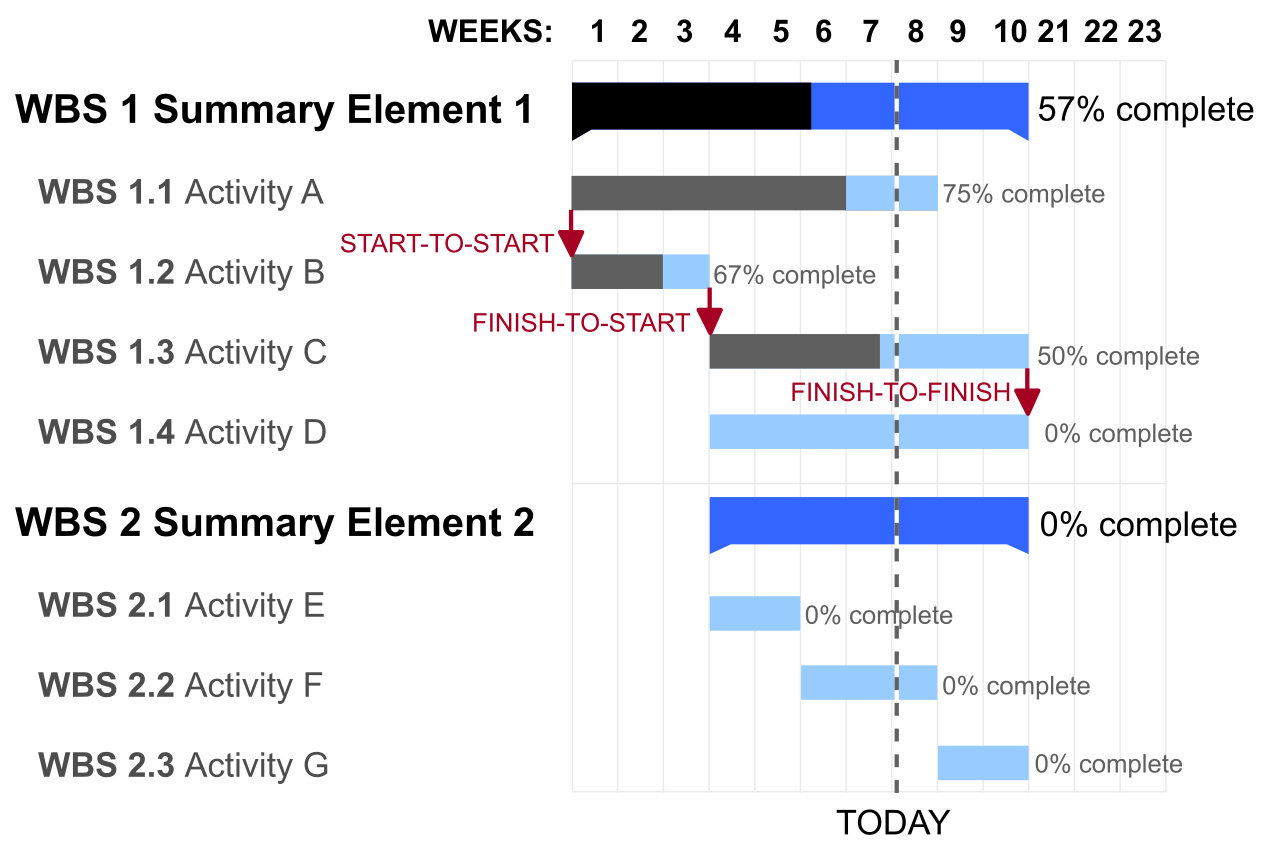
Functionally, management skills are utilized to create and monitor project schedules and budgets. If you are tracking a $500,000 budget or updating a Gantt chart, you are managing. Your gaze is fixed on the immediate horizon: management focuses on near-term goals and immediate project deliverables.
The Management Maxim: Management emphasizes doing things right to ensure process efficiency. It asks, "Are we building this product exactly to the specifications written in the scope baseline?"
The Art of Leadership
If management is the physics of the project, leadership is the chemistry. Leadership focuses primarily on building relationships with people. You cannot "manage" a person into believing in a project; you must lead them there.
Instead of dictating known behaviors, leadership involves guiding others through discussion and a shared vision. It is inherently collaborative. Because of this, it cannot rely on a title on an organizational chart. Instead, leadership relies on relational power built through personal credibility. You lead because people choose to follow you, not because HR told them they have to. Therefore, a leader relies on trust and personal influence to achieve project objectives.
Where management seeks to minimize risk and keep things stable, leadership encourages innovation and embraces necessary change within a project. When a new, disruptive technology emerges, management tries to mitigate its impact on the current baseline; leadership asks how the project can pivot to harness it.
Functionally, leadership skills are utilized to inspire team members to overcome difficult project challenges. When the server crashes at 2:00 AM the day before a major launch, positional power will not motivate a tired engineer. Relational power will. Furthermore, leadership focuses on long-range vision and future organizational horizons.
The Leadership Maxim: Leadership emphasizes doing the right things to align with overarching strategic goals. It asks, "Does this product still deliver business value to the client, even if we built it to spec?"
Comparing the Two Paradigms
For exam purposes, you must be able to rapidly distinguish between these two modes of operation. Consider this comparative framework:
| Attribute | Management | Leadership |
|---|---|---|
| Primary Focus | Systems, structures, and operational processes | Building relationships with people |
| Method of Guidance | Directing people using a known set of expected behaviors | Guiding others through discussion and a shared vision |
| Source of Power | Positional power (derived from a formal organizational role) | Relational power (built through personal credibility) |
| Mechanism of Execution | Relies on strict control and authority | Relies on trust and personal influence |
| Time Horizon | Near-term goals and immediate project deliverables | Long-range vision and future organizational horizons |
| Approach to Risk | Seeks to minimize risk and maintain stability | Encourages innovation and embraces necessary change |
| Core Philosophy | Emphasizes doing things right (process efficiency) | Emphasizes doing the right things (strategic alignment) |
If leadership requires relational power, trust, and personal influence, how exactly does one build those things? They are built through a deep, intuitive mastery of human psychology.
In project management, this mastery is called emotional intelligence. The acronyms EQ and EI both stand for emotional intelligence, and you will see them used interchangeably in professional literature.
At its core, emotional intelligence is the ability to recognize one's own emotions, but it extends far beyond simple self-reflection. Emotional intelligence includes the ability to manage and regulate one's own emotional state. Furthermore, it bridges the gap to the external world: emotional intelligence encompasses the ability to understand the emotions of other people, and ultimately, it involves the ability to positively influence the emotions of other people.
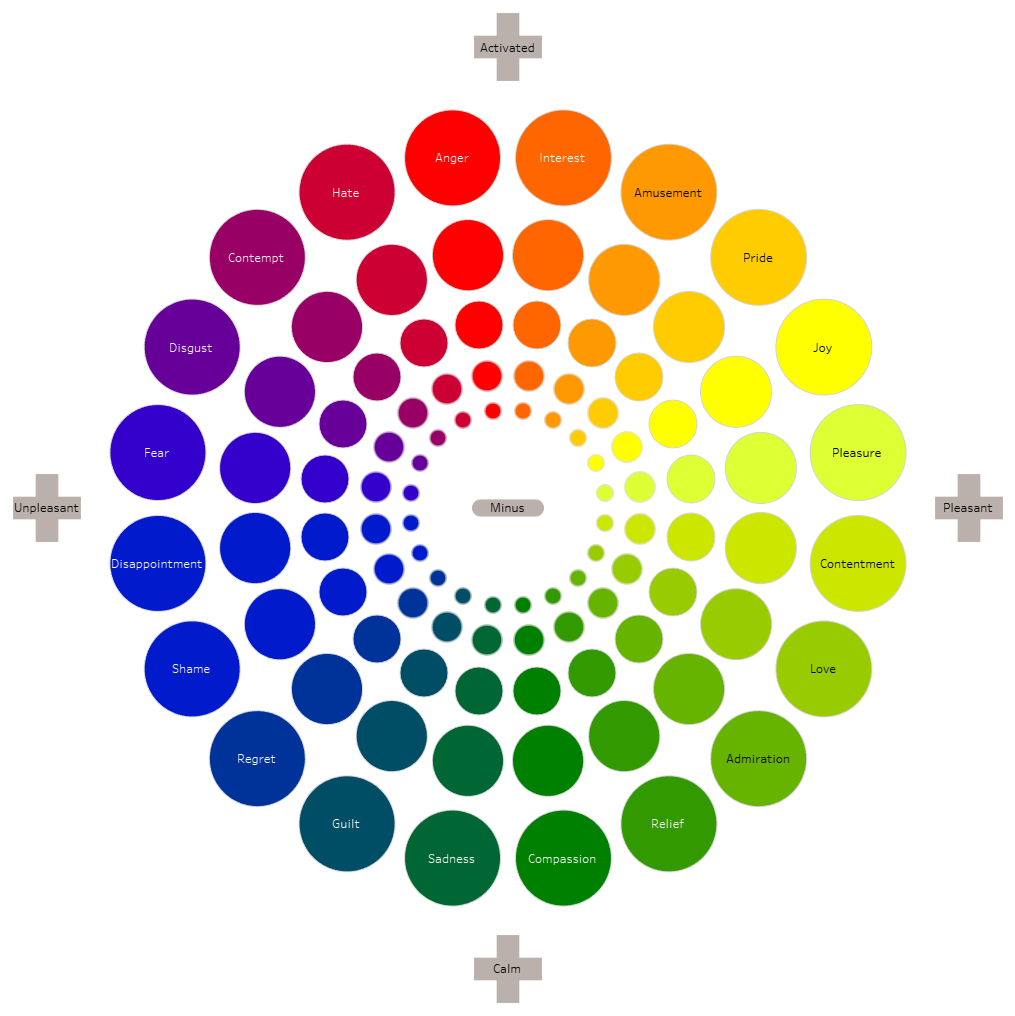
To make this rigorous, we divide emotional intelligence into four distinct components. Think of these as a matrix. The vertical axis is Self versus Social (internal vs. external). The horizontal axis is Awareness versus Management (observation vs. action).
1. Self-Awareness (Internal Observation)
Before you can lead a team, you must understand the instrument you are using to lead them: yourself. Self-awareness is an emotional intelligence component involving the recognition of personal moods and psychological drives. It is the ability to monitor your own internal state in real-time. Are you snapping at the business analyst because their requirements are poor, or because you only slept four hours last night and are stressed about a $10,000 budget overrun? Self-awareness is knowing the difference.
2. Self-Management (Internal Action)
Observation is useless without control. Self-management is an emotional intelligence component involving the redirection of disruptive impulses. When a key stakeholder abruptly demands a massive change to the project scope two weeks before delivery, your initial impulse might be anger or panic. Self-management is the mechanism that catches that impulse, suppresses the urge to yell, and redirects that energy into a calm, professional analysis of the change request.
3. Social Awareness (External Observation)
Once you have mastered yourself, you turn your gaze outward. Social awareness is an emotional intelligence component involving empathy toward the emotional makeup of other people. You are reading the room. You notice that the lead developer has been unusually quiet during the daily standup, or that the client's body language is defensive when discussing the deployment schedule.
4. Relationship Management (External Action)
This is the culmination of EQ. Relationship management is an emotional intelligence component involving proficiency in managing stakeholder networks. It is taking everything you observed in the previous three steps and using it to guide the project forward. At the team level, relationship management involves proficiency in building interpersonal rapport among team members. It is the active work of making disparate individuals function as a cohesive, resilient unit.
Concepts are abstract; projects are messy. How does this theoretical framework actually map to your day-to-day reality as a project professional?
Perspective and Empathy
A project is a collision of different realities. The operations team cares about system uptime. The marketing team cares about aesthetic appeal. The finance team cares about cost. Empathy allows a project manager to understand the distinct perspectives of individual team members. By understanding why a team member feels a certain way, you can negotiate solutions that satisfy their underlying psychological needs, not just their surface-level demands.
The Mechanism of Communication
You cannot understand someone's perspective if you are merely waiting for your turn to speak. Therefore, active listening is a crucial communication technique associated with high emotional intelligence. Active listening means paying attention to tone, identifying non-verbal cues, and reflecting back what the speaker has said to confirm understanding. It is the tactical tool you use to gather the data required for Social Awareness.
Furthermore, because different stakeholders have completely different priorities and emotional drivers, emotional intelligence enables project managers to tailor their communication styles to diverse stakeholder groups. You do not give the exact same presentation to the highly technical engineering team that you give to the high-level, time-starved executive sponsor. You adapt the medium, the tone, and the detail level to suit the audience's emotional and cognitive state.
Conflict and Change
Projects are engines of change, and human beings naturally resist change. Project managers with high emotional intelligence can more accurately anticipate stakeholder resistance to project changes. If you possess high Social Awareness, you can predict who will be upset by a new software rollout and why, allowing you to engage them proactively before the resistance metastasizes into a project blocker.
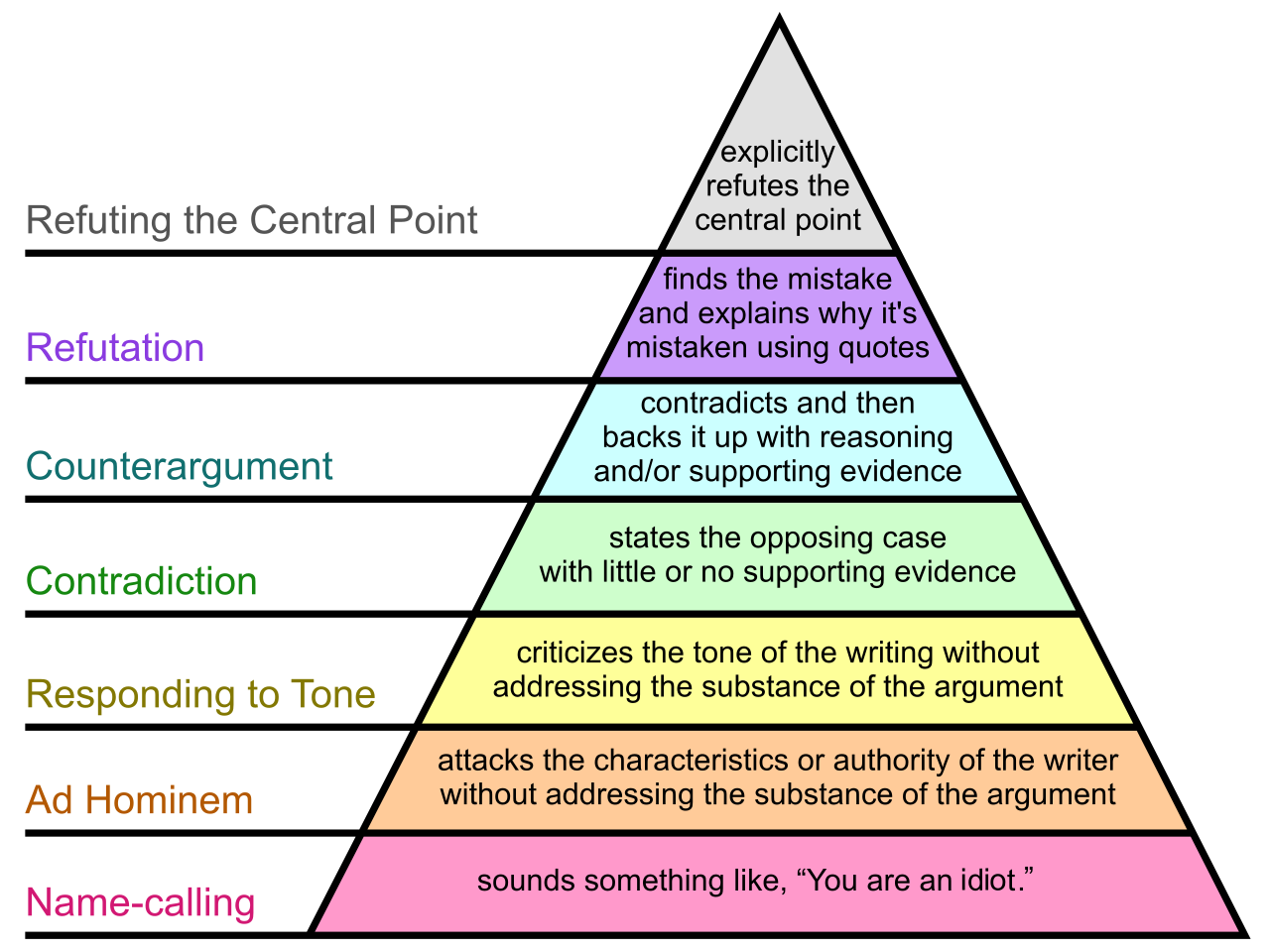
When resistance does boil over into conflict, EQ is your primary mitigation tool. Project managers apply emotional intelligence to effectively de-escalate team conflicts. By utilizing self-management (staying calm) and empathy (understanding the root cause of the anger), you can guide a heated argument away from personal attacks and back toward collaborative problem-solving.
The Ultimate Goal: Psychological Safety
Why put so much effort into managing feelings? Because fear kills performance. High emotional intelligence helps project managers build psychological safety and trust among team members. Psychological safety is the belief that one will not be punished or humiliated for speaking up with ideas, questions, concerns, or mistakes. If an operations professional discovers a fatal flaw in the project schedule, you want them to speak up immediately. If they fear you will react with anger (poor Self-Management), they will hide the problem until it is too late.
Finally, a master project manager understands that teams are not static. A project manager must adapt their leadership style based on the emotional maturity of the project team. A newly formed team of junior associates may require more direct guidance and structured relationship-building. A highly mature, cross-functional agile team may simply require the project manager to remove external blockers and trust them to self-organize.
By marrying the rigorous structures of management with the empathetic influence of leadership—and powering both with high emotional intelligence—you transition from someone who merely tracks tasks to someone who consistently delivers project success.