Planned Strategies and Frameworks
Not sure you’re ready?
Take the ~3-minute readiness diagnostic and see where you stand.
A commercial airline pilot does not dictate the flight path, calculate fuel requirements, or design emergency landing protocols while accelerating down the runway. Every trajectory, contingency, and communication channel is authorized and codified long before the engines ignite. In project management, this same rigorous pre-determination separates professional execution from chaotic improvisation. Projects are not organically evolving ecosystems; they are temporary, highly structured organizational endeavors. To operate effectively within one, a practitioner must intimately understand how projects are officially born, how their value is economically justified, and the rigid frameworks that govern how a team communicates and responds to uncertainty.
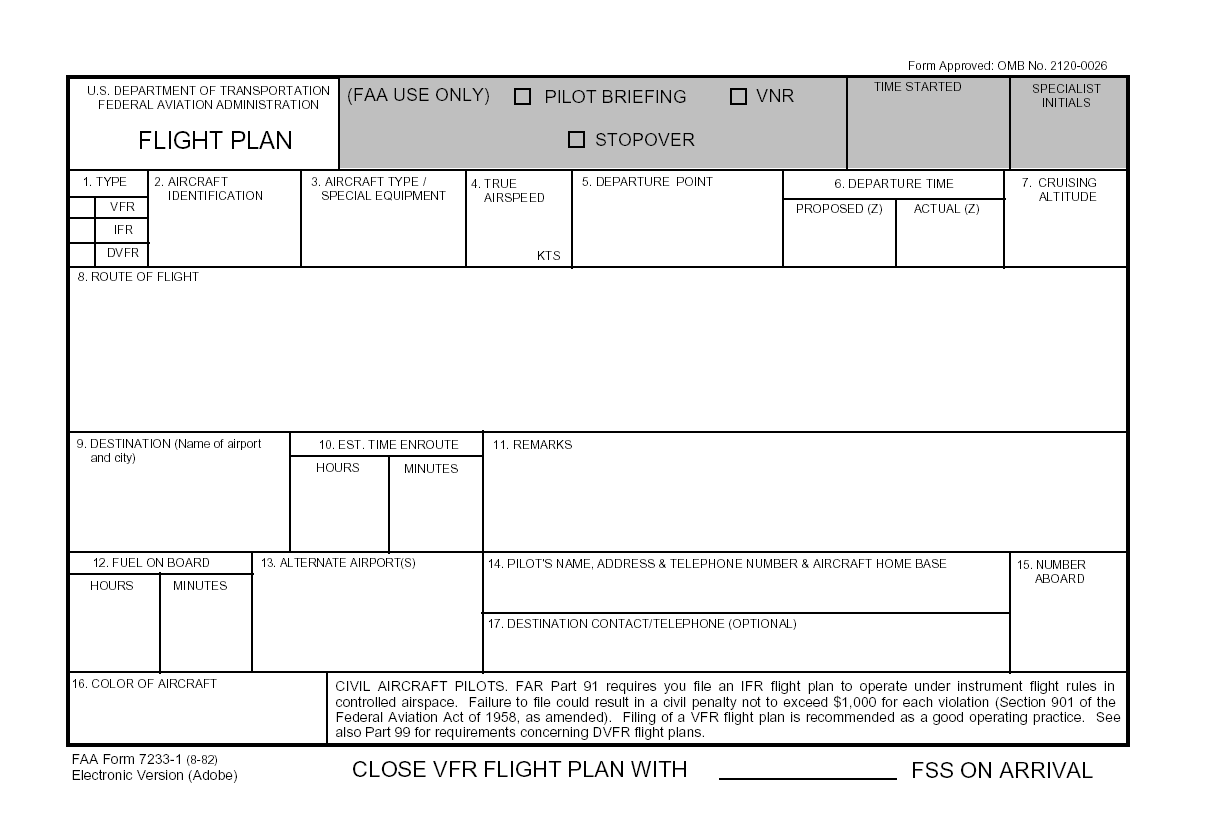
In any organization, ideas are abundant, but resources are fiercely constrained. Before a single dollar is spent or a single hour of labor is logged, a project must pass through a formal gateway. Project initiation is the first phase of the standard project life cycle. During this crucial stage, project initiation processes formally authorize the existence of a new project within an organization.
Without this formal authorization, a project manager is merely an employee making unauthorized requests. The instrument that grants this power is the project charter.
A project charter provides the project manager with the formal authority to apply organizational resources to project activities.
Think of the charter as a project manager's constitutional mandate. It does not contain every granular detail of the project schedule, but it establishes the legal fiction that the project now exists as an entity requiring time, capital, and effort. Because it grants organizational authority, the project manager does not author this mandate in a vacuum; rather, the project sponsor is typically responsible for creating and approving the project charter. The sponsor acts as the champion and financial backer, elevating the project manager from an individual contributor to an authorized leader.
Simultaneously, the project manager must begin mapping the human terrain of the endeavor. Stakeholder identification is a primary process performed during the project initiation phase. A project cannot succeed if the people impacted by its outcome are discovered as an afterthought. To manage this systematically, the project manager creates a stakeholder register, which documents information regarding stakeholder interests and their level of project involvement.
An organization does not authorize a project simply because it is technically intriguing; it does so because the project promises a return on investment. The bedrock of this financial justification is the project business case, which is a documented economic feasibility study used to establish the validity of a project.
Before the charter is even signed, the project business case justifies the financial investment required to execute a project. If an organization plans to spend $5 million upgrading its warehouse logistics software, the business case must mathematically demonstrate that this expenditure will prevent $10 million in lost productivity or generate new revenue streams.
However, realizing value does not happen automatically upon project completion. The translation of project deliverables into actual organizational value requires strict planning. This is where the business case translates into actionable strategy: the project business case serves as a direct input to the creation of the project benefits management plan.
A project benefits management plan defines how project benefits will be created and maximized during the project life cycle. Crucially, the benefits management plan describes how targeted project benefits will be sustained over time after project closure.
What exactly are we maximizing? Target benefits are the expected tangible and intangible values to be realized by project execution. A tangible benefit might be a 15% reduction in supply chain overhead; an intangible benefit might be improved brand reputation or employee morale.
This framework matters because it enforces strategic alignment, which ensures that project benefits support the overall strategic goals of the performing organization. A project that is completed on time and under budget is still a failure if it delivers a product the organization no longer strategically needs. Therefore, the project manager uses the benefits management plan to measure the ongoing success of the project outcomes, continuously verifying that the trajectory still points toward actual business value.
If the charter is the project's mandate and the business case is its rationale, communication is its nervous system. In complex projects, miscommunication is not merely an inconvenience; it is a primary vector for critical failure.
To eliminate ambiguity, the project team relies on a communications management plan, which describes how project communications will be planned, structured, and monitored. You do not leave communication to the organic preferences of individual team members. The communications management plan defines the specific methods and frequency for distributing information to stakeholders.
The Project Management Institute categorizes communication into three primary modalities, each serving a distinct operational purpose:
| Communication Type | Definition | Real-World Example |
|---|---|---|
| Interactive | Interactive communication involves real-time multidirectional information exchange between two or more parties. | A video-conference sprint planning meeting or a phone call to troubleshoot an urgent software bug. |
| Push | Push communication involves sending information directly to specific recipients who need to receive the information. | Emailing a weekly status report to the project sponsor, or sending an SMS alert to an on-call engineer. |
| Pull | Pull communication requires recipients to actively access the information content at their own discretion. | Uploading technical documentation to a shared intranet portal or updating a dashboard that stakeholders can log into when they wish. |
A foundational rule of project execution is strict adherence to this framework. Responding appropriately to a communication strategy requires team members to use the exact communication channels specified in the communications management plan. If the plan dictates that formal vendor changes must be communicated via push communication (email) to the procurement officer, mentioning it casually in an interactive daily stand-up meeting is functionally equivalent to not communicating it at all.
Uncertainty is the only absolute guarantee in project management. Rather than reacting to surprises with panic, a project manager treats uncertainty as quantifiable data.
This begins with a risk management plan, which describes how project risk management activities will be structured and performed. It is important to note that this plan does not list individual risks. Instead, it defines the rules of the game. Specifically, the risk management plan defines the specific risk appetite and risk thresholds of the performing organization. It dictates mathematically how much uncertainty an organization is willing to endure before requiring action (e.g., "Any risk with a potential financial impact over $50,000 requires mitigation").
The actual catalog of uncertainties lives in the risk register.
A risk register is a formal project document containing the results of risk analysis and risk response planning.
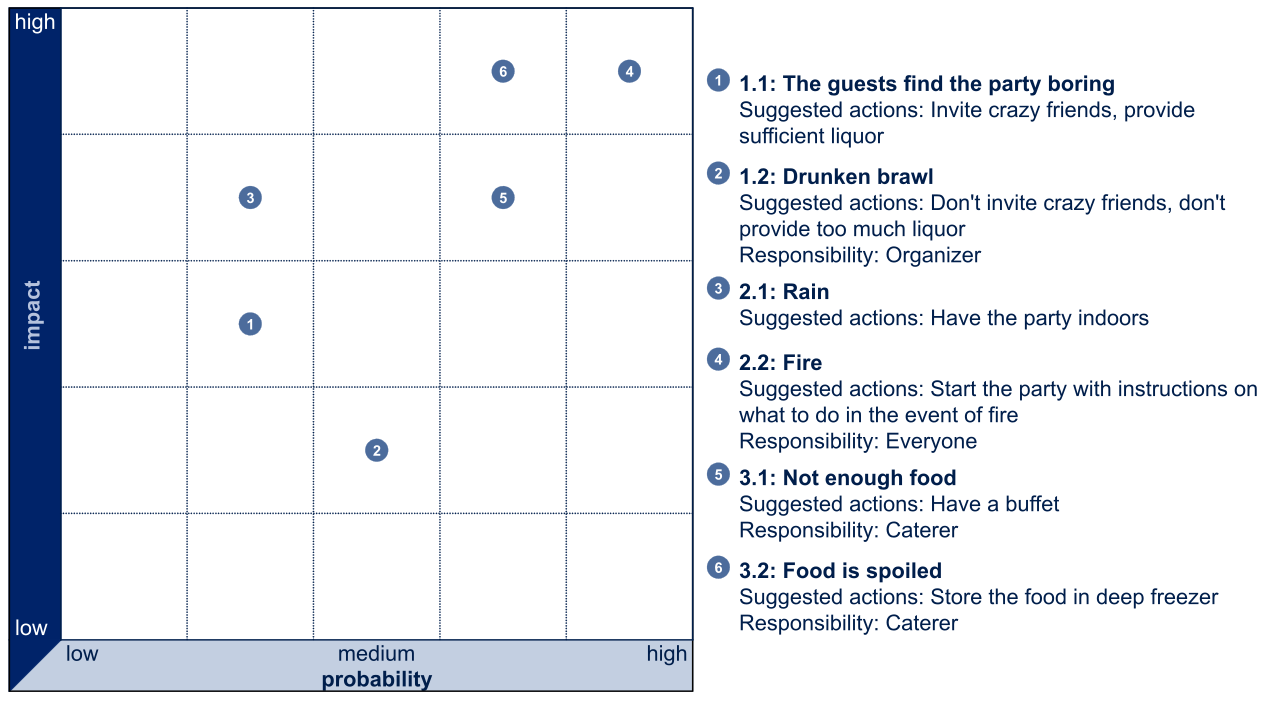
When a risk is identified, it is analyzed, and a specific, pre-calculated response strategy is assigned to it within the register. In professional project management, risk refers to both negative threats and positive opportunities.
The Standard Strategies for Negative Risks (Threats)
The Project Management Institute identifies exactly five standard response strategies for negative project risks.
- Risk avoidance is a negative risk response strategy involving changing the project management plan to eliminate a threat entirely. (e.g., Extending the schedule to avoid rushing an integration, or changing a supplier located in a politically unstable region.)
- Risk mitigation is a negative risk response strategy involving reducing the probability or impact of an adverse risk event. (e.g., Conducting extra prototype testing to reduce the chance of a defect.)
- Risk transfer is a negative risk response strategy involving shifting the financial impact of a threat to a third party. (e.g., Purchasing insurance, or signing a fixed-price contract to shift cost overrun risks to a vendor.)
- Risk acceptance is a risk response strategy where the project team decides to acknowledge a risk without taking proactive action. This is typically used for low-impact risks where the cost of mitigation exceeds the cost of the impact.
- Risk escalation is a risk response strategy used when a documented risk is outside the project manager's scope of authority. (e.g., A risk that a new corporate policy will derail the project must be escalated to the sponsor.)
The Standard Strategies for Positive Risks (Opportunities)
Risk is not always detrimental; sometimes, uncertainty presents a chance to finish early, save money, or deliver enhanced value. The Project Management Institute identifies exactly five standard response strategies for positive project risks.
- Risk exploitation is a positive risk response strategy designed to ensure that an opportunity definitely occurs. (e.g., Reassigning your absolute best, most expensive engineers to a task to guarantee it finishes ahead of schedule to win an early-completion bonus.)
- Risk sharing is a positive risk response strategy involving allocating ownership of an opportunity to a capable third party. (e.g., Forming a joint venture with another company to bid on a massive contract neither could win alone.)
- Risk enhancement is a positive risk response strategy used to increase the probability or impact of a project opportunity. (e.g., Adding extra resources to a task to increase the likelihood, though not guaranteeing, that it finishes early.)
- Risk acceptance applies here exactly as it does to threats: the team acknowledges the opportunity but takes no proactive steps to pursue it. If it happens, great; if not, the project proceeds as planned.
- Risk escalation also applies symmetrically: if an opportunity is discovered that benefits the broader organization but falls outside the project manager's jurisdiction (such as an opportunity to patent a new process), it is escalated upward.
The core competency of an aspiring project professional is understanding the hierarchy of execution. When an event occurs—be it a risk materializing or a communication bottleneck—you do not invent a solution on the spot.
Project team members must consult the project management plan before executing planned strategic project responses.
If a severe supply chain delay (a negative risk) finally happens, the team's response is governed by a strict protocol: responding appropriately to a realized project risk requires executing the predefined response strategy documented in the risk register. If the register says "mitigate by sourcing from alternative vendor B," the team immediately contacts vendor B. There is no debate, because the debate occurred months prior during the planning phase.
But what happens when the predefined strategy is no longer viable, or reality introduces an entirely novel variable?
You do not quietly alter the plan. In project management, any variance from a planned project strategy requires the project manager to submit a formal change request. Ad hoc adjustments create phantom scopes and untracked budgets.
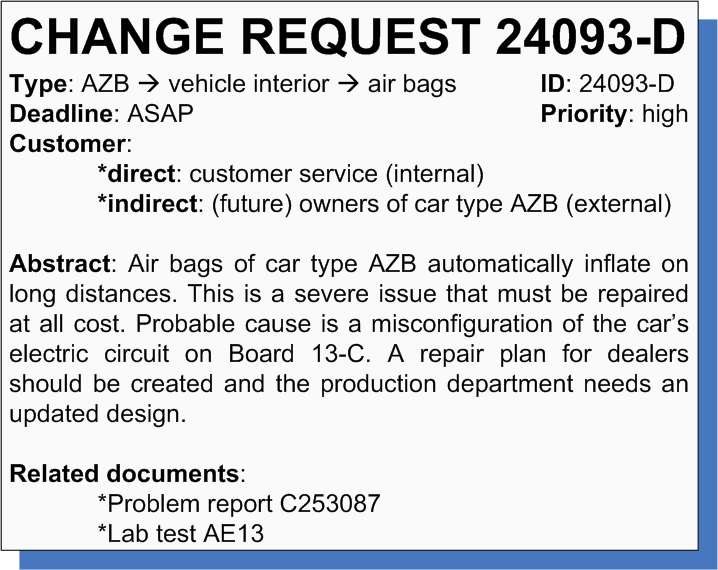
This change request is then fed into a highly controlled organizational mechanism. Integrated change control is the process of reviewing and approving modifications to planned strategies and project frameworks. Through integrated change control, a committee (often a Change Control Board) evaluates the variance, assesses its impact on the business case, schedule, and budget, and officially authorizes the pivot.
By adhering rigorously to these initiation, planning, and execution frameworks, project professionals strip the chaos out of complex endeavors. They replace frantic firefighting with calculated, disciplined strategy, ensuring that when the project ultimately lands, it arrives safely, predictably, and strictly according to the authorized design.