Requirements Traceability and Product Backlog
Not sure you’re ready?
Take the ~3-minute readiness diagnostic and see where you stand.
In structural engineering, installing miles of premium copper wiring on a floor that requires no electrical infrastructure is not just a waste of material; it is a fundamental failure of translation. The wiring might be technically flawless, but it serves no validated purpose. This disconnect is a central pathology in project execution: building the wrong thing brilliantly. To bridge the gap between a sponsor's initial request and the final delivered reality, project professionals employ rigorous tracking mechanisms. Depending on the project's methodology—predictive or adaptive—these mechanisms take the form of either a Requirements Traceability Matrix or a Product Backlog. These tools prevent scope creep, guarantee that every hour of labor ties directly back to a strategic need, and provide absolute clarity on exactly what must be built.
In predictive (traditional) project management, scope is defined heavily upfront. When a stakeholder asks for a feature, we do not simply build it; we interrogate it, document it, and track it. We do this using a specific tool.
Fundamentally, a requirements traceability matrix is a grid table used in project management. You can think of it as a chain of custody for project scope. A requirements traceability matrix links product requirements from their origin to the final deliverables.
Why do we need a grid to track this? Because features have a dangerous habit of morphing or multiplying as a project progresses. By mapping every request, the requirements traceability matrix ensures that each requirement adds business value. If a stakeholder requests a highly customized reporting dashboard, we check the matrix. The requirements traceability matrix links each requirement to specific business objectives, as well as linking each requirement to specific project objectives. If the dashboard does not map back to a stated objective, it is an orphaned requirement—a scope creep—and it is rejected.
The Mechanics of the Matrix
To function as an absolute source of truth, the RTM must be meticulous. In practice, a requirements traceability matrix includes a unique identifier for each tracked requirement (e.g., REQ-042). Next, a requirements traceability matrix records the original source of each requirement, so the project manager knows exactly which stakeholder or document to consult if questions arise.
Once the requirement is approved, we map it forward into the work execution and testing phases:
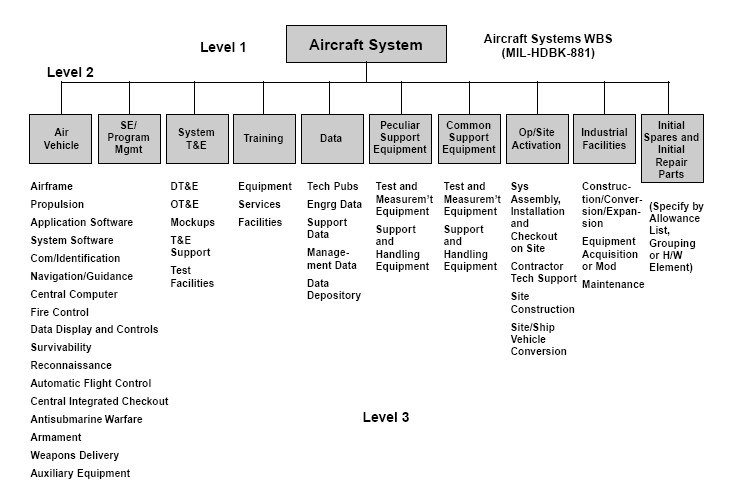
- Execution: A requirements traceability matrix links individual requirements to specific work breakdown structure (WBS) components. This tells the team where and how the work will be executed.
- Verification: A requirements traceability matrix links individual requirements to specific test cases. This is critical for quality assurance. Linking requirements to test cases verifies that the requirements have been successfully met before the project closes.
Key Takeaway for CAPM: The requirements traceability matrix tracks requirements throughout the entire project lifecycle. By doing so, the requirements traceability matrix ensures that approved requirements are delivered at the end of the project. Furthermore, because it maps every approved feature, the requirements traceability matrix provides a formal structure for managing changes to the product scope.
If traditional project management uses the RTM to lock down and track fixed scope, adaptive (agile) project management embraces the reality that scope will inevitably change. In these environments, we abandon the rigid matrix in favor of a dynamic queue.
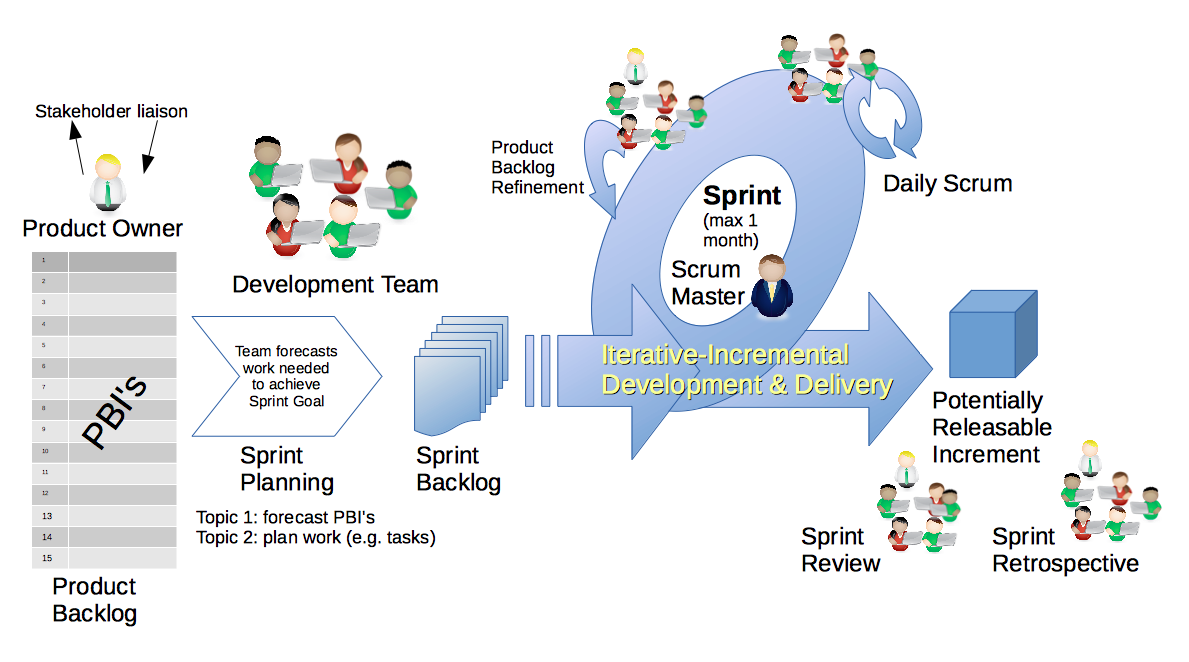
A product backlog is an emergent list of work needed to improve a product. It is also an ordered list of work needed to improve a product. Unlike a predictive project plan where tasks are scattered across various schedules and baselines, the product backlog is the single source of work undertaken by an agile project team. If a task is not in the backlog, it does not exist.
Because this list dictates the team's entire trajectory, it requires decisive leadership. The Product Owner is the specific role responsible for managing the product backlog. They act as the ultimate filter and sequencer of the work. Furthermore, business analysts use the product backlog to communicate required product capabilities to the development team, often collaborating closely with the Product Owner to ensure requirements are clear and actionable.
Evolution and Anatomy of the Backlog
A rigid project plan assumes we know everything on day one. A backlog assumes we know very little, and our knowledge will grow. Therefore, a product backlog is never considered fully complete. Instead, a product backlog evolves continuously as the product changes, and a product backlog evolves continuously as the business environment changes.
What actually lives inside this backlog? The list is diverse. A product backlog contains:
- New product features (e.g., adding a biometric login to a banking app).
- Functional enhancements (e.g., making the existing login screen load 50% faster).
- Defect repairs (e.g., fixing a bug where the login screen crashes on older devices).
- Technical debt remediation tasks (e.g., rewriting the underlying legacy code to make future updates easier).
Because the product backlog serves as the primary requirements management artifact in adaptive project lifecycles, these requirements must be written in a way the team can easily digest. Consequently, product backlog items are frequently written in the format of user stories—short, user-focused descriptions of a feature (e.g., "As a frequent traveler, I want to save my payment details, so that I can book flights faster").
The Physics of Backlog Refinement
If the backlog contains every idea, defect, and enhancement, how does the team know what to work on next? Through ruthless ordering.
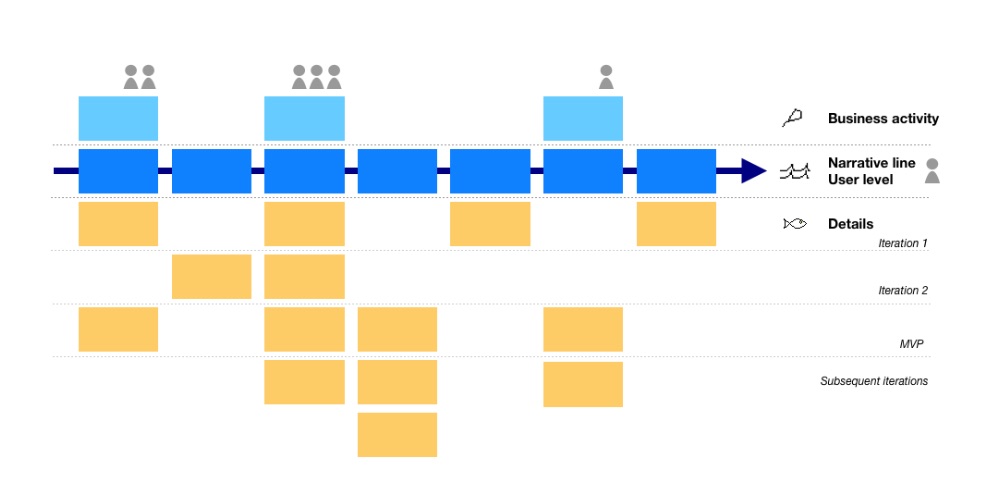
Product backlog items are ordered sequentially based on business value. They are also ordered sequentially based on associated project risks. This ensures the team tackles the most valuable, highest-risk work first. Naturally, higher-priority product backlog items are placed at the top of the product backlog list.
As items move closer to the top, their state changes. Items at the top of the product backlog contain more detail than lower-priority items. An item at the very bottom might simply say "Implement AI chatbot," while an item at the top is broken down into precise, executable steps.
This transition from vague idea to detailed task does not happen by accident. Product backlog refinement is the continuous activity of adding detail to product backlog items. This is a recurring ritual for the agile team. Product backlog refinement includes assigning effort estimates to product backlog items (so the team knows how much work they can take on in a sprint) and ordering product backlog items by priority.
Traceability in an Agile World
You might wonder: if agile teams don't use a massive Requirements Traceability Matrix, how do they prove they actually built what was requested?
Instead of a grid, agile teams maintain requirements traceability by linking product backlog items directly to acceptance criteria. Acceptance criteria act as the precise conditions that a software product must satisfy to be accepted by a user, customer, or other system. When the test passes the acceptance criteria, the traceability loop is closed.

For your exam, you must clearly distinguish between how predictive and adaptive environments handle the lifecycle of a requirement.
| Characteristic | Requirements Traceability Matrix (RTM) | Product Backlog |
|---|---|---|
| Primary Project Methodology | Predictive (Traditional / Waterfall) | Adaptive (Agile / Scrum) |
| Core Structure | A static-leaning grid table used in project management. | An emergent, ordered list of work. |
| State of Completion | Tracks approved requirements to ensure delivery at the end. | Never considered fully complete; evolves continuously. |
| How Traceability is Proven | Links to specific WBS components and specific test cases. | Maintained by linking items directly to acceptance criteria. |
| Key Roles Involved | Project Manager, Quality Assurance | Product Owner (manages it), Business Analysts (communicate via it). |
Mastering these two artifacts gives you the foundational toolkit to ensure that no matter how complex the project, your team is always building precisely what the business needs.