Requirements Gathering Tools and Approaches
Not sure you’re ready?
Take the ~3-minute readiness diagnostic and see where you stand.
Imagine constructing a high-speed rail network without ever asking the local commuters where they actually need to travel. The trains might be engineering marvels—fast, sleek, and safe—but if they terminate miles from the city center, the project is fundamentally flawed. This disconnect is precisely what requirements gathering prevents. In project management, a requirement is not merely a vague request; it is a measurable, actionable condition that a product, service, or result must meet to satisfy a business need. Eliciting these requirements is the definitive first step in transforming an abstract operational goal into a concrete project scope. The tools we use to extract this information act as our organizational sensors, calibrated to detect different types of data across different environments.

When building foundational project knowledge, we must first understand how to interface with the people who hold the keys to the project's success: the stakeholders. The method of extraction changes depending on the volume of people and the depth of the information required.
Interviews
An interview is a formal or informal approach to elicit information from stakeholders by talking to stakeholders directly. Think of interviews as your precision instrument. You do not use them to poll ten thousand people; you use them to go deep.
Interviews are the ideal requirements gathering approach for obtaining detailed expert opinions on complex project needs. Because you are one-on-one, you can pivot your questions based on the stakeholder's body language and sudden insights. Furthermore, interviews are best suited for eliciting confidential project requirements from individual stakeholders. If a department head is worried that a new software automation will make half their team redundant, they will not share that operational constraint in a crowded room. They will tell you behind closed doors.

Surveys and Questionnaires
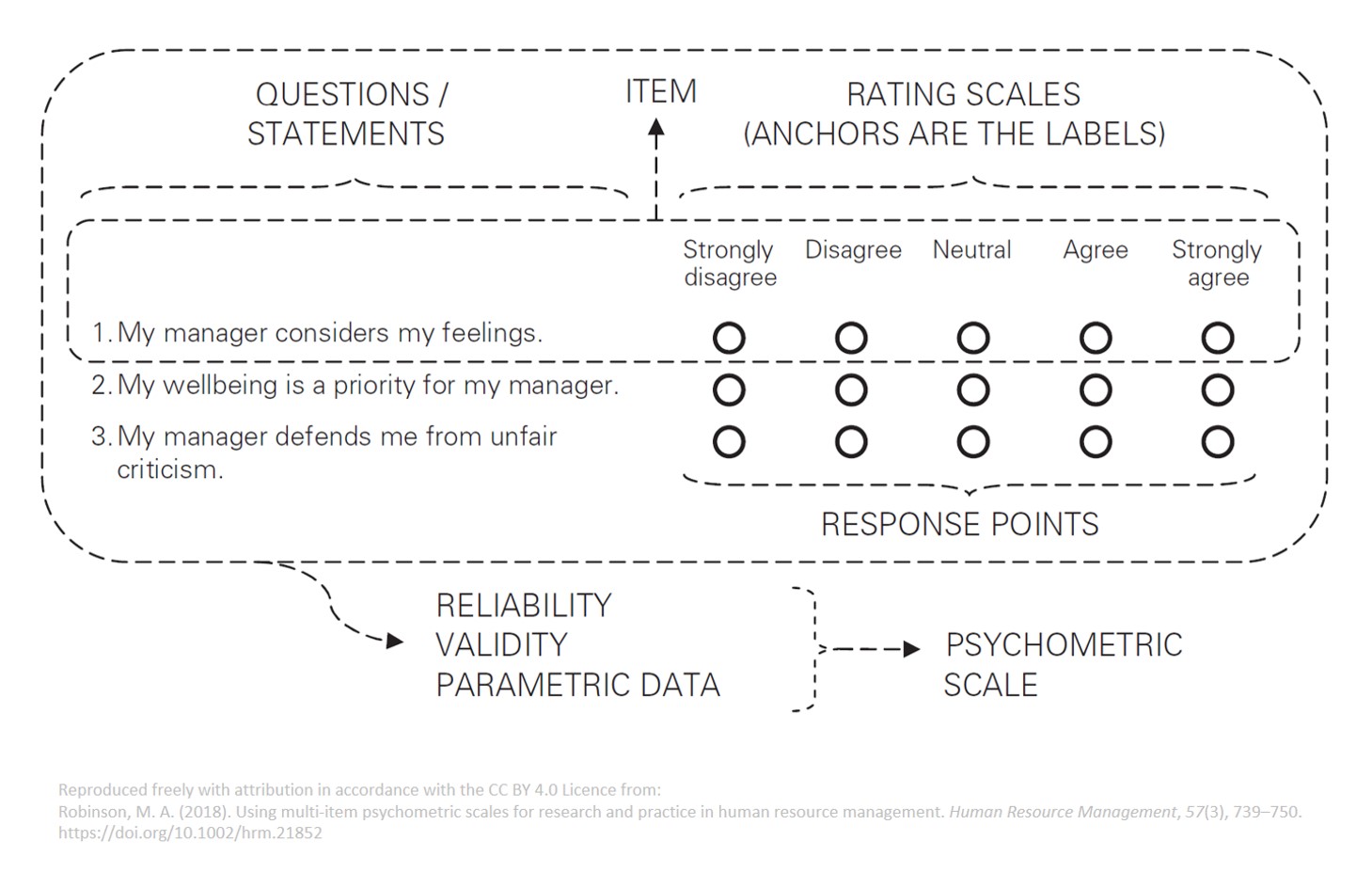
If the interview is a magnifying glass, the survey is a wide-angle lens. Surveys and questionnaires are written sets of questions designed to quickly accumulate information from many respondents.
As a project coordinator, you will find that surveys are the optimal requirements gathering approach when the target stakeholders are geographically dispersed. If your company is rolling out an updated HR portal to employees across twelve countries, interviewing everyone is mathematically impossible. Instead, questionnaires are highly effective when a project requires rapid statistical analysis of stakeholder requirements. You can instantly quantify that eighty percent of users find the current login process cumbersome, establishing a clear requirement for single sign-on functionality.
Project requirements are rarely born in a vacuum; they are forged in the friction between different departments. When operations wants speed, compliance wants security, and finance wants cost-efficiency, you cannot gather their requirements in isolation.
Facilitated Workshops
Facilitated workshops bring cross-functional stakeholders together to define product requirements in an interactive setting. These are working sessions designed for heavy lifting. Because everyone is in the room together, facilitated workshops are used to quickly reconcile stakeholder differences regarding conflicting project requirements. You force the trade-off conversation to happen in real time.
In the real world, these workshops take specific forms depending on the industry:
- Joint Application Design (JAD): JAD sessions are facilitated workshops heavily used in the software development industry to define system requirements. In a JAD session, software engineers sit directly alongside end users to hammer out what the software must actually do.
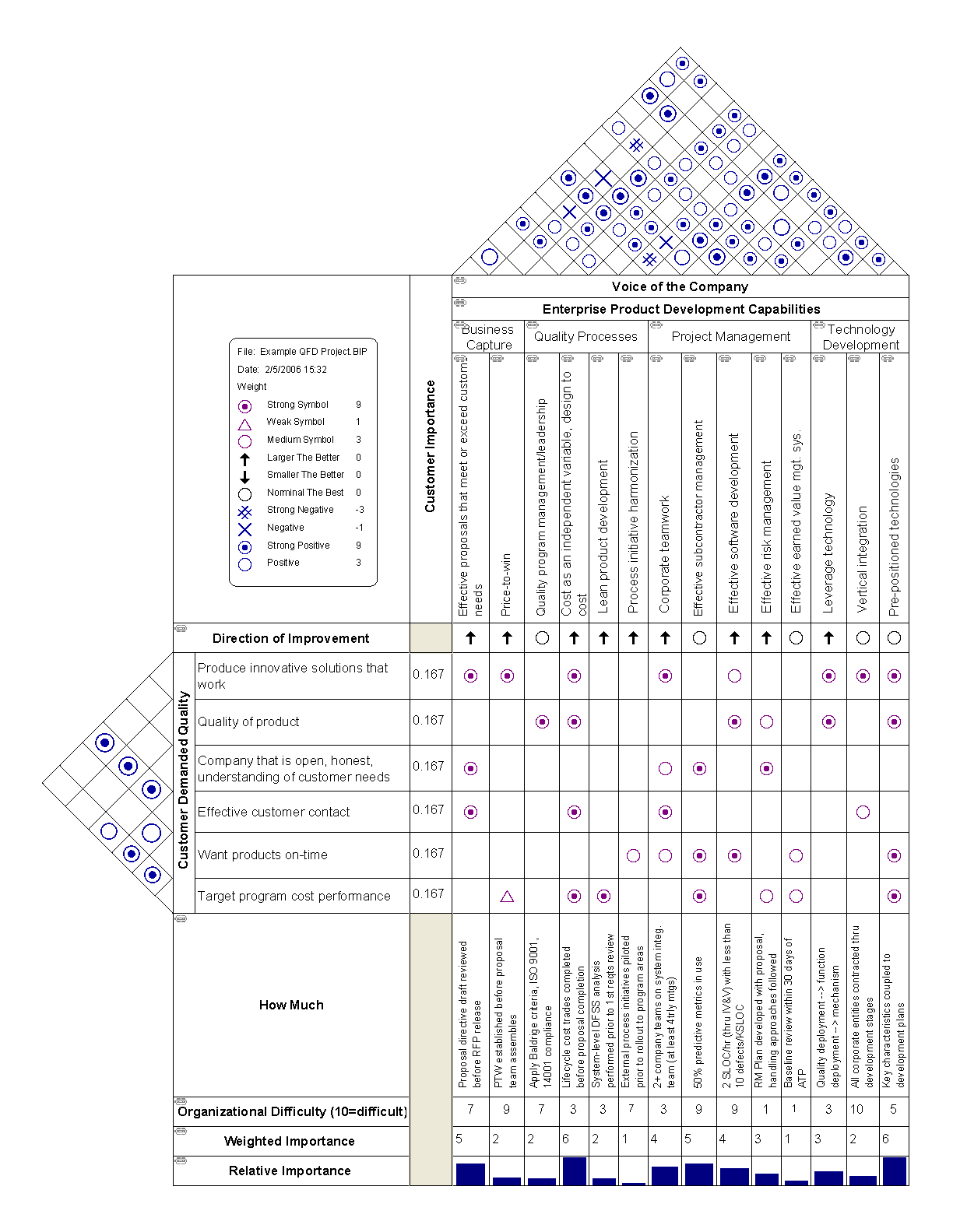
- Quality Function Deployment (QFD): QFD is a facilitated workshop technique used in manufacturing to determine critical characteristics for new product development. It mathematically translates the "voice of the customer" into strict engineering specifications.
Focus Groups
Do not confuse workshops with focus groups. While workshops are for cross-functional problem-solving, focus groups bring together prequalified stakeholders and subject matter experts to discuss expectations for a proposed product or service.
In a focus group, the participants are not building the product; they are reacting to the idea of it. Crucially, a trained moderator guides the conversational discussion during a focus group to successfully elicit stakeholder requirements. Without a trained moderator, a focus group will quickly devolve into an unhelpful complaining session.
People are notoriously bad at explaining what they do. If you ask an operations specialist how they process an invoice, they will give you the idealized, five-step version. They will forget to mention the undocumented spreadsheet they use to double-check the tax codes.
Observation and Job Shadowing
Observation involves viewing a worker directly as the worker performs a job to identify detailed project requirements. When you simply watch the work happen, reality reveals itself. Job shadowing is a specific observation technique used when an end user has difficulty articulating specific operational process requirements.
CAPM Exam Insight: Observation is highly effective for discovering hidden or undocumented requirements within an existing business workflow. If a scenario states that a process is highly complex, manual, and the workers cannot clearly explain their daily tasks, observation is your correct answer.
Document Analysis and Lessons Learned
Sometimes, the requirements already exist; they are just buried in the archives. Document analysis involves extracting project requirements by reviewing existing organizational documentation. By looking at what already exists, you establish the baseline. Business plans, current process flows, issue logs, and regulatory documents are common inputs analyzed during document analysis.
Similarly, lessons learned involves analyzing historical project data to identify relevant requirements for a current project. We study history so we do not repeat its disasters. Reviewing lessons learned repositories helps project teams capture mandatory requirements that caused issues or defects in past projects. If the last three system migrations crashed because the legacy database format was not accounted for, your current project immediately gains a new requirement: Account for legacy database architecture.
When a project is entirely unprecedented, you have no historical documents to read and no existing processes to observe. You must generate the requirements from scratch.
Brainstorming and the Nominal Group Technique
Brainstorming is an elicitation technique used to generate a massive number of unconstrained ideas in a short timeframe. The psychological trick to effective brainstorming is that the sessions intentionally separate the rapid generation of ideas from the critical evaluation of those ideas. If people feel their ideas will be instantly judged, they will stop talking.
To bring order to this chaos, we use the nominal group technique, which enhances brainstorming by incorporating a voting process to rank the most useful requirement ideas. It transforms a scattered list of fifty ideas into a prioritized, actionable top ten.
Visualizing the Ideas
Once ideas are generated, they must be structured:
- Affinity Diagrams: These allow project teams to group numerous brainstormed requirements into logical themes or categories. If your team brainstorms fifty features for a new app, an affinity diagram groups them into themes like "Security," "User Interface," and "Payment Processing."
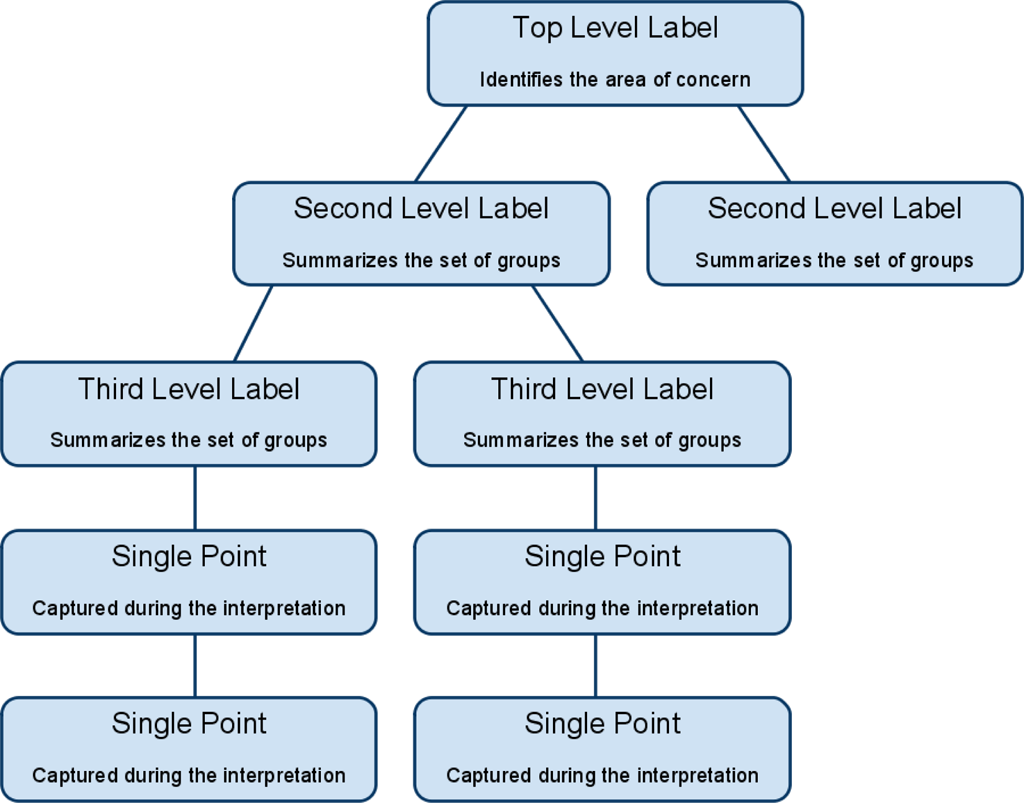
- Mind Mapping: This visually organizes stakeholder requirements by branching the requirements out from a single core project concept. It shows hierarchy and relationship, radiating outward from the central goal.
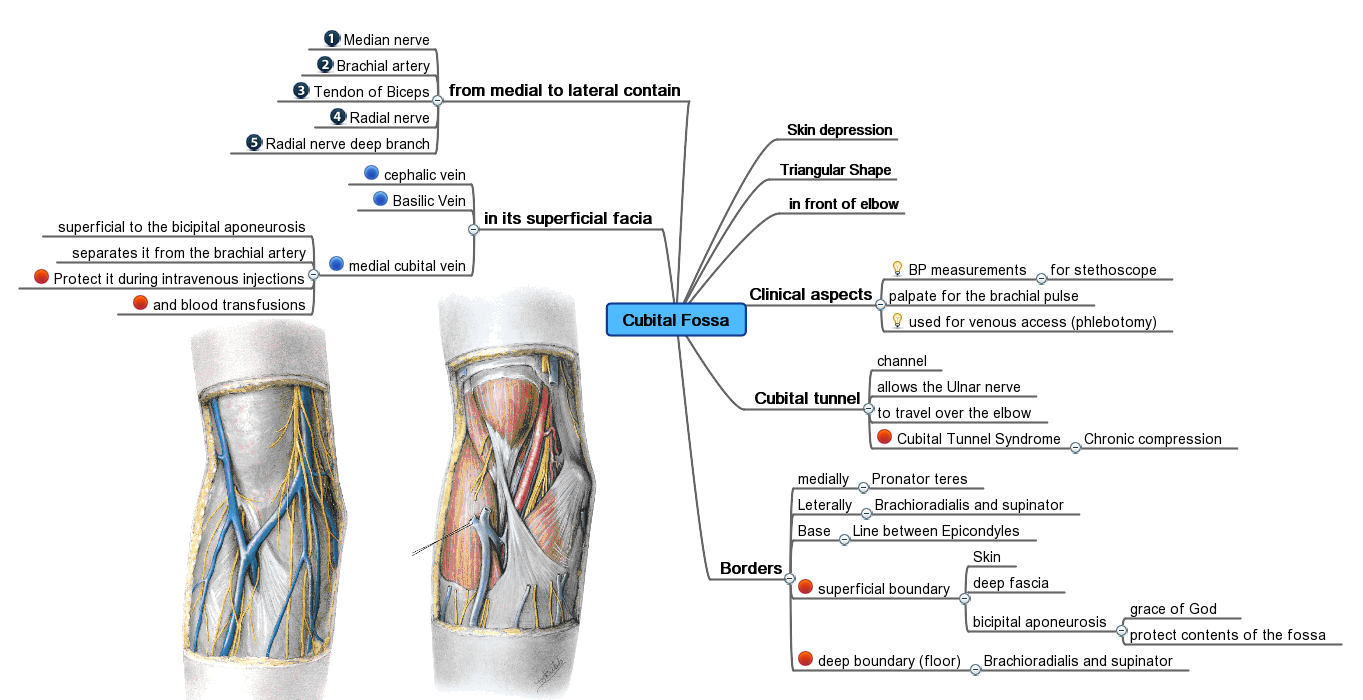
Once we have elicited the requirements, how do we write them down? The tools we use depend heavily on whether the project environment is Agile (iterative and adaptable) or Predictive (traditional and highly planned).
User Stories (The Agile Approach)
User stories are short, textual descriptions of a required functionality written from the perspective of an end user. Agile project teams heavily utilize user stories as the primary tool to capture and manage product requirements.
A standard user story format explicitly states the user role, the desired action, and the resulting business value.
- Format: "As a [role], I want to [action], so that [business value]."
- Example: "As a remote employee, I want to securely access the company intranet without a VPN, so that I can work seamlessly from client locations."
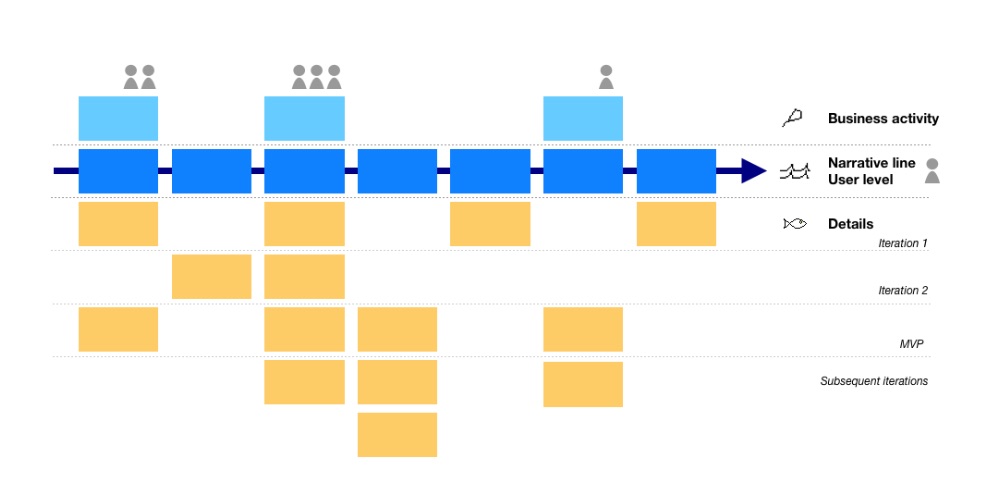
Use Cases and Context Diagrams (The Predictive Approach)
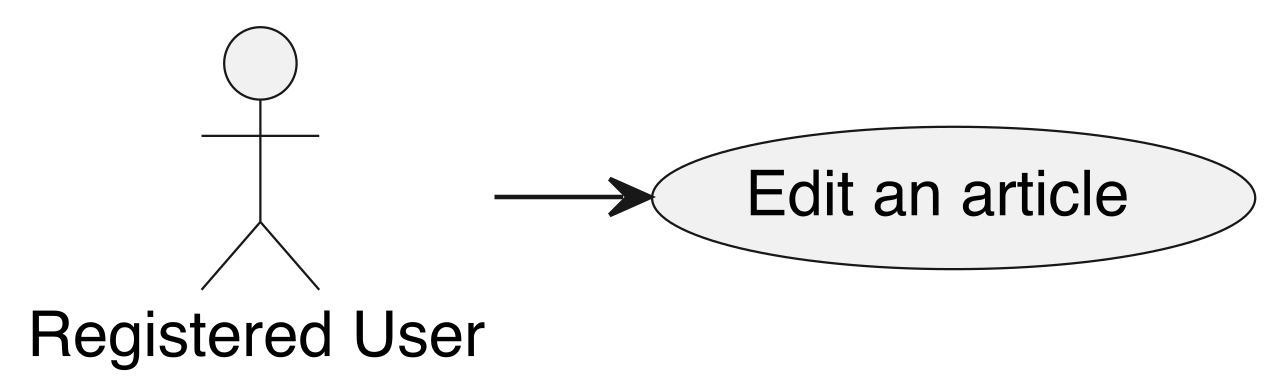
In traditional, plan-driven environments, we require more rigidity. A use case describes how a system interacts with the environment to achieve a specific user goal. It maps out the exact procedural interactions between end-user actors and the proposed software system. Use cases are commonly used in predictive project management and software engineering to detail functional requirements. They outline the primary success path, as well as every alternative failure path (e.g., what happens if the user enters the wrong password three times).
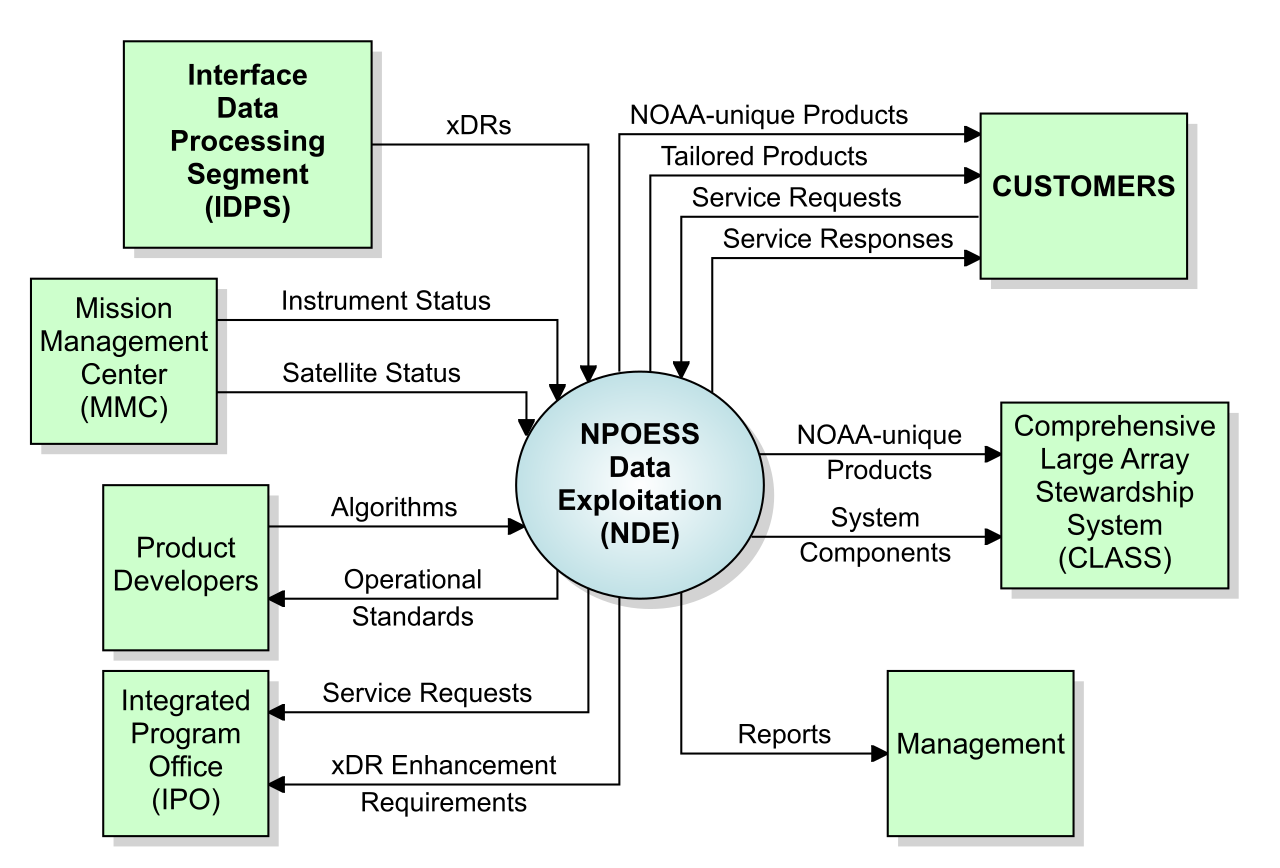
To zoom out even further, a business analyst might create a context diagram. A context diagram is a visual modeling tool showing a complete business system and how external actors interact with the business system. It represents the system as a single circle in the center, with arrows showing the flow of data between the system and external entities (like customers, banks, or other software APIs).
Prototyping and Storyboarding (Bridging the Gap)
Regardless of methodology, words on a page can only convey so much. Prototyping involves creating a working model of a proposed product before building the final deliverables.
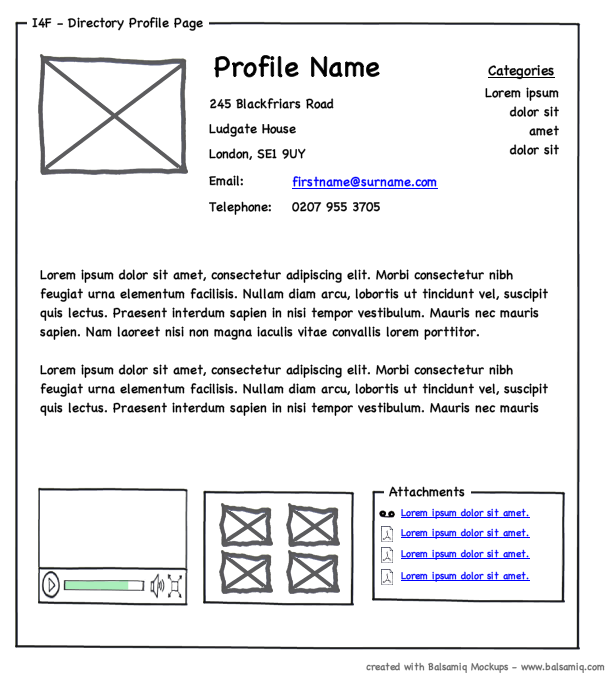
Prototypes allow stakeholders to experiment with a tangible model of the final product to provide early feedback on exact requirements. It is much cheaper to build a wireframe of an app, show it to the client, and have them say, "I hate this layout," than it is to write a million lines of code first. A specific application of this is storyboarding, which is a prototyping technique showing a visual sequence of images to demonstrate how a user navigates a software system. It visually maps the user's journey from screen to screen, ensuring the navigational logic is sound before development begins.
To excel on the CAPM exam, you must instantly connect the situational context of a project to the correct requirements gathering tool. Review this alignment matrix:
| Project Scenario / Goal | Optimal Tool or Approach |
|---|---|
| Extracting confidential data or expert opinions. | Interviews |
| Gathering rapid statistical data from a globally dispersed team. | Surveys / Questionnaires |
| Resolving conflicts between cross-functional departments. | Facilitated Workshops |
| Generating a massive volume of unconstrained ideas quickly. | Brainstorming |
| Ranking brainstormed ideas via a voting process. | Nominal Group Technique |
| Grouping brainstormed ideas into logical categories. | Affinity Diagrams |
| Workers cannot articulate how they do their highly manual jobs. | Observation / Job Shadowing |
| Capturing mandatory requirements to avoid past project failures. | Lessons Learned Repository |
| Capturing Agile requirements from the user's perspective. | User Stories |
| Detailing exact procedural steps between a user and software. | Use Cases |
| Getting early feedback on a tangible model before full build. | Prototyping |
Requirements gathering is not a mechanical administrative task; it is an act of translation. By mastering these tools, you transform the chaotic, often conflicting desires of stakeholders into the precise, actionable foundation upon which successful projects are built.