WBS and Work Packages
Not sure you’re ready?
Take the ~3-minute readiness diagnostic and see where you stand.
Imagine attempting to construct a $50 million commercial office building with a single line of instruction: "Build the building." Chaos would predictably ensue. Plumbers would arrive before the foundation was poured, and procurement teams would be left guessing at the required tonnage of structural steel. To execute complex endeavors efficiently, project professionals rely on a structural blueprint of the work itself.

In predictive project management, this blueprint is the Work Breakdown Structure (WBS). You cannot manage what you have not defined. By systematically breaking a massive, abstract goal into tangible pieces, you transform an overwhelming project into an executable series of components. This is the foundation of project control.
At its core, a Work Breakdown Structure (WBS) is a hierarchical decomposition of the total scope of work to be carried out by the project team. It takes the abstract promises made in project charters and requirement documents and translates them into physical, verifiable outcomes.
Definition: The Work Breakdown Structure (WBS) decomposes project scope into smaller, more manageable components. Work components in a Work Breakdown Structure (WBS) are strictly deliverable-oriented.
The WBS focuses solely on what deliverables need to be created. It represents the physical outcomes of the project (e.g., "Server Rack Installation," "Marketing Brochure"). Crucially, a Work Breakdown Structure (WBS) does not focus on the chronological sequence of project activities. It is a map of the destination, not the turn-by-turn navigation of how to get there.
The Top-Down Hierarchy
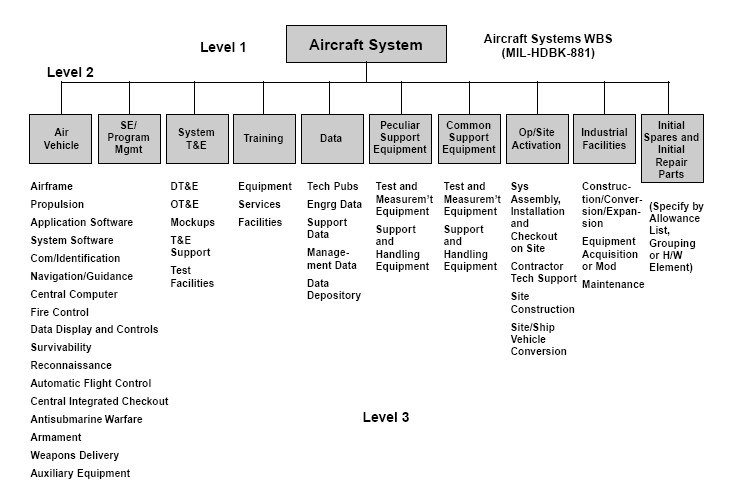
Decomposition is the primary technique used to divide project scope into the components of a Work Breakdown Structure (WBS). You begin at the summit and systematically break the work downward.
- The Summit (Level 0): The top level of a Work Breakdown Structure (WBS) represents the final project outcome or the entire project scope.
- The First Level of Decomposition (Level 1): Moving down one step, the first level of decomposition in a Work Breakdown Structure (WBS) can represent the major project phases (e.g., Design, Build, Test) or it can represent the major project deliverables (e.g., Hardware, Software, Training).
- Display Formats: Depending on the complexity of the project and the preference of stakeholders, a Work Breakdown Structure (WBS) can be displayed in a graphical organizational chart format (which visually maps the hierarchy like a family tree) or it can be displayed in a text-based outline format (like a numbered list).
If there is a fundamental law of physics for project scope, it is the 100 Percent Rule.
The 100 Percent Rule states that the Work Breakdown Structure (WBS) must include all work defined by the project scope. Furthermore, the 100 Percent Rule states that the Work Breakdown Structure (WBS) must include all internal project management work. If you are holding weekly status meetings or writing risk reports, that effort must be represented as a deliverable in the WBS.
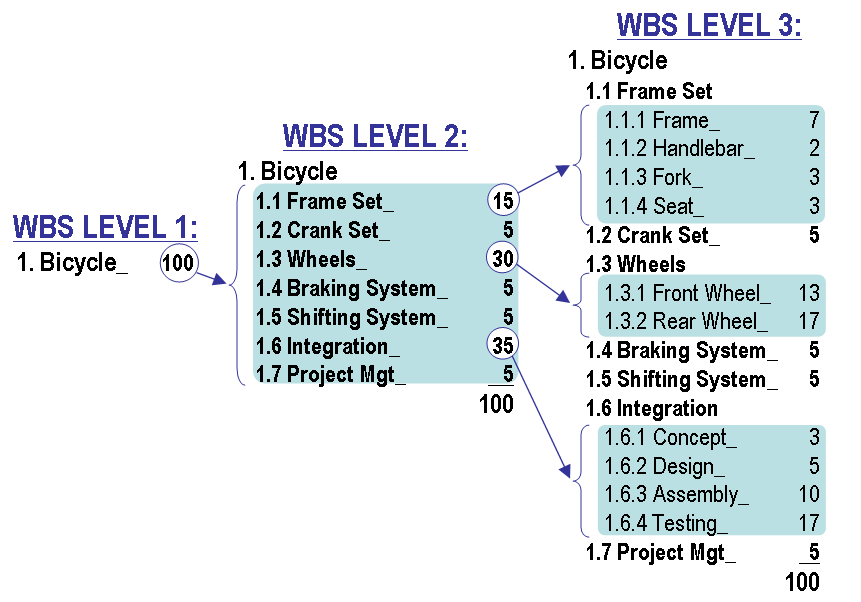
The consequence of this rule is absolute: Any work omitted from the Work Breakdown Structure (WBS) falls outside the authorized project scope.
By clearly defining the boundaries of project work—what is explicitly in and, by omission, what is explicitly out—the Work Breakdown Structure (WBS) helps prevent scope creep. If a stakeholder requests a new feature, you look at the WBS. If it isn't there, it requires formal change control.
To navigate this hierarchy, project managers rely on an organized tracking mechanism. A code of accounts is a numbering system used to uniquely identify Work Breakdown Structure (WBS) components. When a team member references "Component 3.2.1," the finance, scheduling, and engineering teams all instantly know exactly which piece of the project is being discussed.
As we decompose the project, we establish distinct levels of management and planning:
- Control Accounts: A control account is a management control point used to integrate scope, budget, and schedule for performance measurement. Think of it as a financial and operational "bucket." A single control account can contain multiple work packages, allowing management to measure earned value and variance at a higher, summarized level without getting lost in the weeds.
- Planning Packages: Sometimes, you know a major piece of work is coming, but you don't yet have the precise details. A planning package is a Work Breakdown Structure (WBS) component located below a control account, but located above a work package. A planning package contains known work content, but it lacks detailed schedule activities. It serves as a placeholder for work that will be further decomposed as the project progresses.
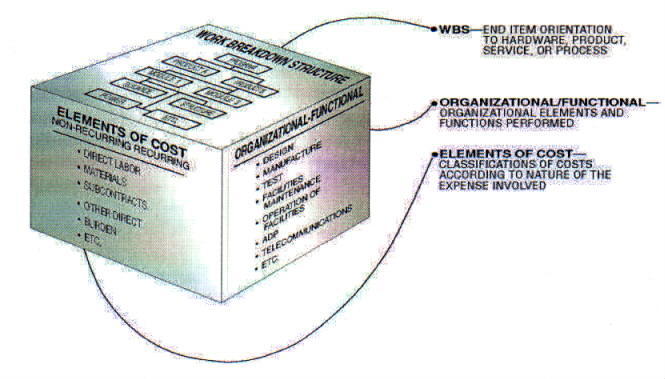
When we decompose the project as far down as it can logically go within the scope boundaries, we arrive at the foundation. A work package is the lowest level of the Work Breakdown Structure (WBS) hierarchy.
Why do we stop here? Because work packages represent the exact level of granularity where project managers can estimate project costs reliably and estimate project durations reliably.
Each work package is assigned to exactly one control account—ensuring there is never any ambiguity about which budget bucket is funding the work. For accountability and execution, a work package can be assigned to a specific individual for execution, or a work package can be assigned to a specific team for execution.
WBS Boundaries: Where Deliverables End and Time Begins
This brings us to a vital conceptual distinction for the CAPM exam: Deliverables vs. Schedule Activities.
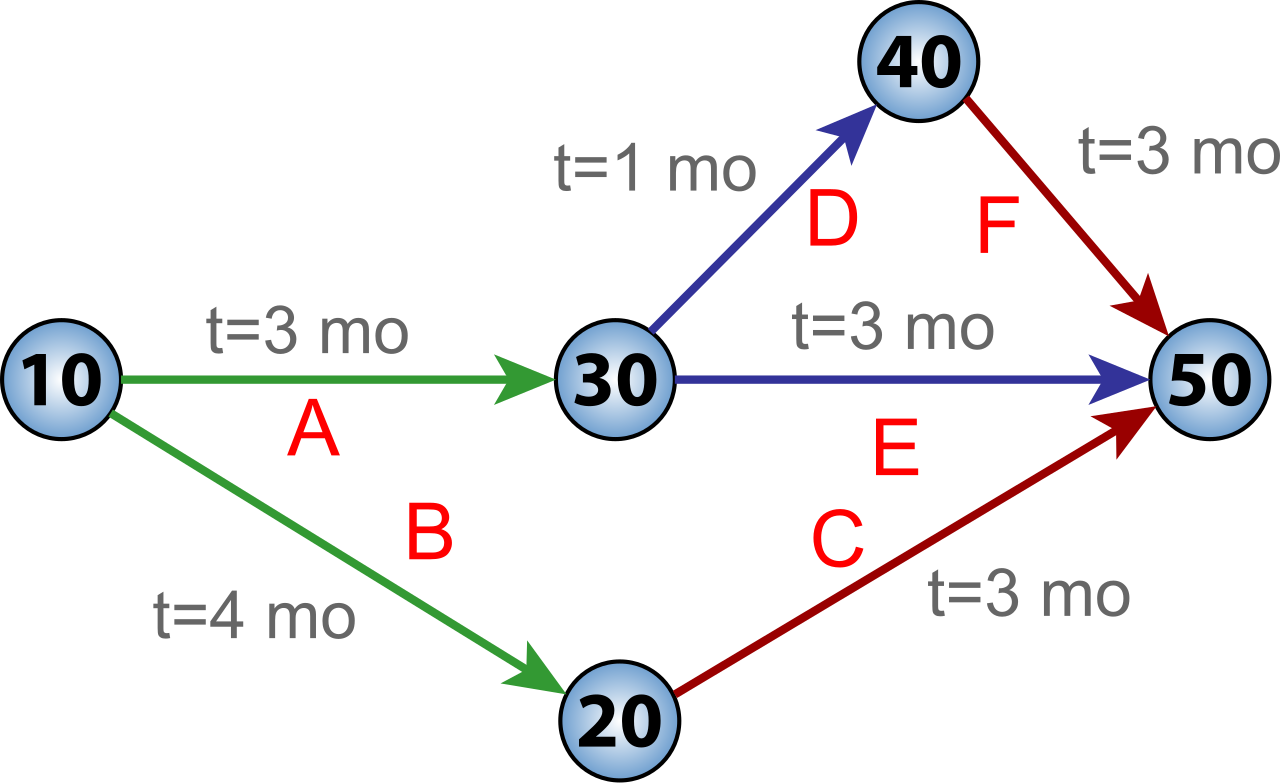
Once the WBS is finalized, the project team further decomposes work packages into smaller components called schedule activities. These represent the actual labor steps required to produce the work package (e.g., "Mix cement," "Pour cement," "Wait 24 hours for curing").
Because the WBS is strictly about what we are building, schedule activities are excluded from the Work Breakdown Structure (WBS) hierarchy. Instead, the completed Work Breakdown Structure (WBS) serves as a key input for the process of defining project activities. The WBS hands the baton to the project schedule.
A visual chart or outline is excellent for high-level structure, but a box labeled "3.2.1 Server Rack" does not give an engineer enough information to build it. They need specifications, boundaries, and criteria.
This is why we require a WBS dictionary. A WBS dictionary is a document providing detailed information for each Work Breakdown Structure (WBS) component. It acts as the descriptive legend to the WBS map.
Specifically, a WBS dictionary contains:
- A description of work for each Work Breakdown Structure (WBS) component, clarifying exactly what the component entails.
- Acceptance criteria for each work package, providing the objective parameters that determine whether the deliverable is complete and correct.

If the WBS is the skeleton of project scope, the WBS dictionary is the muscle and tissue that gives it functional form.
To create this comprehensive structural breakdown, project managers must start with approved requirements. Therefore, creating the Work Breakdown Structure (WBS) requires the approved project scope statement as an input.
Once the WBS and its supporting dictionary are created and authorized, they merge with that original statement to form an untouchable foundation for the project.
The Project Scope Baseline The scope baseline is the static, approved version of your project's scope, used as a reference point for future performance. It consists of three inseparable elements:
- The project scope baseline contains the approved project scope statement.
- The project scope baseline contains the approved Work Breakdown Structure (WBS).
- The project scope baseline contains the approved WBS dictionary.
Understanding the mechanics of the WBS and work packages is not just about passing an exam; it is about grasping the operational reality of predictive project management. When you can accurately break a massive goal down into a numbered code of accounts, define the acceptance criteria in a WBS dictionary, and map those work packages to specific control accounts, you cease merely reacting to project chaos. You architect its success.