Develop Integrated Project Management Plan: Analysis
Not sure you’re ready?
Take the ~3-minute readiness diagnostic and see where you stand.
A mechanical watch is not merely a collection of gears, springs, and escapements dumped into a brass case; it is a meticulously calibrated system where the movement of one tiny component dictates the precision of the whole. In project management, developing an integrated plan operates on the exact same principle. We do not just assemble isolated schedules, budgets, and risk registers and hope they keep time. We integrate them. We rigorously analyze the consolidated data to detect friction, identify misalignments, and ensure that the final mechanism actually delivers the economic value promised to the organization. This process of integration and analysis is the diagnostic heartbeat of cross-functional delivery.

When you step into a project, you will inevitably deal with a multitude of specific plans—how to manage risks, how to control costs, how to engage stakeholders. The project management plan integrates all subsidiary management plans and baselines into a single comprehensive document. It is the master schematic.
However, assembling these plans is only the first step. Assessing consolidated project plans requires identifying misalignments between subsidiary plans, such as schedule conflicts or budget deficits. If your risk management plan dictates purchasing expensive insurance, but your cost baseline lacks the contingency reserves to pay for it, you have a structural misalignment.
To resolve these conflicts, a project manager continuously evaluates the project management plan against the business case to verify continued business value.
The Business Case The business case documents the economic feasibility study used to establish the validity of the project benefits. It is the foundational "why" of the project.
If the schedule stretches out by six months, does the business case still hold up? If market conditions change, is the project still economically viable? These questions are answered using the benefits management plan, a critical companion document. The benefits management plan describes exactly how the project benefits will be delivered to the organization and defines the metrics used to measure the realization of project benefits. Without it, you are delivering scope without guaranteeing value.
To analyze business value and select the right projects or technical approaches, we rely on financial mathematics. You must speak the language of your executive sponsors.
When organizations choose where to allocate capital, a project selection process generally prefers a project with a higher Net Present Value (NPV) over a project with a lower Net Present Value.
- Net Present Value measures the present value of future project cash flows minus the initial project investment. Because money today is worth more than money tomorrow (due to inflation and opportunity costs), NPV discounts future revenues back to today's dollars. If a project costs $100,000 today but generates $150,000 in discounted future cash flows, the NPV is positive $50,000.
- Return on Investment (ROI), conversely, is a ratio. It measures the financial profitability of a project relative to the initial cost of the project. It tells you the percentage yield on the capital deployed.
- The payback period calculates the exact amount of time required to recover the initial investment cost of a project. Naturally, a shorter payback period indicates a faster recovery of the initial project investment, dramatically reducing the organization's financial risk profile.
Before a project manager can sequence work, they must understand the organization's starting position. We use gap analysis to identify differences between current organizational capabilities and the required project delivery capabilities. If your project requires advanced machine learning deployment, but your current IT infrastructure is entirely legacy hardware, the "gap" represents the training, hiring, or procurement work that must be built into the project plan.
Once capabilities are secured, we analyze the logical relationships between tasks. The most common sequence is a Finish-to-Start logical relationship, which dictates that a successor activity cannot start until a predecessor activity has finished. You cannot pour the concrete foundation until you have dug the trench.
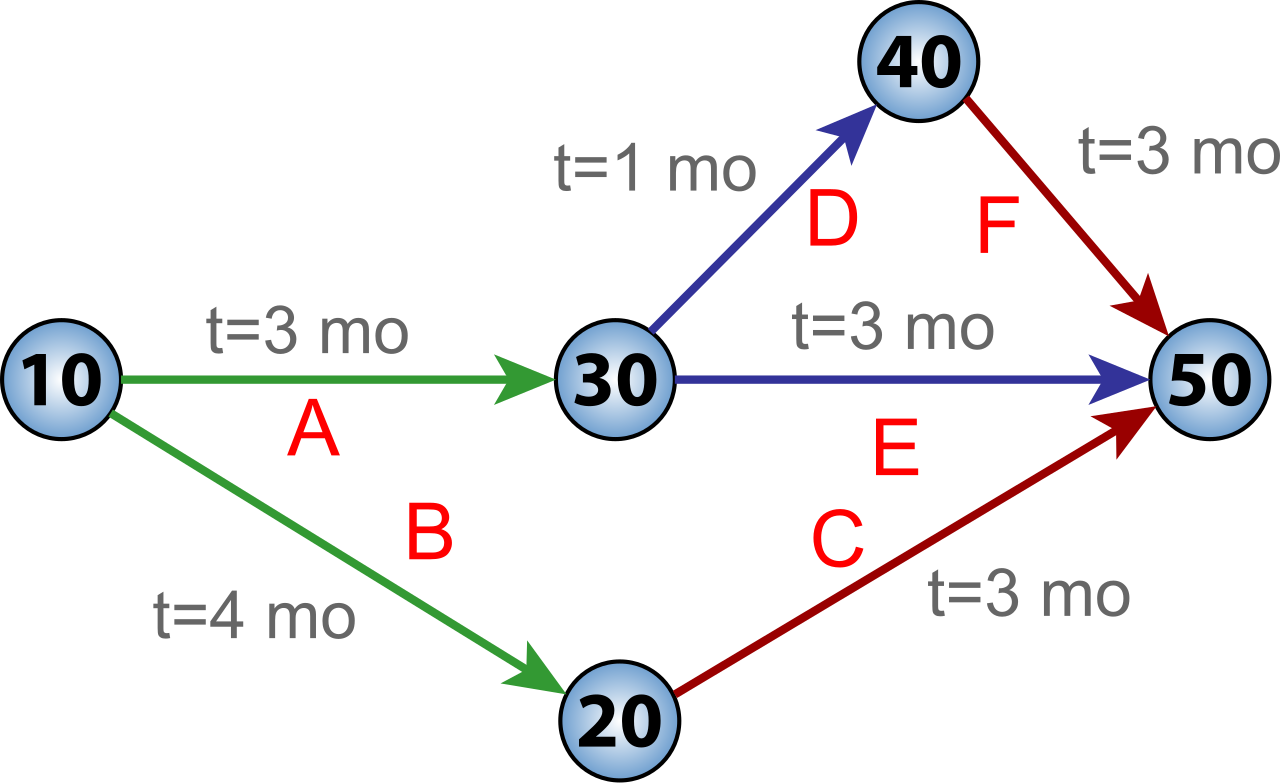
Understanding why a dependency exists allows you to analyze and optimize the schedule. There are four primary types of dependencies:
| Dependency Type | Definition & Characteristics | Real-World Example |
|---|---|---|
| Mandatory | Project constraints that are legally required or inherent in the nature of the project work. Hard logic. | You must lay the foundation before framing the walls. |
| Discretionary | Established based on best practices within a specific application area. Soft logic; can be fast-tracked if necessary. | Painting the walls before installing the flooring to avoid drips. |
| External | Relationships between project activities and non-project activities. You do not control the predecessor. | Waiting for a municipal zoning board to issue a building permit. |
| Internal | Precedence relationships between project activities entirely within the control of the project team. | The software testing team cannot test the module until the dev team codes it. |
Project management is an empirical discipline. We collect data, evaluate options, and measure reality against our theoretical plans.
1. Gathering Information
Data gathering techniques for plan development include brainstorming, checklists, focus groups, and interviews. These pull tacit knowledge out of stakeholders' heads and onto paper. Furthermore, document analysis involves reviewing existing project artifacts (like historical records, contracts, or regulatory guidelines) to extract relevant information for informed decision-making.
2. Making Strategic Decisions
When faced with multiple paths forward, how do you choose?
- Alternatives analysis evaluates different execution options to select the best approach for project work. (e.g., Should we build this software in-house, or buy off-the-shelf?)
- When decisions involve competing priorities—such as balancing cost, speed, and quality—we use multi-criteria decision analysis, which uses a mathematical decision matrix to evaluate conflicting choices systematically.
3. Evaluating Performance and Uncertainty
Once a project is in motion, we must constantly measure its momentum and correct its course. Think of these techniques as a physicist's instruments for observing a system in motion:
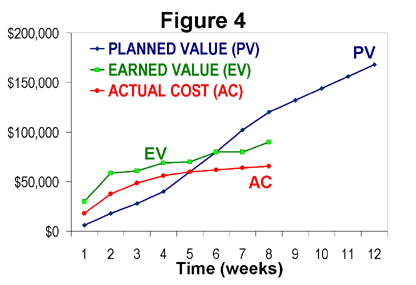
- Variance analysis takes a static snapshot of the present. It compares planned project performance baselines against actual project performance data to identify execution gaps. (e.g., We planned to spend $50,000 by month three, but we actually spent $70,000).
- Root cause analysis looks backward. It identifies the underlying structural reasons for variances in project performance. It asks why the variance occurred, probing beyond the symptom to cure the disease.
- Trend analysis looks at the trajectory. It examines project performance metrics over time to determine if overall performance is improving or deteriorating. A variance tells you you are over budget today; a trend tells you if you are bleeding cash faster or slower than last week.
- Earned Value Analysis (EVA) is the ultimate three-dimensional view. EVA integrates scope, schedule, and resource measurements to assess project performance and progress simultaneously. It prevents the illusion of being "under budget" simply because work hasn't been completed yet.
- Finally, what-if scenario analysis looks to the future. It evaluates the potential impact of different risk events on the project schedule and budget. By simulating scenarios (e.g., "What if our primary supplier goes bankrupt?"), the project manager can build robust contingency reserves.
There is no universal law dictating how a project plan must be structured. The development of the plan must adapt to the nature of the work.
In a predictive approach (often called Waterfall), the project management plan is comprehensively developed upfront before execution begins. This is necessary when dealing with massive capital expenditures and physical constraints, like building a suspension bridge. The cost of changes is astronomically high during execution, so the analysis is heavily front-loaded.

Conversely, in an agile approach, the environment is fraught with uncertainty and changing user needs. Here, the project management plan is progressively elaborated and adapted throughout the project lifecycle. Instead of waiting for a final, monolithic delivery, agile environments assess business value continuously through frequent deliverable iterations and customer feedback loops. The "plan" is a living, breathing backlog.
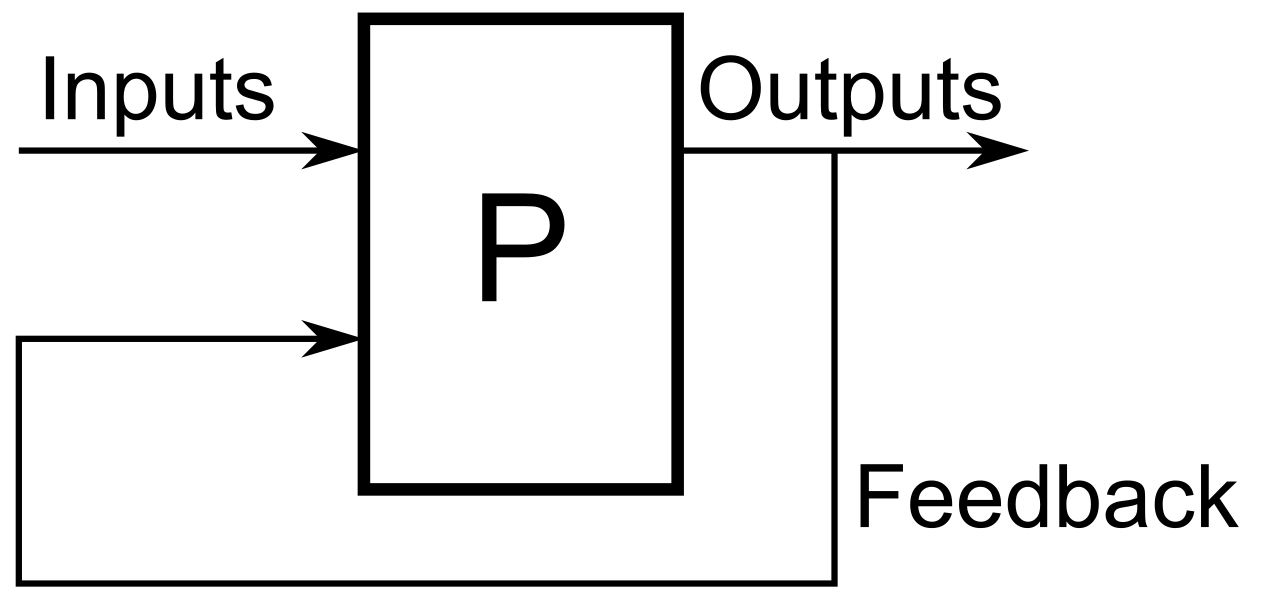
For many modern project managers, the reality is a synthesis of the two. A hybrid project management plan integrates predictive upfront planning for fixed constraints with agile execution for iterative deliverables. You might use a predictive approach to secure hardware procurement and clear regulatory approvals, while simultaneously using an agile approach to develop the software that will eventually run on that hardware.
Mastering the integrated project management plan means understanding that you are not merely a scheduler or a budget-keeper. You are an architect of business value. By continuously applying these analytical frameworks—from NPV and dependency logic to Earned Value Analysis—you transform chaos into predictable, measurable delivery.