Plan and Manage Procurement: Execution
Not sure you’re ready?
Take the ~3-minute readiness diagnostic and see where you stand.
When an aerospace engineering team sets out to build an orbital launch vehicle, they do not manufacture their own O-rings, forge their own titanium fasteners, or weave their own carbon fiber. They must seamlessly integrate external capabilities with their internal vision. This threshold—where internal project boundaries meet external market forces—is the domain of procurement. At the planning stage, a fundamental make-or-buy analysis determines whether work should be accomplished by the internal project team or purchased from outside sources. But once the decision to buy is made, the project manager must shift from theoretical planning into the rigorous mechanics of market engagement.

The Project Management Body of Knowledge categorizes the 'Conduct Procurements' process entirely within the Executing Process Group. Think of this process as a finely tuned selection mechanism. The 'Conduct Procurements' process involves obtaining formal responses from prospective sellers, selecting a qualified seller to perform the project work, and ultimately awarding a binding contract to a selected seller.

To initiate this, organizations often hold bidder conferences. Imagine briefing an entire lecture hall of rival engineering firms simultaneously. Bidder conferences ensure all prospective sellers share a clear understanding of the procurement requirements. Crucially, they serve a strict regulatory and ethical function: bidder conferences prevent any single prospective seller from receiving preferential informational treatment. Everyone hears the exact same requirements, questions, and answers at the exact same time.
The Physics of Proposal Evaluation
When the proposals arrive, you cannot simply guess which vendor is offering a fair deal. You need a baseline. Independent estimates serve as an objective benchmark to evaluate the reasonableness of proposed seller prices. If your internal estimate models a component cost at $50,000 and the vendor bids $200,000, you immediately know a boundary condition has been violated—either your model is missing variables, or their pricing is inflated.
Your procurement management plan defines the specific metrics used to evaluate a prospective seller's proposal. We evaluate these proposals using source selection criteria, which are used to objectively evaluate prospective sellers during the Conduct Procurements process.
To prevent human bias from clouding judgment, we apply weighting systems. Weighting systems assign numerical values to multiple evaluation criteria. By doing so, weighting systems provide an objective mathematical method to score vendor proposals.
What exactly are we scoring? Proposal evaluation techniques dictate that we look beyond just the price tag. These techniques include reviewing the management approach presented by the prospective seller (how they will run the project) as well as reviewing the technical approach presented by the prospective seller (the underlying engineering, architecture, or methodology they will use).
Through this rigorous scoring, a practice called shortlisting narrows down the pool of potential vendors to those most capable of fulfilling the project requirements, setting the stage for negotiations.
Once a vendor is shortlisted, we enter negotiations. The primary goal of procurement negotiation is to reach a mutual agreement satisfying both the buyer and the seller. We do not want a scenario where one side is squeezed to the breaking point; instead, a "win-win" negotiation approach focuses on satisfying the underlying interests of both the buyer and the seller.
During procurement negotiations, the project manager plays a highly specific role. The project manager clarifies project requirements and clarifies technical scope limits during procurement negotiations. You are there to define what is being built and how it will interface with your project.
However, a vital boundary exists here: the project manager frequently lacks the legal authority to sign a binding contract on behalf of the organization. Do not confuse technical stewardship with legal execution. Instead, the legal department typically holds the explicit authority to sign binding organizational contracts, or a designated contract manager typically holds the explicit authority to sign binding organizational contracts.
The Architecture of the Agreement
Modern procurement often uses a tiered approach to documentation:
- Master Services Agreement (MSA): A Master Services Agreement establishes the overarching legal terms and conditions between a buyer and a seller. Think of it as the foundational laws of physics governing the relationship.
- Statements of Work (SOW): Statements of Work attached to a Master Services Agreement define the specific scope for individual project engagements.
- Service Level Agreement (SLA): A Service Level Agreement defines the specific performance metrics expected from a service provider, and a Service Level Agreement defines the specific quality levels expected from a service provider.
Every contract type dictates how financial variance is distributed between the buyer and the seller. As a project manager, you must understand this distribution of kinetic energy—who absorbs the shock if costs explode?
Fixed-Price Contracts (Seller Risk)
Fixed-price contracts transfer the majority of the financial risk to the seller.
- Firm-fixed-price: A firm-fixed-price contract explicitly defines the total price for a precisely defined product or service. If the seller miscalculates the effort, their profit margin evaporates.
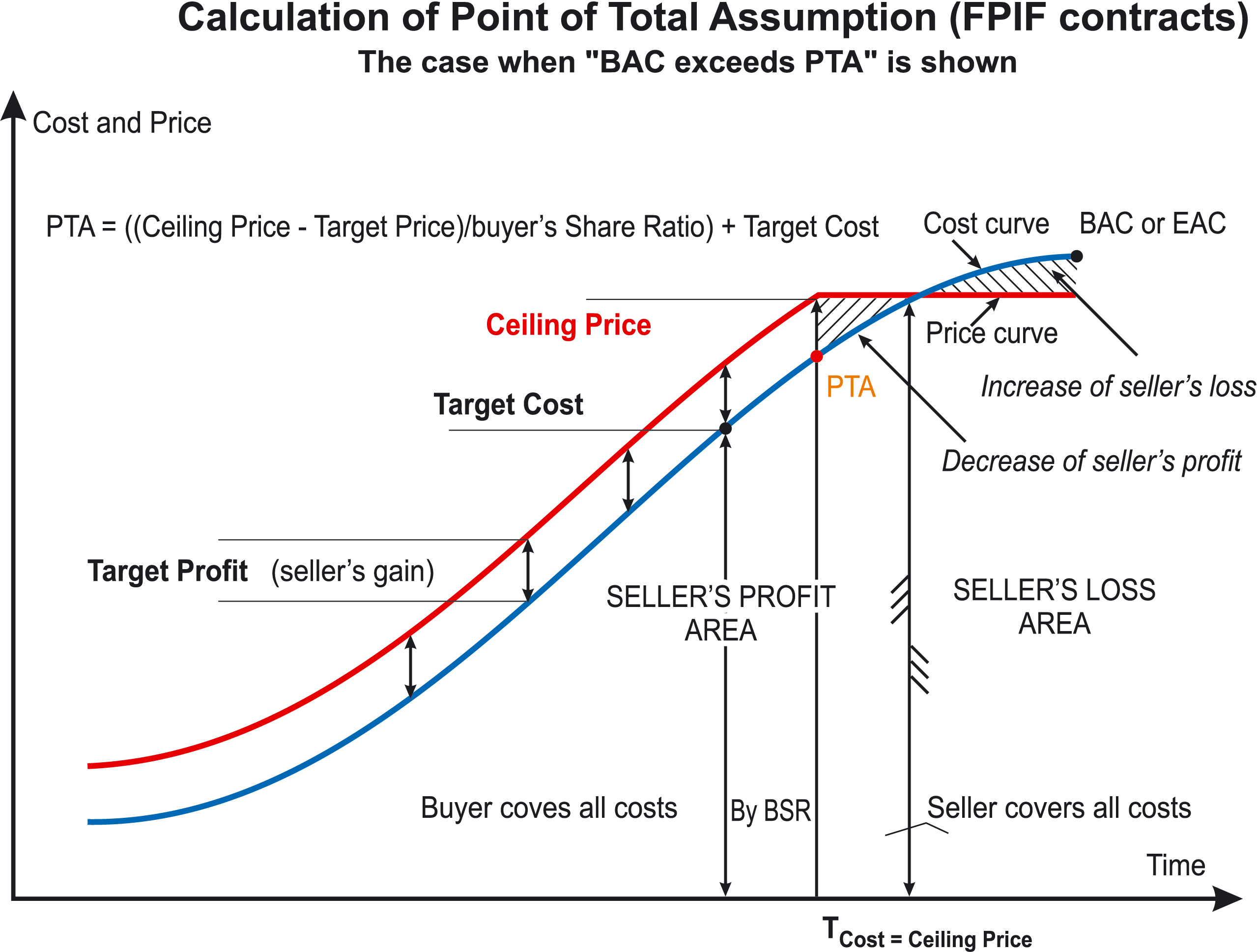
- Fixed-Price Incentive Fee (FPIF): This contract type introduces a shared risk mechanism up to a boundary. A Fixed-Price Incentive Fee contract explicitly includes a maximum price ceiling. In a Fixed-Price Incentive Fee contract, the seller absorbs all costs above the negotiated price ceiling.
- Point of Total Assumption (PTA): The Point of Total Assumption is the exact cost point in a fixed-price incentive contract where the seller assumes responsibility for all additional costs. It is the mathematical threshold where the project ceases to be profitable for the vendor, often shifting their behavior from optimizing delivery to strict cost-cutting.
Cost-Reimbursable Contracts (Buyer Risk)
Cost-reimbursable contracts transfer the majority of the financial risk to the buyer. You pay for the materials and labor, plus a fee for the vendor's profit.
- Cost Plus Fixed Fee (CPFF): Cost Plus Fixed Fee contracts reimburse the seller for all mutually allowable project costs, and provide the seller with a predetermined fixed profit amount. Crucially, the fixed profit amount in a Cost Plus Fixed Fee contract does not change with actual cost variations.
- Cost Plus Award Fee (CPAF): A Cost Plus Award Fee contract bases the final profit on subjective performance evaluations conducted by the buyer.
Time and Materials (Shared Risk)
Time and material (T&M) contracts share financial risk relatively evenly between the buyer and the seller. To prevent runaway costs, a time and materials contract often includes a 'not-to-exceed' clause to limit the buyer's maximum financial exposure.
Agile Procurement Strategies
Agile environments require fluidity. Agile procurement approaches favor collaborative supplier relationships over rigid adversarial contracts.
- A time and materials contract is frequently used to acquire staff augmentation in agile projects.
- Alternatively, agile contracts often employ a fixed-price structure for small incremental deliverables.
- Dynamic scope contracts allow new requirements to replace old requirements within a fixed total budget, maintaining financial control while permitting scope flexibility.
- Early cancellation clauses in agile contracts allow the buyer to terminate the agreement once sufficient business value is achieved, preventing wasted spend on low-value features.
Once the contract is signed and work begins, we transition into the Monitoring and Controlling Process Group. The Project Management Body of Knowledge categorizes the 'Control Procurements' process within the Monitoring and Controlling Process Group. Control Procurements ensures that both the buyer's and seller's performance meets the project's explicit legal requirements.
How do we measure this? Through rigorous procurement performance reviews. These reviews evaluate a seller's progress against the established statement of work, evaluate a seller's progress against the contract quality requirements, and evaluate a seller's progress against the established schedule baseline.
We look at the data dynamically:
- Trend analysis determines whether a vendor's performance is improving over time, or conversely, whether a vendor's performance is deteriorating over time.
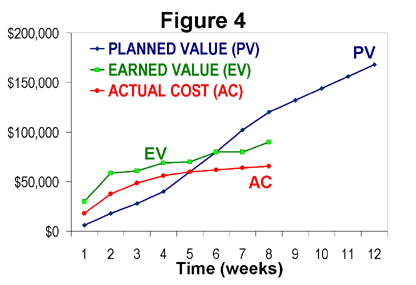
- Earned Value Analysis compares the vendor's actual schedule performance against the expected schedule baseline, and compares the vendor's actual cost performance against the expected cost baseline.
Quality is verified empirically. Inspections verify that the seller's deliverables meet the specific standards outlined in the procurement contract. Based on these observations, vendor performance evaluations provide formal documented feedback to the seller regarding work execution.
Finally, a payment system ensures the seller receives compensation in accordance with the exact contract terms. Payments to the seller are typically tied to the verified completion of specific project deliverables.
In any complex system, entropy guarantees that things will change. How we handle those changes determines project survival.
Any modification to an existing contract must be formally documented in writing, and any modification to an existing contract must be approved by a legally authorized representative. This formal machinery is governed by the Contract Change Control System.
The Contract Change Control System defines the formal process by which a procurement contract can be modified. It includes the specific paperwork required for authorizing contract changes, the tracking systems required for authorizing contract changes, and it dictates the approval levels required for authorizing contract changes.
Sometimes, changes happen without formal paperwork. Constructive changes occur when buyer actions unintentionally alter the seller's required scope of work. Equally dangerous, constructive changes occur when buyer inactions unintentionally alter the seller's required scope of work (for instance, failing to provide an essential facility on time, forcing the vendor to incur storage costs).
When constructive changes or other disputes arise, and the buyer and seller cannot agree on compensation for modified work, we call these contested changes. Claims administration handles contested contractual changes.
If direct negotiation over a claim fails, we turn to Alternative Dispute Resolution (ADR). Alternative Dispute Resolution includes the technique of mediation, and it includes the technique of arbitration. Mediation and arbitration are used to resolve contract disputes without formal litigation, saving both parties immense time, capital, and reputational damage.
Occasionally, the disruption is an act of nature. Force majeure clauses relieve both contractual parties from legal liability in the event of unforeseen extraordinary circumstances. Such unforeseen extraordinary circumstances triggering force majeure clauses include natural disasters and wars.

Before you can archive the project files, the project manager must verify that all contract terms and conditions are satisfied before closing a procurement.
At this stage, mature organizations conduct procurement audits. Procurement audits review the entire procurement process from initial planning through final administration. The goal is systemic optimization: procurement audits identify successes to improve future procurement processes within the performing organization, and they identify failures to improve future procurement processes within the performing organization.
Ultimately, all this procurement machinery exists for one reason: to deliver value. A delivery solution outlines the specific methodology for transferring the completed product to the end customer. Furthermore, a delivery solution outlines the specific sequence for transferring the completed product to the end customer.
By mastering the mechanics of procurement execution, you transcend being a mere administrator of tasks. You become an architect of capabilities, able to orchestrate internal vision and external market forces into a singular, successful reality.