Support Organizational Change
Not sure you’re ready?
Take the ~3-minute readiness diagnostic and see where you stand.
When a heavy stone is dropped into a flowing river, the water does not simply vanish; it aggressively routes around the obstacle, generating turbulence, back-eddies, and drag. In project management, a new system, process, or reorganization is the stone, and the existing organizational culture is the river. To successfully deliver a project is to master fluid dynamics—you must account for the currents of human behavior, or your initiative will be overwhelmed by resistance. Delivering the technical components of a project is meaningless if the organization is unwilling or unable to absorb the disruption.

To understand how projects survive inside a company, we must categorize the environment in which they operate. Organizational culture is classified as an Enterprise Environmental Factor (EEF) in project management. It is the invisible gravity field surrounding your project, consisting of both the shared values among an organization's members and the behavioral norms accepted by an organization's members.
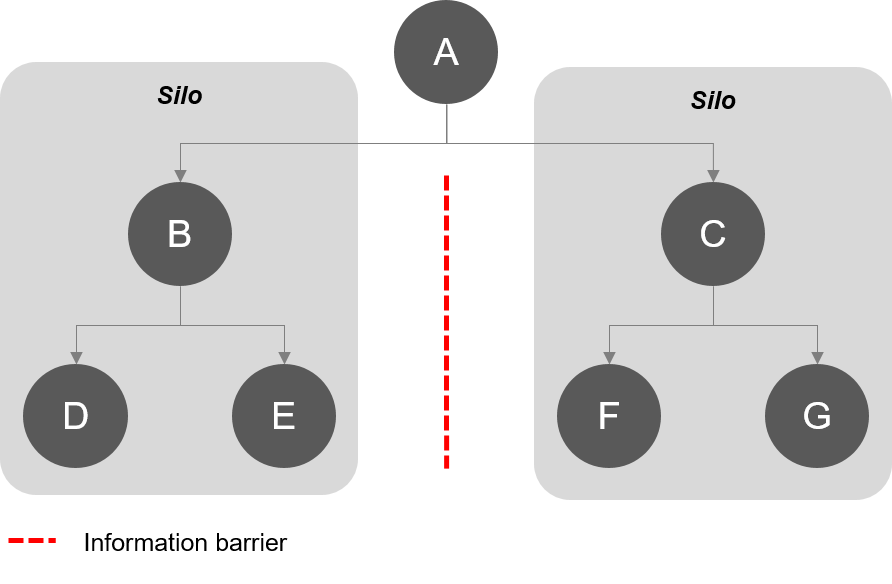
Why do we care about this? Because Enterprise Environmental Factors directly influence project execution strategies. If you are building a collaborative software platform in a company that culturally rewards hyper-competitive, siloed behavior, your project will fail—not due to technical bugs, but due to environmental rejection. Consequently, project managers must assess organizational culture to tailor project communication strategies, adjusting the tone, cadence, and medium to fit what the environment will accept and understand.
Delivering a product is not the same as delivering business value. Value is only realized when humans adopt the product. Therefore, we must separate and combine two distinct disciplines:
- Project management focuses on the processes required to deliver a specific change (the schedule, the budget, the technical scope).
- Organizational Change Management focuses primarily on the people side of change (the psychological transition, adoption, and training).
Because these two spheres overlap so heavily, project managers frequently act as change agents within their organizations. A change agent is an individual who promotes the execution of organizational change, acting as the vital bridge between technical delivery and human adoption.
However, a project manager cannot push the boulder up the hill alone. To survive enterprise politics, the project sponsor plays a critical role in championing organizational change to executive stakeholders, securing the political and financial capital required to keep the project alive when friction inevitably arises.
Before introducing a disruption, you must take an accurate pulse check of the environment. We do this through a specific diagnostic tool: a change readiness assessment evaluates an organization's preparedness to undergo a transformation.
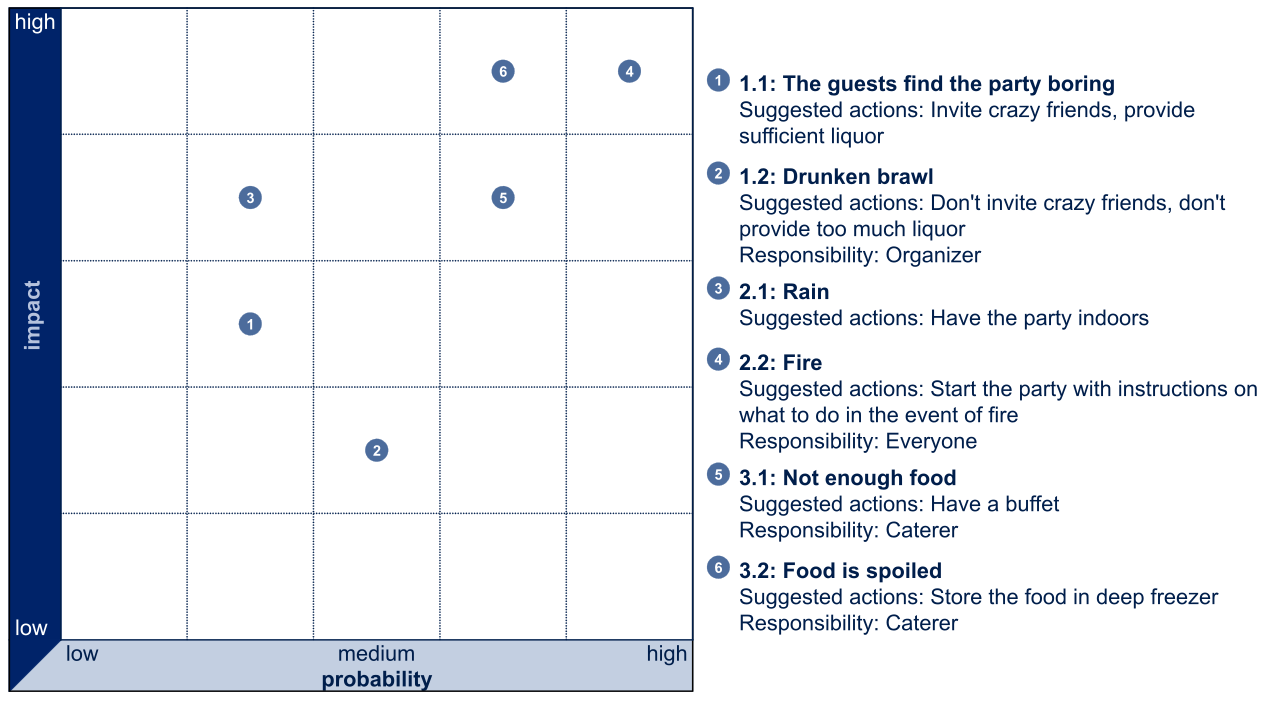
Project managers use change readiness assessments to identify potential resistance to project deliverables. This brings us to a fundamental rule of project management: resistance is not merely an HR concern or a personality conflict. Resistance to change constitutes a common organizational project risk. It threatens your timeline, your budget, and your scope. Because it is a risk, project managers must log identified resistance to change in the project risk register, allowing the team to assign risk owners and plan actionable mitigation responses.
Furthermore, because shifting corporate priorities demand intense human focus, organizational changes frequently alter project resource availability. A department undergoing a massive internal reorganization will abruptly pull its Subject Matter Experts (SMEs) off your project. Your schedule baseline must anticipate this volatility.
To systematically navigate these waters, developing an organizational change management plan helps structure the approach to transitioning individuals. We rely on several foundational frameworks to map out this transition:
Frameworks for Organizational Transition
| Framework / Author | Core Philosophy & Key Elements |
|---|---|
| ADKAR Model | The ADKAR model is an organizational change management framework operating at the individual level. The acronym ADKAR stands for Awareness, Desire, Knowledge, Ability, and Reinforcement. Crucially, Awareness in the ADKAR model represents an individual's understanding of the need for change, while Desire in the ADKAR model represents an individual's willingness to support a change. Without these first two, any subsequent training is useless. |
| Kotter's 8-Step Process | John Kotter created the 8-Step Process for Leading Change for top-down, enterprise-wide shifts. The first step in Kotter's change model is creating a sense of urgency—if the building isn't perceived to be on fire, nobody moves toward the exits. Building a guiding coalition is the second step, assembling influential leaders to pull the initiative forward. |
| Lewin’s Change Management Model | Think of the organization as a block of ice. Lewin's Change Management Model consists of three distinct stages. The three stages of Lewin's Change Management Model are Unfreeze, Change, and Refreeze. The Unfreeze stage of Lewin's model involves preparing the organization to accept necessary change (melting the ice). Following the transition, the Refreeze stage of Lewin's model aims to solidify the new state after implementing a change (pouring the water into a new mold). |
| Bridges Transition Model | Unlike structural models, the Bridges Transition Model focuses on the psychological transitions people experience during a change. Bridges Transition Model includes three phases named Ending, The Neutral Zone, and The New Beginning. People must first grieve what they are losing and navigate the chaotic, ambiguous middle before accepting the future. |
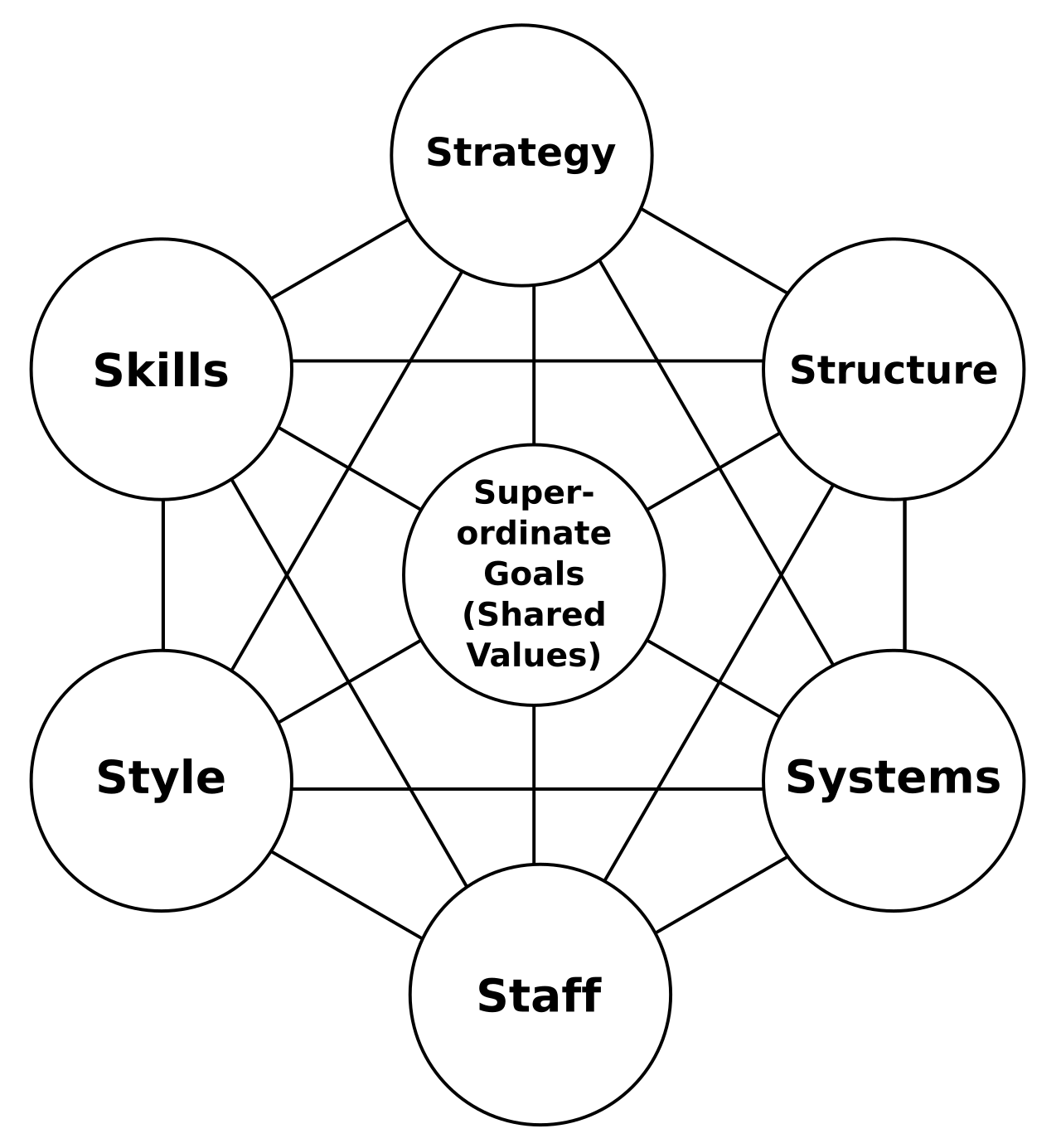
| McKinsey 7-S Framework | When evaluating holistic shifts, McKinsey's 7-S Framework analyzes organizational design through seven key internal elements. The McKinsey 7-S Framework elements include Strategy, Structure, Systems, Shared Values, Style, Staff, and Skills. If you alter a "System" (like a new CRM software), you must recalibrate the other six interconnected levers. |
What happens when the ground moves beneath your feet midway through execution?
Rule of Strategic Alignment: When corporate direction pivots, organizational strategy changes require a re-evaluation of the project business case.
If the company strategy shifts from "aggressive market expansion" to "ruthless cost-cutting," a project designed to launch an expensive new product line may no longer be viable. Project managers must align project goals with newly updated organizational strategic objectives, or risk delivering an entirely obsolete outcome.
Likewise, when the social fabric of the company transforms—perhaps due to a merger, an acquisition, or a leadership shakeup—your communication baselines are suddenly invalidated. Cultural shifts during a project execution require updating the project stakeholder engagement plan. What motivated a stakeholder yesterday might insult them today. Consequently, project teams must update communication management plans to reflect organizational culture shifts.
How a project absorbs change is dictated by its life cycle, which is in turn dictated by the environment. Assessing organizational culture helps determine the most appropriate project management methodology. You cannot force a framework into an incompatible ecosystem.
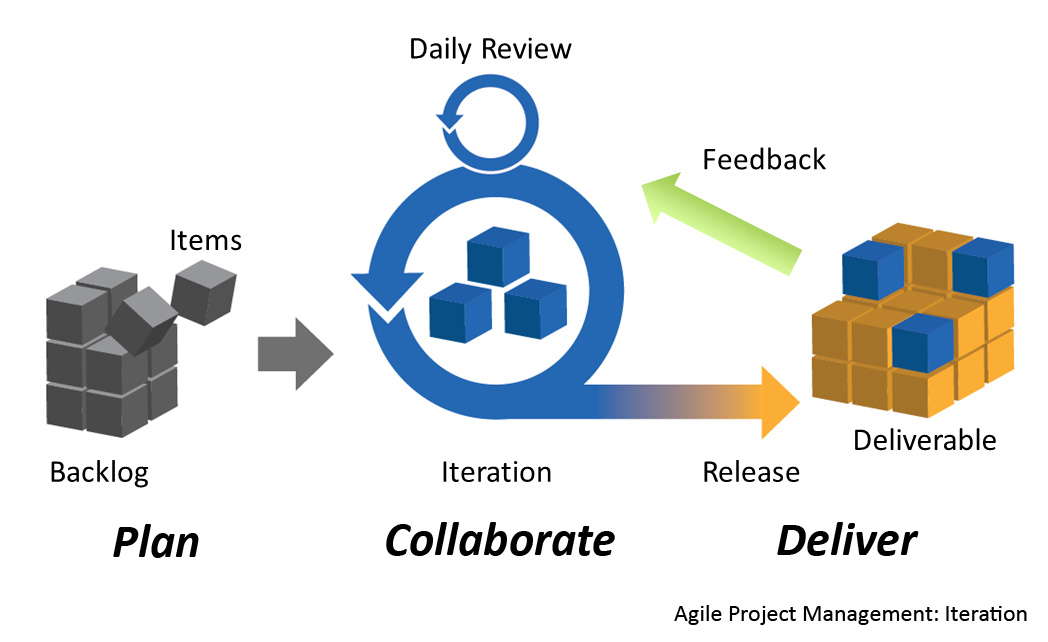
- Agile Environments: In highly adaptive organizations, Agile project management frameworks support organizational change through iterative delivery. Because work is timeboxed, short iterations in Agile allow teams to adjust quickly to shifting organizational priorities, ensuring the team is constantly aligned with the highest business value.
- Predictive Environments: In highly regulated, risk-averse environments, predictive projects manage organizational change impacts through formal change control processes. Here, change is carefully gated by a Change Control Board (CCB) to protect the baseline.
- Methodology Mismatch: Be deeply aware of culture clashes. A highly rigid organizational culture will likely struggle to adopt pure Agile methodologies, as the required trust, psychological safety, and decentralized decision-making simply do not exist in rigid hierarchies.
- The Middle Ground: When organizations exist between these extremes, hybrid project approaches combine predictive change control with agile adaptability to manage organizational shifts.
To ensure the change actually takes root, the project manager must orchestrate specific transitional events. Training programs act as a required project action to build organizational change capability, actively moving individuals from Kotter's "Desire" phase into tangible "Ability."
Once implemented, how do we empirically prove it worked? Project managers measure change adoption metrics to evaluate the success of an organizational transformation. We do not just measure if the software was installed; we measure daily active user rates, error reductions, and help-desk ticket volumes.
Finally, we must respect the physical limits of human elasticity. Change fatigue occurs when an organization implements too many concurrent transformations. If accounting is getting a new ERP, HR is rolling out a new performance review system, and you are launching a massive reorganization all in the same quarter, the users will simply shut down and reject it all. To ensure survival, project managers mitigate change fatigue by staggering the rollout of major project deliverables, releasing value in digestible, humane increments rather than a massive, overwhelming shock to the system.