Maryland Fair Housing & Special Topics
Not sure you’re ready?
Take the ~3-minute readiness diagnostic and see where you stand.
Real estate practice in the United States operates on a foundational bedrock of federal statutes, but the actual transaction occurs on the highly specific, deeply idiosyncratic terrain of state law. To practice real estate in Maryland is to navigate a unique legal topography. A practitioner here must understand historical land tenure artifacts dating back to the 19th century, stringent environmental protections designed to save the nation’s largest estuary, and highly specific statutory protections for consumers facing foreclosure or discrimination.
Mastering this material is not simply about passing a licensing exam. It is about recognizing that every time you draft a contract or list a property, you are pulling levers connected to a vast machinery of state regulations. We will examine the mechanics of Maryland-specific license law, agency, and disclosures by breaking them down into their fundamental principles.
Federal fair housing laws set the minimum baseline of protection across the country. However, states possess the sovereign authority to expand the umbrella of civil rights protections, and Maryland has done so decisively.
To operate legally in Maryland, you must first recognize the baseline. Maryland fair housing law protects all seven federal classes: race, color, religion, national origin, sex, familial status, and disability.
But Maryland does not stop there. The state legislature recognized that housing discrimination frequently morphs into new forms, targeting other vulnerable demographics. Consequently, Maryland fair housing law includes four additional protected classes: marital status, sexual orientation, gender identity, and source of income.
Understanding "Source of Income"
For a real estate practitioner working with landlords or investors, "source of income" is often the most operationally misunderstood protected class. Source of income discrimination prohibits housing providers from rejecting tenants based on the use of federal or state housing subsidies.
If you have a client who says, "I don't want to deal with Section 8 vouchers," you must immediately inform them that doing so violates state civil rights law. A landlord retains the right to screen a tenant for past evictions, creditworthiness, and criminal history, but they cannot reject a tenant simply because the funds paying the rent originate from a government subsidy rather than a W-2 paycheck.
The "Mrs. Murphy" Exemption and the Licensee Trap
Like federal law, Maryland offers a narrow exemption for small-scale, owner-occupied properties. Specifically, owner-occupied residential buildings with four or fewer units are exempt from Maryland fair housing laws.
If an owner lives in one unit of a triplex and rents out the other two, they are generally free to discriminate in their selection of tenants without violating state fair housing statutes (though they can never discriminate based on race, due to the federal Civil Rights Act of 1866).
However, there is a massive caveat—one that directly implicates your future real estate license: The owner-occupied fair housing exemption does not apply if the property owner uses a licensed real estate professional.
The moment that owner hires you to list the rental, the exemption vaporizes. A licensed professional is an agent of the state's regulated commercial apparatus, and the state will not permit its licensees to facilitate discrimination under any circumstances.
Enforcement & Local Nuance If a violation occurs, the Maryland Commission on Civil Rights is the state agency responsible for enforcing Maryland fair housing laws. Furthermore, your geographic location within the state matters. Local jurisdictions in Maryland may legislate additional fair housing protected classes beyond the state mandates. For example, several counties explicitly protect traits like age or personal appearance. You must know your local county ordinances as thoroughly as the state laws.
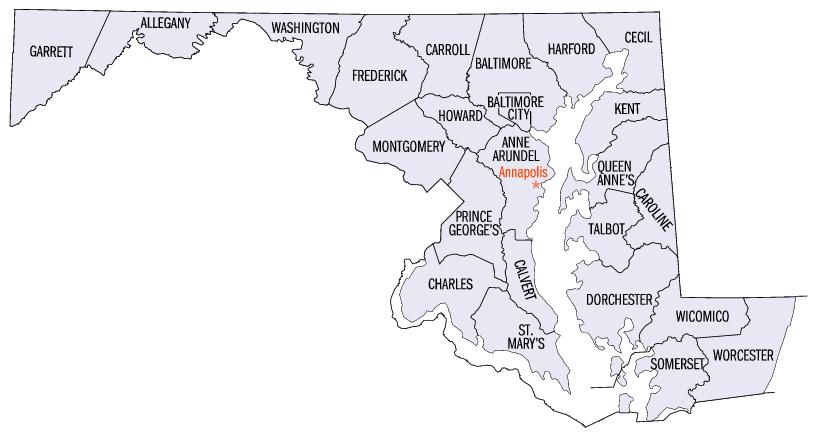
If you practice in or around Baltimore, you will inevitably encounter a legal structure that baffles out-of-state buyers: the ground rent.
Ground rent is a leasehold estate where the tenant owns the building improvements while paying periodic rent for the underlying land.
Imagine buying a house, receiving a deed for the bricks, mortar, and drywall, but realizing you are effectively renting the dirt beneath it from someone else. Historically, this allowed working-class buyers to afford homes without having to purchase the land. Today, it represents an administrative burden and a title complication.

To protect homeowners from unscrupulous landholders seeking to foreclose on homes over minor unpaid ground rents, the state heavily regulates the practice:
- Registration: A ground lease holder in Maryland must register the ground lease with the State Department of Assessments and Taxation to legally collect rent. If they fail to register, they cannot demand payment.
- Redemption Rights: Maryland abhors a permanent lease. Maryland ground rents created after April 8, 1884, are redeemable by the leasehold tenant at any time.
- The Process: To buy out the landholder, a leasehold tenant must give 30 days written notice via certified mail to the ground lease holder to initiate a ground rent redemption.
- The Result: Redeeming a ground rent converts the tenant's leasehold ownership of the land into fee simple ownership. Once redeemed, the homeowner owns both the dirt and the building, forever severing the lease.
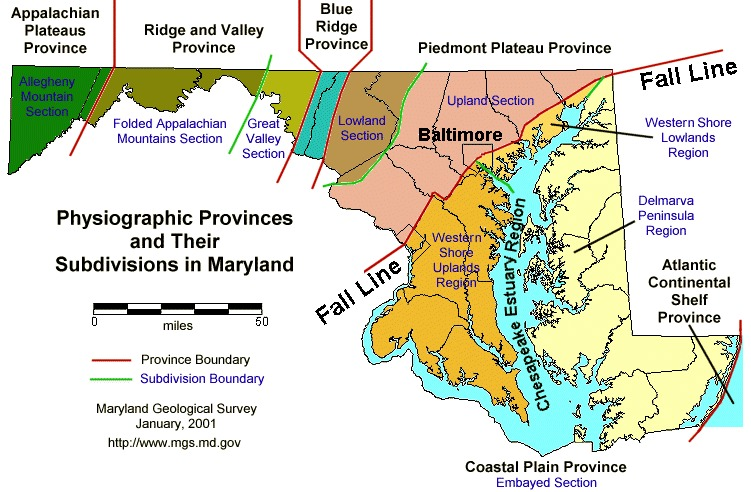
Maryland’s geography is dominated by the Chesapeake Bay. Because the Bay is a fragile, vital economic and ecological engine, property rights near the water are highly restricted.

The Chesapeake Bay Critical Area Act
The Chesapeake Bay Critical Area Act regulates land use and development within 1,000 feet of Maryland's tidal waters and tidal wetlands.
If you are selling waterfront or near-water property, the buyer's dreams of clearing trees to improve their view must be immediately tempered by the realities of this Act.
- The Buffer Zone: The Critical Area Buffer requires a minimum 100-foot strip of natural vegetation maintained directly adjacent to tidal waters or tributary streams. This buffer acts as a kidney, filtering runoff and preventing sediment from suffocating the aquatic ecosystem.
- Expanding the Buffer: Nature is rarely uniform. The standard 100-foot Critical Area Buffer expands up to 300 feet when the contiguous land includes sensitive areas like steep slopes or highly erodible soils.
- Strict Liability: Ignorance is no defense. Property owners must obtain specific permits and approval before removing trees or clearing vegetation within the Chesapeake Bay Critical Area. Unpermitted clearing results in severe fines and mandatory restoration orders.

The Agricultural Transfer Tax
When farmland is sold to a developer to build a subdivision, the state levies a heavy toll to disincentivize the paving over of agricultural land.
The Maryland agricultural transfer tax is imposed when land that previously received a lower agricultural use assessment is converted to a non-agricultural use.
To calculate the penalty, you must memorize the varying rates, which are determined by the size and condition of the parcel. Furthermore, Maryland applies an additional 25 percent surcharge on the calculated agricultural transfer tax amount.
| Property Characteristics | Base Tax Rate | Surcharge |
|---|---|---|
| Parcels of 20 acres or more | 5 percent of the consideration | + 25% of the calculated tax |
| Unimproved parcels smaller than 20 acres | 4 percent of the consideration | + 25% of the calculated tax |
| Parcels under 20 acres that contain site improvements | 3 percent of the consideration | + 25% of the calculated tax |
Example: A 30-acre farm sells for $1,000,000 to be developed into townhomes. The base agricultural transfer tax is 5% ($50,000). The state then applies a 25% surcharge on that $50,000 (which is $12,500). The total tax due is $62,500.
One of your primary duties as a licensee is managing the flow of material facts between buyer and seller. In Maryland, this is formalized through a strict statutory document.
Sellers of residential properties with one to four units must provide buyers with a Maryland Residential Property Disclosure and Disclaimer Statement.
The timing of this document is critical to the validity of the contract. The Maryland Residential Property Disclosure and Disclaimer Statement must be provided to the buyer before entering into a contract of sale. If it is provided after the contract is signed, the buyer generally retains a unilateral right to rescind the contract without penalty. Therefore, real estate licensees must ensure the buyer receives the Maryland Residential Property Disclosure and Disclaimer Statement prior to offer acceptance.
The form presents the seller with a fork in the road: they must either disclose the condition of various property systems, or they must disclaim them.
A seller who chooses the disclaimer option on the Maryland disclosure form elects to sell the property in as-is condition and makes no representations or warranties regarding the condition of the real property.
The Latent Defect Mandate
There is a massive, highly-tested exception to the disclaimer option. You cannot use an "as-is" disclaimer to hide dangerous traps.
A seller providing a property disclaimer must explicitly disclose any known latent defects on the property.
But what exactly is a latent defect in Maryland? It is a two-pronged definition.
- A latent defect is a hidden material defect that a buyer would not reasonably discover via a careful visual inspection.
- However, hidden rot in a floorboard isn't enough on its own to trigger the statutory mandate. To be classified as a latent defect in Maryland, the defect must pose a direct threat to the health or safety of the purchaser or occupant.
Crucial Distinction: A hidden roof leak that slowly damages drywall is a material fact, but if it poses no immediate health or safety threat, it does not meet the strict statutory definition of a latent defect. Conversely, a hidden, poorly wired electrical box that poses an imminent fire hazard is a latent defect and must be disclosed, even if the seller checks the "Disclaimer" box.

Exemptions to the Disclosure Rule
Certain transactions are exempt from this paperwork entirely, usually because the seller lacks the historical knowledge to make meaningful disclosures. You must know these three exemptions:
- Newly constructed homes that have never been occupied are exempt from the Maryland residential property disclosure and disclaimer requirement (they are covered by builder warranties instead).
- Properties sold by a lender via foreclosure or deed in lieu of foreclosure are exempt.
- A fiduciary transferring property during the administration of a decedent's estate is exempt. (An executor who has never lived in the house cannot reliably attest to its condition).
Real estate transactions occasionally occur under duress, and Maryland laws heavily regulate the professionals operating in this space to prevent exploitation.
Protection of Homeowners in Foreclosure Act (PHIFA)
When a homeowner falls behind on their mortgage, they become a target for predatory "rescue" scams.
The Protection of Homeowners in Foreclosure Act protects distressed Maryland homeowners from predatory equity stripping and foreclosure rescue scams.
To prevent panic-induced mistakes, under the Protection of Homeowners in Foreclosure Act, a homeowner has the right to rescind a foreclosure consulting contract within five business days. Furthermore, the law strictly prohibits foreclosure consultants from collecting any upfront fees before all promised services are fully performed.
Why must a real estate salesperson care about PHIFA? Because if you cross the line from standard real estate marketing into promising to "save" a homeowner from the bank, you step into a legal minefield. Real estate licensees offering to help a homeowner arrange a short sale to avoid foreclosure may be classified as foreclosure consultants under Maryland law, subjecting them to PHIFA's strict rescission and fee-ban requirements. Proceed with immense caution and broker supervision in the short-sale space.

Mechanic's Liens
When contractors work on a property and are not paid, they possess the statutory right to encumber the property. However, they must move swiftly.
In Maryland, the clock ticks loudly for tradespeople:
- A contractor must file a petition to establish a mechanic's lien within 180 days after the work has been finished or the materials furnished.
- If the petition is successful, the lien is not indefinite. A contractor must file a lawsuit to enforce a Maryland mechanic's lien within one year after the petition to establish the lien is filed. If they fail to enforce it within that year, the lien evaporates.
Finally, Maryland uses its tax code to encourage homeownership, a policy that directly dictates how settlement costs are distributed on the Closing Disclosure.
Maryland law provides a state transfer tax reduction for first-time homebuyers who will occupy the property as a principal residence.
The math is simple but its application is mandatory: For eligible first-time homebuyers, the Maryland state transfer tax is reduced from 0.5 percent to 0.25 percent of the consideration.
Normally, transfer taxes are split 50/50 between buyer and seller unless negotiated otherwise. But when the state grants this first-time buyer discount, it refuses to let the seller off the hook. By statute, when a first-time homebuyer is involved in a transaction, the seller is legally required to pay the remaining 0.25 percent state transfer tax. The seller cannot write a clause into the contract forcing the first-time buyer to pay the seller's half; such a clause is void under Maryland law.
By internalizing these parameters—the robust civil rights expansions, the archaic but critical ground rent procedures, the stringent environmental and disclosure rules, and the strict timelines of liens and foreclosure protections—you elevate yourself from a mere salesperson to a competent, elite practitioner of Maryland real estate. Understand the why behind these laws, and you will navigate your exam, and your career, with absolute clarity.