NC Brokerage Practice — Trust Accounts, Record-Keeping & Advertising
Not sure you’re ready?
Take the ~3-minute readiness diagnostic and see where you stand.
In the architecture of a real estate transaction, a North Carolina broker acts as the indispensable conduit between buyers, sellers, and the vast sums of capital moving between them. A real estate license is not merely a permit to negotiate; it is a profound grant of fiduciary power. When you hold a client's money or communicate the structural integrity of a home, you are operating at the intersection of law, commerce, and public trust. The North Carolina Real Estate Commission (NCREC) rules exist precisely to insulate that trust from incompetence, negligence, and greed.
To master North Carolina brokerage practice is to master the anatomy of a transaction. We will dissect how you must handle other people's money, the precise mechanics of record-keeping and advertising, and the rigid standards of truth and disclosure that govern your daily professional conduct.
Imagine a trust account as a sterilized surgical field. Only specific items are allowed inside, and any contamination can result in catastrophic failure. By default, North Carolina real estate brokers are not required to open a trust account unless the brokers receive and hold funds belonging to others. If you run a purely referral-based business and never touch client money, you never need one.
When you do hold client funds, the NCREC dictates exactly where that money must sit.
A trust account is a demand deposit account in a federally insured depository institution lawfully doing business in North Carolina.
Let’s break that down:
- Demand deposit: The money must be accessible immediately upon demand, without penalties for early withdrawal.
- Federally insured: It must be protected by the FDIC.
- Lawfully doing business in NC: The bank must have a legal, physical presence operating under state or federal banking laws in North Carolina.
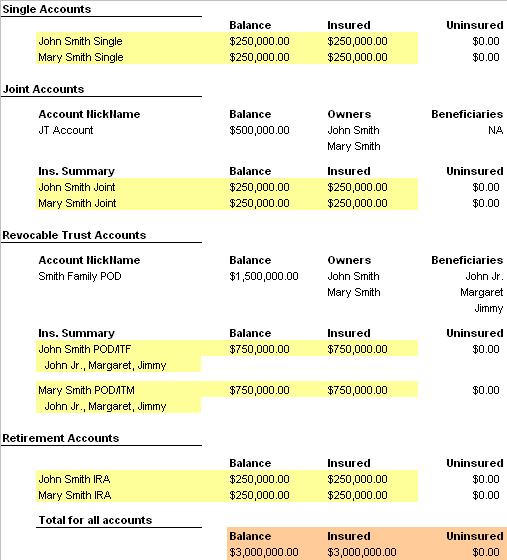
To ensure transparency, a real estate broker's trust account must be clearly designated as a "Trust Account" or "Escrow Account" on all checks, deposit tickets, and bank statements. This labeling is crucial. If the broker is sued personally, or dies unexpectedly, the bank and the courts must instantly recognize that this money does not belong to the broker.
Commingling and Conversion: The Cardinal Sins
There are two primary ways brokers illegally contaminate the sterilized field of the trust account:
- Commingling occurs when a real estate broker mixes the broker's own personal or business funds with the trust funds of clients or customers. You cannot pour your own water into the client’s pitcher.
- Conversion occurs when a real estate broker intentionally uses trust funds for an unauthorized purpose such as paying the broker's personal or business expenses. This is outright theft—drinking from the client’s pitcher.
Because banks routinely charge maintenance or service fees, maintaining an account with only client money could theoretically result in a bounced check if the bank deducts a fee directly from client funds. Therefore, the Commission provides a strict exception: North Carolina Real Estate Commission rules permit a broker to maintain a maximum of $100 of company funds in a trust account to pay bank service charges.
What if the bank is particularly expensive and charges $150 a month? The rules adapt to reality: If bank service charges exceed $100 monthly, a broker may deposit an amount each month sufficient to cover the service charges without violating commingling rules.
To prevent this from becoming a loophole for sloppy accounting, a broker-in-charge (BIC) must maintain a separate ledger for company funds held in the trust account. This ledger must meticulously identify the date, amount, and running balance of the broker's own money.
In North Carolina, when a buyer makes an offer, they typically bring two distinct checks: the Earnest Money Deposit (EMD) and the Due Diligence Fee. The physical journey of these checks through your hands is highly regulated.
As a provisional broker, you are an apprentice. You are operating under the protective umbrella of your broker-in-charge. Therefore, a provisional broker must deliver all trust monies received directly to the provisional broker's affiliated broker-in-charge immediately upon receipt.
Earnest Money: The Collateral
Earnest money is "good faith" money. It belongs to the buyer until closing, meaning it is strictly trust money.
- Holding the Check: A real estate broker who receives a check for an earnest money deposit accompanying a buyer's offer may hold the check securely until the offer is accepted. You don't deposit a check for a contract that doesn't exist yet.
- Non-Cash Deposits: Earnest money deposits and tenant security deposits paid by means other than cash (e.g., a personal check) must be deposited into a trust account no later than three banking days after acceptance of the offer or lease.
- Cash Deposits: Cash is dangerously untraceable. Cash received as trust money must be deposited into a trust account no later than three banking days following receipt of the cash. Note the distinction: checks are tied to acceptance; cash is tied to receipt.

Due Diligence: Buying Time
The due diligence fee is entirely different. It compensates the seller for taking their home off the market while the buyer investigates the property. It belongs to the seller the moment the contract is formed.
- Because it belongs directly to the seller, a due diligence fee made payable to a seller is not considered trust money and must not be deposited into a real estate broker's trust account.
- If you are a provisional broker who receives a due diligence fee check payable to a seller, you must deliver the check to the broker-in-charge or directly to the seller.
Disputed Funds: The Standoff
What happens if the buyer backs out, claiming a breach of contract, but the seller demands to keep the earnest money? The broker is caught in the crossfire. The broker cannot play judge and jury.
Disputed earnest money must remain in the broker's trust account until the broker obtains a written release from the parties or a court order resolves the dispute.
If the parties refuse to settle, the broker is not forced to hold the money until the end of time. A real estate broker may deposit disputed trust funds with the clerk of court in the county where the property is located after providing 90 days' written notice to the parties claiming ownership.
To protect the public, the NCREC must be able to audit your historical transactions. North Carolina real estate brokers must retain all transaction records for a minimum of three years.
When does the three-year clock start ticking? It begins from the date of the successful conclusion of the transaction, termination of the agency agreement, or disbursement of all trust funds, whichever event occurs later.
If a transaction closed in 2020, but disputed earnest money wasn't disbursed by court order until 2022, the three-year clock for all records tied to that transaction begins in 2022. Required retention records for a broker include agency agreements, purchase contracts, closing statements, earnest money receipts, and trust account ledgers.
When the public sees a real estate advertisement, they must instantly know they are dealing with a licensed professional.
A blind ad is an advertisement that does not indicate a licensed real estate broker or firm is involved in the property transaction. North Carolina real estate brokers are strictly prohibited from using blind ads in any format. Every single real estate advertisement must clearly indicate the name of the broker or the firm with which the advertising broker is affiliated.
Because a provisional broker requires intense supervision, a provisional broker is prohibited from advertising any brokerage service without obtaining the prior consent of the provisional broker's broker-in-charge. Furthermore, all advertising by a provisional broker must include the name of the real estate firm or the broker-in-charge.
Digital and physical spaces each have specific rules:
- The "No Click" Rule: The North Carolina Real Estate Commission requires a real estate firm's name to be immediately visible in online advertising without requiring a consumer to click a link or scroll down. The public should never have to hunt for your brokerage identity.
- Team Names: If a real estate agent uses a team name (e.g., "The Elite Property Team") in advertising, that team name must always be immediately accompanied by the full name of the affiliated brokerage firm.
- Signage: You cannot simply stake a sign in a yard. A real estate broker must obtain written consent from the property owner or the owner's authorized agent before placing a "For Sale" or "For Rent" sign on any real estate.
The core duty of a licensee is to prevent harm through ignorance. North Carolina real estate brokers must proactively disclose all material facts to all parties in a transaction regardless of whom the broker represents. You do not get to hide structural defects just because you represent the seller.
Material facts include:
- Facts about the property itself (e.g., a cracked foundation).
- Facts relating directly to the property (e.g., pending zoning changes on the adjacent lot).
- Facts relating to the ability of a party to complete the transaction (e.g., the buyer just lost their job and cannot secure a loan).
- Facts of special importance to a party (e.g., a buyer explicitly tells you they need to run a home daycare, and the HOA prohibits commercial enterprises).
When a broker fails to communicate truth, it falls into a matrix of four categories, mapped by intent (Willful vs. Negligent) and action (Misrepresentation vs. Omission):
| Misrepresentation (Spoken/Written Falsehood) | Omission (Silence/Hiding the Truth) | |
|---|---|---|
| Willful (Intentional) | Willful misrepresentation occurs when a broker intentionally provides false information regarding a material fact to a party in a real estate transaction. (e.g., Telling a buyer a roof is new when you know it's 20 years old). | Willful omission occurs when a broker knows a material fact and deliberately fails to disclose that fact to a party in a transaction. (e.g., You know the house floods, but you keep quiet). |
| Negligent (Careless) | Negligent misrepresentation occurs when a broker unknowingly provides false information regarding a material fact but should reasonably have known the information was false. (e.g., Relying on a wildly inaccurate tax record for square footage instead of verifying). | Negligent omission occurs when a broker does not know a material fact but should reasonably have discovered and disclosed that fact to the parties. (e.g., Failing to notice massive, obvious water stains on a ceiling and therefore failing to disclose a leak). |
The NCREC License Law explicitly forbids behaviors that compromise public protection.
- Unlicensed Practice: Engaging in the business of real estate brokerage without an active license in North Carolina is a Class 1 Misdemeanor.
- Unauthorized Practice of Law: A real estate broker is prohibited from practicing law without a license, which includes drafting legal documents such as deeds or complex custom contract clauses. You are a negotiator, not an attorney. Stick to filling in the blanks on standard forms.
- Provisional Broker Compensation: A provisional broker is strictly prohibited from accepting a commission or valuable consideration from anyone other than the provisional broker's employing broker-in-charge or licensed firm. A seller cannot hand you a cash tip directly.
- Kickbacks and Referral Fees: A real estate broker who pays an unlicensed person a finder's fee or a referral fee for leads violates North Carolina Real Estate License Law. You cannot pay your neighbor $500 for giving you a client's phone number.
- False Promises: A broker who guarantees future profits on the resale of a property engages in the prohibited practice of making false promises. You cannot predict the market, and promising you can is illegal.
Conflicts of Interest
The law heavily penalizes brokers who place their own interests ahead of their clients, or who attempt to play both sides of the fence secretly.
- Self-Dealing: This is a severe conflict of interest that occurs when a broker attempts to make a secret profit in a transaction where the broker is representing a principal.
- Undisclosed Dual Agency: This occurs when a broker acts for more than one party in a transaction without the express knowledge and written consent of all parties. You cannot secretly serve two masters.
- Selling Your Own Property: When a broker sells their own property, they hold an overwhelming informational advantage over a normal buyer. Therefore, a broker selling the broker's own property must disclose all material facts and is prohibited from representing the buyer in that same transaction.

The Limits of Designated Agency
Finally, while firms often allow designated dual agency (where one agent in the firm represents the buyer and another represents the seller), power dynamics matter. Because a provisional broker is fundamentally subordinate to their BIC, a provisional broker cannot act as a designated dual agent in a transaction if the broker-in-charge is acting as the designated dual agent for the other party. The inherent conflict of a boss negotiating against their own apprentice is deemed too risky for the public to endure.
Master these rules not just as items to memorize, but as the foundational physics of your new profession. They define the boundaries of your practice, the safety of your clients, and the longevity of your license.