NJ Standards of Conduct, Advertising & Commissions
Not sure you’re ready?
Take the ~3-minute readiness diagnostic and see where you stand.
In any complex system—whether it is the orbital mechanics of a satellite or the exchange of real property—stability relies on immutable laws. In New Jersey real estate, that stabilizing force is the Real Estate License Act (N.J.S.A. 45:15) and the administrative rules of the New Jersey Real Estate Commission (N.J.A.C. 11:5). A real estate license is not merely a permit to sell; it is a legal mandate to act as a fiduciary in transactions involving the most significant financial assets of a consumer’s life. Understanding these statutes is not about memorizing arbitrary constraints; it is about recognizing the boundaries that prevent market exploitation, financial ruin, and the loss of professional livelihood. When the Commission audits a practice or investigates a complaint, they are examining whether the licensee respected the fundamental physics of the market: honesty, transparency, and the strict separation of public interest from personal greed.
To maintain the integrity of the real estate market, the New Jersey Real Estate Commission is armed with significant disciplinary authority. The Commission can levy fines, suspend licenses, or enact outright revocations when licensees violate the public trust.
Financially, the penalties are stringent. The New Jersey Real Estate Commission can impose fines of up to $5,000 for a first violation of the Real Estate License Act, and can escalate these fines to up to $10,000 for subsequent violations. However, monetary fines are often the least of a rogue agent's worries.
Fraud, Deception, and Fund Mismanagement
The Commission may suspend or revoke a license for making substantial misrepresentations to a client, or for making false promises to influence a real estate transaction. You cannot induce a buyer or seller to act based on a fabricated guarantee. Furthermore, you hold an affirmative duty regarding the physical property itself: a New Jersey licensee must disclose any known physical defects of a property to prospective buyers. Silence in the face of a known defect is treated as a form of misrepresentation.
Nowhere is the Commission’s disciplinary hammer heavier than in the handling of money.
Commingling: The act of mixing client escrow or trust funds with a licensee's personal or business operating funds.
Commingling client funds with a licensee's personal or business funds is direct grounds for license revocation in New Jersey. The logic here is simple: a trust account must remain mathematically pure. Once operating funds touch client money, the ledger is compromised, paving the way for conversion (embezzlement).
Contractual Violations and Prohibited Mechanisms
The execution of paperwork in New Jersey requires immediate transparency. Failing to provide a copy of a contract to a client immediately upon signing is grounds for disciplinary action in New Jersey. To satisfy this, New Jersey licensees must provide a duplicate original of any document to all parties immediately upon signing. You cannot take the only signed copy back to the office to make photocopies later; the client must have a duplicate original in their hand the moment the pen lifts from the paper.
The state also aggressively polices how transactions are structured and marketed, strictly forbidding manipulative tactics:
- Dual Contracts: A dual contract involves creating two separate agreements for the same transaction with the intent to deceive a lender. For example, drafting one contract at $300,000 to secure a larger mortgage, while secretly executing a second contract at $250,000. Because this constitutes bank fraud, preparing dual contracts for a real estate transaction is illegal in New Jersey.
- Net Listings: A net listing is an agreement where the broker retains all transaction proceeds above a specified seller net price. If a seller wants $200,000, and the home sells for $250,000, the broker pockets the $50,000 difference. Because this creates a massive conflict of interest where the broker might underprice a property or reject fair offers to maximize their own cut, net listings are strictly prohibited for all real estate transactions in New Jersey.
- Lotteries: Promoting the sale of real estate by using a lottery or contest is a prohibited practice in New Jersey. Real estate must be sold on its own merits, not as a game of chance.
- Blockbusting: Blockbusting involves inducing panic selling based on the entry of protected classes into a neighborhood (e.g., telling homeowners, "You should sell now before property values drop because a certain demographic is moving in"). This is a vile violation of the Law Against Discrimination, and New Jersey real estate licensees are strictly prohibited from engaging in blockbusting.
When you advertise, you are not projecting your own independent business; you are projecting the brokerage. In the eyes of the law, a salesperson is merely an extension of the employing broker. Therefore, the broker's identity must always remain structurally dominant in the public eye.
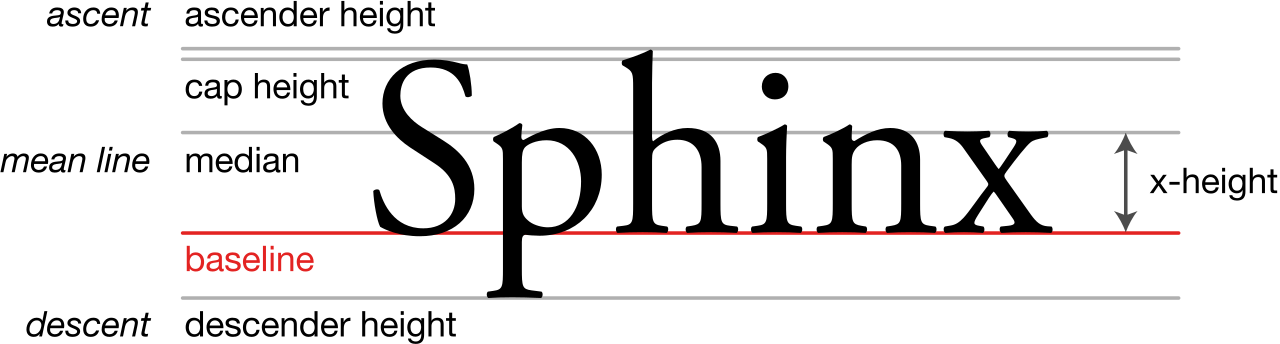
All New Jersey real estate advertisements must prominently display the regular business name of the employing broker. To ensure the public understands who is ultimately responsible, there are strict geometric rules for text: a salesperson's name in a New Jersey advertisement must not be larger or more prominent than the employing broker's business name. If a New Jersey real estate advertisement includes a salesperson's name, the broker's name must appear in a font of equal or greater size.
If the brokerage is part of a larger franchise network (like a RE/MAX or Century 21), franchise real estate advertisements in New Jersey must include the statement "Each office is independently owned and operated."

Telephones and Digital Presence
Contact information is equally regulated to prevent "blind ads" where the public does not realize they are dealing with a licensed broker.
- New Jersey real estate advertisements must include the broker's business telephone number.
- If you wish to be reached directly, an advertisement including a New Jersey salesperson's home or cell phone number must clearly identify the number as a personal line (e.g., labeled "Cell").
- Furthermore, an advertisement including a salesperson's personal phone number must also prominently display the employing broker's business phone number.
These rules extend directly to the internet. A New Jersey real estate salesperson cannot advertise using a personal web page without a link to the employing broker's main web page. Additionally, a New Jersey real estate salesperson cannot advertise using a personal web page without displaying the broker's business phone number.
Geography, Status, and "Free" Offers
Clarity of location and status is non-negotiable. New Jersey real estate advertisements must clearly indicate the municipality in which the advertised property is located. A New Jersey real estate advertisement cannot refer to a property strictly by a neighborhood name without indicating the official municipality. Buyers have a right to know exactly which tax jurisdiction and school district a property belongs to.
When it comes to property status, a New Jersey licensee cannot advertise a property as "sold" until the transaction has officially closed and the deed has transferred. "Under contract" does not mean sold; a deal can always fall through until the ink is dry on the deed.
If a broker utilizes promotional giveaways, advertisements for a free offering by a New Jersey broker must ensure the offering is genuinely free of any conditions. If a free real estate offering requires attending a presentation, the advertisement must explicitly state this condition. You cannot lure consumers in with the promise of a free iPad only to lock them in a timeshare presentation without prior warning.
Finally, because price fixing is a violation of federal antitrust laws, any New Jersey advertisement referencing a commission rate must explicitly state that real estate commissions are negotiable.
To understand compensation in New Jersey, you must conceptualize the broker as a funnel. All capital flowing from the consumer to the agent must pass through the top of this funnel—the broker.
Negotiability and Agency Contracts
First and foremost, New Jersey real estate commissions are fully negotiable between the employing broker and the client. There is no legally established minimum or standard real estate commission rate permitted in New Jersey. To ensure the public is aware of this, a New Jersey listing agreement must contain a prescribed statement informing the seller of the right to negotiate the commission rate.
To enforce the collection of this negotiated fee, a New Jersey broker can sue a client for an unpaid commission only if a written agency agreement exists. What happens if a broker secures an agreement over the phone? An oral agreement for a real estate commission must be confirmed in writing within five days to be legally enforceable in New Jersey.
The Salesperson's Boundaries
As a salesperson, your financial relationship is exclusively with your broker.
- A New Jersey real estate salesperson may only accept compensation from their employing broker.
- A New Jersey real estate salesperson is strictly prohibited from accepting a commission directly from a client.
- A New Jersey real estate salesperson is strictly prohibited from accepting a commission directly from a competing broker.
If a grateful buyer tries to hand you a $500 bonus check at closing, you must decline it. The check must be written to your broker, who will then disburse your split according to your independent contractor agreement.
Referrals and Out-of-State Brokers
Brokers frequently share commissions, but they can only share them with legally recognized peers. A New Jersey broker may legally pay a portion of a commission to a licensed real estate broker from another state (provided the out-of-state broker does not conduct real estate activities within New Jersey's borders). However, paying a finder's fee or referral fee to an unlicensed person is illegal in New Jersey. You cannot pay your unlicensed cousin a $200 "bird dog" fee for finding a seller.
The Consumer Protection Enhancement Act: Commission Rebates
New Jersey law allows a very specific exception to the way commission funds are disbursed: the commission rebate.
A New Jersey real estate broker is legally permitted to provide a commission rebate to a residential property buyer. This is designed to help buyers offset heavy closing costs. However, the constraints on this mechanism are precise:
- Buyers Only: Commission rebates in New Jersey real estate transactions can only be provided to buyers. Commission rebates in New Jersey real estate transactions cannot be provided to sellers. (If a seller wants to pay less, they simply negotiate a lower initial commission rate; they do not receive a back-end rebate).
- Broker Authority: Only a licensed real estate broker can legally pay a commission rebate to a buyer in New Jersey. A New Jersey real estate salesperson cannot directly pay a commission rebate to a buyer out of their own personal funds.
- Transparency: A New Jersey broker must disclose a buyer commission rebate to all parties involved in the real estate transaction (including the lender, as it affects the buyer's financial positioning).
- Tax Implications: A New Jersey broker providing a rebate must advise the buyer to consult a tax professional regarding the tax implications of the commission rebate.
The final component of the regulatory physics of New Jersey real estate is the paper trail. The Commission requires meticulous record-keeping to allow for comprehensive audits. Timeframes dictate how long these artifacts must survive.
| Record Type | Required Retention Period |
|---|---|
| Completed transactions | 6 years |
| Property management records | 6 years |
| Trust/Escrow account records | 6 years |
| Unaccepted formal written offers | 6 months |
| Expired listings | 6 months |
Note: New Jersey real estate brokers must retain records of completed transactions, property management, and trust account records for six years. However, they only need to retain records of unaccepted formal written offers and expired listings for six months.
When generating listing agreements, the Commission demands defined boundaries. Every exclusive listing agreement in New Jersey must include a definite expiration date. You cannot write a listing agreement that says "Valid until the property is sold." Consequently, automatic renewal clauses in real estate listing agreements are strictly prohibited in New Jersey. When a listing expires, it expires. If the seller wishes to continue, a new agreement or formal extension must be signed.
Once that active listing yields a prospective buyer, time is of the essence. A New Jersey listing broker must present all formal written offers to the seller within 24 hours of receipt. A broker cannot hold an offer in their desk drawer hoping a better one comes along; the seller is the principal, and the seller makes the decisions.