Cyber Security and Liability
Not sure you’re ready?
Take the ~3-minute readiness diagnostic and see where you stand.
A real estate transaction is, fundamentally, the transfer of an immense amount of stored energy. In the physical realm, this energy takes the form of land, timber, steel, and shelter. In the digital realm, it takes the form of hundreds of thousands—often millions—of dollars in capital, accompanied by the most sensitive data a human being possesses. The moment a buyer signs an agency disclosure form or a seller hands you the keys to their property, you cease to be merely a salesperson. You become a custodian of their financial identity and a physical guardian of the spaces you navigate together.
Understanding the rules that govern this custody—how we protect digital information and how we manage physical liability—is not just an administrative hurdle for the New York state exam. It is the architectural foundation of a real estate professional's survival.
Real estate licensees handle extensive Personally Identifiable Information (PII) during transactions. PII is not just a name or a phone number; it includes deeply sensitive data like Social Security numbers and bank account details. If you visualize a transaction, the paperwork is effectively a map to a client's entire financial life.
Because of this immense concentration of wealth and data, cybercriminals frequently target real estate transactions to intercept large wire transfers. They are not looking to steal a few hundred dollars; they are waiting for closing day to divert life savings.
The NY SHIELD Act and Civil Liability
New York does not leave data protection to the honor system. The NY SHIELD Act requires businesses to implement reasonable safeguards for computerized data containing private information of New York residents.
The Stakes: A licensee's failure to safeguard client data can result in legal liability for identity theft. If a client's bank accounts are drained because you left their financial dossier exposed, you and your broker can be held financially responsible.
Vectors of Attack
To protect a system, you must understand how it is breached. Threat actors generally employ deception or proximity to capture data.
-
Business Email Compromise (BEC): This occurs when cybercriminals spoof a legitimate email address to deceive victims. They might alter a single letter in a title company’s email address, send the buyer new wire instructions on a Friday afternoon, and vanish with the down payment.
-
Phishing: This involves sending fraudulent communications to trick individuals into revealing sensitive system passwords. Once they have your password, they can monitor your inbox for months, waiting for the perfect moment to execute a BEC attack.
-
Network Interception: Using public Wi-Fi networks without a Virtual Private Network (VPN) exposes confidential client data to unauthorized interception. Sending a contract from a local coffee shop without a VPN is equivalent to shouting your client's Social Security number across the room.
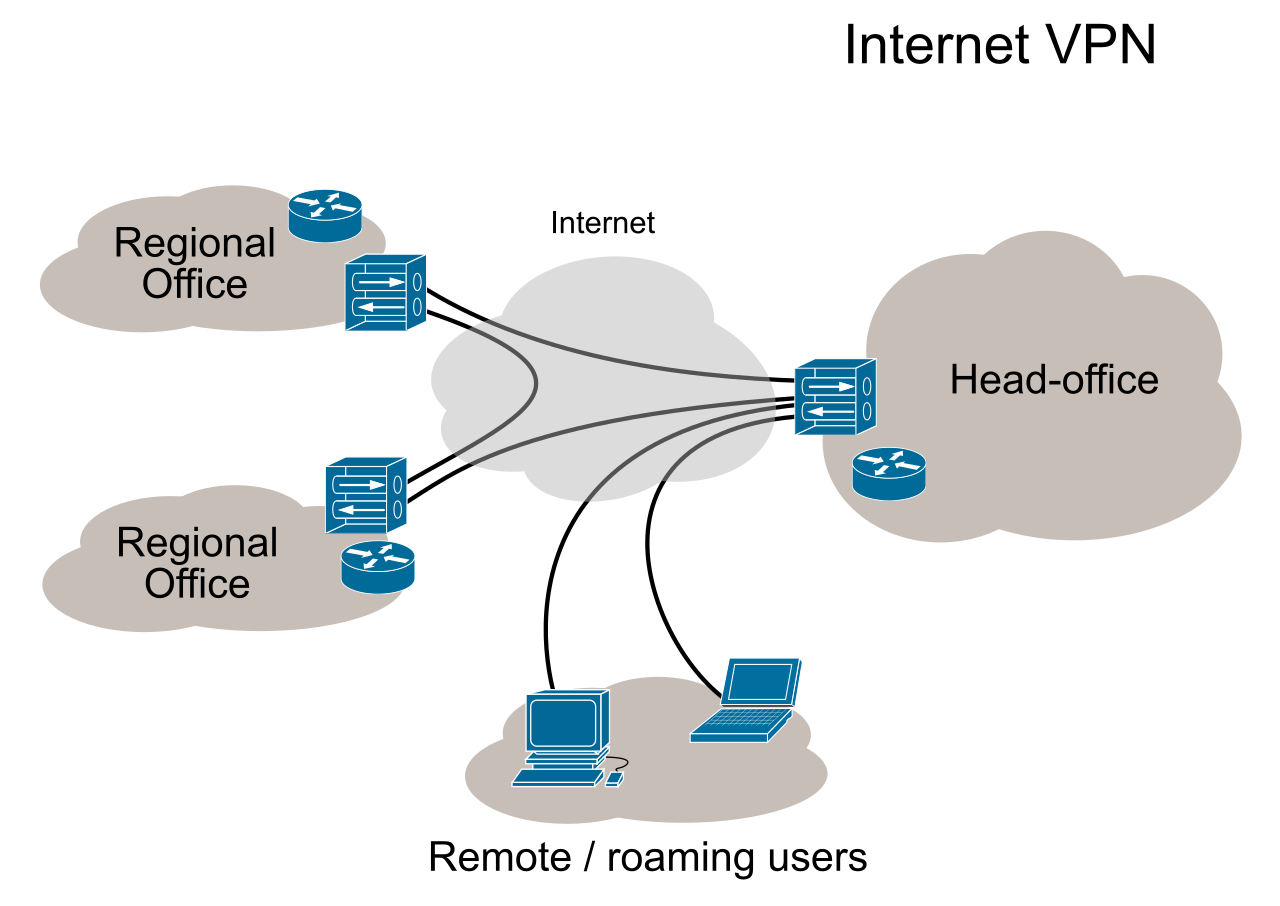
A Virtual Private Network (VPN) creates an encrypted tunnel between a remote device and a secure network, preventing unauthorized interception of sensitive client data. Source: Virtual Private Network overview by Ludovic.ferre ( talk · contribs ), CC BY-SA 4.0. -
Hardware Vulnerabilities: Storing unencrypted client data on a portable digital device creates a severe cybersecurity vulnerability. If you leave a flash drive or an unencrypted laptop in a taxi, that data is instantly compromised.
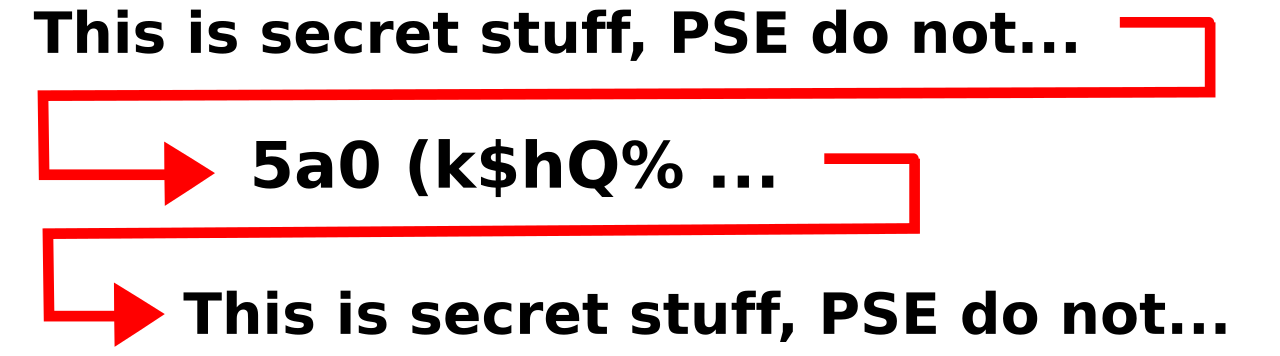
Encryption algorithms scramble plain data into unreadable ciphertext, ensuring that if a portable device is lost or stolen, the underlying information remains protected. Source: Encryption - decryption by odder, CC BY-SA 3.0.
The Mechanisms of Defense
Protecting this data requires deliberate, active systems.
-
The Wire Verification Rule: To prevent wire fraud, licensees must verify wire instructions verbally using a previously established phone number. Never use the phone number provided in the suspicious email. Call the title agent on the number you saved on day one of the transaction.
-
Access Control: You must implement Multi-Factor Authentication (MFA), which requires users to provide two or more verification factors to access digital accounts (e.g., a password and a code sent to your phone).

An authenticator application generating time-based one-time passwords, serving as an effective secondary factor for Multi-Factor Authentication (MFA). Source: Aegis Authenticator 3.2 screenshot by Software: Beem Development Screenshot: VulcanSphere, GPLv3. -
Physical Destruction: Not all data is digital. Licensees must securely shred physical documents containing sensitive client financial information before disposal.

Cross-cut paper shredders provide secure physical data destruction by rendering documents containing personal identifiable information into unreadable fragments. Source: Paper shredder - detail-9839 by Raimond Spekking, CC BY-SA 4.0.
Cyber Liability Insurance
Because no system is impervious to attack, real estate brokerages purchase Cyber Liability Insurance to cover financial losses stemming from data breaches. However, insurance companies are rigorously analytical. Cyber liability insurance underwriters require verifiable proof of active security controls (like MFA and employee training logs) before issuing a policy. You cannot buy insurance to cover up gross negligence.
While digital threats occur in the unseen spaces of networks, physical threats happen in the very tangible environment of a property showing. Your responsibility to your client extends to their physical safety and your own.
The Environment and Civil Liability
A property showing is a controlled event, and you are the one controlling it. A real estate agent's failure to maintain a safe environment during a showing can result in civil liability for third-party injuries. If you fail to warn a prospective buyer about a rotted floorboard and they fall, the liability falls on your shoulders.
Tactical Positioning: To maintain a safe environment, particularly when showing homes to unknown individuals, agents should position themselves between the client and the property exit to maintain a safe escape route during showings. Never trap yourself in a basement or a walk-in closet.
The Calculus of Physical Force
What happens if the threat is not a broken floorboard, but an aggressive individual? New York Penal Law Article 35 governs the legal justification for the use of physical force.
The baseline rule is that a person may legally use physical force upon reasonably believing such force is necessary to defend against imminent unlawful physical force. Furthermore, New York law allows individuals to use justified physical force to defend a third person (such as your client) from an imminent illegal attack.
The Standard of Reasonableness
The word "reasonable" carries immense legal weight. The legal standard for self-defense in New York requires the defender's belief of danger to be both objectively and subjectively reasonable.
- Subjective: You must genuinely, internally believe you are in danger.
- Objective: A rational, hypothetical person observing the exact same situation must also agree that the danger was real. Paranoia does not justify force.
The Initial Aggressor Rule
Justice demands clean hands. A person acting as the initial aggressor in a physical confrontation generally loses the right to claim self-defense. You cannot start a fight and then claim self-defense when you start losing.
Deadly Force, the Duty to Retreat, and The Castle Doctrine
The laws governing deadly physical force are strictly constrained.
New York imposes a legal duty to retreat before a person can lawfully employ deadly physical force. You cannot stand your ground if an avenue of escape exists. Specifically, a person must retreat from a physically dangerous situation if the person can do so with complete safety.
There is a famous exception to this rule called the Castle Doctrine, which New York recognizes within state self-defense laws. The Castle Doctrine removes the duty to retreat when a person is inside the person's own home and is not the initial aggressor.
The Real Estate Paradox: While you may possess the keys to the property, it is not your home. Real estate agents showing properties are legally bound by the duty to retreat because the agents are not inside their own homes. The Castle Doctrine does not apply to you at an open house.
Exceptions for Heinous Crimes
The law recognizes that some acts are so intrinsically violent that retreat is not required. New York law permits deadly physical force to prevent the commission of kidnapping, forcible rape, robbery, or arson.
The Limits of Insurance
Brokerages carry Errors and Omissions (E&O) insurance to protect agents from mistakes made during professional real estate activities—such as drafting a contract incorrectly or misrepresenting a property boundary.
However, E&O insurance policies strictly exclude coverage for intentional criminal acts committed by a real estate agent. If an agent uses unjustified, excessive physical force that goes beyond the protections of Article 35, they step outside the bounds of their insurance policy and face civil and criminal liability alone.
Summary Comparison: Assessing the Threats
| Threat Domain | Primary Risk | Preventative Action | Failsafe / Insurance |
|---|---|---|---|
| Digital Security | Wire fraud, Identity theft via stolen PII | MFA, verbal wire verification, VPN use, secure shredding | Cyber Liability Insurance (requires proof of security controls) |
| Physical Liability | Third-party injuries during property tours | Environmental awareness, safe positioning near exits | Errors & Omissions (E&O) Insurance |
| Physical Confrontation | Imminent unlawful physical force | Retreat if completely safe; use justified reasonable force if necessary | Article 35 Self-Defense Justification (E&O excludes intentional crimes) |
By mastering both the digital infrastructure of data protection and the physical boundaries of legal liability, you transition from being a mere facilitator of real estate to a trusted, legally secure professional.