Education and Exemptions
Not sure you’re ready?
Take the ~3-minute readiness diagnostic and see where you stand.
The power to legally negotiate the transfer of property on behalf of another person is not an inherent right; it is a heavily guarded statutory privilege. In New York, the gatekeeper of this privilege is Article 12-A of the New York Real Property Law. This statute serves as the definitive manual for the real estate profession, outlining precisely who may facilitate a transaction, the educational gauntlet required to earn that right, and the severe penalties awaiting those who attempt to operate outside the system.
Understanding Article 12-A is not just about passing a multiple-choice test; it is about understanding the boundaries of your own legal authority. Every open house you host, every commercial lease you negotiate, and every commission check you deposit is governed by the rules laid out in this text.
Before you can draft a listing agreement or represent a buyer, you must prove to the state that you possess the baseline maturity, legal status, and technical knowledge required to handle complex financial transactions.
To be eligible for a New York real estate salesperson license, an applicant must be at least 18 years of age and possess the legal right to work in the country—meaning you must be a United States citizen or a legal permanent resident.
Furthermore, the state evaluates the character of its applicants. Generally, an applicant must not have any felony convictions. However, this is not an absolute, immutable barrier; the New York Department of State (DOS) may grant specific exceptions to the felony conviction restriction upon careful review.
The Educational Foundation
The theoretical groundwork for your career begins in the classroom. An applicant for a salesperson license must complete a 77-hour qualifying pre-licensing education course.
Perspective: If you later decide to upgrade your authority and manage your own firm, the educational requirement increases significantly. The required pre-licensing education for a New York real estate broker license is 152 total hours.
You must prove mastery of this 77-hour curriculum through a two-tiered examination process:
- The School Exam: You must pass a proctored school exam with a minimum passing score of 70 percent. Upon passing, you receive a completion certificate. This certificate is remarkably durable—it remains valid for eight years from the date of completion.
- The State Exam: You must pass a separate state-administered exam. Once you pass this state exam, the results remain valid for exactly two years. You have a strict two-year window from passing the state real estate exam to apply for your license.
Notice carefully how the state separates education from agency. A sponsoring broker is not required for a student to take the 77-hour pre-licensing course, nor is a sponsoring broker required to sit for the state exam. You can acquire the knowledge entirely on your own.
However, knowledge alone does not grant you the power to act. To obtain an active New York real estate salesperson license and actually practice, you must be sponsored by a New York licensed real estate broker. Your sponsor is legally responsible for your professional conduct.
When precisely does everyday helpfulness cross the line into regulated real estate activity? The core mechanism of Article 12-A is triggered by two overlapping conditions: performing a specific real property action for another person, and doing so for a fee (or expectation of compensation).
If you are executing any of the following activities for another person for a fee, you are operating within the jurisdiction of Article 12-A and require a license:
- Negotiating the sale or exchange of real estate. (The classic brokerage function).
- Renting or leasing real property. (Connecting landlords with tenants).
- Collecting rent on behalf of another person. (If an overseas investor asks you to collect checks from their Bronx duplex for a cut, you need a license).
- Negotiating a commercial mortgage. (The financing side of commercial real estate is inherently tied to the property's valuation and transfer).
- Assisting in the auctioning of real estate.
- Providing tenant relocation services.
The Physics of Unlicensed Activity
Attempting to perform these acts without a license is not merely a bureaucratic misstep; it is a criminal offense. The state views unlicensed real estate activity as a threat to consumer financial safety.
Engaging in real estate brokerage activities without a license is a misdemeanor in New York. The consequences escalate rapidly:
- You can face imprisonment.
- You can be subjected to criminal fines up to $1000.
- The New York Department of State can levy brutal civil penalties—imposing fines up to four times the amount of any improperly received commissions. If you illegally collect a $10,000 commission, the state can penalize you $40,000. They do not just take the cookie back; they empty your jar.
While the net cast by Article 12-A is incredibly wide, there are specific, logical exemptions. The law recognizes that certain individuals inherently possess the right to transfer property by virtue of ownership, legal mandate, or fiduciary duty.
1. The Property Owner The most fundamental exemption belongs to the property owner. You do not need a real estate license to sell or rent your own real property, nor do you need a license to manage your own real property. Article 12-A regulates agency (acting for others), not principal ownership.
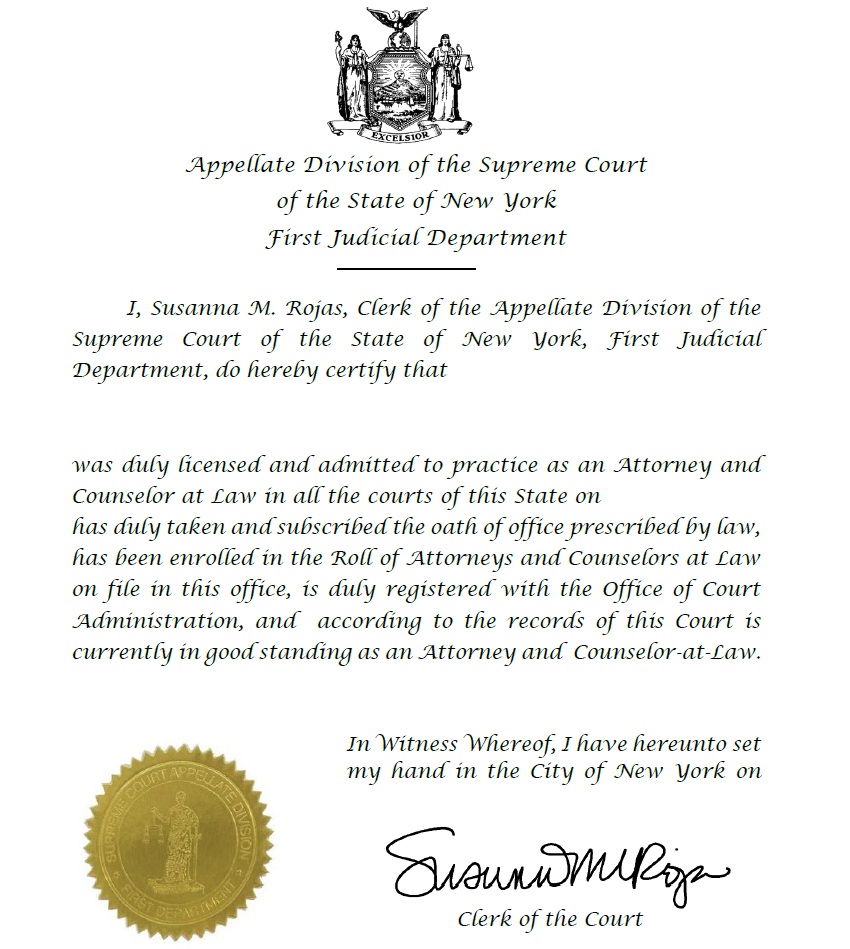
2. The Legal Profession Attorneys admitted to practice law in New York are exempt from holding a real estate license when performing real estate transactions in a legal capacity. Because their bar admission already permits them to draft contracts and offer fiduciary counsel, the state avoids redundant licensing.
Crucial Distinction: This exemption only covers practicing law. If a licensed New York attorney wishes to open a traditional real estate brokerage to employ and supervise real estate salespersons, they cannot use their law degree as a shield; they must obtain a real estate broker license.
3. Court-Appointed and Fiduciary Roles When the courts or the law mandates someone to handle a property, they bypass the standard licensing requirements. The following individuals are exempt when acting in their official capacities:
- Executors and Administrators of an estate (when selling property belonging to the deceased's estate).
- Court-appointed receivers (when managing or selling property under a direct court order, such as during a foreclosure or bankruptcy).
- Legal guardians (when handling real estate transactions to protect the assets of a ward).
- Public officers (performing official public duties, such as a city official auctioning tax-delinquent homes).
4. The New York City Exceptions In the specific urban ecosystem of New York City, the state carves out exemptions to assist with municipal housing management. Tenant associations and authorized not-for-profit organizations are exempt from licensure when they are managing New York City-owned residential properties.
A New York real estate salesperson license is valid for a term of exactly two years.
Unlike a parking meter, there is no grace period allowing an agent to continue practicing after a license expires. If your license expires at midnight, your legal authority to negotiate or collect a fee evaporates at 12:01 AM. New York real estate licensees must formally renew the license every two years.
If you allow your license to expire, the state grants you a window of two years from the expiration date to renew it before severe friction is applied. If an individual allows their license to remain expired for more than two years, they lose their previous status entirely and must pass the state written exam again to reinstate the license.
The Anatomy of Continuing Education (CE)
To renew a license, both salespersons and brokers must complete 22.5 hours of approved continuing education every two years. Think of CE as mandatory software updates for your legal and ethical operating system. The state does not allow you to simply take 22.5 hours of marketing classes; they prescribe a highly specific curriculum to ensure public protection.
| Subject Area | Required Hours | Purpose & Application in the Field |
|---|---|---|
| Fair Housing & Discrimination | 3.0 | Ensuring equitable access to housing; vital for steering clear of civil rights violations. |
| Ethical Business Practices | 2.5 | Navigating dual agency, fiduciary duties, and client conflicts. |
| Implicit Bias | 2.0 | Recognizing unconscious prejudices that could influence how you treat prospective buyers or tenants. |
| Cultural Competency | 2.0 | Understanding and effectively communicating across diverse community backgrounds. |
| Recent Legal Matters | 1.0 | Staying updated on shifts in property law, rent control regulations, and zoning limits. |
| Law of Agency | 1.0* | Reaffirming the exact legal relationship between you, your broker, and the client. (See note below). |
| Electives | 11.0 | Standard real estate topics chosen by the licensee to round out the 22.5-hour requirement. |
The First-Timer Agency Rule: If you are a real estate salesperson renewing a New York license for the first time, the state requires extra foundational reinforcement. You must complete 2 hours of instruction on the law of agency (leaving 10 hours for electives). For all subsequent renewals, the agency requirement drops to the standard 1 hour (allowing 11 elective hours).
Continuing Education Exemptions
Historically, New York granted a "veteran broker" exemption, allowing highly experienced brokers who had been licensed for 15 straight years to skip continuing education. This 15-year continuing education exemption was removed in July 2021. Today, there is no tenure-based free pass: veteran New York real estate brokers must now complete all continuing education requirements to renew a license.
There is only one true group that remains insulated from the 22.5-hour mandate: Attorneys admitted to the New York State bar are completely exempt from New York real estate continuing education requirements. Their mandatory Continuing Legal Education (CLE) for the Bar satisfies the state's requirement for ongoing professional competence.