Virginia Standards of Conduct & Escrow
Not sure you’re ready?
Take the ~3-minute readiness diagnostic and see where you stand.
Consider the structural integrity of a suspension bridge. Its stability does not depend merely on the cables or the towers, but on the precise, predictable laws of physics binding them together. A real estate transaction operates on an identical principle. The structural integrity of the real estate market relies on an invisible but unyielding force: the absolute sanctity of the public's trust. The Virginia Real Estate Board (VREB) does not issue guidelines; it enforces the fundamental laws of professional physics that govern how money moves, how information is transmitted, and how agents conduct themselves. For an aspiring Virginia real estate salesperson, mastering these rules is not merely about passing an examination—it is about understanding the boundaries that prevent catastrophic failure in your daily practice.

When a consumer hands you an earnest money check, they are not giving you money; they are entrusting you with potential energy. This energy must be quarantined from your operating funds to ensure it remains completely intact and available. In Virginia, the rules governing this quarantine—the escrow account—are exacting.
By default, escrow accounts must be held in federally insured depositories located in Virginia. The logic is simple: the funds must be secure, and they must remain within the jurisdictional reach of the Commonwealth. However, the law respects the autonomy of the actors in a transaction; therefore, principals can agree in writing to hold escrow funds in a depository located outside of Virginia.

The Deposit Clocks
Time is a critical dimension in escrow handling. The Virginia regulations establish strict countdowns for when funds must be deposited into the broker's escrow account, but you must pay close attention to the trigger event that starts the clock.
| Fund Type | Deposit Deadline | The Trigger Event |
|---|---|---|
| Earnest Money | By the end of the 5th business banking day | Following contract ratification |
| Prepaid Rents | By the end of the 5th business banking day | Following receipt of the funds by a licensee |
Notice the divergence. If a buyer writes an earnest money check on a Tuesday, but the contract is not ratified until Thursday, the five-day clock does not begin until Thursday. Conversely, if you receive prepaid rent, the clock begins immediately upon receipt. As with location, principals to a real estate transaction can agree in writing to alter the standard five-day deadline for earnest money deposits, provided this variance is explicitly documented.
Furthermore, you cannot create the illusion of liquidity. A licensee is prohibited from submitting copies of the same earnest money deposit check with multiple purchase offers. An earnest money check represents a discrete quantum of collateral; photocopying it for three different offers fundamentally misrepresents the buyer's leveraged capital.

The Two Deadly Sins: Commingling and Conversion
When handling escrow, brokers must avoid two primary violations, both of which deal with the contamination of client funds.
Commingling occurs when a licensee mixes personal or firm funds with client escrow funds. Conversion occurs when a licensee appropriates client escrow funds for personal or unauthorized use.
Think of commingling as pouring oil into water—you have improperly mixed two substances that must remain separate. The practice of commingling funds is strictly prohibited in Virginia. Conversion, however, is far more severe. If you take that mixed water and drink it (e.g., using client funds to pay the firm's utility bills), you have committed conversion. Conversion of escrow funds is a severe violation of Virginia real estate regulations, tantamount to theft.
If the structural integrity of this system fails, the broker cannot hide it. Principal brokers are required to self-report any escrow account non-compliance to the Virginia Real Estate Board.
Escrow Dispersal Mechanics
Money enters escrow easily, but it can only exit through specific legal vectors. A broker can disburse escrow funds upon the successful consummation of the real estate transaction (at closing). If the transaction fails, the funds remain locked until one of the following occurs:
- Mutual Agreement: A broker can disburse escrow funds when all principals to the transaction sign a mutual written release.
- Judicial Intervention: A court order from a competent jurisdiction is a valid authorization for a broker to disburse escrow funds.
- The 15-Day Notice: When parties dispute who is entitled to the earnest money, the broker is not required to act as a judge. Instead, a broker may intend to disburse disputed escrow funds by sending written notice to all parties to the transaction.
- This written notice of intended escrow disbursement must give the non-receiving party 15 calendar days to submit a written protest.
- If a written protest is received within 15 calendar days of the escrow disbursement notice, the broker must hold the funds.
- If no written protest is received within 15 calendar days of the escrow disbursement notice, the broker may disburse the funds. This mechanism prevents funds from being trapped in perpetuity by an unresponsive party.
In physics, a spectrum allows us to identify the elemental composition of a star simply by looking at the light it emits. In real estate, advertising is your emitted light. The consumer must be able to look at your advertisement and instantly know who you are, whom you represent, and the precise nature of the property.
To guarantee this transparency, all real estate advertising must be conducted under the direct supervision of the principal broker or supervising broker. Furthermore, a licensee must obtain the owner's written consent before advertising a property for sale or lease, and advertising a property as being listed by the firm when no valid listing agreement exists is prohibited.
The End of the "One-Click-Away" Era
Digital media previously allowed agents to hide mandatory disclosures behind hyperlinks. This is no longer permissible. Real estate advertisements can no longer use a one-click-away link to provide mandatory disclosures. Today, all mandatory real estate advertising disclosures must be contained directly within the advertisement itself.

Mandatory Display Elements
Regardless of the medium, certain data points are non-negotiable. All real estate advertising must clearly and legibly display the licensed name of the brokerage firm. Beyond this universal rule, specific mediums require specific elements:
- Print and Online Advertisements: Must include the brokerage firm's name and the office contact information.
- Yard Signs: Real estate yard signs placed on a property must include the brokerage firm's name and the firm's primary or branch office telephone number.
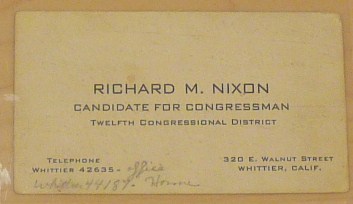
- Business Cards: A real estate licensee's business card must include three specific things: the licensee's name, the brokerage firm's name, and the licensee's contact information.
Dynamic Accuracy
Advertising is not static. A property's condition and legal status exist in a constant state of flux, and your public representations must keep pace. Property information in advertising must accurately reflect the current physical condition of the property. If a tree falls on the listed property, destroying the roof, you cannot continue advertising it as "move-in ready." Similarly, advertising must be updated promptly to reflect material changes in a property's contract status. If a property goes under contract, leaving it advertised as simply "Active" misleads the market.
Every transaction creates a paper trail, establishing the verifiable memory of the firm. A principal broker must maintain all real estate transaction records for a minimum of three years. These files must include everything: brokers must retain copies of all executed purchase contracts, lease agreements, property management agreements, and settlement statements related to a real estate transaction for a minimum of three years.
The primary trap for the unwary salesperson lies in when the three-year countdown begins. It is not uniform.
| Document / Transaction Type | The 3-Year Retention Clock Begins... |
|---|---|
| Successfully Closed Transaction | On the date of closing. |
| Transaction That Fails to Close | On the date of contract ratification. |
| Agency Disclosure and Consent Forms | On the date of execution. |
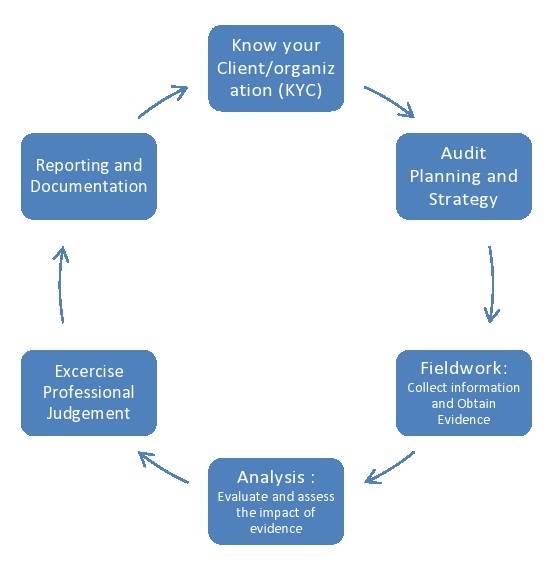
The VREB demands absolute transparency into these archives. The Virginia Real Estate Board has the authority to inspect and audit any required real estate documentation of a firm. To ensure compliance before the state intervenes, brokers must perform a firm self-audit within 90 days of the brokerage license expiration date.
The license you earn grants you immense power to orchestrate high-value transactions. With that power comes a strict prohibition against certain behaviors. Practicing real estate with an expired license is a violation of Virginia law. You are either entirely licensed, or you are a civilian; there is no grace period for unauthorized practice.
Representation and Fiduciary Boundaries
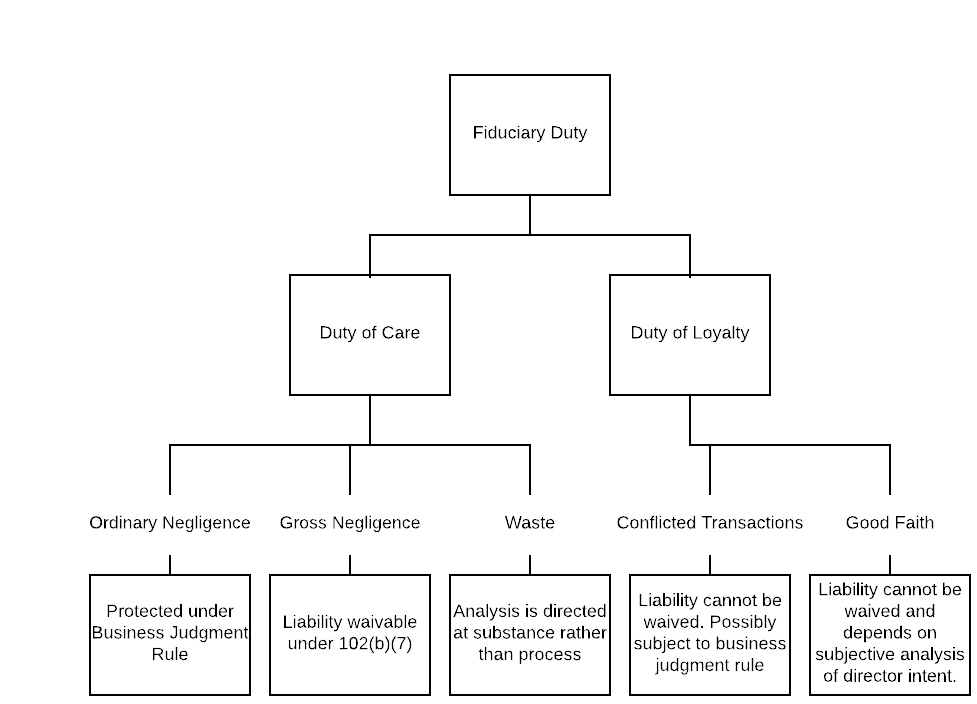
The foundation of agency is loyalty. You cannot serve two masters secretly. Acting as a dual agent without obtaining the written consent of all clients is grounds for disciplinary action. Likewise, a licensee must not accept compensation from more than one party to a transaction without the written consent of all clients.
When managing the transaction mechanics, you must operate with urgency and transparency. Licensees must promptly tender all written offers and counteroffers to the respective buyer or seller. You do not have the authority to withhold a low offer simply because you believe the seller will be insulted. Furthermore, licensees must provide copies of any signed documents to all signing parties at the time of execution.
Because fraud is a persistent threat in high-dollar markets, a real estate licensee must take reasonable steps to verify the identity of the seller or landlord hiring the licensee. If a stranger asks you to sell a vacant lot they claim to own, you must do your diligence. Conversely, you must be honest about the property you represent: failing to disclose known material adverse facts pertaining to the physical condition of a property is grounds for disciplinary action.
Unlicensed Assistants and Compensation
Real estate teams often rely on administrative staff, but you must strictly police the boundary between licensed and unlicensed work. Non-licensed individuals are prohibited from performing any activities that require a real estate license (such as negotiating contracts or explaining documents to clients). Consequently, paying a real estate commission to an unlicensed individual for acts requiring a license is strictly prohibited. However, the law does recognize the realities of modern business operations: non-licensed individuals working for a real estate broker may be paid on a per-transaction basis, provided their compensation is strictly for administrative or clerical tasks, not licensed acts.
The Prohibition of Net Listings
One of the most heavily tested concepts in real estate law is the misalignment of incentives.
A net listing is a listing agreement where the broker keeps any amount over the seller's specified net price.
If a seller states, "I just want \$300,000 for this house, you keep whatever you get above that," and the broker sells the home for \$375,000, a net listing would allow the broker to pocket the \$75,000 difference. This creates a catastrophic conflict of interest, incentivizing the agent to underprice the seller's net expectation for their own massive windfall. Because this fundamentally breaches fiduciary duty, net listings are strictly prohibited in the Commonwealth of Virginia.
The Virginia Real Estate Board manages licensure and enforces real estate regulations in the Commonwealth of Virginia. They are the arbiters of the physical laws of this profession. When a licensee breaks the rules, the Virginia Real Estate Board has the authority to impose monetary penalties on real estate licensees, as well as the power to suspend or permanently revoke a real estate license.

Mandatory Reporting Timelines
To monitor the integrity of the profession, the VREB relies on strict reporting timelines. When the facts of a licensee's life or employment change, the Board must know rapidly.
- 30-Day Reporting Windows:
- A licensee must notify the Virginia Real Estate Board of any change in the licensee's personal name or home address within 30 days.
- A licensee must report any felony conviction to the Virginia Real Estate Board within 30 days of the conviction.
- A licensee must report any misdemeanor conviction involving moral turpitude to the Virginia Real Estate Board within 30 days of the conviction. (Moral turpitude refers to crimes involving lying, cheating, or stealing—actions that strike at the heart of public trust).
- 10-Day Reporting Windows:
- When a licensee leaves a firm, principal brokers must notify the Virginia Real Estate Board of the termination of an affiliated salesperson within 10 calendar days.
- Furthermore, a real estate license must be returned to the Virginia Real Estate Board within 10 days of the licensee's termination from a firm.
The Ultimate Penalty: The Recovery Fund
Despite all these regulations, humans occasionally fail. When a licensee commits severe misconduct (such as fraud or embezzlement) and a consumer is financially harmed, the consumer can seek restitution from the Virginia Real Estate Transaction Recovery Fund, provided they have exhausted all other legal remedies to collect their court judgment.
If this occurs, the state steps in to make the consumer whole, but the professional consequence is absolute. If a payment is made from the Virginia Real Estate Transaction Recovery Fund due to a licensee's misconduct, the licensee's license is automatically revoked. There is no hearing, no suspension, and no debate. If the state must pay for your professional failure, your right to practice in the Commonwealth of Virginia is immediately extinguished.
Mastering these laws is not an academic exercise; it is the blueprint for a sustainable, bulletproof career. The VREB enforces these standards to ensure that every time money changes hands, every time a contract is signed, and every time an advertisement is published, the invisible structural integrity of the real estate market holds firm.