WA Statutes Governing Licensee Conduct & Advertising
Not sure you’re ready?
Take the ~3-minute readiness diagnostic and see where you stand.
The moment a license is issued by the State of Washington, a professional enters a highly structured regulatory universe where intent no longer shields you from consequence. In this space, the Real Estate Brokers Act (Chapter 18.85 RCW) and its accompanying rules act as the laws of physics. Just as gravity dictates the motion of planets, Washington law strictly dictates how authority is delegated, how money flows, and how you present yourself to the public. You cannot operate on intuition alone. To survive and thrive as a real estate broker, you must understand the mechanical boundaries of your profession, the exact obligations you owe your firm, and the absolute authority held by the Director of the Department of Licensing.

Think of a real estate firm as a contained electrical circuit. At the center is the Designated Broker (DB), the ultimate grounding wire. A designated broker is legally responsible for supervising all brokers licensed with their real estate firm. They are the single point of ultimate accountability, though a real estate firm may delegate certain supervisory duties to one or more managing brokers to help shoulder the day-to-day oversight of entry-level brokers.
Because this oversight must be anchored in reality, every licensed Washington real estate firm must maintain a physical office or records depository accessible within the state. If the firm wishes to expand its footprint, a designated broker may apply to establish one or more branch offices under the real estate firm's licensed name. When they do, a branch office of a Washington real estate firm must visually display the firm's licensed name to the public.

The Lifeline of the License
Your broker's license is not something you carry in your wallet. By law, a Washington real estate broker's license must be kept at all times by their affiliated real estate firm. The moment this tether is severed, the physics of your authority change instantly.
If you decide to leave a firm, a Washington real estate broker must submit written notification to their designated broker when terminating their affiliation with the firm, and a real estate broker must surrender their license immediately upon termination of their affiliation with a firm. At that exact moment, a Washington real estate broker's license ceases to be in force immediately when the broker stops representing their licensed firm. You cannot write a contract on your drive over to your new brokerage.
The notification requirements flow upward as well:
- A designated broker must promptly notify the Director of the Department of Licensing when a broker terminates affiliation with the firm.
- If a broker is fired for a regulatory infraction, the rules become more stringent: a real estate firm must immediately file a written statement with the Director if a broker is terminated for violating Washington real estate laws.
Firms must fiercely guard who operates under their umbrella. Continuing to employ an associate broker whose license has been revoked is a ground for disciplinary action against the firm itself. Similarly, accepting the real estate services of an unlicensed person is grounds for disciplinary action against a firm.
In Washington, imagine compensation as water flowing down a mountain. It can only travel through specific, approved riverbeds. If you try to dig your own canal, you violate the law.
The primary rule of compensation is absolute: a Washington real estate broker may only receive compensation for brokerage services through their firm's designated broker. Consequently, a real estate client cannot directly pay a commission to an individual real estate broker. If a seller hands you a $10,000 check made out to your personal name at closing, accepting it is illegal.
Furthermore, a Washington real estate broker is legally prohibited from sharing commissions directly with any person. You cannot cut a check to a colleague, and a Washington real estate broker cannot directly share a portion of their commission with an unlicensed assistant. All payouts must be routed through the designated broker.
Inter-Firm and Escrow Routing
Firms are the only entities that can share money with other firms. A Washington real estate firm may legally share compensation with another licensed real estate firm. However, a Washington real estate firm is prohibited from directly paying a commission to a broker affiliated with a different firm (e.g., Firm A cannot pay a broker at Firm B directly; Firm A must pay Firm B).
Firms can also share commissions across state lines, meaning a Washington real estate firm may share a commission with a licensed brokerage in another state that has a real estate regulatory program. Interestingly, a Washington real estate firm may also share a commission with a licensed manufactured housing retailer when selling a manufactured home along with land.

Crucial Rule on Escrow Payouts Escrow companies frequently disburse commissions directly to brokers at closing, but only under strict conditions. An individual broker is prohibited from independently instructing an escrow company to disburse commission payments to themselves. However, a designated broker can issue written instructions to an escrow company to disburse a commission directly to an affiliated broker.
Agreements and Exceptions
Generally, compensation requires a written agreement. But there are specific statutory carve-outs. A real estate firm may receive compensation for a broker's price opinion (BPO) without a written services agreement. Furthermore, a real estate firm may receive a referral fee from another firm without a written services agreement if no other brokerage services were provided.
The Cardinal Sins: Commingling and Conversion
When you handle client money—such as earnest money—it is sacred. It does not belong to you, and it does not belong to the firm's operating budget.
- Commingling client trust funds with a real estate firm's operating funds is prohibited under Washington law. You cannot mix client money with the money used to pay the firm's light bill.
- Conversion is worse. Converting trust funds for personal or business use is a prohibited act for Washington real estate licensees. This is effectively theft and guarantees severe disciplinary action.
Advertising in real estate is not just billboards and bus benches. In Washington, real estate advertising includes any oral or written attempt to induce a person to use the services of a real estate firm. Because of this broad definition, Washington real estate advertising rules apply to internet-based advertising, social media posts, and emails. A casual tweet offering to help someone find a house is regulated advertising.
The Clear and Conspicuous Doctrine
The state demands that consumers know exactly which firm is legally responsible for a broker's actions. Therefore, all advertising for real estate brokerage services in Washington must include the firm's licensed name or licensed assumed name. (Note: A real estate firm can operate under an assumed name, or DBA, if that name is properly licensed with the Washington Department of Licensing).
The real estate firm's licensed name must be clear and conspicuous in all forms of advertising. If it takes a magnifying glass to find your brokerage's name at the bottom of your Instagram graphic, you are violating the rule. Consequently, blind ads promoting real estate services without disclosing the licensed brokerage firm's name are illegal in Washington.
Brands, Franchises, and Teams
Brokers love to market themselves, but personal branding is heavily restricted to prevent deceiving the public into thinking an individual broker is an independent firm.
- A Washington real estate broker is prohibited from using words like "realty" or "realtors" in a personal brand name (e.g., you cannot market yourself as "Smith Realty" if you are a broker affiliated with XYZ Brokerage).
- A Washington real estate broker must obtain advance written approval from their designated broker to use an unlicensed title or brand in advertising.
- Real estate team advertising must conspicuously display the licensed firm's name. "The Elite Property Team" must still clearly show they are part of XYZ Brokerage.
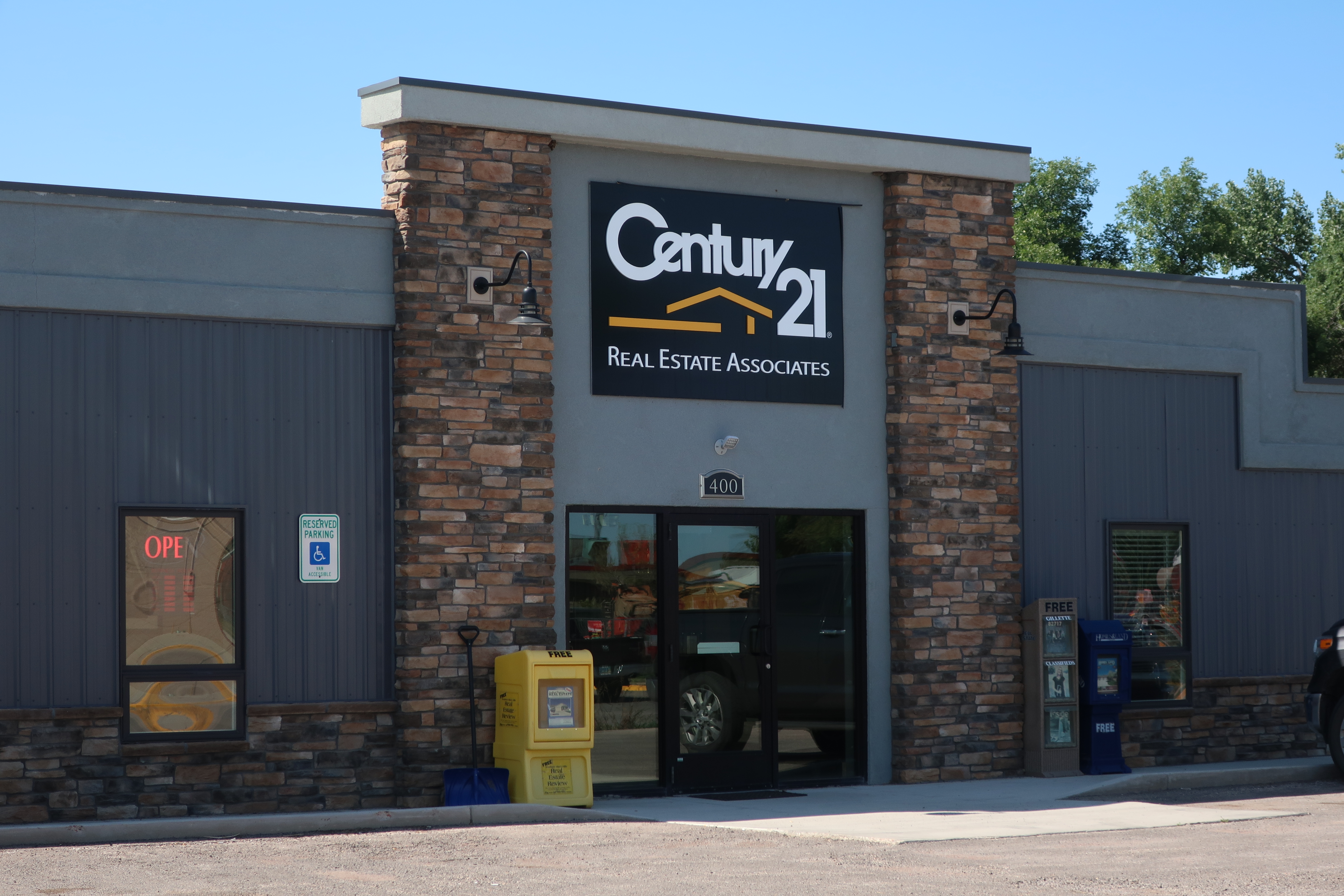
- A franchised real estate firm must include the franchisee's specific firm name alongside the franchisor's name in all advertising (e.g., "Century 21 [Northwest Properties]").
The Director of the Washington Department of Licensing has the authority to take disciplinary action against a real estate broker. This authority is sweeping, and the statutes explicitly enumerate grounds for discipline. For example, making false statements or descriptions in real estate advertising is a statutory ground for disciplinary action in Washington.
Mandatory Disclosures
Information asymmetry is the enemy of a fair market. You possess specialized knowledge and industry connections, so Washington requires strict transparency:
- Self-Dealing: A Washington real estate licensee must disclose their licensed status in writing when buying or selling real property for their own account. You cannot hide your expertise from an unrepresented civilian party.
- Kickbacks: Under Washington law, a real estate broker must disclose to their principal any expectation of receiving a kickback from a lending institution. Similarly, a real estate broker must disclose to their principal any expectation of receiving a kickback from an escrow company. Hidden financial incentives compromise your fiduciary duties.

The Law of Agency and the Consumer Pamphlet
The foundation of your relationship with the public is outlined in the Law of Agency (Ch. 18.86 RCW). To ensure consumers understand who represents whom, the state created a mandatory pamphlet. Failing to provide a mandatory Washington real estate agency pamphlet to a client is grounds for disciplinary action.
Finally, understanding agency means understanding liability. If a broker acts negligently or commits fraud, does the client (the principal) bear the legal consequences? Generally, no. A real estate principal is not vicariously liable for a broker's actions unless the principal participated in or authorized the specific act. This protection mechanism encourages consumers to use professional representation without the terrifying prospect of being sued for their broker's independent, unauthorized mistakes.
By mastering these rules, you do not just memorize facts for an exam; you learn the structural mechanics of the real estate profession. You protect the public, you protect your firm, and most importantly, you protect the license you have worked so hard to earn.