Protecting Vulnerable Adults and Uniform Prudent Investor Act
Imagine holding the legal authority to allocate the life savings of a family you have never met, or noticing that an elderly client's sudden, frantic wire transfers do not match decades of careful financial behavior. In the securities industry, you are not merely executing trades; you are positioned on the front lines of financial defense and fiduciary stewardship. The Uniform Securities Agent State Law Exam (Series 63) tests your command of this dual responsibility through two vital frameworks: the NASAA Model Act to Protect Vulnerable Adults from Financial Exploitation, and the Uniform Prudent Investor Act (UPIA). One framework empowers you to halt the theft of a vulnerable client's assets before the money disappears, while the other modernizes the centuries-old rules of how a trustee must manage someone else's wealth. Both demand a precise understanding of when to act, how to act, and the legal standards by which those actions will be judged.
Financial exploitation rarely looks like a bank robbery. It looks like a new "friend" accompanying an elderly client to the branch, or a sudden, uncharacteristic demand to liquidate a conservative portfolio and wire the proceeds to a foreign entity. To combat this, state securities regulators adopted the NASAA Model Act, empowering industry professionals to act as a dam against the outward flow of stolen funds.
Defining the Vulnerable and the Protectors
The law first establishes exactly who is at risk and who has the authority to intervene.
Under the NASAA Model Act, a vulnerable adult includes:
- Any person aged 65 or older.
- A person aged 18 or older who is subject to adult protective services (APS) due to a physical or mental impairment.
Financial exploitation occurs when there is the wrongful or unauthorized taking of a vulnerable adult's money or property, or the wrongful or unauthorized use of a vulnerable adult's assets.
The individuals deputized to spot and stop this are called qualified individuals. A qualified individual includes:
- A broker-dealer agent.
- An investment adviser representative.
- Persons serving in a supervisory capacity for a broker-dealer or investment adviser.
- Persons serving in a compliance capacity for a broker-dealer or investment adviser.
The Duty to Report
If you are a qualified individual and you suspect financial exploitation is occurring, silence is not an option. You must promptly notify two distinct authorities:
You also have a valuable tool at your disposal: the trusted contact. A qualified individual may disclose suspected financial exploitation to a third party previously designated by the vulnerable adult. However, logic dictates a critical exception—you are strictly prohibited from disclosing suspected financial exploitation to a designated third party if that third party is the one suspected of the exploitation.
The Power to Pause: Delaying Disbursements
Reporting the crime does not instantly stop the money from leaving the account. For that, the Act grants unprecedented authority: a broker-dealer or an investment adviser may delay a disbursement from an account of a vulnerable adult if financial exploitation is suspected. Notice that the law specifically targets disbursements (money leaving the account), not necessarily the execution of trades within the account.
When a broker-dealer triggers a disbursement delay, a strict legal and procedural clock begins ticking.
| Requirement | Timeline / Detail |
|---|---|
| Written Notification | The broker-dealer must provide written notification of the delay within two business days after the requested disbursement. |
| Who Gets Notified? | 1. All parties authorized to transact business on the account.<br>2. The state securities administrator.<br>3. Adult Protective Services (APS). |
| Internal Review | The broker-dealer must initiate an internal review of the facts and circumstances that caused the delay. The firm must then report the results of this internal review to both the state securities administrator and APS. |
| Initial Expiration | The initial delay expires 15 business days after the date the delay was first placed. |
| Extensions | If the investigation requires more time, the state securities administrator or APS can request an extension of the delay for an additional 10 business days. |
| Judicial Intervention | Ultimately, a court of competent jurisdiction may enter an order extending the delay indefinitely or for a specific period. |
Safe Harbors: Immunity and Recordkeeping
Regulators understand that halting a client's money is a drastic step. If industry professionals feared lawsuits from angry clients every time they paused a suspicious transaction, they would never act. Therefore, the law provides a shield:
- A qualified individual acting in good faith receives immunity from both civil and administrative liability for reporting suspected financial exploitation.
- A broker-dealer receives immunity from civil and administrative liability for delaying a disbursement in good faith.
To maintain these protections and prove compliance, broker-dealers must rigorously retain records related to the reporting of suspected financial exploitation and records related to any disbursement delays.
If protecting vulnerable adults is about defending capital, the Uniform Prudent Investor Act (UPIA) is about deploying it.
Historically, trust law treated investments in isolation. A trustee could be sued if a single bond in a portfolio defaulted, leading trustees to invest only in ultra-conservative, legally approved "safe" lists. This archaic approach ignored how markets actually work. The UPIA modernized fiduciary duty by applying modern portfolio theory to the law.
The Paradigm Shift: Context and Timing
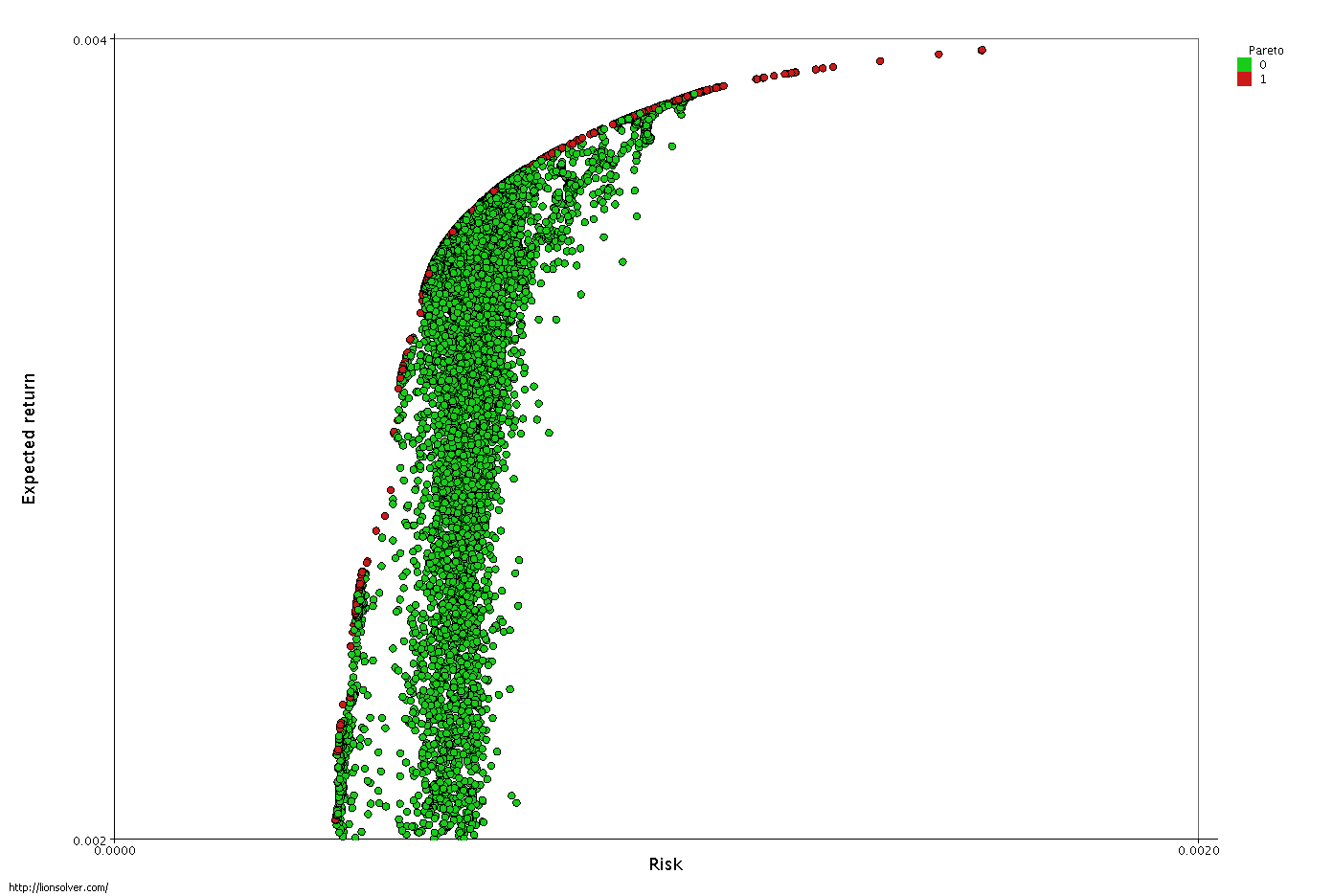
The core philosophy of the UPIA is that risk is measured collectively, not in isolation. The Act evaluates a trustee's investment decisions based on the context of the trust portfolio as a whole, not on a trade-by-trade basis. A trustee's decisions are evaluated as part of an overall investment strategy having risk and return objectives reasonably suited to the trust.
Furthermore, markets are inherently unpredictable. Therefore, a trustee's compliance with the Uniform Prudent Investor Act is determined in light of the facts and circumstances existing at the time of a decision. Crucially, a trustee's compliance is not judged by hindsight. If a trustee makes a highly analyzed, rational investment that subsequently drops in value due to an unforeseen global event, the trustee has not breached their duty.
The Unrestricted Universe and the Duty to Diversify
Because modern finance utilizes complex instruments to hedge and grow wealth, the Uniform Prudent Investor Act removes categorical restrictions on specific types of investments. Under the UPIA, a trustee may invest in any kind of property or type of investment, as long as the investment aligns with the prudent investor rule. An options contract, historically viewed as "speculative," might be perfectly prudent if used to hedge concentrated stock risk.
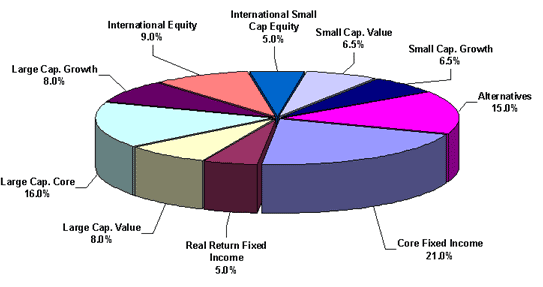
With this freedom comes the obligation of risk management. A trustee under the UPIA has a duty to diversify the investments of the trust. However, this is not absolute. A trustee is exempt from the duty to diversify if the trustee reasonably determines that the purposes of the trust are better served without diversifying (for example, if the trust's primary asset is a highly profitable, closely held family business that the beneficiaries wish to retain).
The Architecture of a Prudent Decision
A trustee cannot invest on a whim. The UPIA mandates that a trustee must verify facts relevant to the investment and management of trust assets. When formulating the strategy, the trustee must consider an expansive list of factors to ensure the portfolio matches reality:
- General economic conditions
- The possible effect of inflation or deflation (recognizing that "safe" cash often loses purchasing power)
- Expected tax consequences of investment decisions or strategies
- The expected total return from both income and capital appreciation
- The role each investment plays within the overall trust portfolio
- The needs for liquidity
- The needs for regularity of income
- The needs for preservation of capital

Beyond asset selection, the trustee must monitor expenses. A trustee incurs costs only if the costs are appropriate and reasonable in relation to the assets and purposes of the trust. Excessive fees drag down total return and violate the duty of prudence.
Loyalty and Impartiality
Fiduciary stewardship requires absolute allegiance. A trustee must invest and manage trust assets solely in the interest of the beneficiaries, satisfying the duty of loyalty. Self-dealing or prioritizing the trustee's own firm's proprietary funds over better external options is strictly forbidden.
When managing a trust with two or more beneficiaries, the trustee must satisfy the duty of impartiality. A trustee must take into account any differing interests of multiple beneficiaries and act impartially in investing and managing the assets.
Example: A trust has an older beneficiary who needs current income to live, and a younger remainderman beneficiary who wants long-term aggressive growth. The trustee cannot simply favor one over the other; they must construct a portfolio that balances current yield with capital appreciation to serve both interests impartially.
The Delegation of Authority
No single trustee can be a macroeconomic forecaster, a tax specialist, and a stock-picker all at once. Recognizing this, the Uniform Prudent Investor Act radically updated the law: it permits a trustee to delegate investment and management functions to an agent (such as an investment adviser).
However, delegation is not an abdication of responsibility. To maintain the shield of liability, the trustee must follow a strict three-step process:
- Exercise reasonable care, skill, and caution in selecting the agent.
- Establish the scope and terms of the delegation.
- Periodically review the actions of the agent to ensure compliance with the terms of the delegation.
If the trustee faithfully executes these three steps, a profound legal protection is activated: a trustee who properly delegates investment functions is not liable to the beneficiaries for the decisions or actions of the agent. The liability shifts to the expert who accepted the delegated duty.