Equity Securities: Rights, Warrants, and Taxes
When a corporation alters its capital structure, the fundamental geometry of shareholder ownership shifts. An equity position is not merely a static claim on corporate earnings; it is a dynamic bundle of privileges and liabilities that must be actively managed. For the General Securities Representative, understanding how to navigate these structural changes—whether through the anti-dilutive protection of preemptive rights, the speculative leverage of warrants, or the cross-border bridge of American Depositary Receipts—is critical to preserving client wealth. Ultimately, however, every market maneuver converges on a single, inescapable friction: taxation. Mastering the mechanics of how equity is originated, traded across electronic networks, and taxed separates the functional broker from the true architect of a client’s portfolio.
Imagine you own 10% of a successful, privately-owned coffee shop. If the other owners decide to issue new shares to raise capital and sell them to an outside investor, your 10% slice of the pie suddenly shrinks to 5%. You have been diluted. The public equity markets have mechanisms to prevent this.
Preemptive Rights: The Anti-Dilution Shield
Preemptive rights give existing common stockholders the privilege to purchase newly issued shares before the public. Functionally, preemptive rights prevent the dilution of existing shareholders' proportionate ownership interest when new shares are issued.
Because the corporation needs this capital quickly, rights offerings have a short lifespan, typically expiring in 30 to 45 days. To incentivize the current shareholders to participate, the exercise price of a preemptive right is set below the current market price of the stock.
A shareholder receives exactly one preemptive right for each share of common stock owned. Once these rights are deposited into a client's account, they have three distinct choices:
- They can exercise the preemptive rights and buy the newly issued shares.
- They can sell the rights in the open market, as they carry intrinsic value.
- They can let the rights expire (though as a registered rep, letting valuable rights expire worthless is a dereliction of duty to your client!).
If your client decides to sell the right, you need to know what it’s worth. The math depends on whether the stock is trading with the rights attached (cum-rights) or without them (ex-rights).
Theoretical Value Cum-Rights (Before Ex-Date): Value = (Market Price - Subscription Price) / (Number of Rights Needed + 1)
Theoretical Value Ex-Rights (On or After Ex-Date): Value = (Market Price - Subscription Price) / Number of Rights Needed
Notice the "+ 1" disappears on the ex-date. Why? Because the market price of the stock naturally drops by the value of the right on the ex-dividend date.
But what if the broader market is apathetic and shareholders let their rights expire? The corporation still needs the money. Enter the standby underwriter. A standby underwriter agrees to purchase any unsold shares from a corporate rights offering, acting as the ultimate financial safety net.
Warrants: The Corporate Sweetener
If rights are a short-term obligation to current owners, warrants are a long-term enticement for new lenders.
Warrants are long-term instruments that give the holder the right to buy stock at a specified price. Unlike rights, the exercise price of a warrant is set above the current market price of the underlying stock at the time of issuance. Some warrants are even perpetual and have no expiration date at all.
Why would anyone want the right to buy a stock at a price higher than it currently trades? Because of time. Given five or ten years, a stock trading at 20mightsurgeto100. A warrant allowing you to buy it at $30 becomes massively valuable.
Corporations rarely issue warrants on their own. Warrants are often issued as a "sweetener" attached to new bond or preferred stock offerings. By attaching warrants to a bond, the issuer is giving the investor a potential equity upside; in exchange, this allows the issuer to offer a lower interest rate on the bond. It lowers the corporation's cost of borrowing.
Because warrants are simply the option to buy stock, they lack the privileges of actual ownership. Warrants do not possess voting rights, nor do warrants pay dividends. However, once issued, they don't have to stay tied to the bond. Warrants can be traded separately from the underlying security in the secondary market.
If a client wants to invest in a major Japanese automaker or a European pharmaceutical giant, forcing them to open a foreign brokerage account and trade in Yen or Euros is wildly inefficient.
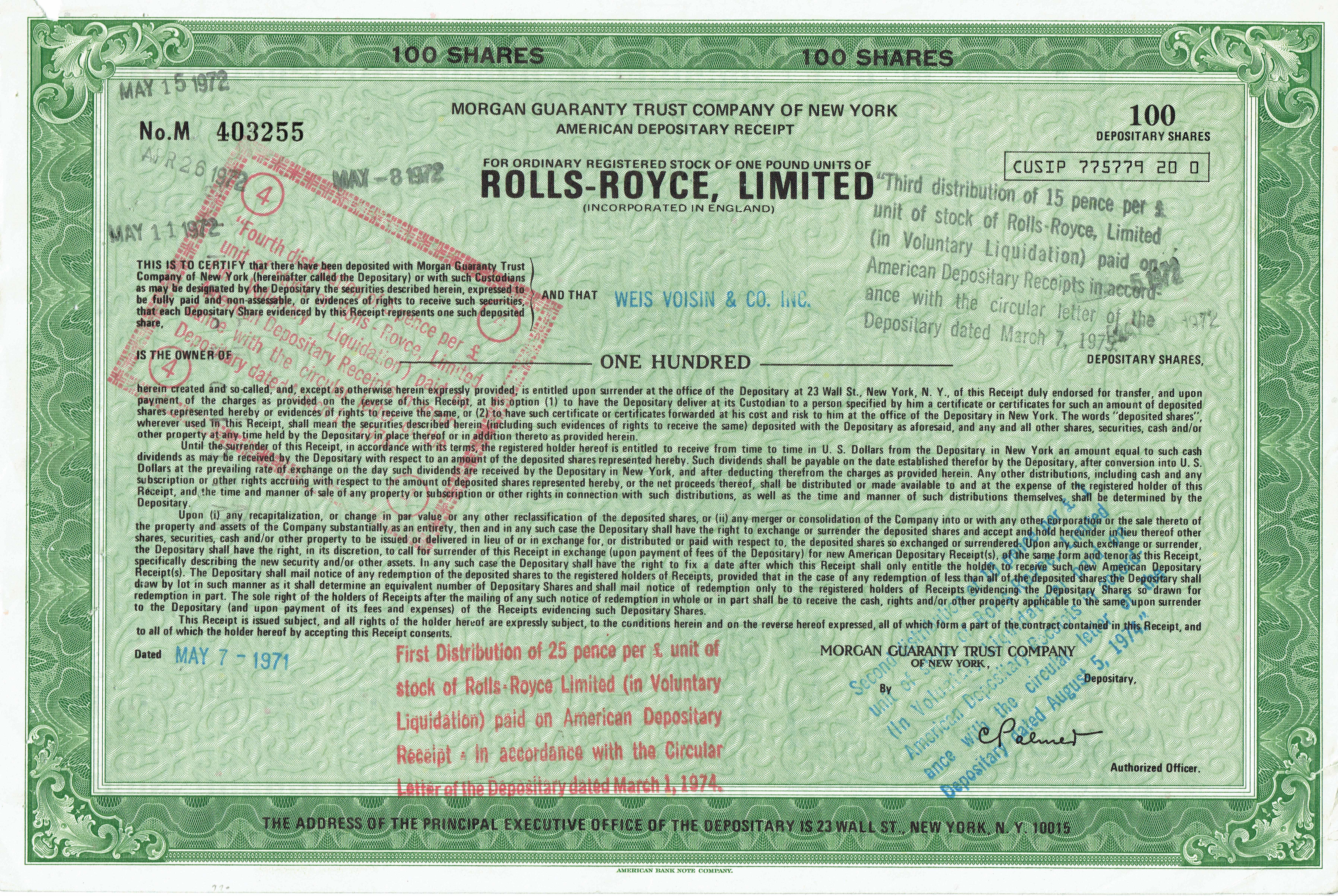
American Depositary Receipts (ADRs) solve this. ADRs are U.S. dollar-denominated certificates representing ownership of foreign equity securities. They trade seamlessly on U.S. exchanges or in the U.S. over-the-counter (OTC) market.
The Architecture of an ADR
Here is how they are created: A U.S. depositary bank issues American Depositary Receipts against foreign shares held by a branch of the bank in the foreign country. The bank essentially vaults the foreign stock and issues domestic "receipts" against them.
There are two distinct tiers of ADRs:
- Sponsored American Depositary Receipts are issued with the direct cooperation of the foreign company. Because they meet stringent regulatory requirements, only sponsored American Depositary Receipts can trade on major U.S. stock exchanges (like the NYSE or Nasdaq).
- Unsponsored ADRs lack this cooperation and are relegated to trading OTC.
The Realities of Foreign Ownership
While ADRs look and feel like U.S. stocks, they carry unique mechanics.
First, consider the dividends. American Depositary Receipt dividends are declared by the foreign company in the foreign currency. The depositary bank converts the foreign currency dividend into U.S. dollars before paying the American Depositary Receipt holder.
This introduces an invisible variable: Currency risk. Even though the ADR is priced in dollars, American Depositary Receipts subject the investor to currency risk because the underlying foreign stock is priced in a foreign currency. If the U.S. dollar strengthens aggressively against the foreign currency, the converted dividend—and the value of the ADR itself—will drop.
Next, consider the tax friction. Foreign governments may withhold taxes on dividends paid to American Depositary Receipt holders. To prevent double taxation, the IRS allows a remedy: American Depositary Receipt holders can claim foreign taxes withheld on dividends as a credit against their U.S. income tax liability.
Finally, ADR holders are somewhat removed from traditional shareholder privileges. American Depositary Receipts do not typically grant preemptive rights to U.S. investors (the logistics of a cross-border rights offering are generally too complex). Furthermore, while American Depositary Receipt holders retain voting rights, those rights are executed by the depositary bank on their behalf, based on the investor's instructions.
The execution of these securities has evolved far beyond individuals yelling in trading pits. Today, liquidity is driven by Electronic Communication Networks (ECNs).

ECNs automatically match buy and sell orders at specified prices for securities trading in the market. If you want to buy 100 shares of an ADR at $50, and someone else wants to sell at $50, the ECN's algorithm crosses the trade instantly without a middleman.
Traditionally, Electronic Communication Networks are available directly to institutional investors and broker-dealers. However, the democratization of markets means retail investors can access Electronic Communication Networks through a broker-dealer.
Because ECNs are fundamentally just software matching engines, they don't need to sleep. Electronic Communication Networks allow for after-hours trading of equity securities, extending the window of liquidity long after the traditional market bells have rung.
In the financial markets, how much you make is entirely secondary to how much you keep. The IRS treats different holding periods, dividend types, and transaction sequencing with distinct sets of rules.
Timing is Everything: Capital Gains and Losses
To understand tax rates, we must measure time precisely.
- Holding periods for capital gains begin on the day after the trade date.
- The holding period for capital gains ends on the trade date of the sale.
If that duration is one year or less, it results in a short-term capital gain. The IRS treats this aggressively: short-term capital gains are taxed at the investor's ordinary income tax rate. If the asset is held for more than one year, it triggers a long-term capital gain. The government rewards patient capital; long-term capital gains are taxed at a maximum preferential rate, which is lower than ordinary income tax rates.
When an investor has a messy year of both wins and losses, they must perform netting. Investors must first net short-term gains against short-term losses and long-term gains against long-term losses. Only after establishing these separate buckets are net short-term figures and net long-term figures netted against each other (if one is a gain and the other is a loss).
If the final result is a net loss, the IRS offers a small consolation prize. An investor can use a maximum of $3,000 of net capital losses to offset ordinary income in a single tax year. What about a catastrophic $50,000 loss? Unused net capital losses exceeding $3,000 can be carried forward indefinitely into future tax years. Crucially, capital losses carried forward retain their original short-term or long-term character.
The Dividend Distinction
Dividends are the periodic rewards of ownership, but not all dividends are created equal.
- Qualified dividends are taxed at the same preferential rates as long-term capital gains.
- Non-qualified dividends are taxed at the investor's ordinary income tax rate.
Sometimes, a company wants to reward shareholders but lacks cash. They might issue a stock dividend—giving you more shares instead of money. Because you received no actual economic value (just a thinner slice of the same pie), stock dividends are not taxable upon receipt.
Instead, a stock dividend reduces the cost basis per share of the investor's overall position, while ensuring the stock dividend does not change the total cost basis of the investor's overall position. (If you buy 100 shares for 10,000total(100/share), and receive a 100% stock dividend, you now own 200 shares. Your total cost basis is still $10,000, but your per-share basis is now $50).
The Wash-Sale Rule: You Can't Have Your Cake and Eat It Too
Imagine selling a stock at a $5,000 loss to claim the tax deduction, and then immediately buying the stock right back. The IRS despises this trick.
The wash-sale rule prevents an investor from claiming a capital loss on a security if a substantially identical security is purchased within a specific timeframe. This timeframe is famously rigid. The wash-sale timeframe encompasses 30 days before the sale, the day of the sale, and 30 days after the sale. Therefore, the total wash-sale window spans exactly 61 days.
If you violate this rule, the loss is disallowed. But the loss doesn't vanish entirely; a disallowed loss from a wash sale is added to the cost basis of the newly purchased shares. Furthermore, the holding period of the newly purchased shares in a wash sale includes the holding period of the originally sold shares.
Be warned: "substantially identical" doesn't just mean buying the exact same stock. Call options, warrants, and convertible bonds of the same issuer are considered substantially identical securities for the wash-sale rule because they all represent the right to acquire the underlying stock.
Establishing Cost Basis
If you buy shares of a stock at three different prices over five years, and then sell a portion of them, which shares did you just sell?
By default, First In, First Out (FIFO) is the default IRS method for determining the cost basis of sold shares if the investor makes no specific choice. Usually, this means recognizing the largest capital gains, as the oldest shares were likely bought at lower prices.

Savvy investors use the specific identification method, which allows an investor to choose exactly which shares are being sold to optimize tax outcomes. To legally execute this, the specific identification method must be declared to the broker-dealer no later than the settlement date of the trade.
The Transfer of Wealth: Gifts and Inheritances
When securities change hands outside of the open market, the IRS alters the cost basis rules.
Inherited Securities: When someone dies, the tax code applies a heavy dose of mercy. The cost basis of inherited securities is stepped up to the fair market value on the date of the decedent's death. Furthermore, inherited securities are always treated as having a long-term holding period, regardless of how long the decedent held the shares.
Gifted Securities: Gifts are treated with much less leniency. Generally, the cost basis of gifted securities transfers to the recipient as the donor's original cost basis.
There is one major exception: what if a father buys a stock at $100, it crashes to $20, and he gifts it to his son? The IRS will not let the son sell it and claim the father's $80 loss. For gifted securities where the market value is lower than the donor's cost basis, the recipient's basis for determining a loss is the fair market value on the date of the gift.
Understanding these mechanisms—from the geometry of rights offerings down to the final tax accounting—provides the structural foundation every successful Series 7 professional must possess.