Variable Life Insurance and Annuities
For centuries, the fundamental premise of the insurance industry was entirely risk-absorptive: the policyholder paid a premium, and the insurance company absorbed the investment risk, guaranteeing a fixed payout. However, a fixed annuity transfers the investment risk entirely to the insurance company, meaning the underlying assets must be invested conservatively. Because of this, fixed annuities are not classified as securities. But there is a glaring flaw in the fixed-contract architecture: inflation. Fixed annuities are highly subject to purchasing power risk.

To solve this, the financial industry engineered variable contracts. Variable contracts place investment risk on the policyowner rather than the insurance company. By tying the contract’s cash value to equity and bond markets, variable annuities offer protection against purchasing power risk, though they inevitably expose the investor to market risk. Because the policyowner bears this market risk, selling variable contracts requires both a securities license (like your Series 7) and a state life insurance license.
As a registered representative, understanding the internal mechanics of variable life insurance and variable annuities is not merely about passing a regulatory exam; it is about managing the precise mechanisms your clients will rely upon so they do not outlive their capital.
At the heart of every variable contract is the separate account. You can think of the separate account as the high-performance engine of the policy. The separate account of a variable contract operates similarly to a mutual fund, holding a diverse portfolio of equities and debt instruments. Because it functions like a mutual fund, the separate account of a variable contract must be registered under the Investment Company Act of 1940.
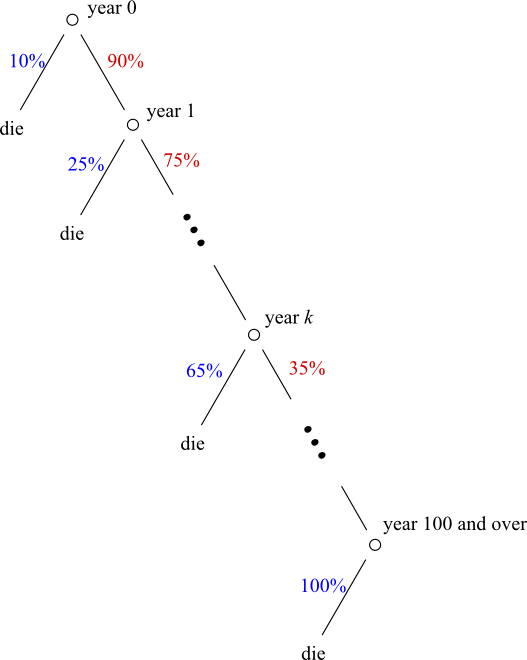
While the separate account chases market returns, the insurance company still has to manage the administrative and demographic risks of the contract. To do this, they apply mortality and expense risk (M&E) charges, which compensate the insurance company for life expectancy and administrative risks.
- The mortality risk charge guarantees that the insurance company will cover annuity payments for life, even if the annuitant outlives standard mortality tables.
- The expense risk charge guarantees that administrative fees will not increase beyond a stated maximum.
Crucially, mortality and expense risk charges are deducted directly from the separate account of a variable annuity, subtly dragging on the gross return of the underlying investments.
Variable Life Insurance fundamentally restructures the traditional whole life policy. Medical underwriting is required for the issuance of a variable life insurance policy, just as it is for traditional life insurance. However, the premium dollars follow a dual pathway.
First, consider the structure of premiums. Variable life insurance requires fixed and scheduled premium payments. (Do not confuse this with variable universal life insurance, which permits flexible premium payments).
When a policyholder pays their fixed premium, the funds are split:
- The General Account: Variable life insurance premiums are deposited into the general account to fund the guaranteed minimum death benefit. The general account of an insurance company holds premiums invested in conservative instruments to back these guaranteed obligations.
- The Separate Account: Variable life insurance premium amounts exceeding the cost of the minimum death benefit are deposited into the separate account, where they are subject to market forces.
Valuation and Fluctuation
Because of this dual structure, the death benefit of a variable life insurance policy consists of a guaranteed minimum amount (backed by the general account) and a variable amount (driven by the separate account).
The cash value of a variable life insurance policy fluctuates based on the performance of the separate account investments. Because this is tied to the market, variable life insurance policies do not guarantee a minimum cash value. If the market crashes, the cash value can drop to zero, though the guaranteed minimum death benefit remains intact as long as premiums are paid.
The exam frequently tests the exact frequency of policy valuations. Memorize this rhythm:
- Variable life insurance separate account unit values are calculated daily.
- The cash value of a variable life insurance policy is calculated at least monthly.
- The death benefit of a variable life insurance policy is calculated at least annually.
Because policyholders bear the investment risk, policyowners of variable life insurance possess voting rights regarding the separate account investments. The weight of this vote is directly tied to their financial stake: variable life insurance policyowners receive one vote per $100 of cash value.
Loans, Lapses, and Surrenders
Policyholders can access their capital without surrendering the policy. Variable life insurance allows the policyowner to borrow against the cash value. By law, variable life insurance policies must allow a policyholder to borrow at least 75 percent of the cash value after the policy has been in force for three years.
However, borrowing is not free money. Interest on an outstanding variable life insurance policy loan is added to the loan balance. Furthermore, an outstanding loan reduces the death benefit of a variable life insurance policy upon the death of the insured. If a client mismanages this leverage, the consequences are severe: a variable life insurance policy will lapse if the policy loan balance exceeds the cash value.
If a client chooses to walk away entirely, the surrender value of a variable life insurance policy equals the cash value minus outstanding loans and surrender charges.
Regulatory Protections for VLI
FINRA and the SEC strictly regulate the sale and modification of these policies:
- Sales Charges: Variable life insurance policies are restricted to a maximum sales charge of 9 percent computed over a period of up to 20 years.
- Free-Look Provision: Free-look provisions allow a variable life insurance purchaser to return the policy within 45 days of application execution or 10 days of policy delivery. The refund under a variable life free-look provision equals all premiums paid.
- Early Surrender: Surrendering a variable life insurance policy within the first two years requires the insurer to refund the cash value plus a portion of the sales charges.
- Exchange Privilege: Markets are volatile, and a client may get cold feet. Variable life insurance provides a contract exchange privilege allowing conversion to a whole life policy. This variable life insurance contract exchange privilege must be available for a minimum of 24 months from policy issuance.
A variable annuity is designed as a lifelong tax-advantaged retirement vehicle. A variable annuity has an accumulation phase and a payout phase.
During the variable annuity accumulation phase, the investor purchases accumulation units. Variable annuity accumulation units are purchased at the net asset value (NAV) of the separate account. Just like mutual funds, forward pricing is used to determine the purchase price of variable annuity accumulation units, meaning the net asset value of a variable annuity separate account is computed daily at the close of the New York Stock Exchange.

The value of an accumulation unit changes daily based on the performance of the underlying subaccounts. Therefore, the total accumulation value equals the number of accumulation units owned multiplied by the current accumulation unit value.
Taxation and Withdrawals
The IRS provides a distinct tax treatment for annuities. Non-qualified variable annuity contributions are made with after-tax dollars. However, earnings within a variable annuity accumulate tax-deferred until withdrawal.
When a client needs to pull money out prior to annuitization, they face a strict tax reality. Withdrawals from a non-qualified variable annuity during the accumulation phase are taxed on a last-in, first-out (LIFO) basis. This means the IRS assumes the client is withdrawing their taxable growth first, before touching their untaxed principal. Furthermore, variable annuity withdrawals made before age 59.5 are generally subject to a 10 percent IRS penalty on the earnings.
Surrender Charges
If an investor wants to cash out their variable annuity entirely, they will likely encounter a contingent deferred sales charge (CDSC). Surrendering a variable annuity early often triggers a contingent deferred sales charge, which functions as a back-end load. A contingent deferred sales charge decreases the longer the variable annuity contract is held (e.g., 7% in year one, dropping to 0% by year eight).
The mathematical reality for the client is that the surrender value of a variable annuity equals the accumulation value minus any applicable surrender charges and administrative fees.
Exam Note on Sales Charges: Unlike variable life insurance, there is no specific maximum sales charge limit set by FINRA for variable annuities. Instead, FINRA rules require variable annuity sales charges to be "fair and reasonable."
Living and Death Benefit Riders
Insurance companies offer various riders to mitigate the market risk inherent in variable annuities. Adding a living benefit rider to a variable annuity increases the fees associated with the contract, but provides powerful guarantees:
- Guaranteed Minimum Accumulation Benefit (GMAB): Protects the variable annuity principal from market downturns over a specified holding period.
- Guaranteed Minimum Income Benefit (GMIB): Guarantees a minimum level of annuity payments regardless of market performance.
- Guaranteed Minimum Withdrawal Benefit (GMWB): Guarantees the return of principal through systematic withdrawals.
Death benefits also provide downside protection. The standard death benefit on a variable annuity guarantees the beneficiary receives the greater of the total contributions or the current account value. However, the variable annuity standard death benefit applies only if the annuitant dies during the accumulation phase. For clients who have experienced substantial market growth, a variable annuity stepped-up death benefit rider periodically locks in investment gains to pass on to beneficiaries.
The true utility of an annuity is realized when the client is ready to convert their capital into an irrevocable income stream. The payout phase of an annuity is also known as the annuitization phase.
Annuitization is a one-way door. Annuitization permanently converts the accumulation units into a stream of income payments. Upon doing so, accumulation units are converted into annuity units.
Critical Rule: Once a variable annuity is annuitized, the investor can no longer make withdrawals of principal. Changing the settlement option of a variable annuity is prohibited after annuitization begins.
While the value of the units will change, the number of annuity units remains fixed once a variable annuity contract is annuitized.
The Assumed Interest Rate (AIR) Mechanism
How does the insurance company determine the size of your client's monthly check? The initial variable annuity payment amount depends on the principal balance along with the annuitant age and gender and chosen settlement option.
For subsequent payments, the math hinges on the Assumed Interest Rate (AIR) and the net investment factor. The net investment factor measures the actual investment performance of the separate account over a specific period. The value of an annuity unit is determined by multiplying the previous annuity unit value by the net investment factor.
The AIR is a benchmark earnings target used to determine future annuity payment amounts. The assumed interest rate does not guarantee a specific rate of return. It is simply the hurdle rate the separate account must clear to increase the client's payout.
The relationship between the separate account and the AIR dictates the exact trajectory of the client's monthly income:
- If the separate account performance exceeds the assumed interest rate, the next annuity payment increases.
- If the separate account performance falls below the assumed interest rate, the next annuity payment decreases.
- If the separate account performance exactly matches the assumed interest rate, the next annuity payment remains the same as the previous payment.
Settlement Options
Clients must choose how they want their income distributed. Each option carries a different level of risk, which dictates the size of the payout.
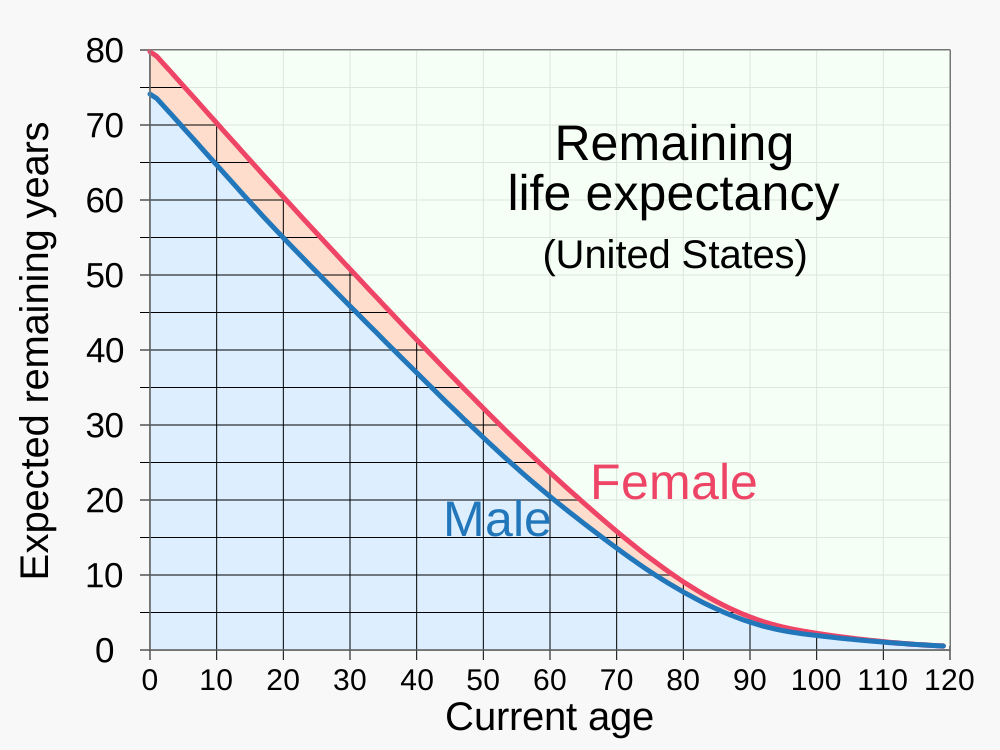
- Life-Only Annuity: Provides income for the duration of the annuitant's life, but ceases payments immediately upon the death of the annuitant. Because the insurance company keeps any remaining funds when the annuitant dies, the life-only settlement option provides the largest monthly payout among variable annuity payout choices.
- Life with Period Certain: Guarantees payments for a specified minimum number of years (e.g., 10 years). If an annuitant with a period certain annuity dies before the period ends, the beneficiary receives the remaining guaranteed payments.
- Joint and Last Survivor Annuity: Continues payments until the death of the second annuitant (often a spouse). Because the insurance company is covering two lifespans, the joint and last survivor annuity provides the smallest initial monthly payment among standard annuity settlement options.
- Unit Refund Life Annuity: Guarantees that total payments will at least equal the original investment amount. If the annuitant dies before recovering their principal, the beneficiary receives the balance.
Because variable products are complex and carry high fees, they are subject to intense regulatory scrutiny.
Section 1035 Exchanges
The IRS code allows investors to move capital between certain insurance products without triggering immediate taxation.
- A Section 1035 exchange allows the tax-free transfer of cash value from one annuity to another annuity.
- A Section 1035 exchange allows the tax-free transfer of cash value from a life insurance policy to an annuity.
- Crucial Limitation: A Section 1035 exchange does not permit the tax-free transfer of cash value from an annuity to a life insurance policy.
Furthermore, while the exchange avoids taxes, it does not avoid contract fees. A Section 1035 exchange may still subject the investor to surrender charges on the original contract.
FINRA Rule 2330
To prevent predatory sales practices—such as churning annuities just to generate commissions—FINRA established Rule 2330. FINRA Rule 2330 requires principals to review and approve deferred variable annuity applications within seven business days. During this review, FINRA Rule 2330 mandates assessing whether the customer has had another deferred variable annuity exchange within the preceding 36 months.
Product Illustrations
When you present a variable annuity to a client, you will use policy illustrations to project potential future values. FINRA dictates exactly how these numbers can be framed:
- Variable annuity illustrations may use assumed gross rates of return up to 12 percent.
- To ensure the client understands the downside, variable annuity illustrations must always include a 0 percent gross rate of return scenario.
- Finally, variable annuity illustrations must reflect the maximum mortality and expense risk charges, ensuring the client sees the worst-case scenario regarding internal drag on their portfolio.
Mastering these mechanics—the interplay of subaccounts, the tax implications of withdrawals, and the irreversible physics of annuitization—is what separates a test-taker from a highly competent securities professional.