Corporate Actions
When a public corporation alters the structure, quantity, or voting power of its outstanding capital, the resulting shockwaves ripple directly into the portfolios of its investors. A corporate action is an event initiated by a public company that brings a material change to the securities issued by the company. Whether the firm is dividing its shares, combining with a rival, or returning capital to its owners, the mathematical reality of the investor's position must instantly adapt to reflect the new corporate architecture. Common corporate actions include stock splits, dividends, mergers, acquisitions, rights offerings, and spin-offs. Understanding these mechanisms is not just an exercise in abstract accounting; it is the fundamental vocabulary of market mechanics that dictates how wealth, cost basis, and corporate control are preserved and transferred on the trading desk.
Imagine a corporation's equity as a single, massive pizza. The total caloric value of that pizza represents the company's overall market capitalization. When a company executes a stock split, it is merely deciding to slice that exact same pizza into a different number of pieces. The total amount of food on the table has not changed, but the size of each slice—and how many slices you hold—shifts immediately.
Forward Stock Splits
A forward stock split increases the total number of outstanding shares of a company. Because the company is creating more shares out of thin air without adding any new underlying economic value, a forward stock split proportionately decreases the market price per share.
If you held a position before the split, the total market value of your position remains exactly the same immediately following a forward stock split. Let’s look at the mathematics of a classic example: a two-for-one forward stock split will double the number of shares an investor owns, and simultaneously, a two-for-one forward stock split will cut the market price per share in half.
| Forward Split | Shares Owned | Price per Share | Total Market Value |
|---|---|---|---|
| Before (Pre-Split) | 100 | $100 | $10,000 |
| After (Post-Split) | 200 | $50 | $10,000 |
Because you now own more shares for the same original initial investment, a forward stock split proportionately reduces the cost basis per share of the investor's position. If your original basis was $100 per share, your new basis mathematically adjusts to $50 per share.
Reverse Stock Splits
Sometimes, a company's stock price falls so low that it risks being delisted from a major national exchange. To cure this, the company runs the math in the opposite direction. A reverse stock split decreases the total number of outstanding shares of a company. To compensate for having fewer shares, a reverse stock split proportionately increases the market price per share.
Once again, the total market value of an investor's position remains exactly the same immediately following a reverse stock split. However, because your total investment cost is now spread across fewer shares, a reverse stock split proportionately increases the cost basis per share of the investor's position. If you owned 100 shares at $5 and the company executes a 1-for-10 reverse split, you wake up owning 10 shares at $50. The pie is exactly the same size; the company has simply traded ten thin slices for one thick slice.
Stock Dividends and the Remainder
Instead of slicing the existing shares, a company might choose to reward investors by handing out newly minted ones. During a stock dividend, a company distributes additional shares of its own stock to existing shareholders instead of cash.
Much like a forward split, a stock dividend increases the total number of shares held by an investor. Because the investor receives these new shares without paying additional capital, a stock dividend proportionally decreases the cost basis per share for the receiving investor. Crucially, the total aggregate value of an investor's position remains unchanged immediately after a stock dividend is paid, as the overall market capitalization is simply spread across a wider base of shares.
What happens to the leftovers? When the arithmetic of a stock split or a stock dividend doesn't result in a neat whole number of shares, it creates a fractional share. A fractional share resulting from a corporate action is typically paid out to the investor in cash rather than issued as a partial share.
Beyond adjusting the share count, companies frequently reshape their fundamental corporate structures. These events are transformative, often requiring investors to trade their old securities for something entirely new.
- Mergers: A merger occurs when two distinct public companies combine to form a single new legal entity. Company A and Company B dissolve to become Company C.
- Acquisitions: An acquisition occurs when one company purchases a majority interest in another company to assume control of the target company's assets. Company A swallows Company B.
- Spin-Offs: Sometimes a conglomerate becomes too large or complex and decides to unlock value by separating a business unit. A spin-off occurs when a parent company distributes shares of a subsidiary to the parent company's shareholders to create a new independent entity. If you owned the parent, you suddenly find yourself owning shares in a brand-new, separate public company as well.
- Exchange Offers: In an exchange offer, the corporation allows shareholders to trade current securities for a different class of securities. This is often used to reorganize the capital structure, such as trading preferred stock for common stock, or debt for equity.
Companies constantly evaluate whether their shares are in the right hands and at the right price. They use specific corporate actions to deliberately pull shares out of the market or carefully push new ones in.
Shrinking the Float: Buybacks and Tender Offers
If a company believes its stock is undervalued, it might step into the market as a buyer. A share buyback occurs when a publicly traded company purchases its own outstanding shares in the open market. By doing so, a share buyback reduces the total number of outstanding shares available in the public market, which concentrates the ownership percentage and earnings per share for the remaining investors.
For a more aggressive approach, a company (or an outside acquirer) might issue a tender offer. A tender offer is a public solicitation to purchase a substantial percentage of a company's shares directly from existing shareholders. To entice investors to part with their shares, tender offers are typically made at a premium to the current market price of the target company's stock. Because this is a high-stakes solicitation that forces investors to make a significant financial decision, regulators demand a fair window for analysis: Securities and Exchange Commission rules require a tender offer to remain open for a minimum of twenty business days.
Expanding the Float: Rights Offerings
When a company needs to raise new capital by issuing new shares, it faces a mathematical problem: issuing new shares dilutes the proportional ownership of existing shareholders.
To protect them, the company initiates a rights offering, which gives existing shareholders the privilege to purchase newly issued shares in proportion to current holdings before public distribution. To make this privilege valuable, rights offerings allow existing shareholders to purchase new shares at a price below the current market value. The investor can exercise the right (buy the discounted shares), sell the right on the open market to another investor, or let it expire.
None of these mechanical shifts can happen in a vacuum. The market must be prepared, and trading systems must adapt instantaneously to prevent chaos.
When a board of directors approves an event, the first step is communication. A corporate action notice is a formal communication from a company to shareholders detailing an upcoming event that will affect the underlying securities. Regulators are uncompromising about this timeline. Specifically, FINRA Rule 6490 requires companies with unlisted securities to notify FINRA of specific corporate actions at least ten calendar days prior to the record date. This ensures the over-the-counter markets have adequate time to price in the adjustment.
On the execution side, consider what happens to an investor's open limit order to buy a stock at $40 if the stock suddenly drops to $20 because of a 2-for-1 forward split. If the trading system did not adjust, that $40 order would immediately execute at an artificially high price, destroying the investor's capital. To prevent this entirely, broker-dealers must adjust the price and quantity of open orders for a stock on the ex-date to reflect corporate actions like stock splits. The system mathematically dials down the order price to protect the customer seamlessly.
Ownership of common stock comes with a voice, but the modern reality is that most investors cannot travel to corporate headquarters to raise their hands in a boardroom. The financial system solves this distance problem through proxies.
A proxy is a legal document granting another person or entity the authority to vote on a shareholder's behalf at a corporate meeting. Functionally, shareholders use proxy voting to vote on corporate matters such as electing board directors without attending the annual meeting in person.
The Mechanics of "Street Name" Voting
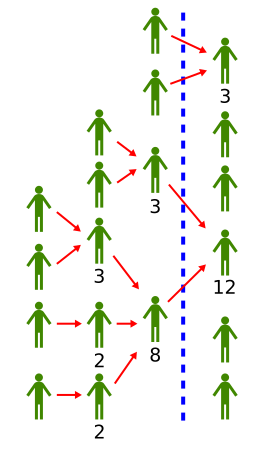
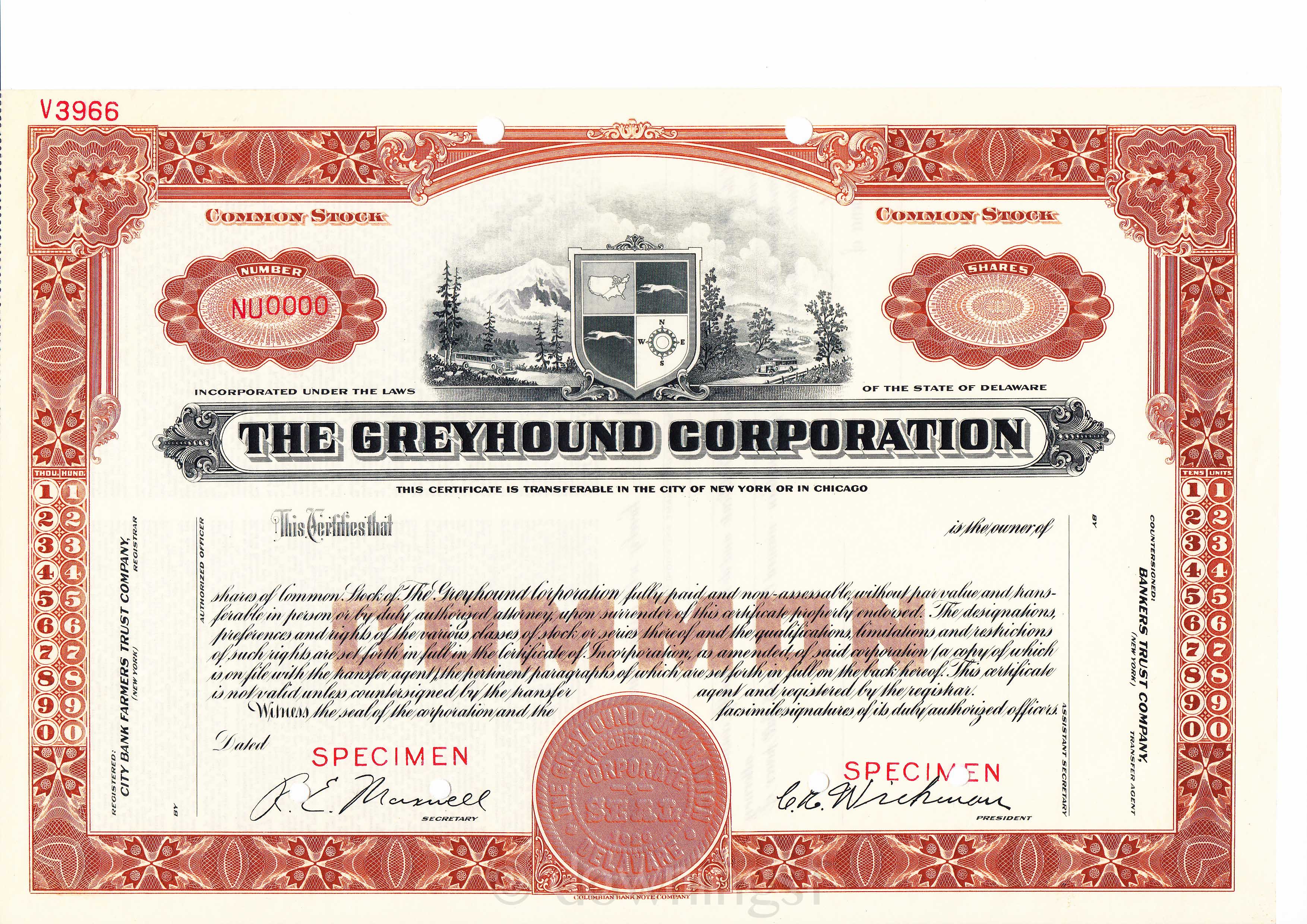
Here is where the plumbing of Wall Street gets fascinating. Most retail investors do not hold physical stock certificates with their names printed on them. Instead, their broker-dealer holds the shares in "street name" for convenience, electronic clearing, and liquidity. The broker-dealer is the registered owner, while the investor is the "beneficial owner."
Because the broker-dealer is technically the registered owner on the company's books, the proxy materials are sent directly to the broker-dealer. But the ultimate voting power belongs to the customer. Therefore, FINRA rules require broker-dealers to forward all proxy materials and annual reports to the beneficial owners of street name securities.
Printing and transmitting these thick packets of proxy materials across the country is an expensive logistical hurdle. Who foots the bill? The issuing company bears the entire cost of distributing proxy materials to beneficial owners holding shares in street name.
Routine vs. Non-Routine Matters
What happens if the broker-dealer faithfully forwards the proxy, but the beneficial owner throws it in the recycling bin and fails to vote?
Wall Street distinguishes between the mundane operations of a company and its material transformations. If a customer holding shares in street name fails to return proxy voting instructions, a broker-dealer may vote a customer's shares on routine matters (such as approving the independent auditing firm). When the firm does this, it is called an uninstructed broker vote—an event that occurs when a broker-dealer voting on a routine proxy matter because the beneficial owner failed to provide explicit voting instructions.
However, the broker-dealer's power has a strict and logical limit. A broker-dealer is strictly prohibited from voting a customer's uninstructed shares on non-routine matters such as mergers or elections of directors. If the issue alters the fundamental nature of the company or its leadership, and the beneficial owner remains silent, the broker-dealer must abstain. Those shares simply do not vote, preserving the integrity of ultimate corporate control.