Investment Returns and Trade Settlement
When an agricultural enterprise purchases a tract of land, the success of the investment is measured in two distinct ways: the seasonal harvest it produces each year and the final price the land commands when it is eventually sold. Securities markets operate on the exact same fundamental principle. An investor commits capital to an asset, expecting to extract a return through periodic distributions of income, the appreciation of the asset’s underlying value, or a combination of both.

Understanding how to quantify these returns, track their tax implications, and navigate the precise mechanical timeline by which ownership and capital change hands is the bedrock of professional finance. If a registered representative misquotes a yield, miscalculates a cost basis, or misunderstands the chronological gears of trade settlement, their client faces immediate financial and tax consequences. This guide deconstructs the anatomy of investment returns and the strict mechanical rules governing how markets settle their transactions.
To evaluate whether an investment is succeeding or failing, we must isolate and measure its individual sources of profit. Fundamentally, investment return components include interest, dividends, and capital gains.
When an investor lends money to an entity (by purchasing a bond), they receive interest. When an investor buys an equity stake in a corporation (by purchasing stock), they may receive dividends, which are a share of the company's profits.
The third component is dictated by the market value of the asset itself.
- A capital gain occurs when an investor sells a security for a higher price than the original purchase price.
- Conversely, a capital loss occurs when an investor sells a security for a lower price than the original purchase price.
To view the complete picture, professionals rely on total return, which measures the overall performance of an investment over a specific period. It is the ultimate equalizer, allowing an investor to compare the performance of a high-dividend stock against a non-dividend-paying growth stock.
The Total Return Formula The total return formula is the sum of all income received plus any capital gains, divided by the initial investment amount.
Total Return = (Income + Capital Gains) / Initial Investment
While total return looks backward to measure overall performance, yield measures the income generated by an investment expressed as a percentage of the investment price. If total return is the odometer measuring the entire journey, yield is the speedometer tracking the current rate of income.
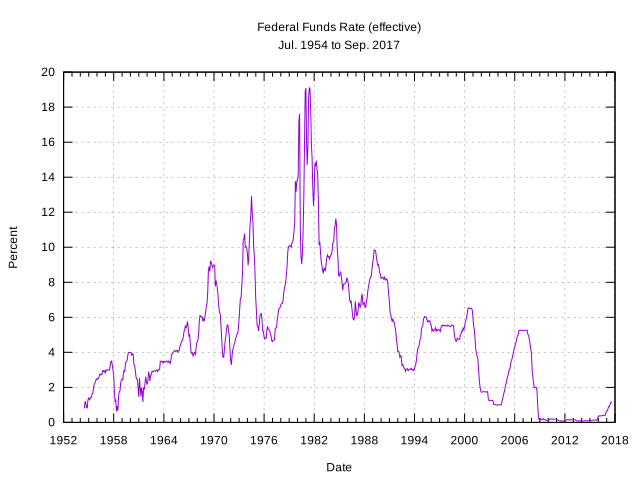
Because interest rates operate in fractions, the financial industry requires a precise unit of measurement to avoid ambiguity. This unit is the basis point.
- A basis point is a standard unit of measure for interest rates and investment yields.
- One basis point equals 0.01 percent.
- Therefore, one hundred basis points equal one full percentage point (1.00%). If a bond's yield increases from 4.50% to 4.75%, it has moved exactly 25 basis points.
The Nuances of Bond Yields
The concept of yield becomes uniquely complex when applied to fixed-income securities like bonds, which have fixed lifespans and fluctuate in market price.
Current yield measures a bond's annual interest payment divided by the current market price of the bond. It is a snapshot. Because it only looks at the present moment, current yield calculations ignore any potential capital gains or losses upon bond maturity. If an investor buys a bond at $900 that will mature at ,1000, the current yield completely ignores that built-in \100 gain.
To capture a mathematically complete picture, investors use yield to maturity (YTM). YTM represents the total annualized return an investor will earn if a bond is held until the bond matures. Unlike current yield, yield to maturity calculations incorporate the bond's annual interest payments and the amortization of any premium or discount over the life of the bond. It accounts for both the coupon harvest and the final principal payout.

However, bonds are frequently "callable," meaning the issuer has the right to retire the debt early. This introduces yield to call (YTC), which represents the total annualized return an investor will earn if a bond is held until the bond's first call date.
When a broker-dealer sells a bond to a client, regulations require transparency regarding the worst-case scenario. Because premium bonds (bonds trading above their face value) lose their premium faster if called early, broker-dealers must quote the lower of yield to call or yield to maturity when selling a callable premium bond to a customer. This is known as "yield to worst."
To calculate the tax liability on a capital gain, the Internal Revenue Service needs a definitive starting line. This starting line is the cost basis, which is the original value of an asset for tax purposes.
Determining cost basis requires strict accounting. A security's initial cost basis includes the purchase price, but it does not stop there. Crucially, acquisition fees and commissions are added to a security's initial cost basis. If you purchase $10,000 worth of stock and pay a $50 commission, your initial cost basis is $10,050.
Over time, this initial baseline may require modification. Adjusted cost basis reflects changes to the original purchase price due to corporate actions like stock splits or stock dividends.
Furthermore, investors frequently choose to automatically reinvest their dividends to buy more shares. When an investor reinvests dividends into additional shares, the reinvested amount increases the investor's total cost basis. This is mathematically essential; because the investor already pays taxes on the dividend in the year it is distributed, adding it to the cost basis ensures they are not double-taxed when they eventually sell the asset.
When the position is ultimately liquidated, capital gains taxes are calculated based on the difference between the final sale price and the adjusted cost basis.
When a corporation decides to return wealth to its shareholders, it utilizes dividends. The mechanics and tax implications of a dividend depend entirely on its form.

Cash Dividends
Cash dividends distribute corporate profits directly to shareholders in the form of cash payments. Because this is a direct transfer of wealth into the investor's pocket, cash dividends are generally taxable as ordinary income in the year the cash dividend is received.
Stock Dividends
Instead of distributing cash, a company may issue a stock dividend, which is paid to shareholders in the form of additional shares of the issuing company.
Imagine a pizza sliced into 8 pieces. If you slice it into 10 pieces instead, you have more slices, but you do not have more pizza.
- A stock dividend increases the total number of shares an investor owns.
- Simultaneously, a stock dividend proportionally decreases the cost basis per share of an investor's position.
- Therefore, stock dividends do not change the total overall value of an investor's position.
Because no actual wealth has been transferred—only the accounting of the shares has changed—stock dividends do not create an immediate taxable event for the investor.
Property Dividends
While rare, a company may also issue a property dividend, which is a distribution of physical assets or products from the corporation to the shareholders (for instance, a parent company distributing shares of a subsidiary it owns).
Dividends are not distributed instantaneously. The process requires a precise chronological sequence of dates. A financial professional must understand exactly when a buyer becomes entitled to a dividend and when they miss the cutoff.
- The Declaration Date: This is the day a company's board of directors announces an upcoming dividend payment.
- The Record Date: This is the specific date upon which an investor must be a registered owner on the company's books to receive a dividend.
- The Payable date: This is the day the company distributes the dividend payments to shareholders of record.
The Ex-Dividend Date
The most critical date for secondary market trading is the ex-dividend date, which is the first day a stock trades without the buyer being entitled to the upcoming dividend.
Unlike the declaration, record, and payable dates, the ex-dividend date is determined by exchange rules and settlement cycles rather than the company's board of directors. It acts as the mechanical fulcrum for the transaction:
- Buyers who purchase a stock on the ex-dividend date will not receive the upcoming dividend.
- Conversely, an investor who sells a stock on the ex-dividend date is still entitled to receive the upcoming dividend because they were the owner before the cutoff.
Because the buyer on the ex-dividend date will not receive the cash payout, the stock is inherently worth less on that day. Therefore, on the morning of the ex-dividend date, the exchange reduces the stock's opening price by the exact amount of the cash dividend.
Due Bills
Occasionally, the plumbing of the financial system backs up. If a trade is executed in time but fails to settle properly before the record date, the seller might accidentally receive a dividend that rightfully belongs to the buyer. To solve this, brokerages use a due bill, which is a printed statement showing a buyer's right to an upcoming dividend. Brokerages use due bills to assign dividend payments if a stock trade fails to settle before the record date, forcing the seller's firm to remit the dividend to the buyer's firm.
Executing a trade on an exchange is merely a binding agreement. The actual transfer of property happens later. Trade settlement is the process of transferring securities to the buyer and cash to the seller to complete a transaction.
Transactions that follow standard market protocols are called regular-way trades, defined as a transaction that settles under the standard time frame for that specific type of security.
The T+1 Settlement Standard
Historically, stock trades took five days to settle. As technology advanced, this timeline shrank. In a monumental shift for market efficiency, the Securities and Exchange Commission implemented the T+1 settlement cycle for equities and corporate bonds on May 28, 2024.
Today, the standard is rapid and uniform across major asset classes:
- Standard settlement for United States equities is one business day after the trade date.
- The standard settlement timeframe of one business day after the trade date is known as T+1.
- Standard settlement for corporate bonds is one business day after the trade date.
- Standard settlement for municipal bonds is one business day after the trade date.
- Standard settlement for United States government securities is one business day after the trade date.
- Standard settlement for equity options is one business day after the trade date.
Note on T+1 and the Ex-Dividend Date: Because a stock trade now settles the very next day, under the T+1 settlement cycle, the ex-dividend date for standard stock trades is the exact same business day as the record date. If the record date is Tuesday, a trade executed on Monday settles on Tuesday—meaning the buyer is on the books in time. However, if the buyer executes the trade on Tuesday, it settles on Wednesday—too late. Therefore, to receive a dividend under T+1 settlement, an investor must execute the stock purchase at least one business day before the record date.
Alternative Settlement Timeframes
Certain scenarios require instantaneous clearance. Cash settlement trades are completed on the exact same day the trade is executed. Because there is zero delay between execution and settlement, cash settlement is sometimes referred to as T+0 settlement.
The Form of Delivery
When an asset settles, how does it actually change hands?
Historically, physical settlement requires the seller to deliver actual paper certificates of the security to the buyer or the clearing firm. For a physical trade to settle successfully, the paper must meet strict criteria: a physical security certificate is considered in good delivery form when the certificate is properly endorsed and legible.
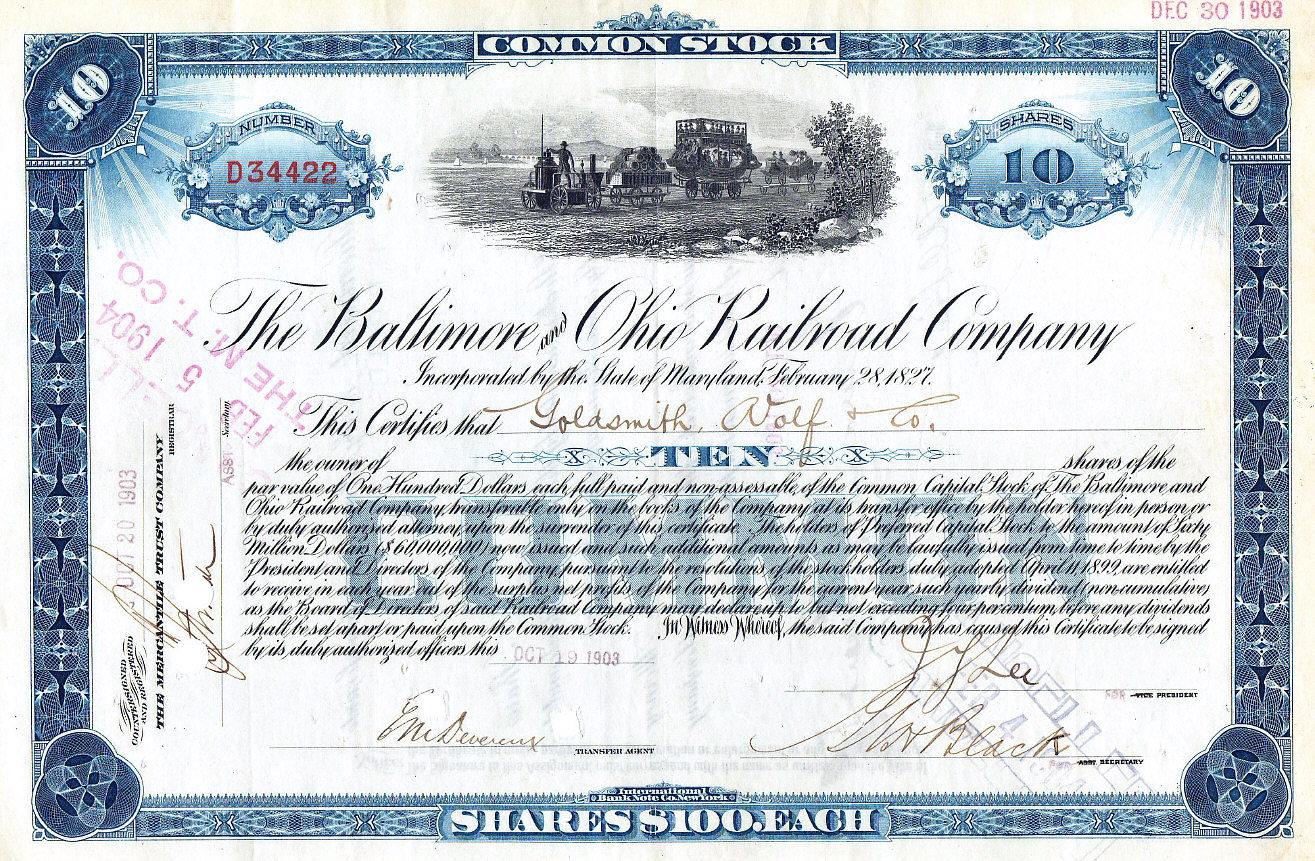
Today, physical certificates are largely historical relics. Most modern securities transactions settle via book-entry transfer rather than physical delivery. In this modern framework, book-entry settlement means the transfer of security ownership is recorded electronically without issuing physical certificates. It is the digital ledger system that allows trillions of dollars to change hands seamlessly, safely, and securely at the speed of T+1.