Market Structure
Consider the lifecycle of a modern automobile. When a manufacturer produces a new car and sells it off the assembly line, the manufacturer receives the capital from that initial transaction. Once that car drives off the lot, however, its subsequent lifespan involves being bought and sold by various owners in the used-car market. If you sell your five-year-old sedan to a neighbor, the manufacturer does not see a penny of that transaction; the proceeds belong entirely to you. This fundamental distinction between original issuance and subsequent trading forms the absolute foundation of global financial market structure. For a newly registered representative, understanding exactly where and how a trade occurs is not just trivia—it dictates which regulations apply, how prices are determined, and how your clients' orders are routed, executed, and reported.
The primary market is the financial market where new securities are created and issued to the public. If a corporation wants to build a new manufacturing plant or fund a massive research and development project, it needs capital. It raises this capital by issuing new securities (like stocks or bonds) directly to investors.
The most critical distinction of this market is the flow of capital: in the primary market, the issuer of the security receives the proceeds from the sale.
As a registered representative, your clients might ask to participate in these new offerings. There are two primary types of transactions you will encounter:
- Initial Public Offering (IPO): An IPO is a transaction that takes place in the primary market when a privately held company issues stock to the public for the first time.
- Follow-on Public Offering: Also known as an additional public offering (APO), a Follow-on Public Offering is a transaction that takes place in the primary market when an already-public company issues new shares to raise additional capital.
Corporations are experts at building software or manufacturing goods, not at pricing and distributing securities. To bridge this gap, investment banks act as underwriters in the primary market to help issuers sell new securities. The underwriter structures the offering, determines the initial price, and assumes the risk of bringing the new shares to the public.
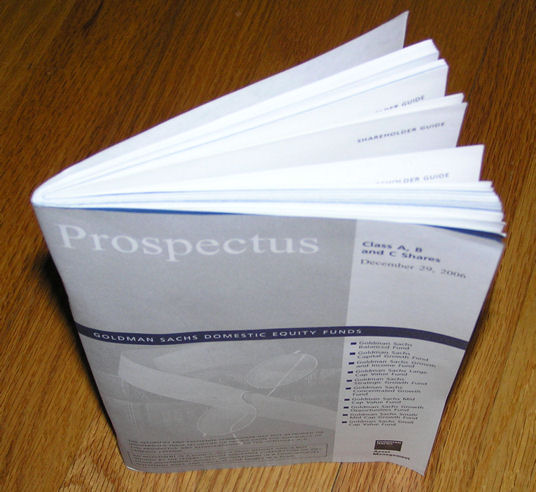
Regulatory Anchor: Because the public is taking a risk on newly minted securities, the federal government mandates strict disclosure. The Securities Act of 1933 regulates the issuance of new securities in the primary market, requiring issuers to provide investors with a prospectus containing detailed, audited financial information.
Imagine if, after buying shares in an IPO, your client was forbidden from ever selling them. Few would willingly part with their capital under those conditions. The primary market can only exist because investors know they have an exit strategy. That exit strategy is the secondary market.
The secondary market is the financial market where previously issued securities are bought and sold among investors.
When your client sells 100 shares of Apple stock, the proceeds from the sale of a security go to the selling investor. The issuing corporation does not receive proceeds from transactions in the secondary market. Apple's balance sheet does not change when your client unloads those shares.
The essential function of this ecosystem is simple: the secondary market provides liquidity to investors who originally purchased securities in the primary market. Liquidity is the ease with which an asset can be converted to cash without drastically affecting its price.
The secondary market is divided into exchange markets and over-the-counter (OTC) markets. Understanding the plumbing of these subdivisions is critical to understanding how your clients' trades are executed.
1. Physical Exchanges: The Auction Markets
For over two centuries, the image of the stock market was a crowded room of traders shouting orders. A physical exchange is a centralized secondary market with a designated trading floor.
The New York Stock Exchange (NYSE) is an example of a physical exchange.
The mechanics of a physical exchange are highly structured: physical exchanges operate as auction markets. In an auction market, buyers and sellers submit competitive bids and offers simultaneously. Think of it like a real estate auction where multiple buyers are shouting higher bids, while sellers are seeking the highest possible price. The trade occurs when the highest bid matches the lowest offer.
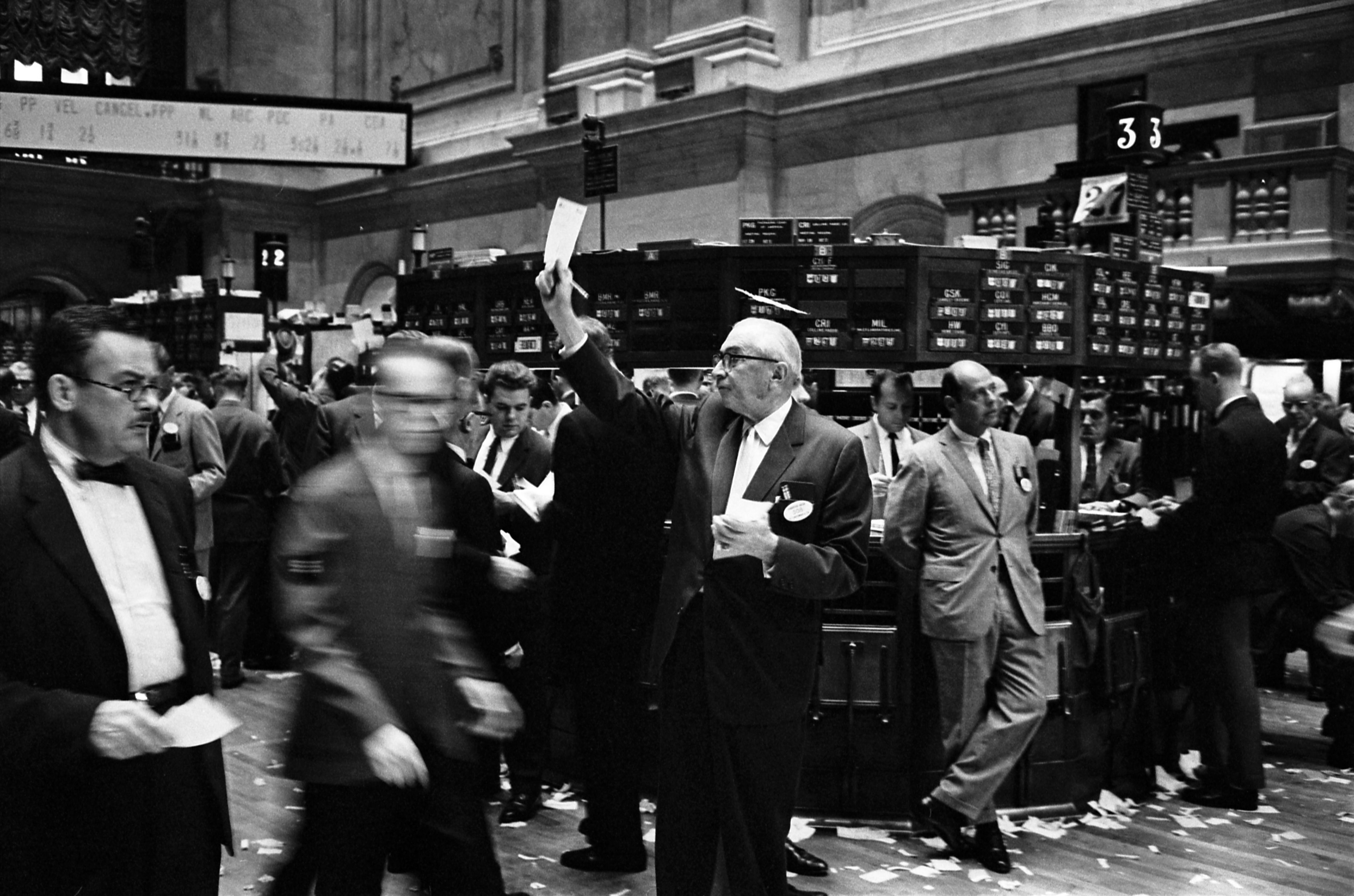
To prevent chaos, physical exchanges rely on specialized participants. Designated Market Makers (DMMs) facilitate trading on physical exchanges to maintain a fair and orderly market. A DMM (formerly known as a specialist) acts as a traffic controller for a specific stock. If there is a massive imbalance of sell orders and no buyers, the DMM must step in and use their own inventory to buy shares, smoothing out extreme price volatility.
2. Electronic Exchanges: The Dealer Markets
Today, most trading volume occurs silently across servers. Electronic exchanges are secondary markets that operate entirely through computer networks without a physical trading floor.
The Nasdaq Stock Market is an example of an electronic exchange.
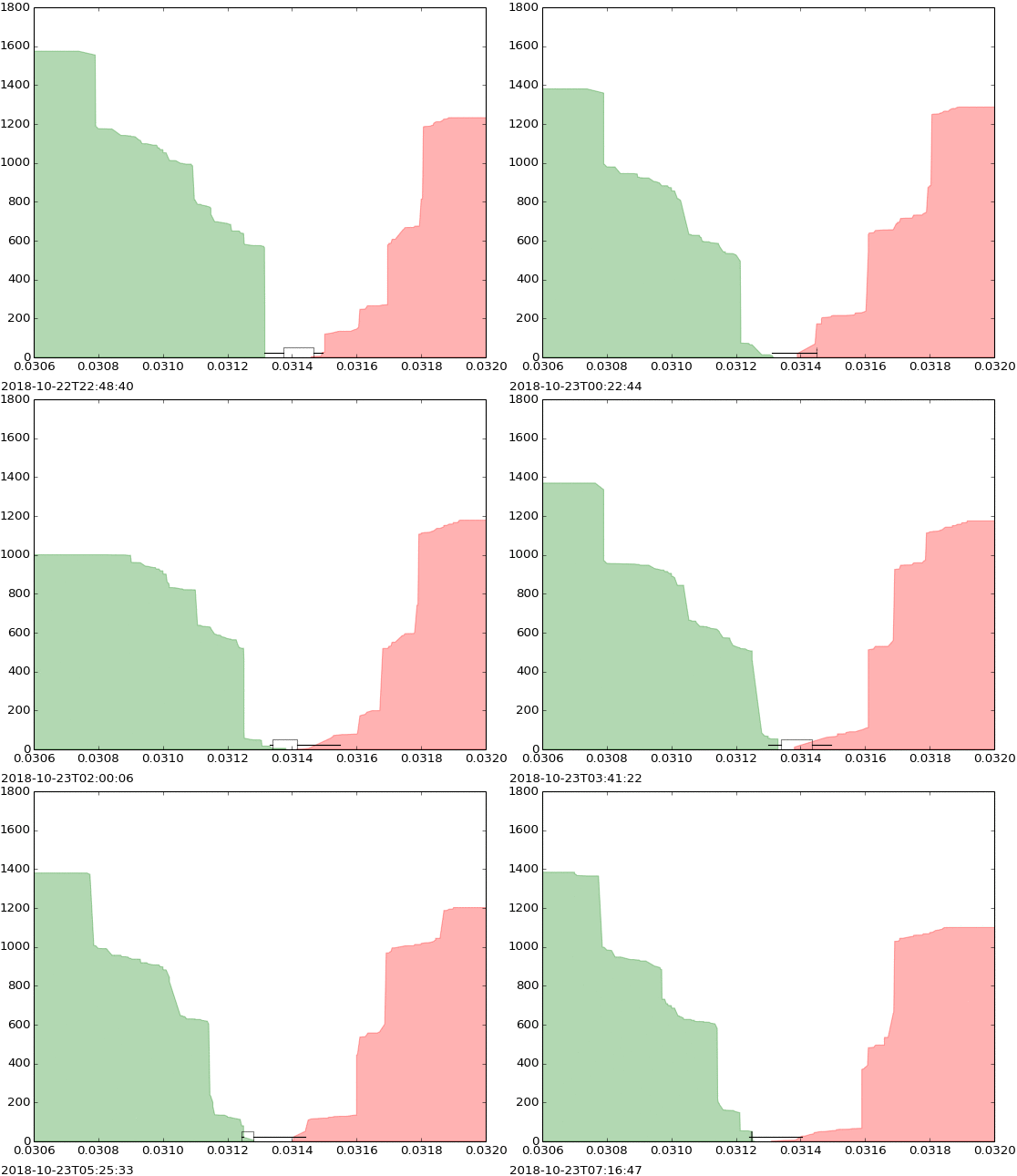
Unlike the centralized auction of the NYSE, electronic exchanges operate as dealer markets. Instead of buyers and sellers meeting in a centralized auction pit, in a dealer market, multiple market makers post bid and ask prices for specific securities.
Think of a dealer market like an ecosystem of interconnected used-car dealerships. Each dealer owns their own inventory of cars (stocks) and publicly advertises the price they are willing to pay for a car (the bid) and the price they are willing to sell a car for (the ask or offer). Investors trade directly from the inventory of market makers in a dealer market.
| Feature | Physical Exchanges (e.g., NYSE) | Electronic Exchanges (e.g., Nasdaq) |
|---|---|---|
| Structure | Centralized, physical trading floor | Decentralized, computer networks |
| Market Type | Auction Market | Dealer Market |
| Price Discovery | Buyers & sellers compete simultaneously | Market makers post bid & ask prices |
| Facilitator | Designated Market Maker (DMM) | Multiple Market Makers |
3. The Over-The-Counter (OTC) Market
Not all companies qualify to be listed on major exchanges like the NYSE or Nasdaq. For these companies, the OTC market is their home.
The over-the-counter market is a decentralized secondary market where broker-dealers negotiate trades directly via computer or telephone.
By definition, securities that are not listed on a national exchange trade in the over-the-counter market. Why might a company be unlisted? Generally, over-the-counter markets typically have lower listing requirements than national stock exchanges. Small startup companies, distressed companies, or foreign entities that do not wish to comply with rigorous SEC exchange-listing standards often trade OTC.
Because there is no centralized exchange matching engine, transparency must be provided synthetically. The OTC Bulletin Board (OTCBB) is a quotation facility for unlisted securities in the over-the-counter market. It allows broker-dealers to see the bids and offers of other broker-dealers across the country.
As institutional investing grew in the 20th century, market structure evolved to handle massive order sizes. The result was the Third Market.
The third market involves the trading of exchange-listed securities in the over-the-counter market.
Why would someone trade an NYSE-listed stock off the exchange? Suppose a mutual fund manager wants to buy 500,000 shares of Coca-Cola. Routing that massive order to the physical exchange floor could trigger a panic, driving the price up before the order is fully filled.
Instead, institutional investors frequently use the third market to execute large block trades. They can negotiate the trade directly with a large broker-dealer who will fill the order from their own massive inventory, completely off-exchange. By doing this, third market transactions bypass the physical or electronic exchange where the security is primarily listed.
Furthermore, broker-dealers that are not registered as exchange members can trade listed securities in the third market. This opens up the competitive landscape, allowing non-member firms to offer liquidity to their institutional clients.
The ultimate evolution of market efficiency is the elimination of the middleman altogether.
The fourth market is the direct trading of securities between institutional investors.
In the primary, secondary, and third markets, broker-dealers are heavily involved as either agents (brokers) matching trades or principals (dealers) trading from their own inventory. In stark contrast, fourth market transactions do not involve a traditional broker-dealer acting as an intermediary. If a massive pension fund wants to sell 1 million shares of IBM, and a hedge fund wants to buy 1 million shares of IBM, they simply trade directly with one another.
How the Fourth Market Operates
Because there is no traditional broker-dealer negotiating the trade, institutions rely on technology. Electronic Communication Networks (ECNs) frequently facilitate trading in the fourth market. ECNs are algorithmic computer systems that automatically match buy and sell orders at specified prices.
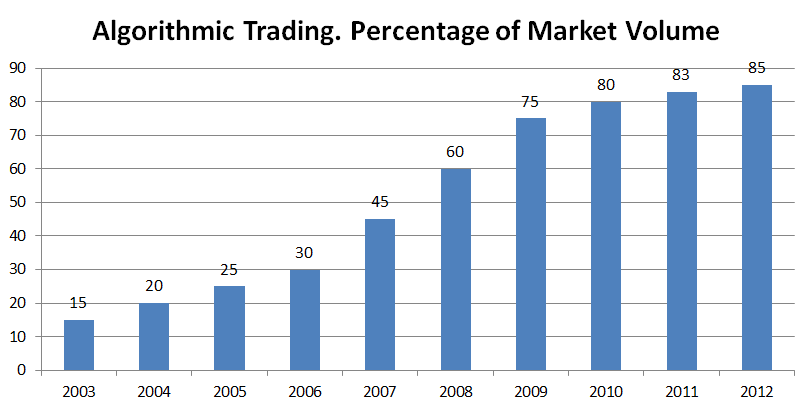
A critical subset of this technology is the "dark pool." Dark pools are private trading systems that routinely facilitate fourth market transactions.
To understand why dark pools exist, consider the risk of "showing your hand" in a game of poker. If an institution publicly posts an order to sell 5 million shares of a stock on a public exchange, algorithmic high-frequency traders will immediately detect the massive supply and drive the price of the stock down, costing the institution millions in lost value.
Dark pools allow institutional investors to trade large blocks of securities without publicly revealing their orders beforehand. There is no visible bid or ask quote broadcast to the public before the trade occurs. Consequently, fourth market transactions prevent large block trades from immediately impacting the public market price of a security.
Finally, the elimination of the traditional broker-dealer middleman serves an economic purpose: fourth market participants trade directly with each other to reduce transaction costs. Stripping away intermediary markups and commissions on multimillion-dollar block trades saves institutions (and by extension, the retail investors whose retirement funds they manage) a tremendous amount of capital.
Summary for the Professional
As you prepare for the SIE and step into the industry, remember that market structure is the map of where money moves. Primary markets raise the money; secondary markets (exchanges and OTC) provide the liquidity that makes investing safe and viable. The third and fourth markets exist to handle the massive weight of institutional capital, ensuring that the gears of the broader economy turn smoothly, quietly, and efficiently.