Money Market Instruments and Bond Features
A multinational corporation often faces a strict temporal mismatch: hundreds of millions of dollars in payroll and supplier invoices might come due on a Tuesday, but the revenues to fund them will not arrive until Thursday. Conversely, a pension fund might be sitting on a billion dollars of cash that needs to earn interest overnight before being deployed. The financial markets have engineered precise mechanisms to bridge these gaps across time. At its core, a debt security is simply an agreement to trade capital today for a promised return in the future. For the financial professional—whether managing a client's retirement portfolio, executing institutional trades, or navigating regulatory frameworks—mastering the mechanics of debt instruments is not merely an academic exercise; it is the fundamental grammar of the capital markets. We classify these temporal bridges into two distinct realms: the short-term money markets, where institutions park cash and fund immediate operations, and the long-term bond markets, which finance the foundational architecture of the modern economy.
The money market is a segment of the financial market where highly liquid debt instruments are traded. It acts as the circulatory system for global commerce. By definition, money market instruments have a maximum maturity of one year from the date of issuance.
Because of their short lifespans and high credit quality, these instruments rarely fluctuate wildly in price. Ultimately, money market securities provide a mechanism for institutions to meet short-term cash flow needs—allowing them to seamlessly manage daily operations without having to liquidate long-term investments.
Key Instruments in the Money Market
To understand the money market, you must understand the specific tools institutions use to manipulate their cash flows.
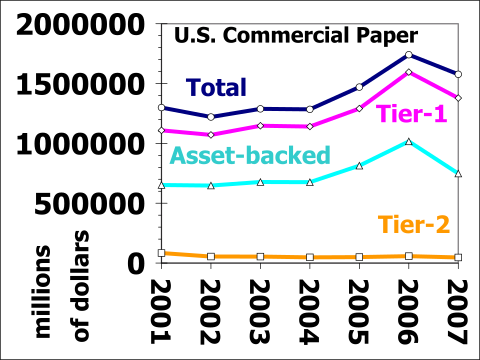
Commercial Paper Corporations cannot practically issue 10-year bonds every time they need to cover a brief payroll shortfall. Instead, they issue commercial paper, which consists of short-term, unsecured promissory notes issued by corporations with high credit ratings. Because it is unsecured, only the most financially sound companies can issue it successfully.
- Purpose: Corporations issue commercial paper to finance short-term working capital needs rather than long-term projects (like building a new factory).
- Maturity & Regulation: The maximum maturity of commercial paper is 270 days. This exact cutoff is not arbitrary. Commercial paper with a maturity of 270 days or less is exempt from SEC registration, allowing corporations to raise funds quickly without enduring the costly and time-consuming regulatory filings required for long-term securities.
Banker’s Acceptances (BAs) Imagine a clothing retailer in New York ordering $5 million worth of fabric from a manufacturer in Vietnam. The manufacturer wants guaranteed payment before loading the cargo ship; the retailer wants the fabric before handing over the cash. The solution is a Banker’s Acceptance, which is a short-term time draft with payment guaranteed by a bank.
- Purpose: Because of the bank's guarantee, Banker's Acceptances are primarily used to finance international trade transactions.
- Maturity: Like commercial paper, the maximum maturity of a Banker's Acceptance is typically 270 days.

Negotiable Certificates of Deposit (NCDs) While retail customers buy standard CDs to earn a bit of interest, institutions use a different vehicle. A Negotiable Certificate of Deposit is a time deposit offered by banks that can be traded in the secondary market. If a corporation buys an NCD but suddenly needs cash next week, they can sell the NCD to another investor rather than breaking the deposit and paying a penalty to the bank.
- Size: Negotiable Certificates of Deposit require a minimum face value of $100,000. However, large institutions trade in much larger blocks; Jumbo Negotiable Certificates of Deposit often have face values of $1,000,000 or more.
- Security: These instruments are backed by the credit of the issuing bank, making the bank's financial health the primary risk factor.
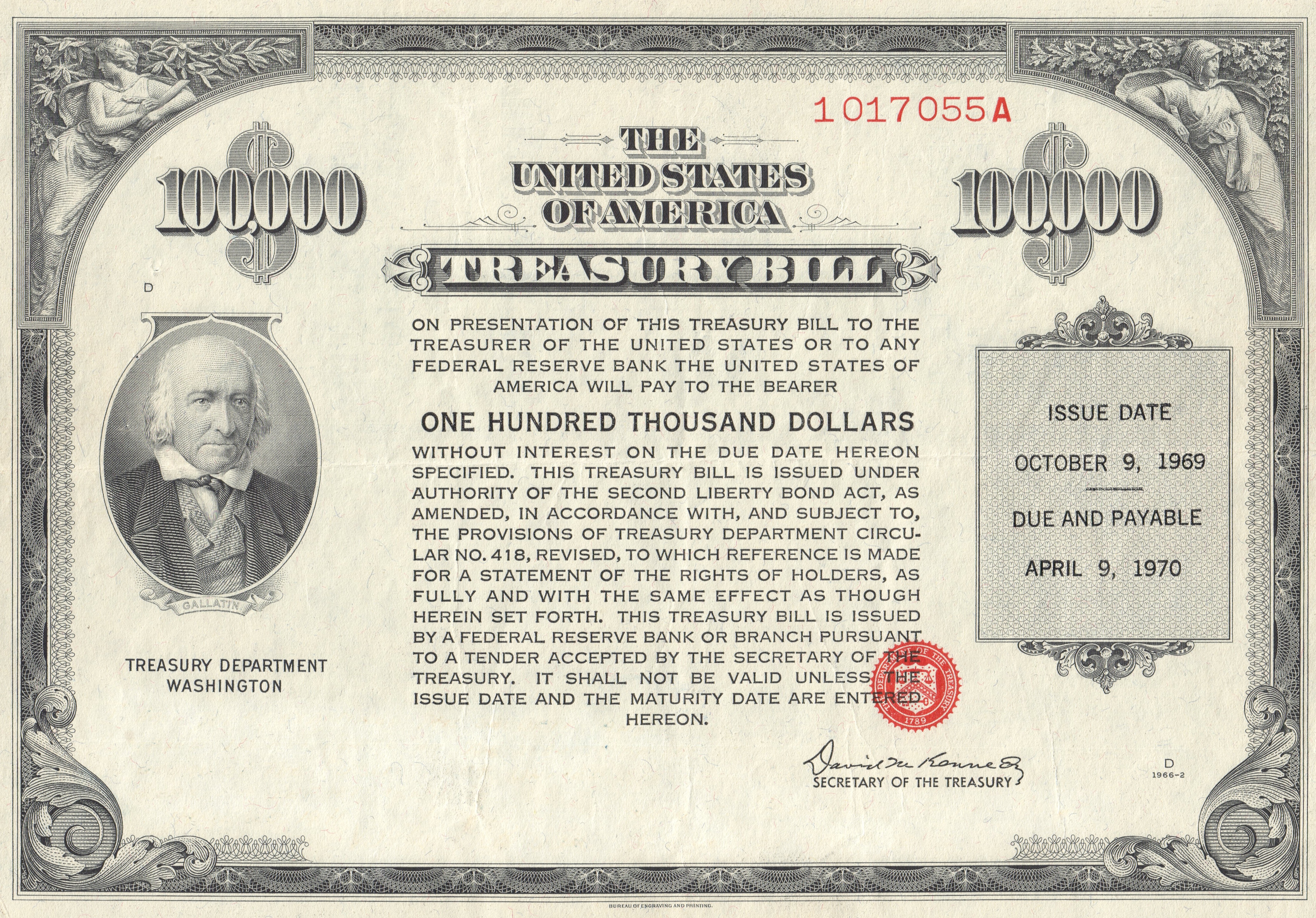
Treasury Bills (T-Bills) The U.S. government also borrows in the money market. Treasury bills are short-term United States government debt obligations with maturities of one year or less.
- Unlike typical bonds, Treasury bills do not pay periodic interest payments.
- Instead, Treasury bills are issued at a discount to par value. An investor might buy a T-bill for $9,800 today, and the government will pay them the full $10,000 face value in six months. The $200 difference is the investor's return.
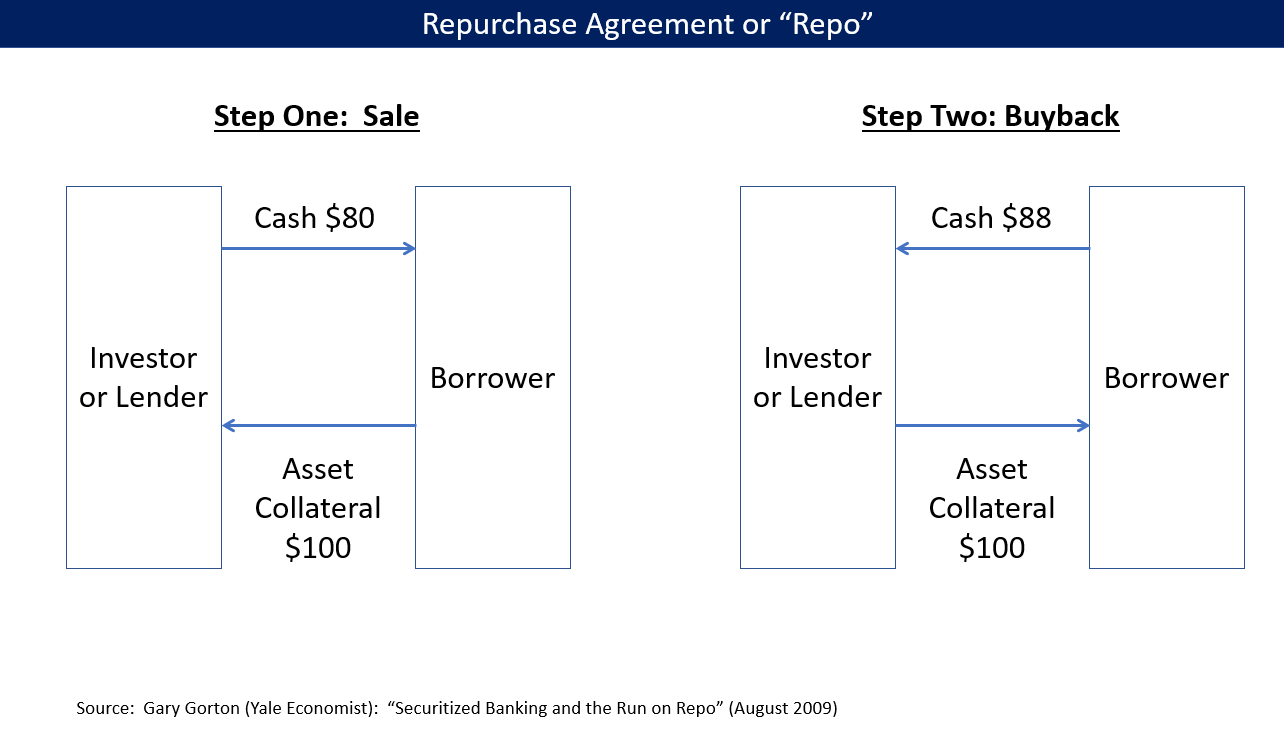
Repurchase Agreements (Repos) A Repurchase Agreement involves the sale of securities with an agreement to buy the securities back at a higher price on a future date. Think of it conceptually as a highly secure, short-term pawn shop loan for financial institutions. One bank hands over Treasury bonds to another bank in exchange for cash overnight, promising to buy the bonds back the next morning for a slightly higher price (the repo rate).
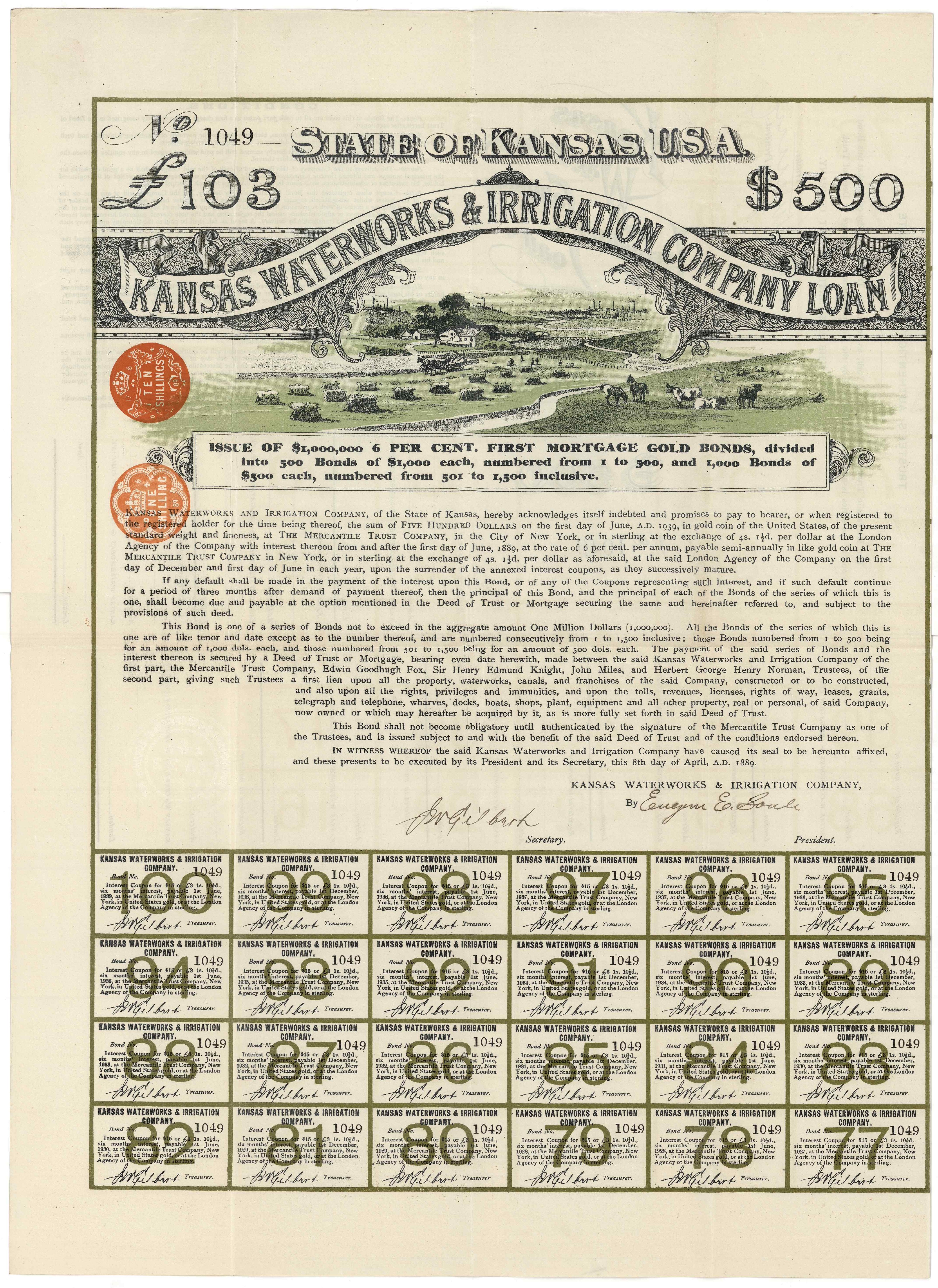
When an entity needs to build a bridge, acquire a competitor, or fund decades of infrastructure, they leave the money market and enter the bond market. Simply put, a bond is a debt security representing a loan made by an investor to a borrower.
To understand bonds, we must define the fixed mathematical variables determined the moment the bond is printed:
- Par Value: This is the baseline accounting unit of a bond. The standard par value for a corporate bond is $1,000. Conceptually, par value is the principal amount that the bond issuer promises to repay the bondholder at maturity.
- Maturity Date: This is the specific day the bond issuer must repay the principal amount to the bondholder, extinguishing the debt.
- Coupon Rate: This is the annual interest rate paid by the bond issuer relative to the bond's par value. Unless heavily specified as a floating-rate note, the coupon rate of a traditional bond remains fixed for the entire life of the bond.
- Annual Interest Payment: Because the coupon rate is fixed to the par value, the cash flow never changes. A bond's annual interest payment is calculated by multiplying the coupon rate by the par value.
Example: If a corporate bond has a 5% coupon rate and a standard $1,000 par value, the annual interest payment is exactly $50 (calculated as $0.05 \times $1,000). Even if the bond's [market price](https://en.wikipedia.org/wiki/Market_price) fluctuates wildly over the next decade, the issuer will continue sending the investor \50 a year.
Because bonds trade daily in the secondary market, their market prices detach from their par values. When prices move, the effective return an investor earns—the yield—moves. You must master four distinct yield concepts:
- Nominal Yield: This is the easiest to identify. Nominal yield is another term for the stated coupon rate of a bond. If the bond says 5% on the certificate, the nominal yield is 5%. It never changes.
- Current Yield: This metric ignores future principal repayments and focuses only on cash generation right now. Current yield measures a bond's annual interest income relative to the bond's current market price.
The Formula: The current yield formula divides the annual coupon payment by the current market price of the bond. Current Yield = Annual Coupon Payment / Current Market Price
- Yield to Maturity (YTM): This is the holy grail of bond pricing. Yield to Maturity calculates the total anticipated return of a bond if the bond is held until the maturity date. YTM accounts for all future coupon payments plus the mathematical difference between the current market price and the par value that will eventually be repaid.
- Yield to Call (YTC): As we will explore shortly, some bonds can be retired early. Yield to Call calculates the total return of a bond if the bond is held until the earliest callable date.
Here is the most fundamental rule of fixed-income mathematics: Bond prices and interest rates have an inverse relationship.
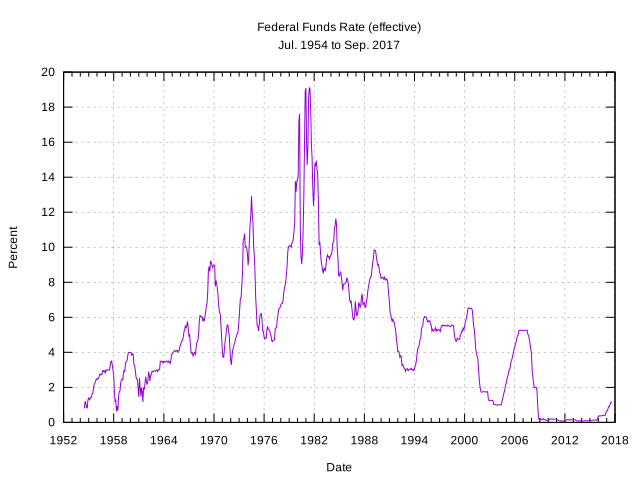
Imagine you own a bond paying a fixed 5% coupon. Tomorrow, the Federal Reserve raises rates, and brand-new bonds hit the market paying 7%. Suddenly, your 5% bond looks highly unattractive. If you want to sell it to another investor, no one will pay the full $1,000 par value. You must put it on sale.
- When prevailing interest rates rise in the market, the prices of outstanding bonds fall.
- Conversely, if new bonds are only paying 3%, your 5% bond becomes a coveted, high-yielding asset. Buyers will bid up its price. When prevailing interest rates fall in the market, the prices of outstanding bonds rise.
This inverse teeter-totter creates two pricing states in the secondary market:
- A bond trades at a discount when the bond's market price is below the bond's par value (e.g., trading at $950).
- A bond trades at a premium when the bond's market price is above the bond's par value (e.g., trading at $1,050).
Volatility: Which Bonds Move the Most?
Not all bonds react to interest rate changes equally. The magnitude of a bond's price swing (its volatility) is dictated by two factors: time and cash flow.
- Maturity Length: Long-term bonds experience greater price volatility than short-term bonds when prevailing interest rates change. If a 1-year bond pays a below-market rate, the investor only suffers for a few months before getting their principal back to reinvest. If a 30-year bond pays a below-market rate, the investor is locked into a bad deal for three decades. Therefore, the market violently marks down the price of the 30-year bond to compensate.
- Coupon Size: Bonds with lower coupon rates experience greater price volatility than bonds with higher coupon rates when prevailing interest rates change. A higher coupon bond returns the investor's capital faster through large periodic interest payments. A lower coupon bond pushes the majority of the investor's return into the distant future (the repayment of par). The further cash flows are pushed into the future, the more sensitive they are to current interest rate changes.
Bonds are legally binding contracts, and issuers frequently embed special clauses into the indenture to grant themselves, or the investor, specific superpowers.
Callable Bonds: The Issuer's Superpower
A callable bond gives the issuer the right to redeem the bond before the maturity date.
Why would a corporation want to pay off its debt early? For the exact same reason a homeowner refinances a mortgage. Issuers are most likely to call a bond when prevailing interest rates decline. By forcibly returning the bondholders' principal early, calling a bond allows an issuer to refinance their existing debt at a lower interest rate.
For the investor, this presents a massive headache known as call risk. Call risk is the risk that a bondholder will have their bond redeemed early and must reinvest the principal at lower interest rates. The investor loses their high-yielding asset precisely when it is most valuable.
To make callable bonds palatable to investors, issuers include sweeteners:
- Call Protection: This is a specified period during which a callable bond cannot be redeemed by the issuer (e.g., the first 5 years of a 20-year bond). It guarantees the investor at least a minimum window of steady returns.
- Call Premium: To compensate for the disruption, the issuer will often pay a penalty to force the early redemption. A call premium is an amount above par value that an issuer pays to a bondholder to redeem the bond early (e.g., paying $1,020 instead of $1,000).
Convertible Bonds: The Investor's Superpower
If a callable bond favors the issuer, a convertible bond favors the investor. A convertible bond gives the bondholder the right to exchange the bond for a specific number of shares of the issuer's common stock.
This creates a hybrid security. You have the downside protection of fixed debt, but if the company invents a revolutionary new product and its stock price skyrockets, you can flip your boring bond into lucrative equity. Because this feature is so valuable to the investor, there is a trade-off: convertible bonds generally offer lower coupon rates than non-convertible bonds from the same issuer.
The mechanics of this exchange are dictated by the indenture:
- Conversion Price: This is the specified price per share at which a convertible bond can be converted into common stock.
- Conversion Ratio: This metric determines the exact number of shares a bondholder receives upon converting one bond.
The Formula: The conversion ratio is calculated by dividing the bond's par value by the conversion price. Conversion Ratio = Par Value / Conversion Price (e.g., A $1,000 par bond with a $50 conversion price yields a ratio of 20 shares).
Because of this dual nature, a convertible bond suffers from a split personality in the secondary market. Like all debt, convertible bond prices are influenced by prevailing interest rates. However, because it can be magically transformed into stock at the investor's whim, convertible bond prices are heavily influenced by the market price of the underlying common stock. If the stock surges past the conversion price, the bond's price will surge in tandem, completely ignoring the traditional rules of interest rate mechanics.