Municipal Fund Securities
Imagine a city government with millions of dollars in idle tax revenue waiting to fund a bridge project next year. Simultaneously, a family down the street is trying to figure out how to afford college tuition eighteen years from now. Though these problems seem entirely disconnected, the financial markets solve both through the exact same structural innovation.
Unlike traditional municipal bonds—where governments issue debt to build infrastructure—municipal fund securities are investment vehicles issued by a state or local government entity. Instead of borrowing money, the government acts as a sponsor, pooling capital to achieve specific public-policy or civic goals.

If you look closely at how these products operate, they behave remarkably like mutual funds. They pool money, they invest in underlying assets, and they provide professional management. However, because they are issued by municipal entities rather than private corporations, they do not answer to the standard mutual fund rulebook.
Instead, the Municipal Securities Rulemaking Board (MSRB) regulates the issuance and trading of municipal fund securities. As a registered representative, you will encounter these products constantly because they solve deeply human and operational problems for your clients.
To master this segment of the market, you must understand the mechanics of the three primary types of municipal fund securities: 529 plans, ABLE accounts, and Local Government Investment Pools.
State governments are the primary sponsors of 529 savings and prepaid tuition plans. While both exist to tackle the staggering cost of education, they operate on completely different financial engines.
Prepaid Tuition Plans: Buying Time
A 529 Prepaid Tuition Plan is an exercise in time travel. It allows a purchaser to lock in future college tuition rates at current prices. When a parent buys "tuition credits" today for a toddler, the state promises to honor those credits when the child turns eighteen, regardless of how expensive college becomes.
Mechanically, prepaid tuition plans protect the account owner against tuition inflation. Because the state government is absorbing the inflation risk and promising the future payout, investments in prepaid tuition plans do not carry market risk for the purchaser.
There is, however, a strict constraint: to use the state’s resources to hedge against inflation, prepaid tuition plans generally require the account owner or the beneficiary to be a resident of the state sponsoring the plan.
529 Savings Plans: Riding the Market
If prepaid plans are about locking in a price, savings plans are about maximizing growth. A 529 Savings Plan allows an investor to contribute funds to various investment portfolios to pay for future education expenses.
Rather than buying predetermined tuition credits, the investor allocates money into equity, fixed-income, or target-date portfolios. Therefore, the investment performance of a 529 Savings Plan depends entirely on the underlying mutual funds or investments chosen. By tying the account's value to the financial markets, investments in 529 Savings Plans carry market risk.
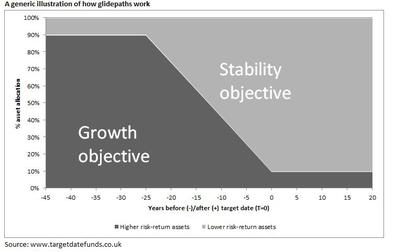
The tradeoff for assuming this risk is geographic freedom. 529 Savings Plans generally do not impose state residency requirements on the account owner or beneficiary. A resident of New York can open a Nevada 529 Savings Plan and ultimately use the funds to send their child to college in Texas.
| Feature | 529 Prepaid Tuition Plan | 529 Savings Plan |
|---|---|---|
| Primary Benefit | Locks in future tuition at today's prices. | Maximizes capital growth potential. |
| Market Risk | None for the purchaser. | Yes, depends on underlying investments. |
| Residency Limits | Generally requires state residency. | No residency requirements. |
The Mechanics of Control and Taxation
To effectively advise clients, you must understand who holds the keys and how the IRS treats the money.
In a 529 plan, the account owner controls the funds and distribution decisions. The owner chooses the investments, decides when to withdraw money, and determines who receives the benefit. Conversely, the designated beneficiary of a 529 plan is the individual whose future education expenses will be paid from the account.
If the beneficiary receives a full scholarship or simply decides not to go to college, the capital is not trapped. The account owner of a 529 plan has the legal right to change the designated beneficiary. Furthermore, a 529 plan beneficiary can be changed to another qualifying family member of the original beneficiary without tax penalties.
The Tax Superpower of the 529 Contributions to a 529 plan are made with after-tax dollars, meaning they are not deductible for federal income tax purposes. However, the IRS rewards the investor on the back end: investment earnings within a 529 plan grow on a tax-deferred basis.
If utilized correctly, withdrawals from a 529 plan used for qualified education expenses are completely free from federal income tax.
What constitutes a "qualified" expense? The IRS defines it broadly. Qualified higher education expenses for 529 Savings Plans include college tuition, room, board, and books. Additionally, recognizing that education costs begin before college, the rules state that up to $10,000 per year can be withdrawn tax-free from a 529 Savings Plan to pay for elementary or secondary school tuition.
The Penalty Box: What happens if the account owner decides to withdraw the money to buy a boat instead of paying for tuition? The tax code penalizes non-qualified distributions. If funds are used for non-qualified expenses, the earnings portion of a non-qualified 529 plan withdrawal is subject to ordinary income tax. To add teeth to the rule, the earnings portion of a non-qualified 529 plan withdrawal is subject to a 10 percent federal tax penalty. (Note: The principal, having already been taxed before it was contributed, is not penalized or double-taxed upon withdrawal).
The Gift Tax Hack
For high-net-worth clients, 529 plans represent an incredibly powerful estate planning tool. Contributions to a 529 plan are considered completed gifts for federal gift tax purposes. Because they are completed gifts, contributions to a 529 plan qualify for the annual federal gift tax exclusion.
Here is the unique structural advantage of the 529: a 529 plan contributor can accelerate five years' worth of annual gift tax exclusions into a single lump-sum contribution. This allows grandparents to move massive amounts of capital out of their taxable estate in a single day, while still retaining control over the account as the owner.
Now, apply the structural genius of the 529 plan to a completely different human challenge. Historically, individuals with disabilities faced a cruel financial paradox: if they accumulated even a modest amount of personal savings (often just $2,000), they risked losing vital federal benefits like Medicaid and Supplemental Security Income (SSI).
To fix this, Congress created the Achieving a Better Life Experience Act. ABLE accounts are tax-advantaged savings accounts designed specifically for individuals with significant disabilities. They allow vulnerable individuals to build wealth without forfeiting their federal safety net.

The regulatory guardrails are strict:
- The onset of the individual's disability must have occurred before age 26 to qualify for an ABLE account.
- To prevent exploitation of the tax shelter, an eligible individual is strictly limited to having only one ABLE account.
- Unlike a 529 plan where an uncle might own the account for a niece, in an ABLE account, the account owner is also the designated beneficiary.
The taxation perfectly mirrors the 529 Savings Plan. Contributions to an ABLE account are made with after-tax dollars. Once inside the account, investment earnings in an ABLE account grow tax-deferred. When the funds are needed for living, withdrawals from an ABLE account used for qualified disability expenses are exempt from federal income tax.
Let's shift our focus from individual retail investors back to the municipalities themselves. Imagine a county tax assessor who has just collected millions of dollars in property taxes. That money is needed to fund public works projects over the next six months. The county cannot risk placing this money in volatile stocks, but leaving it in a zero-interest checking account wastes taxpayer potential.
The solution is the LGIP. Local Government Investment Pools are investment trusts established by state or local governments. They exist to provide municipalities with a highly liquid vehicle to invest short-term public funds.
Think of an LGIP as a massive, exclusive money market fund designed strictly for government entities. In fact, Local Government Investment Pools operate similarly to money market mutual funds. To protect public capital and ensure liquidity, Local Government Investment Pools typically seek to maintain a stable Net Asset Value of $1.00 per share.
Because these vehicles are designed specifically to manage public treasuries, the general public is not permitted to invest in Local Government Investment Pools.
The Regulatory Exemptions of LGIPs
Because LGIPs are issued by government entities—which are constitutionally distinct from private corporations—they bypass traditional corporate investment regulations:
- Local Government Investment Pools are exempt from registration under the Investment Company Act of 1940.
- Likewise, Local Government Investment Pools are exempt from SEC registration requirements.
Because they do not register with the SEC, they are not required to generate a standard mutual fund prospectus. Instead, to maintain transparency for the participating municipalities, Local Government Investment Pools provide an official statement or information statement to investors rather than a prospectus.

Summary for the SIE Candidate: When you see a municipal fund security on the exam, ask yourself what problem it is trying to solve. If it is fighting tuition inflation, it is a Prepaid 529. If it is growing capital for college with market risk, it is a 529 Savings Plan. If it is protecting the federal benefits of someone disabled before age 26, it is an ABLE account. And if it is giving a county government a safe place to park its tax revenue at a $1.00 NAV, it is an LGIP. Understand the owner, the beneficiary, and the tax exemptions, and you will dominate this section of the exam.