Real Estate Investment Trusts (REITs)
Imagine trying to buy a commercial skyscraper in Manhattan. You would need hundreds of millions of dollars, a dedicated property management team to negotiate leases, and a legal department to navigate local zoning laws. For the average investor, direct ownership of institutional-grade real estate is a structural impossibility. A Real Estate Investment Trust (REIT) solves this exact problem. A Real Estate Investment Trust (REIT) is a company that owns, operates, or finances income-producing real estate. By pooling capital from thousands of shareholders, Real Estate Investment Trusts (REITs) allow individual investors to earn dividends from real estate investments without directly buying or managing properties. Furthermore, Real Estate Investment Trusts (REITs) offer investors portfolio diversification through exposure to the real estate asset class, transforming highly illiquid physical buildings into accessible financial instruments.

As a future financial professional, you must understand exactly what a REIT is—and just as importantly, what it is not.
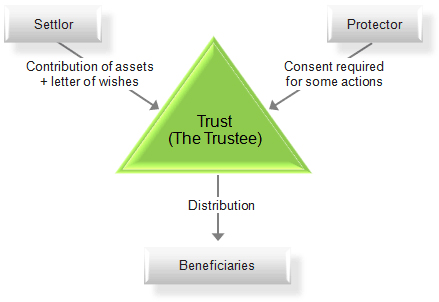
Legally, a Real Estate Investment Trust (REIT) must be structured as a corporation, trust, or association. To ensure professional oversight, a Real Estate Investment Trust (REIT) must be managed by a board of directors or trustees who make the high-level strategic decisions regarding property acquisition and financing.
Because REITs pool money to invest in a specific sector, candidates often confuse them with mutual funds or limited partnerships. You must distinguish them clearly for your exams and your clients:
- Not a Mutual Fund: Real Estate Investment Trust (REIT) shares are not classified as investment companies under the Investment Company Act of 1940.
- Not a Partnership: Real Estate Investment Trusts (REITs) do not fall under the definition of a Direct Participation Program (DPP).
To ensure that a REIT remains a broadly held public vehicle rather than a private tax shelter for a wealthy few, the IRS imposes strict ownership rules:
- A Real Estate Investment Trust (REIT) must have a minimum of 100 shareholders after the REIT's first year of existence.
- No more than 50 percent of a Real Estate Investment Trust's (REIT's) shares can be held by five or fewer individuals during the last half of the taxable year. (In the industry, this is often affectionately called the "5/50 rule").
When a standard corporation earns a profit, it pays corporate income tax. When it distributes the remaining profit to shareholders as a dividend, the shareholders pay tax on that dividend. This is the dreaded "double taxation."
REITs bypass this entirely.
The Conduit Theory: The avoidance of corporate-level taxation by a Real Estate Investment Trust (REIT) through distributing income to shareholders is known as the conduit theory.
Think of the REIT as a pipeline (a conduit). If the money flows directly through the pipe to the investors, the pipe itself is not taxed. Therefore, a Real Estate Investment Trust (REIT) is not subject to corporate-level income tax on earnings distributed to shareholders.
However, to qualify for this special tax treatment, the IRS requires the REIT to prove it is a genuine real estate vehicle passing its wealth to investors. To do so, it must pass three strict mathematical tests:
- The Asset Test: A Real Estate Investment Trust (REIT) must invest at least 75 percent of the REIT's total assets in real estate assets, cash, or U.S. Treasuries.
- The Income Test: A Real Estate Investment Trust (REIT) must derive at least 75 percent of the REIT's gross income from real estate related sources. Naturally, real estate related income sources for a Real Estate Investment Trust (REIT) include rents from real property and interest on mortgages financing real property.
- The Distribution Test: A Real Estate Investment Trust (REIT) must distribute at least 90 percent of the REIT's taxable income to shareholders annually to avoid corporate taxation on the distributed portion.
What This Means for Your Client's Taxes
Because the REIT escapes the corporate tax, the tax burden falls entirely on the investor. Consequently, Real Estate Investment Trust (REIT) dividends paid to retail investors are generally taxed at the investor's ordinary income tax rate, rather than the lower qualified dividend rate enjoyed by typical corporate stock.
Furthermore, remember our distinction between REITs and Direct Participation Programs (DPPs)? While a DPP (like a limited partnership) passes through both income and losses, Real Estate Investment Trusts (REITs) do not pass through investment losses to the REIT's shareholders. If the REIT operates at a loss, the share price may decline, but your client cannot use the REIT's operating losses to offset their personal income.
The term "real estate" is broad. Are we talking about owning the bricks and mortar, or owning the paper that financed the bricks and mortar? The industry divides REITs into three categories based on how they generate cash flow:
1. Equity REITs (The Landlords)
Equity Real Estate Investment Trusts (REITs) invest in and own physical income-producing real estate properties. Think of shopping malls, apartment buildings, data centers, and hospital complexes. Because they act as landlords, the primary source of revenue for Equity Real Estate Investment Trusts (REITs) is rent collected from tenants. They also benefit from the potential capital appreciation of the physical property over time.

2. Mortgage REITs (The Lenders)
Instead of owning buildings, Mortgage Real Estate Investment Trusts (REITs) provide financing for real estate by purchasing or originating mortgages and mortgage-backed securities. Because they act as lenders rather than landlords, the primary source of revenue for Mortgage Real Estate Investment Trusts (REITs) is the interest earned on mortgage loans. Their success is highly sensitive to interest rate fluctuations.

3. Hybrid REITs (The Best of Both Worlds)
As the name implies, Hybrid Real Estate Investment Trusts (REITs) invest in both physical real estate properties and real estate mortgages. They generate income from both rent and interest, providing internal diversification between real estate equity and real estate debt.
Understanding what a REIT buys is only half the battle; as a securities professional, you must know how your clients can trade them. We classify REITs into three distinct tiers based on their registration status and liquidity.
| REIT Classification | SEC Registration | Exchange Traded? | Liquidity | Typical Investor |
|---|---|---|---|---|
| Listed REITs | Yes | Yes | High | Retail / All Investors |
| Registered Non-Listed REITs | Yes | No | Low | Retail looking for stability |
| Private REITs | No | No | Very Low | Institutional / Accredited |
Listed REITs
Listed Real Estate Investment Trusts (REITs) are registered with the Securities and Exchange Commission (SEC) and are publicly traded on national securities exchanges, such as the New York Stock Exchange (NYSE). Because they trade openly, investors can buy and sell listed Real Estate Investment Trust (REIT) shares on the secondary market like typical corporate stock. This provides investors with immediate liquidity and transparent pricing.

Registered Non-Listed REITs
Registered non-listed Real Estate Investment Trusts (REITs) are also registered with the Securities and Exchange Commission (SEC), meaning they are subject to the exact same rigorous public disclosures and regulatory scrutiny as listed REITs. However, registered non-listed Real Estate Investment Trusts (REITs) do not trade on national securities exchanges. Because there is no active secondary market to easily match buyers and sellers, registered non-listed Real Estate Investment Trusts (REITs) are generally illiquid investments. Investors usually have to hold them until the REIT liquidates or rely on limited, periodic redemption programs offered by the sponsor.
Private REITs
Operating in a completely different regulatory sphere, Private Real Estate Investment Trusts (REITs) are exempt from Securities and Exchange Commission (SEC) registration, generally offered under Regulation D. Like their registered non-listed cousins, Private Real Estate Investment Trusts (REITs) do not trade on national securities exchanges. Because they lack both an active secondary market and public SEC disclosures, Private Real Estate Investment Trusts (REITs) are highly illiquid investments. Accordingly, financial regulations dictate that Private Real Estate Investment Trusts (REITs) are generally only available to institutional or accredited investors who have the financial sophistication to evaluate the risks and the capital to weather the illiquidity.

Summary for the SIE Professional
When you sit for the FINRA SIE, remember the fundamental tradeoff of a REIT. It trades the burden of corporate taxation for strict behavioral constraints (the 75/75/90 rules). It democratizes real estate, allowing retail investors to become fractional landlords or lenders. Master the distinction between what they own (Equity vs. Mortgage) and how they trade (Listed vs. Non-Listed vs. Private), and you will effortlessly navigate REIT questions on your exam and in your career.