Forces, Motion, and Energy
Not sure you’re ready?
Take the ~3-minute readiness diagnostic and see where you stand.
Forces, Motion, and Energy: The Grand Ballet of the Universe
Welcome! As future elementary educators, you have the magnificent task of looking at a child who just dropped a book, or slid across a wooden floor in their socks, and explaining to them the hidden rules of the universe. To do that, we aren’t just going to memorize vocabulary. We are going to look under the hood of reality.
Why do things move? Why do they stop? Why does a roller coaster need a giant hill to start, and why does an astronaut bounce on the Moon?
Let’s strip away the complicated jargon and look at the beautiful, intuitive mechanics of nature. By the time we’re done, you’ll have a profound grasp of forces, motion, energy, mass, and weight—and you’ll be perfectly equipped to crush this section of the Praxis exam.
Imagine a coffee cup sitting on your desk. It is perfectly happy doing nothing. It isn't going to spontaneously fly across the room. If you want it to move, you have to do something to it.
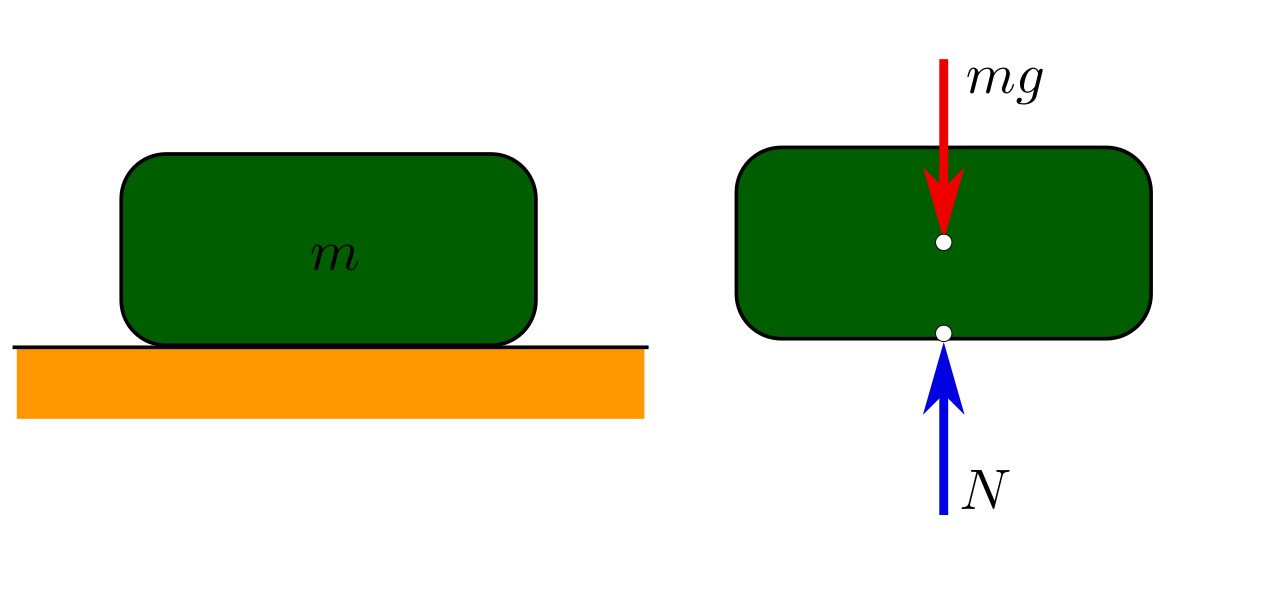
In physics, a force is simply a push or a pull exerted on an object. But in the real world, there is rarely just one push or pull happening at a time. Gravity is pulling that cup down, the desk is pushing it up, and maybe your hand is pushing it sideways. To figure out what the cup is actually going to do, we have to look at the net force, which is the vector sum of all forces acting upon an object.
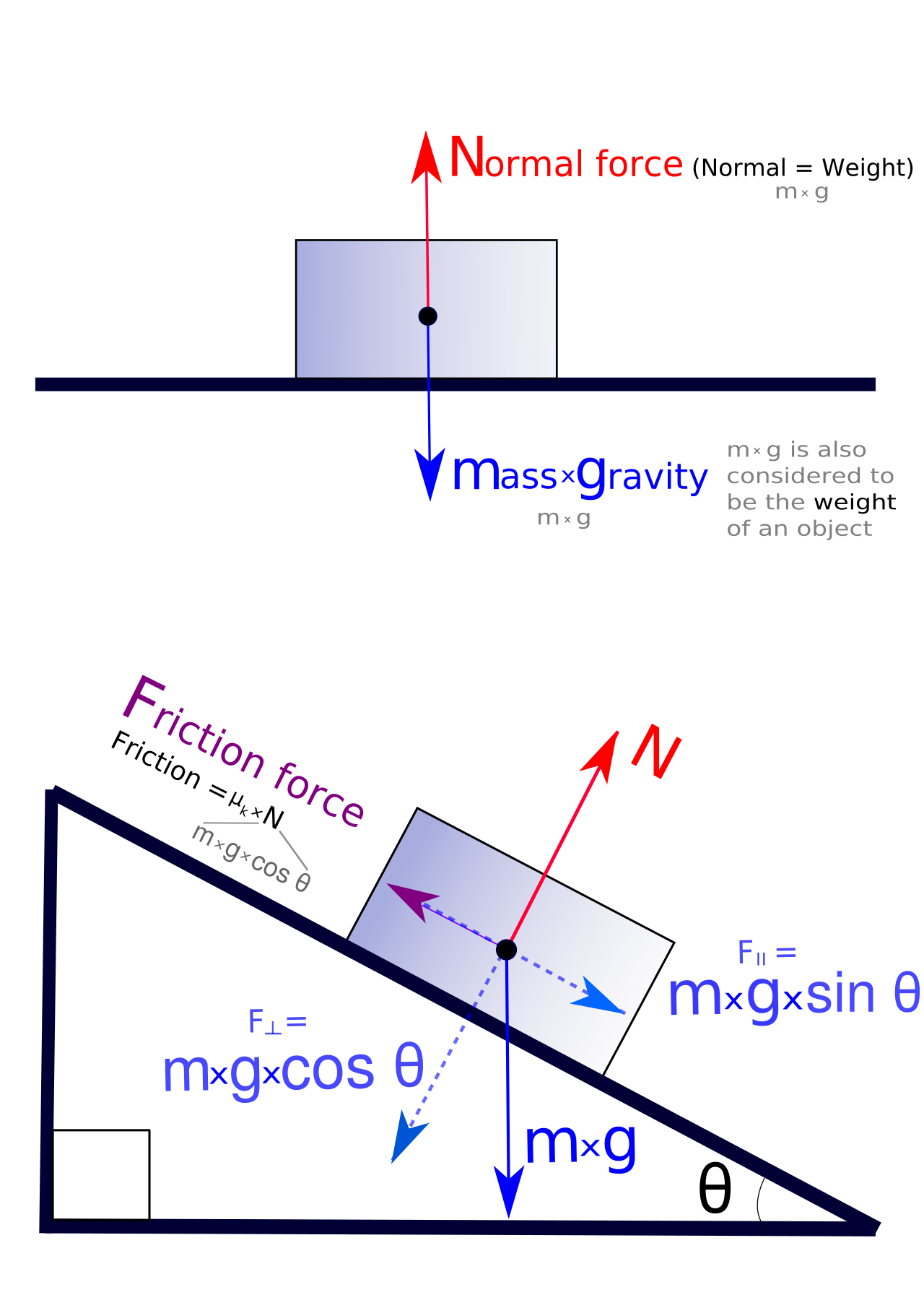
Equilibrium: When you add up all the pushes and pulls acting on an object, and they perfectly cancel each other out, the net force acting on the object is exactly zero. We call this a state of equilibrium.
Here is the golden rule of equilibrium: an object in a state of equilibrium will not accelerate. If it was sitting completely still, it stays still. If it was already coasting through deep space at a steady speed, it just keeps coasting.
Enter Sir Isaac Newton
In the year 1687, Sir Isaac Newton published the Principia Mathematica, unveiling his three laws of motion. He didn't just guess these; he observed the undeniable patterns of the physical world. Let's break down the mechanics of why things move.
The Law of Inertia (Newton's First Law)
Newton realized that objects are fundamentally lazy. They want to keep doing whatever it is they are currently doing.
- An object at rest remains at rest unless acted upon by a non-zero net force. (The lazy coffee cup).
- An object in uniform motion remains in uniform motion unless acted upon by a non-zero net force. (A hockey puck gliding flawlessly across infinitely smooth ice).
We call this stubbornness inertia. Inertia is the tendency of an object to resist changes in the object's state of motion. And here is the trick: an object's inertia is directly proportional to the object's mass. It is much harder to push a broken-down school bus than a broken-down bicycle because the bus has significantly more mass, and therefore, much more inertia!
The Law of Acceleration (Newton's Second Law)
If you finally push that coffee cup hard enough to overcome the opposing forces, you have applied a non-zero net force. What happens? An object accelerates when a non-zero net force is applied to the object.
But how much does it accelerate? Newton figured out a brilliantly simple mathematical relationship:
Newton's Second Law of Motion: Force equals mass times acceleration (F=ma).
This beautiful equation tells us two vital things:
- The acceleration of an object is directly proportional to the net force acting upon the object. (Push the grocery cart twice as hard, and it speeds up twice as fast).
- The acceleration of an object is inversely proportional to the mass of the object. (If you fill that grocery cart with watermelons, making it massively heavy, that exact same push will result in a much smaller acceleration).
The Invisible Thief of Motion: Friction
Wait a minute. Newton said an object in motion stays in motion. So why is it that if I roll a rubber ball across the grass, it eventually stops all by itself? Did Newton get it wrong?
No! The ball doesn't stop by itself. It is being stopped by friction.
Friction is a contact force that opposes the relative motion between two surfaces. As the ball rolls, the blades of grass are microscopic roadblocks. Friction causes a moving object to slow down by exerting a force in the opposite direction of the motion. If you could somehow magically turn off friction and air resistance, that ball would roll across the Earth forever.
If force is the act of pushing or pulling, then energy is the ability to do so. In physics, energy is defined as the capacity to do work.
Imagine energy as the currency of the universe. Just like money can be held in a savings account or spent at the store, energy comes in different forms.
- The standard unit of energy in the International System of Units (SI) is the Joule.
The Two Main Flavors of Energy
While energy has many specific types (thermal, chemical, nuclear), in basic mechanics we focus on two fundamental categories:
- Potential Energy: This is your savings account. It is the stored energy an object possesses due to the object's position or state. The most common type you will teach is gravitational potential energy, which depends strictly on two things: an object's mass and the object's height above a reference point. A heavy boulder sitting on the edge of a high cliff has an enormous amount of stored, gravitational potential energy.
- Kinetic Energy: This is the cash you are actively spending. It is the energy an object possesses due to the object's motion. If that boulder falls off the cliff, it is moving. It now has kinetic energy.
The Law of Conservation of Energy
Nature is the ultimate, incredibly strict accountant. The universe never loses a single penny of energy, and it never magically prints new ones out of thin air.
The Law of Conservation of Energy states that the total energy of an isolated system remains constant.
- Energy cannot be created.
- Energy cannot be destroyed.
- Energy can be transformed from one form to another.
Let’s look at a magnificent example: a falling object. Imagine you drop an apple from a high tree branch. As the object falls in a gravitational field, the object's gravitational potential energy decreases because its height is shrinking. Where does that "lost" energy go? It isn't destroyed! Instead, as the apple falls, the object's kinetic energy increases because it speeds up.
A falling object perfectly transforms potential energy into kinetic energy.
The Swinging Pendulum
To wrap our heads around this, let’s look at a grandfather clock. A pendulum swinging back and forth is one of the most elegant displays of energy transformation in the cosmos.
We define mechanical energy as the sum of an object's kinetic energy and potential energy. In an isolated system without friction, the total mechanical energy of an object remains perfectly constant. The pendulum is just shuffling the energy back and forth between the two forms:
- At the highest point of its swing, the pendulum pauses for a fraction of a millisecond. It has no speed, but it has maximum height. Therefore, a swinging pendulum possesses maximum potential energy at the pendulum's highest point.
- At the lowest point of its swing, it is closest to the ground (zero height), but it is whipping through the air at its fastest speed. Therefore, a swinging pendulum possesses maximum kinetic energy at the pendulum's lowest point.
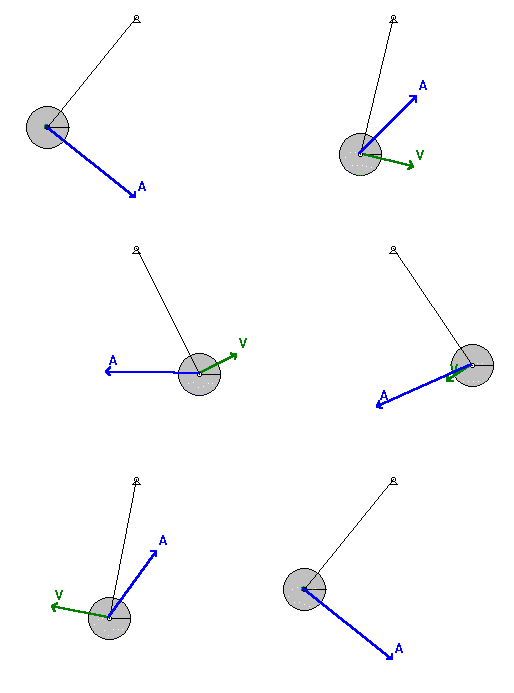
It is a gorgeous, endless dance: Potential → Kinetic → Potential → Kinetic.
If you take only one thing away from this guide to share with your elementary students, make it this section. In everyday conversation, people use the words "mass" and "weight" as if they mean the exact same thing. They do not. In physics, confusing them is a cardinal sin!
Let's clear this up once and for all.
What is Mass?
Mass is a measure of the amount of matter contained within an object. It is a count of the actual protons, neutrons, and electrons that make you, you.
- Because it's just a tally of your "stuff", the mass of an object remains constant regardless of the object's location in the universe.
- The standard unit of mass in the International System of Units (SI) is the kilogram.
What is Weight?
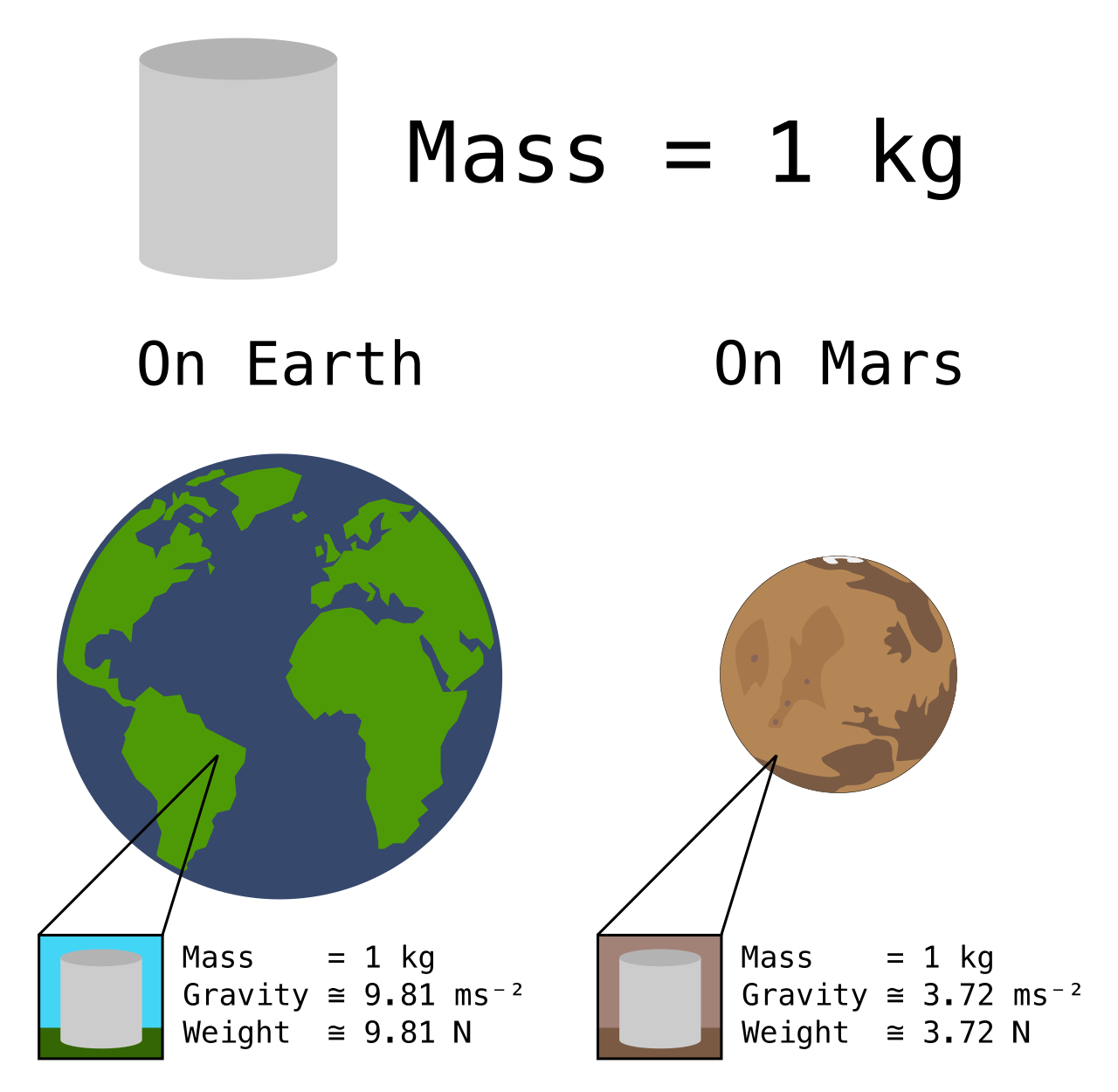
Weight, on the other hand, is not a measure of matter. Weight is a force. Specifically, weight is a measure of the gravitational force exerted on an object.
- Because it relies on gravity, the weight of an object changes depending on the strength of the local gravitational field.
- You calculate weight by multiplying an object's mass by the local acceleration due to gravity (W=mg).
- Because weight is a force, the standard unit of weight in the International System of Units (SI) is the Newton (not the kilogram!).
The Ultimate Test: The Trip to the Moon
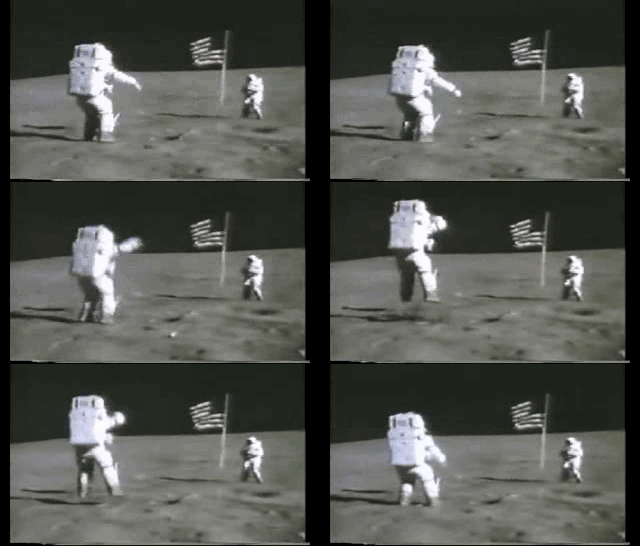
Imagine you pack your bags and take a rocket to the Moon. You step out of the lander and jump around in that bulky spacesuit.
Did stepping onto the Moon magically amputate your arm or steal your atoms? Of course not! Therefore, an object located on the Moon has the exact same mass as the object has on Earth. Your kilogram value has not changed one bit.
However, the Moon is much smaller than the Earth. In fact, the Moon's surface gravitational pull is approximately one-sixth the strength of Earth's surface gravitational pull.
Because gravity is pulling on you with far less ferocity, an object located on the Moon has less weight than the object has on Earth. You weigh roughly 1/6th of what you weighed this morning, which is exactly why astronauts can bounce gracefully across the lunar surface despite wearing extremely massive spacesuits.
Summary Cheat Sheet: Mass vs. Weight
| Feature | Mass | Weight |
|---|---|---|
| Definition | Amount of matter contained within an object. | The gravitational force exerted on an object. |
| Standard SI Unit | Kilogram (kg) | Newton (N) |
| Does it change? | No. It is constant anywhere in the universe. | Yes. It changes based on local gravity. |
| How to calculate | It is an inherent property of the object. | Mass × local acceleration due to gravity. |
Final Thoughts for the Exam
When you sit down to take the Praxis exam, remember that all of these concepts are deeply intertwined. An object's mass determines its inertia, which dictates how it will accelerate when a force is applied. As it accelerates, its kinetic energy increases, drawing from its stored potential energy, all while obeying the strict conservation of energy dictated by the universe.
Physics isn't a collection of disconnected facts; it's the rhythm of the world around us. Keep this framework in mind, trust in your understanding of how things push, pull, and fall, and you'll do phenomenally well!