Literary Elements and Textual Meaning
Not sure you’re ready?
Take the ~3-minute readiness diagnostic and see where you stand.
When a student reads a masterful piece of literature, they experience it as a seamless, immersive reality. Your task, as an English educator, is to teach them how to pry the back off the watch and examine the gears. To do this, you cannot merely hand a teenager a list of vocabulary words; you must show them how structural choices—from the framing of a narrator's lens to the jagged rhythm of a heated line of dialogue—create meaning, manipulate emotion, and drive human narratives forward.
Understanding literary elements is not about memorizing taxonomy. It is about understanding the physics of storytelling. The concepts you master here are the fundamental laws of narrative mechanics that you will use daily to help students navigate passage-based reasoning, decode complex informational texts, and analyze the nuances of human communication.
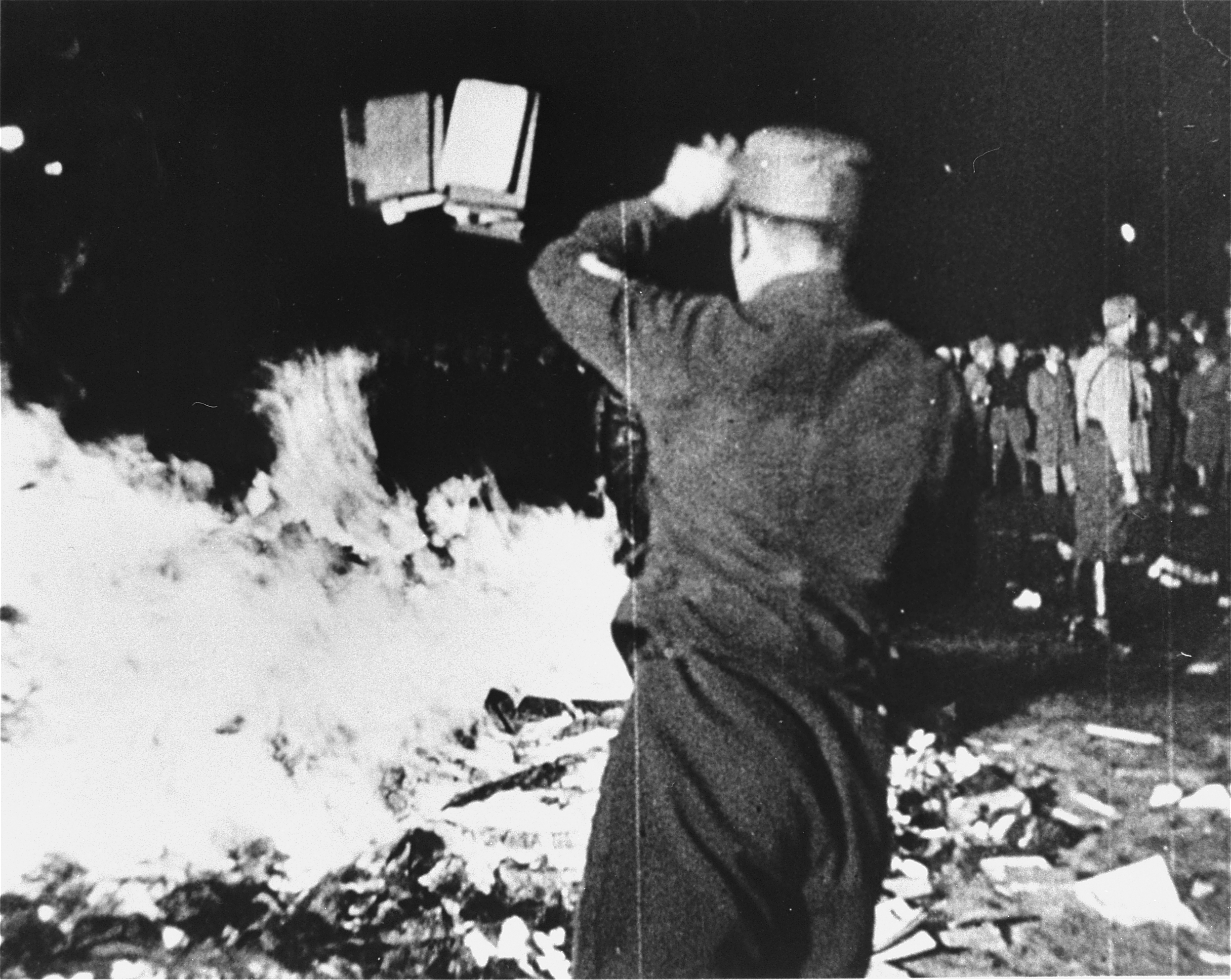
Every narrative requires kinetic energy to move forward. Conflict is the central struggle between opposing forces that drives the narrative plot forward. Without it, a story is just a static portrait.
We can categorize this struggle into two domains. Internal conflict occurs within a character's mind as a struggle against their own emotions, morals, or desires. It is the invisible war of conscience. External conflict pits a character against an outside force such as another character, society, or nature. When you teach Jack London, you are often looking at Man versus Nature, an external conflict where a character struggles against environmental forces. When you teach Fahrenheit 451 or The Hate U Give, you are exploring Man versus Society, an external conflict where a character opposes societal norms, laws, or cultural expectations.
Structuring the Tension: Freytag’s Pyramid
The conflict provides the fuel; the plot provides the engine block. A plot is the sequence of interconnected events that make up a narrative. To help students visualize how narratives organize tension, we use Freytag's Pyramid, a traditional plot structure consisting of exposition, rising action, climax, falling action, and resolution.
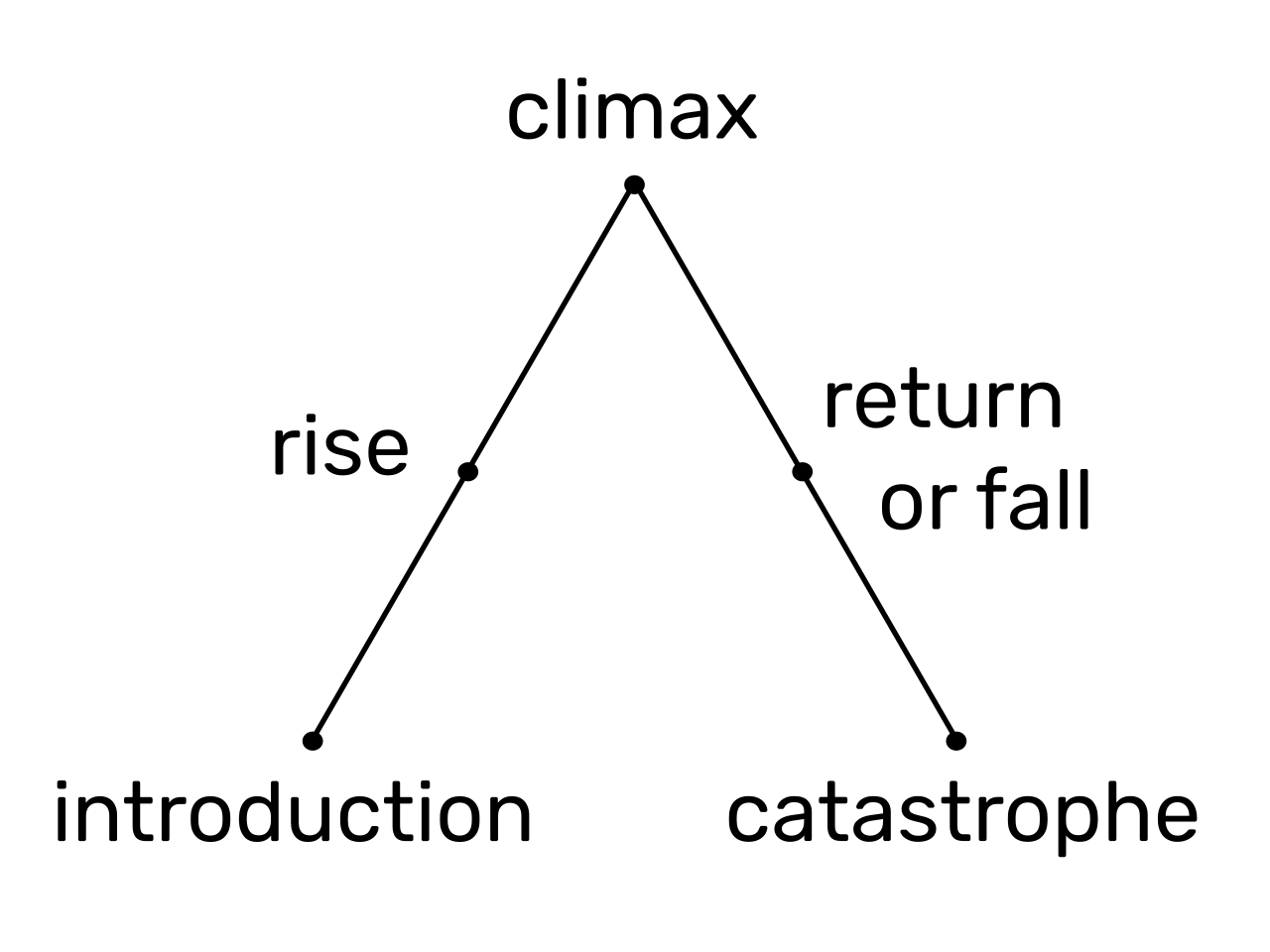
- Exposition: The foundation. Exposition introduces the setting, background information, and major characters of a narrative.
- The Inciting Incident: The spark. The inciting incident is the specific event that disrupts the status quo and sets the main conflict into motion.
- Rising Action: The climb. Rising action comprises a series of events and complications that build tension leading up to the narrative climax.
- The Climax: The apex. The climax is the narrative's turning point featuring the highest tension or action. It is the moment where the opposing forces finally collide in a way that makes a return to the status quo impossible.
- Falling Action: The descent. Falling action includes the events following the climax where conflicts begin to resolve and tension decreases.
- Denouement: The aftermath. Denouement is the final resolution of a narrative where loose ends are tied up and the conflict is concluded.
Breaking the Timeline: Non-Linear Narratives
Not all authors build their engines in a straight line. Non-linear plots disrupt chronological order using techniques like flashbacks, flash-forwards, or multiple timelines. This forces the reader to actively reconstruct meaning rather than passively absorb it.
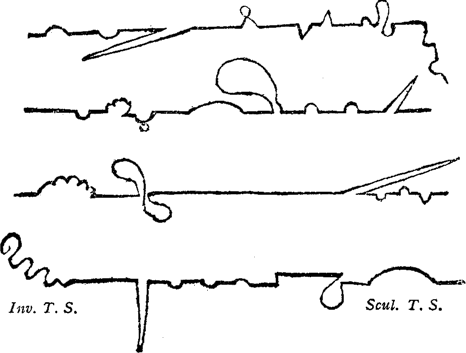
Sometimes, an author uses in media res, a narrative technique where the story opens in the middle of the action rather than at the chronological beginning, immediately hooking the reader before doubling back to provide the exposition. Alternatively, an author might construct a frame narrative, a secondary story inserted within a primary story to provide context or multiple perspectives (think of Frankenstein or Heart of Darkness).
If plot is the engine, setting and style form the environment in which the vehicle travels.
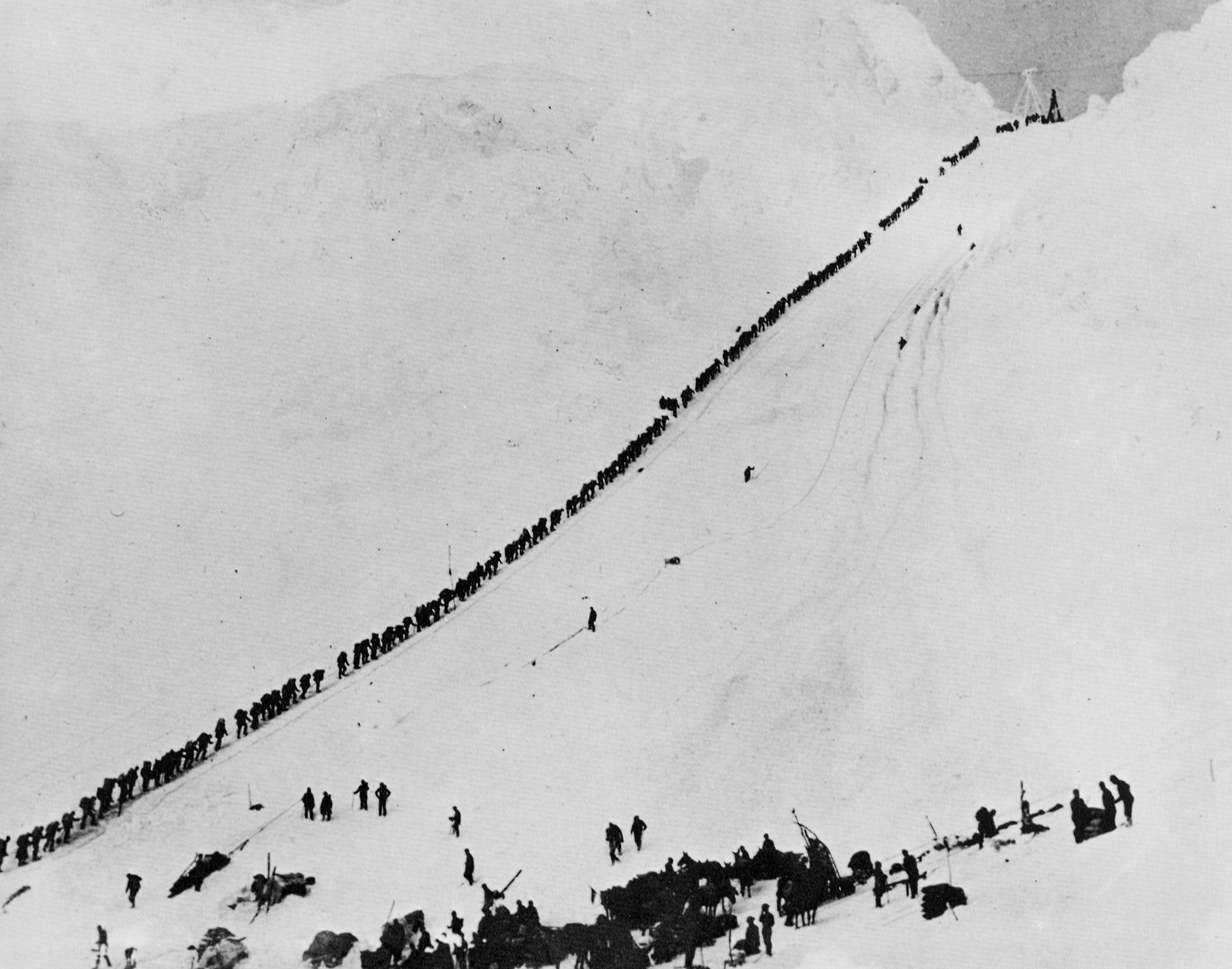
Setting encompasses the physical location, time period, and social environment in which a narrative occurs. But setting is rarely just a painted backdrop. In many great works, setting can function as an antagonist by creating direct physical or social obstacles for the protagonist. The freezing Yukon in "To Build a Fire" or the oppressive dystopian state in 1984 are not merely "where" the story happens; they are the active forces opposing the hero.
The Twin Pillars of Atmosphere: Tone and Mood
New teachers often find students confusing tone and mood. You must define the boundary clearly, as they are tested heavily in literary analysis.
| Concept | Definition | Your Perspective in the Classroom |
|---|---|---|
| Tone | Tone is the author's or narrator's attitude toward the subject matter, characters, or audience. | It is the voice of the sender. Is the author being sarcastic, reverent, cynical, or didactic? |
| Mood | Mood is the emotional atmosphere a text creates for the reader. | It is the feeling of the receiver. Does the text make the reader feel anxious, nostalgic, or terrified? |
Professor's Note: You can have a horrific mood delivered with an apathetic tone—think of Shirley Jackson's "The Lottery." The contrast between the two is often where the deepest literary meaning lies.
The Mechanics of Style
Authors build tone and mood using specific, granular tools:
- Diction is the author's specific word choices used to establish both tone and mood. The difference between "the house was dilapidated" and "the house was rotting" is a choice of diction.
- Syntax refers to sentence structure and length used to manipulate narrative pacing and tone.
- Imagery uses sensory details to evoke specific emotional responses and establish the narrative mood. It goes beyond the visual, pulling in auditory, tactile, and olfactory data to make the text tangible.
Every story is filtered through a lens, and the shape of that lens distorts or clarifies the light passing through it. Point of view determines the narrative perspective from which a story is told. As an English teacher, you must train your students to immediately ask: Who is speaking, and why should I trust them?
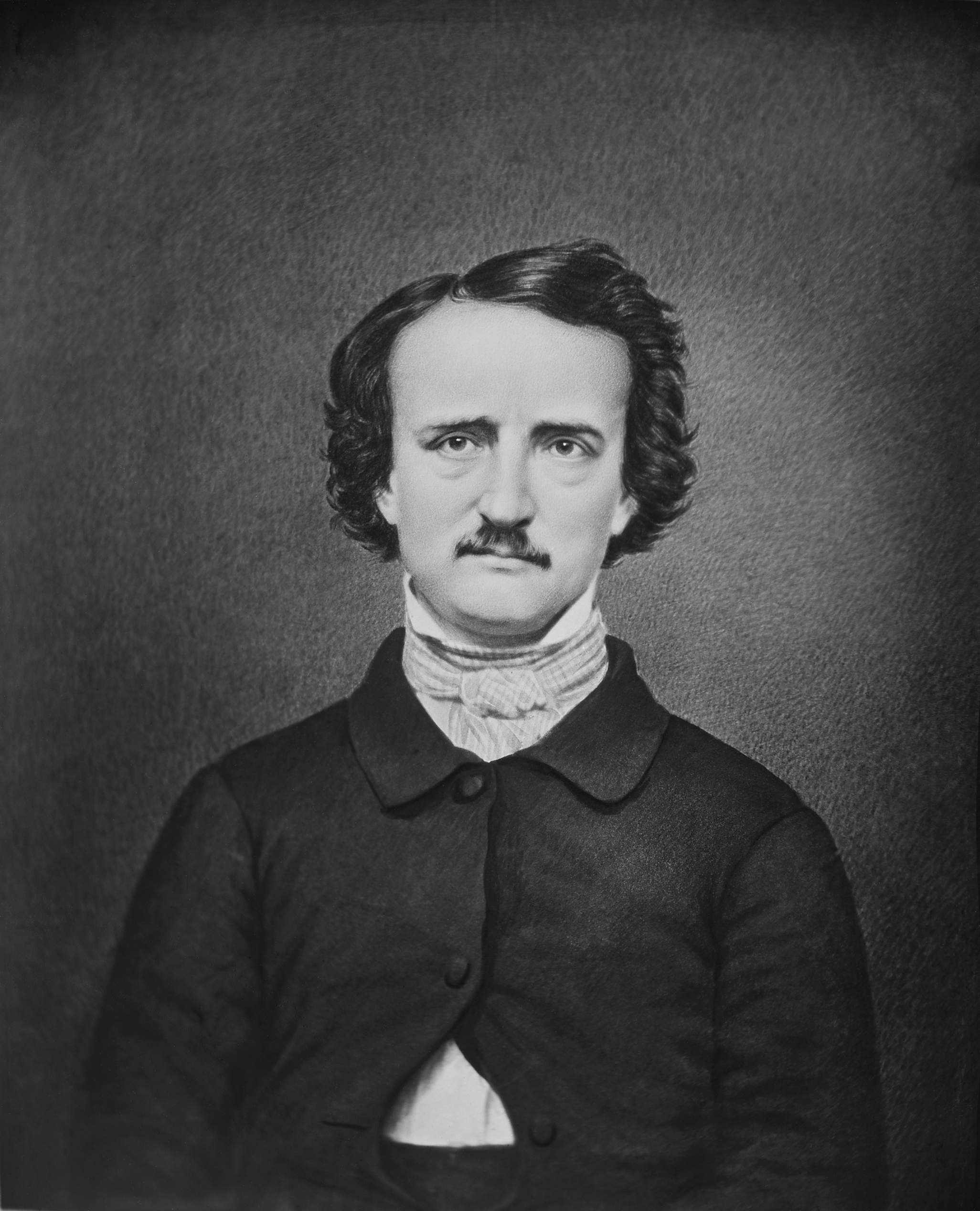
- First-person point of view uses pronouns like I and we to tell a story from the narrator's direct experience. Because it is inherently subjective, it frequently gives rise to an unreliable narrator, which compromises the credibility of the narrative through bias, lack of knowledge, or deliberate deception (Poe's protagonists are masterclasses in this).
- Second-person point of view uses the pronoun you to make the reader a participant in the narrative. It is rare and jarring, forcing immediate intimacy.
- Third-person objective point of view presents events without revealing any characters' internal thoughts or feelings. It is a fly-on-the-wall camera, recording only action and dialogue.
- Third-person limited point of view restricts the narrative perspective to the thoughts and feelings of a single character. We see the world entirely over their shoulder.
- Third-person omniscient point of view grants the narrator full knowledge of all characters' thoughts, feelings, and actions. It is a god-like perspective.
Advanced Perspective Mechanics
For high-level literature, you will frequently encounter two complex narrative tools. The first is free indirect discourse, which blends third-person narration with the grammatical features of a character's first-person direct speech. It slips seamlessly into a character's consciousness without dialogue tags. (e.g., John stared at the wreckage. Why did this always have to happen to him?).
The second involves using multiple points of view to create dramatic irony when the reader knows information that individual characters do not. By jumping between characters' perspectives, the author allows the audience to see the tragic collisions before the characters do.
Plot happens to people. Characterization is the process by which an author reveals the personality, traits, and motivations of a character.
Authors achieve this via two methods. Direct characterization occurs when the narrator explicitly tells the reader about a character's traits ("He was a greedy, cruel man"). Indirect characterization reveals a character's traits implicitly through their actions, dialogue, thoughts, and appearance. You will spend much of your career teaching students to hunt for indirect characterization.
The Cast and Their Architecture
- A protagonist is the main character whose choices and experiences drive the narrative plot.
- An antagonist is a character or force that actively opposes or creates conflict for the protagonist.
- A foil is a supporting character whose traits contrast with the protagonist's traits to highlight specific qualities. If your hero is highly impulsive, giving them a rigidly logical sidekick (a foil) makes the hero's impulsivity mathematically clearer to the reader.
- An antihero is a protagonist who lacks conventional heroic attributes such as idealism, courage, or morality. They force the reader to empathize with flawed, sometimes dark, human behavior.
Measuring Depth and Change
We measure characters along two different axes: complexity (depth) and growth (time).
- Depth: A flat character exhibits only one or two distinct personality traits and lacks psychological depth. A round character possesses complex, contradictory personality traits similar to a real human being.
- Time/Growth: A static character remains fundamentally unchanged in personality or perspective throughout the narrative. A dynamic character undergoes significant internal change in response to the narrative's events and conflicts.
This internal change often pivots on an epiphany, a sudden realization or flash of insight experienced by a character during a pivotal story event.
Finally, we arrive at the interaction between characters. Dialogue advances the plot by providing exposition or escalating conflict between characters. But in masterful writing, people rarely say exactly what they mean.
Beneath the surface lies subtext, the unspoken meaning, tension, or intention hiding beneath the literal words of a character's dialogue. When two characters are arguing about doing the dishes, the text is about plates; the subtext might be about a profound lack of respect in the marriage.
Pacing and Patterns in Dialogue
You can look at the physical shape of dialogue on the page—its syntax and rhythm—to understand its narrative function.
- Short, fragmented dialogue accelerates narrative pacing and heightens tension. It mimics the rapid physiological response of adrenaline and panic.
- Long, descriptive dialogue slows narrative pacing to allow for deeper character reflection or exposition.
Through these conversations and narrative descriptions, authors weave recurring threads. Foreshadowing uses dialogue or specific story events to hint at future narrative outcomes, rewarding the careful reader upon a second pass. Meanwhile, a motif is a recurring image, symbol, or line of dialogue that reinforces the narrative's central themes.
When your students learn to spot a motif, map a character's dynamic arc, and identify the friction between syntax and tone, they cease to be passive consumers of text. They become architects themselves, capable of dismantling, analyzing, and ultimately constructing powerful arguments about the human condition.