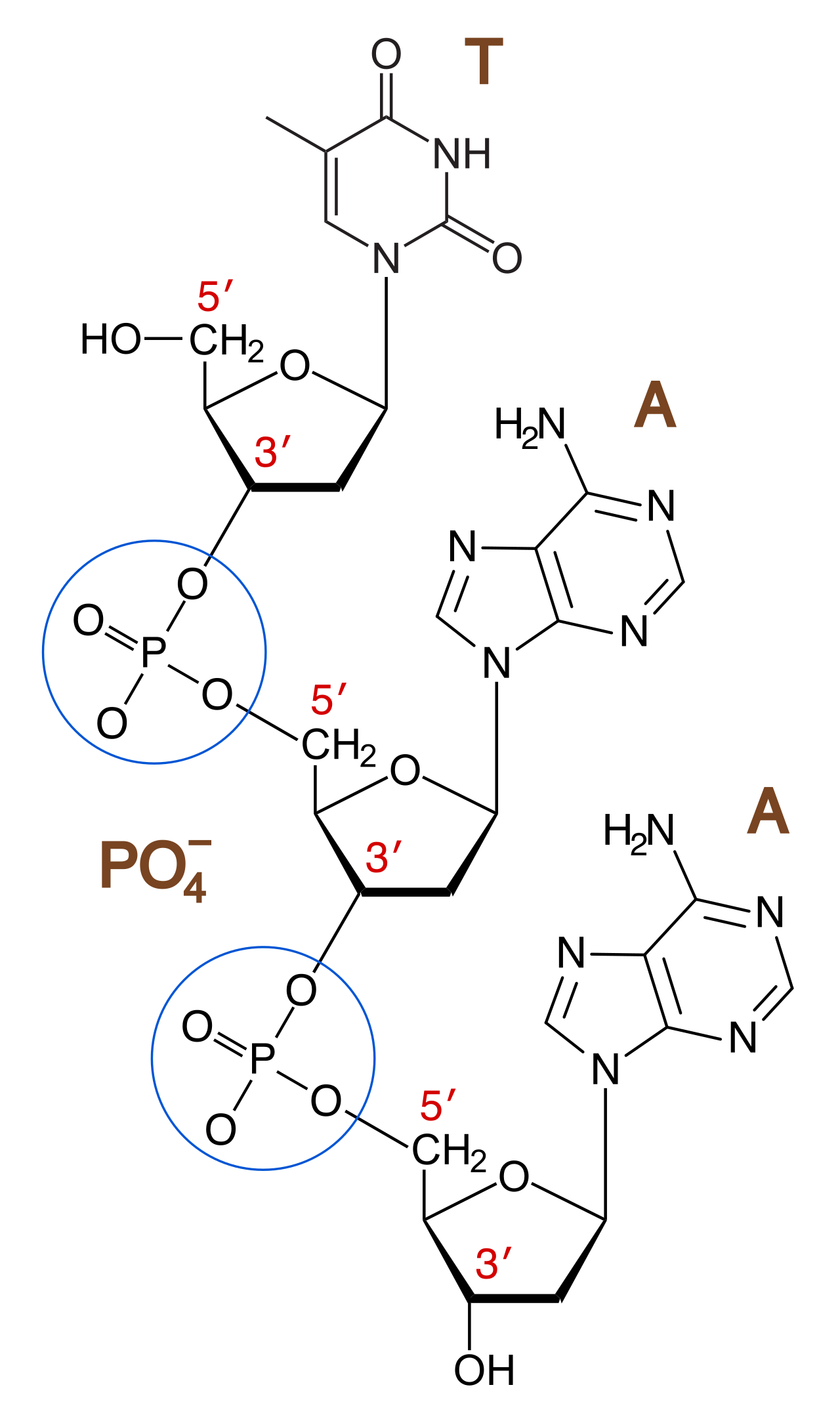
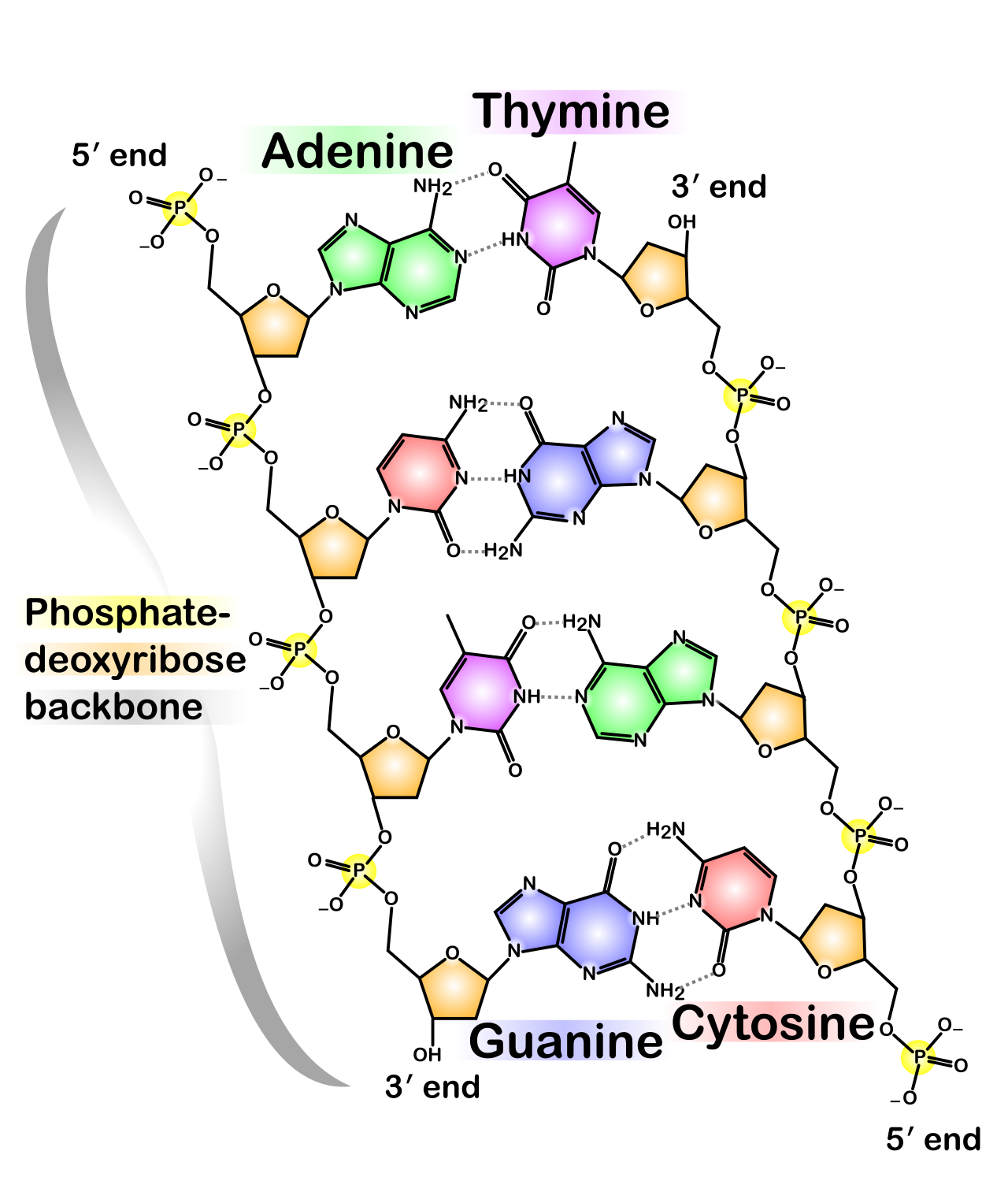
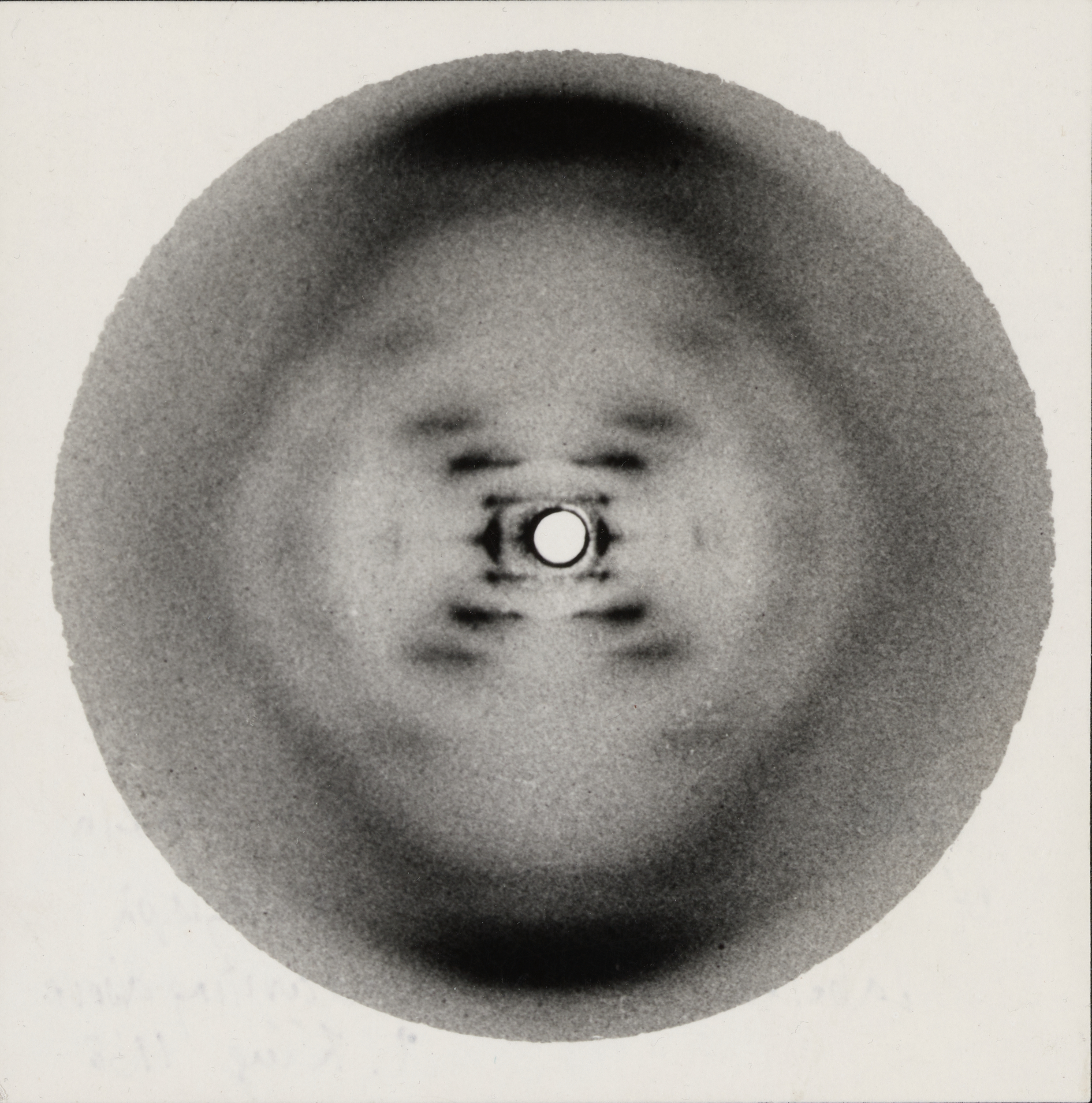
While DNA provides stable storage, RNA executes the blueprint. Unlike DNA, RNA exists primarily as a single-stranded molecule in living cells.
Because it is not rigidly paired into a double helix, single-stranded RNA molecules can fold into complex three-dimensional shapes by forming intramolecular base pairs. In these folded structures, the pairing rules remain consistent, but with a crucial substitution: adenine pairs exclusively with uracil in RNA. Just like the A-T pair in DNA, an adenine-uracil base pair is stabilized by exactly two hydrogen bonds.
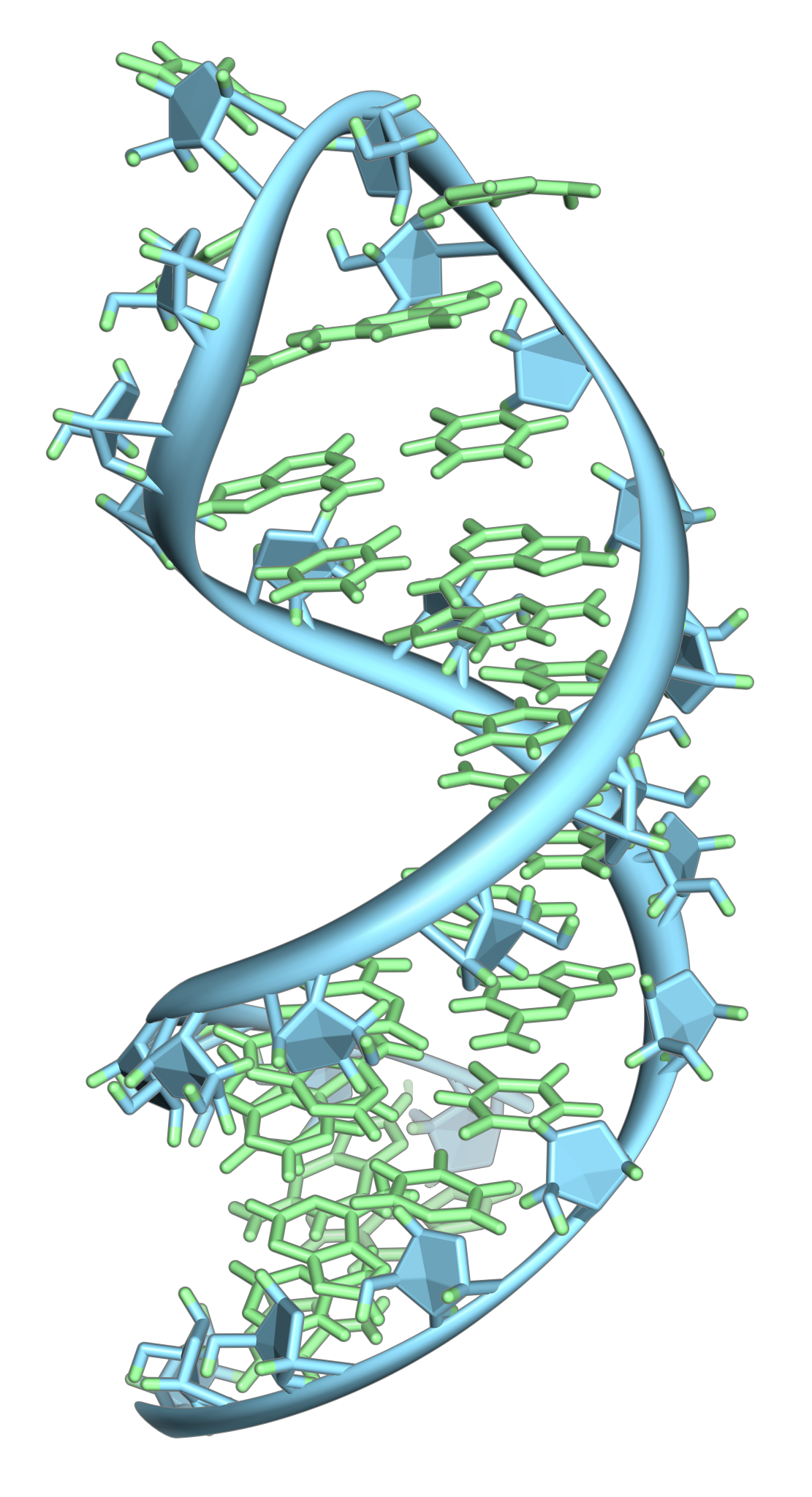
Source: Pre-mRNA-1ysv-tubes by Vossman, CC BY-SA 3.0.
The Specialized Roles of RNA
Living systems utilize several distinct forms of RNA to translate the genetic code into functional reality:
| RNA Type | Core Function in the Cell |
|---|---|
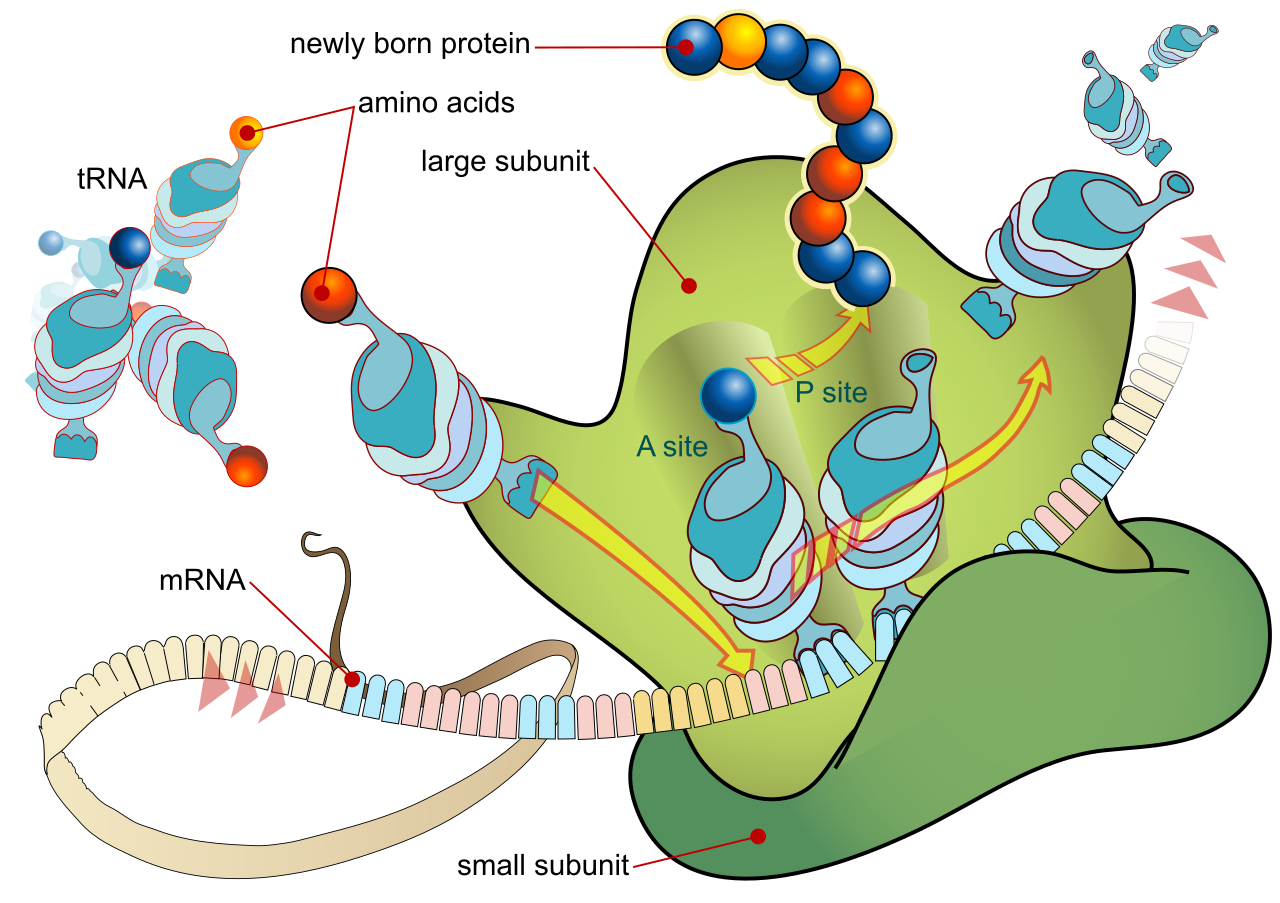
| Messenger RNA (mRNA) | Carries the transcribed genetic code from DNA to the ribosome. |
| Transfer RNA (tRNA) | Delivers specific amino acids to the ribosome during translation. |
| Ribosomal RNA (rRNA) | Physically catalyzes the formation of peptide bonds during protein synthesis. |
| MicroRNAs (miRNAs) | Short non-coding RNA molecules that regulate gene expression by binding to specific messenger RNA transcripts, frequently blocking their translation or causing their degradation. |