Communication with Stakeholders
Not sure you’re ready?
Take the ~3-minute readiness diagnostic and see where you stand.
A special education teacher is, fundamentally, a linguist and a diplomat. You will spend your career translating complex diagnostic data into actionable daily instruction, and you will do so while navigating an intricate network of stakeholders: parents, paraprofessionals, therapists, administrators, and the law itself. The success of a student’s intervention does not occur in a vacuum; it is the direct result of a highly synchronized team. If the communication breaks down, the intervention breaks down.
In this guide, we will examine the mechanics of stakeholder communication. We will explore how to strip away jargon, how to engineer a truly collaborative Individualized Education Program (IEP) meeting, and how to operate flawlessly within the legal parameters of federal special education law.
Imagine sitting across a table from experts who are discussing your child's brain, their deficits, and their future, using terminology that sounds like a foreign language. This is the reality for many parents entering the special education system. Your first duty is to bridge this gap.
Deconstructing Barriers to Entry
The most immediate threat to collaboration is the language we use. Using educational jargon creates barriers to effective communication with parents. When you say, "We are going to implement an FBA to determine the function of the target behavior before employing a DRA," you have not communicated; you have alienated. A collaborative educator translates this: "We are going to figure out why he is getting frustrated, and teach him a better way to ask for help."
To foster a genuine partnership, you must employ a strengths-based communication approach. This means you deliberately highlight a student's positive attributes before discussing deficits. You do not do this to sugarcoat reality, but to establish that you see the child as a whole human being, not merely a collection of missing skills. Once a parent trusts that you see their child's potential, they are far more receptive to discussing areas of need.
The Mechanics of Active Listening
Listening is not passively waiting for your turn to speak. Active listening involves fully concentrating on the speaker without interrupting. But concentration is invisible. Therefore, active listening also involves responding to the speaker to confirm understanding of the message.
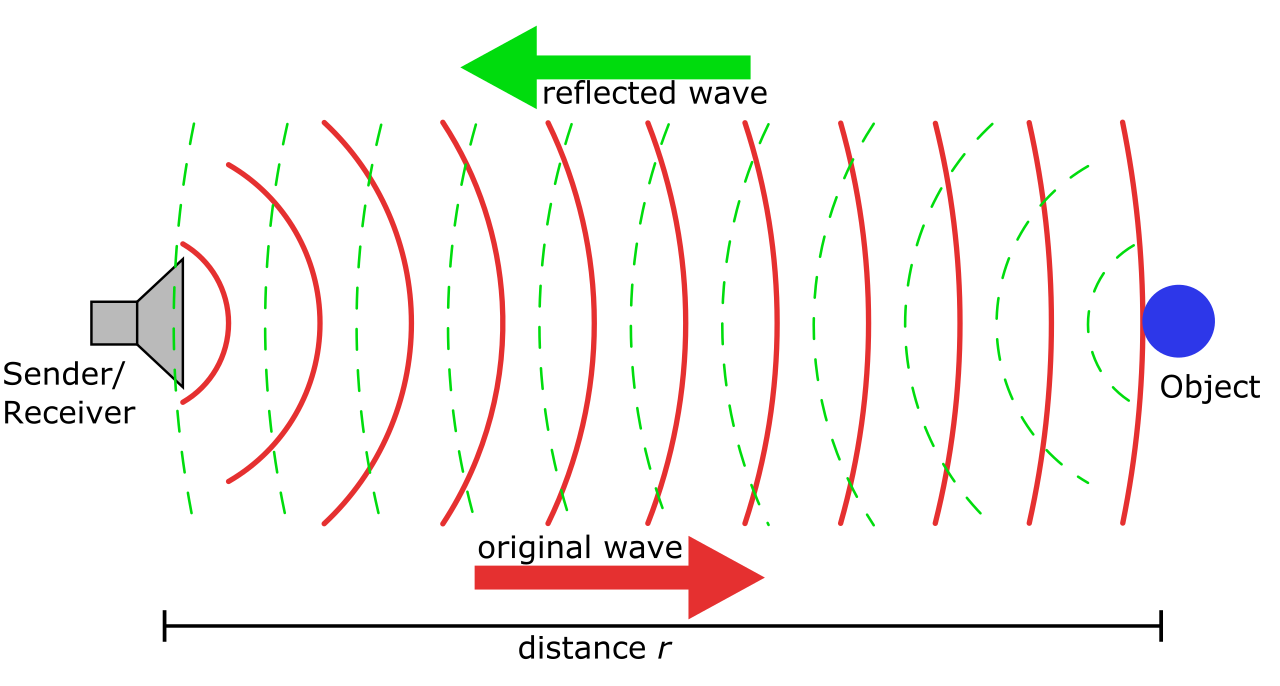
Analogy: Think of communication like a sonar ping. You send the signal out, wait for it to hit the target, and listen for the echo. In a parent conference, the "echo" is you paraphrasing: "What I'm hearing is that mornings are particularly chaotic because transition routines are tough. Do I have that right?"
To gather the best information, you must ask the right questions. Open-ended questions encourage parents to share detailed insights about a child's home life. Instead of asking, "Does she read at home?" (a closed question yielding a yes/no), ask, "What does it look like when she tries to read at home?"
Cultural Competence and Accessibility
We cannot assume all families view disability, education, or authority through the same cultural lens. Cultural competence requires educators to respect diverse family backgrounds. Furthermore, respect must be operationalized; cultural competence requires educators to adapt communication styles to align with diverse family backgrounds. If a family's culture defers heavily to teacher authority, they may hesitate to voice disagreements. It is your job to actively invite their input and assure them their voice is critical.
Between meetings, you must maintain a lifeline. Two-way communication systems allow parents to easily respond to teacher updates. Whether it is a digital app, a communication binder, or a weekly email, the system must be frictionless. If a parent has to jump through hoops to reach you, they won't.
Your communication is not just pedagogical; it is governed by federal law. The system is designed to protect the rights of the student and the family, ensuring schools cannot make unilateral decisions.
The Right to Privacy
The cornerstone of student privacy is the Family Educational Rights and Privacy Act (FERPA), which protects the privacy of student education records. You cannot discuss a student's accommodations with a community volunteer, nor can you leave IEPs sitting open on your desk. Privacy is a non-negotiable legal mandate.
The Right to Participate and Consent
The Individuals with Disabilities Education Act (IDEA) is the federal law governing special education. A core tenet of IDEA is that it mandates parent participation in Individualized Education Program (IEP) meetings. Parents are not guests; they are legal members of the IEP team.
To ensure parents understand this, schools must provide Procedural safeguards notices, which explain parental rights under the Individuals with Disabilities Education Act (IDEA).
Parents also hold the power of consent. Educators must obtain informed written consent from parents before conducting an initial evaluation for special education services. Furthermore, testing a child is not the same as treating them; you must again obtain informed written consent from parents before the initial provision of special education services.
Prior Written Notice (PWN)
One of the most powerful, yet misunderstood, communication tools in special education is the Prior Written Notice. It is the school's formal way of explaining a decision to a family before action is taken.
- Schools must provide parents with Prior Written Notice before proposing changes to a student's educational placement.
- Schools must provide parents with Prior Written Notice before refusing changes to a student's educational placement.
If a parent requests a 1:1 paraprofessional and the IEP team determines the data does not support this, you cannot simply say "No." You must provide a PWN detailing why the request was refused, what data was used to make the decision, and what other options were considered.
The IEP meeting is the crucible where data, law, and human emotion meet. How you set up and run this meeting dictates the trajectory of the student's year.
Pre-Meeting Strategy
Do not let the IEP meeting be the first time a parent hears about a new goal or a change in services. Pre-meeting communication reduces parental anxiety before Individualized Education Program (IEP) meetings.
One of the most effective ways to do this is by providing a draft Individualized Education Program (IEP) to parents before a meeting, which allows parents time to review proposed goals. Springing a 30-page legal document on a parent across a conference table is not collaboration; it is an ambush.
However, draft IEPs carry strict legal requirements to prevent predetermination (the illegal act of a school making decisions before the meeting):
- Draft Individualized Education Programs (IEPs) provided to parents before a meeting must be clearly marked as drafts. (Usually with a watermark).
- Draft Individualized Education Programs (IEPs) provided to parents before a meeting must not represent a finalized decision by the school.

The Required Cast of Characters
IDEA requires specific individuals to be present at the IEP table to ensure all areas of the student's needs and the school's resources are represented.
| IEP Team Member | Role and Legal Requirement |
|---|---|
| Special Education Teacher | As the case manager, a special education teacher is legally required to be present at a student's Individualized Education Program (IEP) meeting. You are the bridge between the data and the instruction. |
| Regular Education Teacher | An Individualized Education Program (IEP) team must include at least one regular education teacher if the student participates in the regular education environment. They provide crucial insight into the general curriculum and pacing. |
| LEA Representative | An Individualized Education Program (IEP) team must include a representative of the local educational agency (LEA). Crucially, the local educational agency (LEA) representative must be qualified to provide or supervise the provision of specially designed instruction. They also have the authority to commit school resources (like funding for an assistive technology device). |
| Related Service Providers | These specialists address developmental, corrective, and supportive needs. Related service providers include occupational therapists (fine motor, sensory), physical therapists (gross motor, mobility), and speech-language pathologists (communication, swallowing). |
| Interpreters (As Needed) | The school must ensure parents understand the proceedings. Schools must arrange for an interpreter for parents whose native language is not English, and schools must arrange for an interpreter for parents with deafness during Individualized Education Program (IEP) meetings. |
| The Student (As Needed) | A student with a disability must be invited to the Individualized Education Program (IEP) meeting when postsecondary transition services are being discussed. (Usually legally required by age 16, though best practice is earlier). |
During the Meeting: Norms and Conflict
Once the team is assembled, establishing meeting norms promotes respectful dialogue during Individualized Education Program (IEP) meetings. Setting ground rules (e.g., "We will hear all ideas," "We will stick to allotted times for topics") keeps the meeting anchored.
The ultimate goal of the meeting is collaborative problem-solving, which treats parents as equal partners in educational decisions. You are not dictating a plan to them; you are building a plan with them.
Inevitably, disagreements will arise. When they do, conflict resolution in special education relies on focusing on the student's needs rather than adult disagreements. If an administrator is worried about a budget, and a parent is angry about a past grievance, the special educator must redirect the compass: "Let's look back at the data regarding Michael's reading fluency. What does Michael need right now to make progress?"
Your communication network extends far beyond the parents and the principal. You must also direct the adults in your own classroom and coordinate with the outside world.
Directing the Paraprofessional
Paraprofessionals are the lifeblood of a special education program, but they are not certified teachers. They look to you for guidance.
Effective paraprofessional collaboration requires the special education teacher to provide clear instructional expectations. You cannot simply hand a paraprofessional a worksheet and say, "Help Sarah with this." You must explain exactly how to prompt Sarah, what wait-time to use, and how to fade support.
Furthermore, paraprofessional collaboration requires the special education teacher to provide constructive feedback on performance. If a paraprofessional is over-prompting a student and creating learned helplessness, you must address it promptly, professionally, and clearly, framing it as a training opportunity.
Interagency and Transition Collaboration
As students grow, the walls of the school must become permeable. Interagency collaboration connects students with disabilities to external community resources. This could mean coordinating with local mental health clinics, food banks, or specialized recreation programs.
This becomes a legal imperative during adolescence. Transition planning requires communication with community agencies like Vocational Rehabilitation. Vocational Rehabilitation (Voc Rehab) is a state-supported agency that assists individuals with disabilities in obtaining and maintaining employment. By inviting them to the transition IEP meetings, you build a ramp from the high school classroom directly into the workforce or postsecondary education, ensuring the student does not fall off a "services cliff" on graduation day.
