Define and Use Various Assessments
Not sure you’re ready?
Take the ~3-minute readiness diagnostic and see where you stand.
A physicist does not wait until an experiment concludes to determine if the apparatus is misaligned; they continuously monitor the telemetry, adjusting the parameters in real-time. Similarly, in the special education classroom, assessment is not merely a post-mortem examination of what a student failed to learn. It is the precise, ongoing diagnostic machinery that drives every instructional decision you make. You are continuously isolating variables, measuring responses to interventions, and adjusting your approach to alter a student's educational trajectory. To do this effectively, you must possess a profound understanding of the instruments at your disposal.
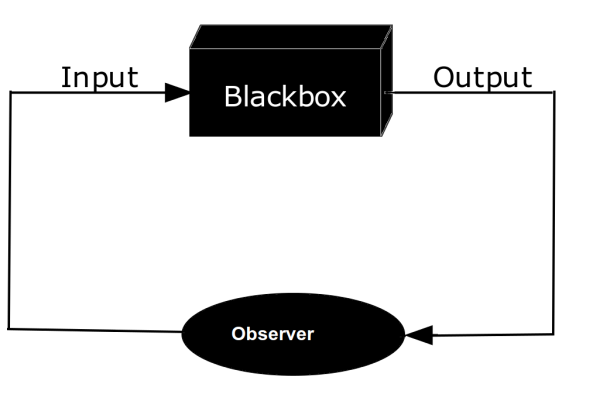
To measure learning accurately, we must first distinguish between assessments used to guide instruction and those used to judge its final outcome.
Establishing the Baseline: Diagnostic Assessments
Before any meaningful instruction can begin, we must map the student's existing cognitive terrain. Diagnostic assessments are administered before instruction begins to identify a student's prior knowledge and specific misconceptions. By isolating exactly what a student already knows—and critically, what they fundamentally misunderstand—teachers use diagnostic assessments to establish a baseline for measuring future academic growth. Without this baseline, measuring subsequent progress is scientifically impossible.
Guiding the Process: Formative Assessments
Once instruction is underway, the priority shifts to course correction. Formative assessments are used to monitor student learning and provide ongoing feedback. These are the low-friction instruments of the classroom; formative assessments typically carry little or no point value toward a student's final grade.
Their power lies in their immediacy. Teachers use formative assessments to adjust instructional strategies during a lesson. If you introduce a new fraction concept and immediately deploy a quick check, the resulting formative assessment data helps special educators determine if a current instructional intervention is effective. If the data shows confusion, you pivot immediately.
- Common examples of formative assessments include exit tickets, think-pair-share activities, and quick quizzes.
Evaluating the Outcome: Summative Assessments
When an instructional sequence concludes, we must quantify the total learning that occurred. Summative assessments evaluate student learning at the end of an instructional unit. Unlike the low-stakes nature of formative checks, summative assessments are typically high-stakes measures of learning and generally account for a significant portion of a student's final grade.
Summative assessments compare student performance against a standard or benchmark to determine proficiency.
- Common examples of summative assessments include midterm exams, final projects, and standardized state tests.
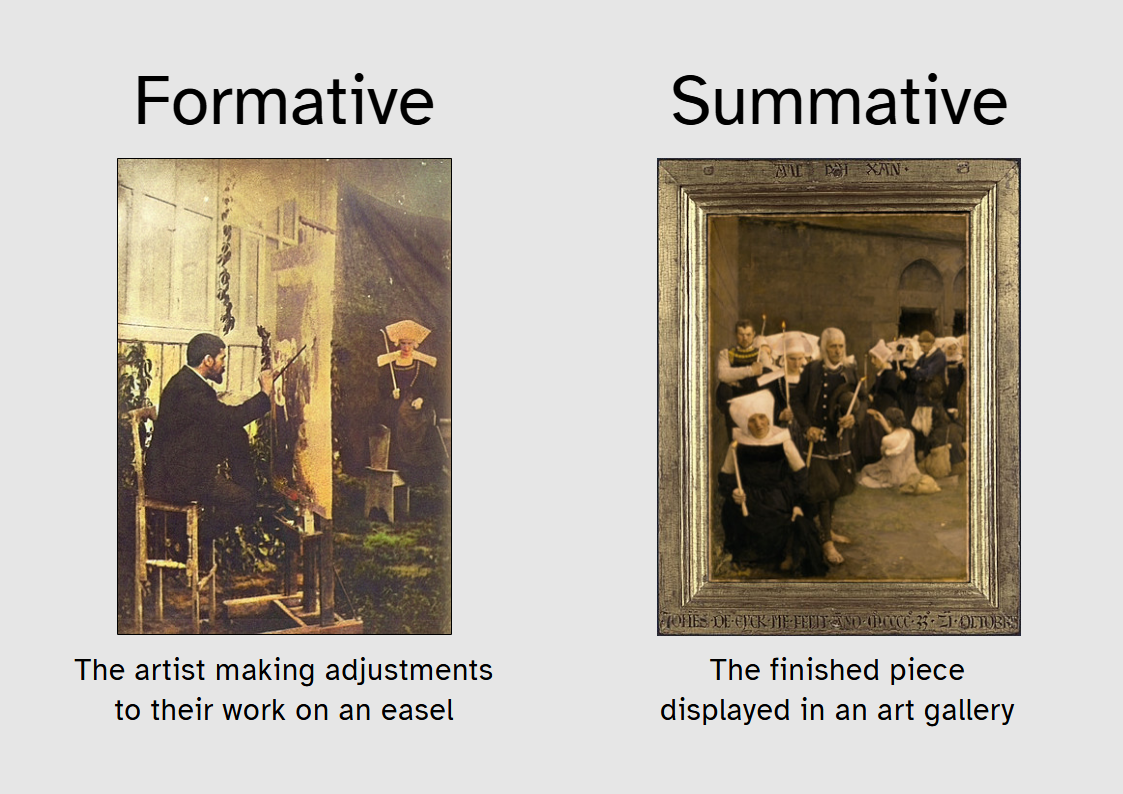
The Essential Distinction: If a formative assessment is the continuous feedback loop of adjusting an aircraft's ailerons during turbulence, a summative assessment is the final flight log analyzed after the plane has landed. Formative informs the process; summative judges the product.
Beyond when we assess, we must define how structured the measurement instrument is.
Formal Assessments
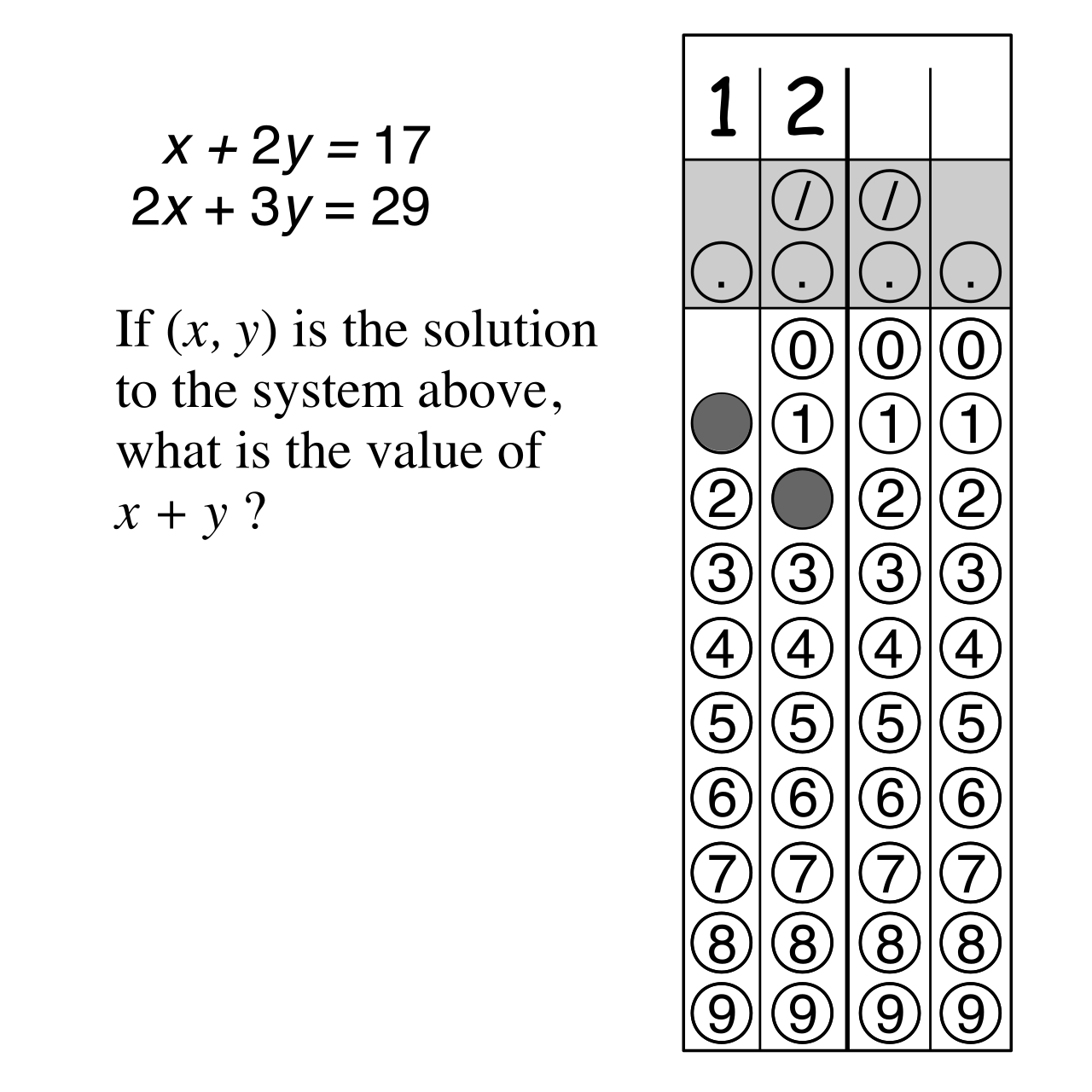
When we require statistically defensible, objective data, we use formal assessments. These instruments follow strict administration and scoring procedures to ensure reliable data. Because the environment and scoring mechanics are highly controlled, formal assessments yield quantitative data regarding student performance.
Formal assessments compare student achievement to broader populations or specific predetermined criteria. Because of their rigidity, you cannot alter the testing conditions without invalidating the results (unless providing specific, legally mandated accommodations). Standardized intelligence tests and state-mandated achievement tests are types of formal assessments.
Informal Assessments
Classrooms are deeply human, dynamic environments. To capture the nuance of daily learning, educators rely heavily on informal assessments. These are content-driven and performance-driven measures that lack standardized grading criteria. Rather than providing rigid numerical scores, informal assessments provide qualitative data about a student's daily academic performance and behavior.
- Teacher observations capture nuances in how a student approaches a problem.
- Student portfolios consist of a curated collection of student work gathered over time to evaluate growth and achievement.
- Running records capture real-time fluency and decoding errors during reading exercises.
- Anecdotal records are brief written notes describing a student's behavior or performance in a specific situation, often crucial for updating behavioral intervention plans.
- Rating scales are assessment tools used to indicate the degree or frequency of a student's behavior or skill demonstration, transitioning subjective observation into a semi-structured format.
A raw score of "85" or "14" is meaningless in a vacuum. To interpret assessment data, we must know the frame of reference being used.
Norm-Referenced Assessments
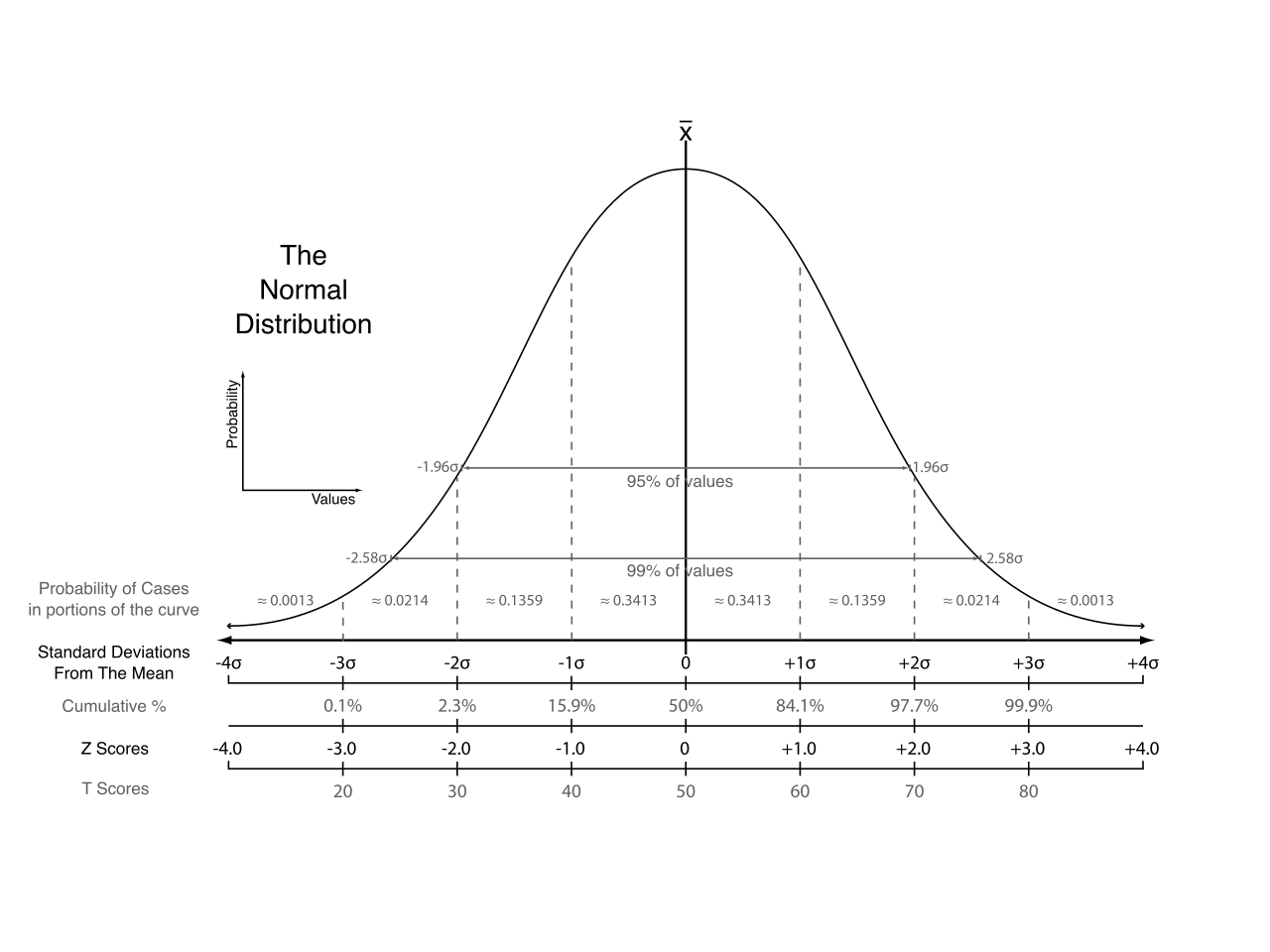
Norm-referenced assessments compare a single student's performance to the performance of a larger representative peer group (the "norming" group). We are answering the question: How does this student compare to other students their age or grade level?
Because we are distributing students along a bell curve, norm-referenced test scores are often reported as percentiles, stanines, or standard scores. If a student scores in the 85th percentile, they performed equal to or better than 85 percent of the normative sample.
- Example: The Wechsler Intelligence Scale for Children (WISC) is a classic example of a norm-referenced assessment used frequently in special education eligibility determinations.
Criterion-Referenced Assessments
Conversely, criterion-referenced assessments measure a student's performance against a predetermined set of learning standards or objectives. The crucial distinction is that criterion-referenced assessments do not compare a student's performance to the performance of other students. A student succeeds by mastering the material, regardless of how their peers perform.
- Example: A spelling test assessing specific weekly spelling words is an example of a criterion-referenced assessment. The student is judged solely on their mastery of that specific list.
Ipsative Assessments
Often overlooked but incredibly powerful in special education are ipsative assessments. These compare a student's current performance with the student's own previous performance. By removing the pressure of external comparison (whether to peers or rigid state standards), ipsative assessments are uniquely useful for motivating special education students by highlighting personal academic growth.
Special educators operate at the intersection of general education curricula and individualized cognitive, behavioral, and functional needs. This requires specialized measurement tools.
Progress Monitoring: Curriculum-Based Measurement (CBM)
To track micro-progress on specific skills, educators rely on curriculum-based measurement (CBM). CBM is a standardized method of evaluating basic skills in reading, math, and writing.
Because they are tightly aligned with the curriculum being taught, special education teachers use curriculum-based measurement for continuous progress monitoring of Individualized Education Program (IEP) goals. A defining feature of CBMs is their efficiency; curriculum-based measurements are typically brief assessments lasting one to five minutes, allowing for weekly or bi-weekly administration without massive loss of instructional time.
Systematic Screening: Universal and Benchmark Assessments
To prevent students from falling through the cracks, schools implement broad nets. Universal screening assessments are used across the entire student body to identify students who may be at risk for academic or behavioral difficulties. Once identified and placed into intervention tiers, benchmark assessments are administered periodically (often fall, winter, and spring) to track student progress toward end-of-year academic goals.
Evaluating Potential: Dynamic Assessment
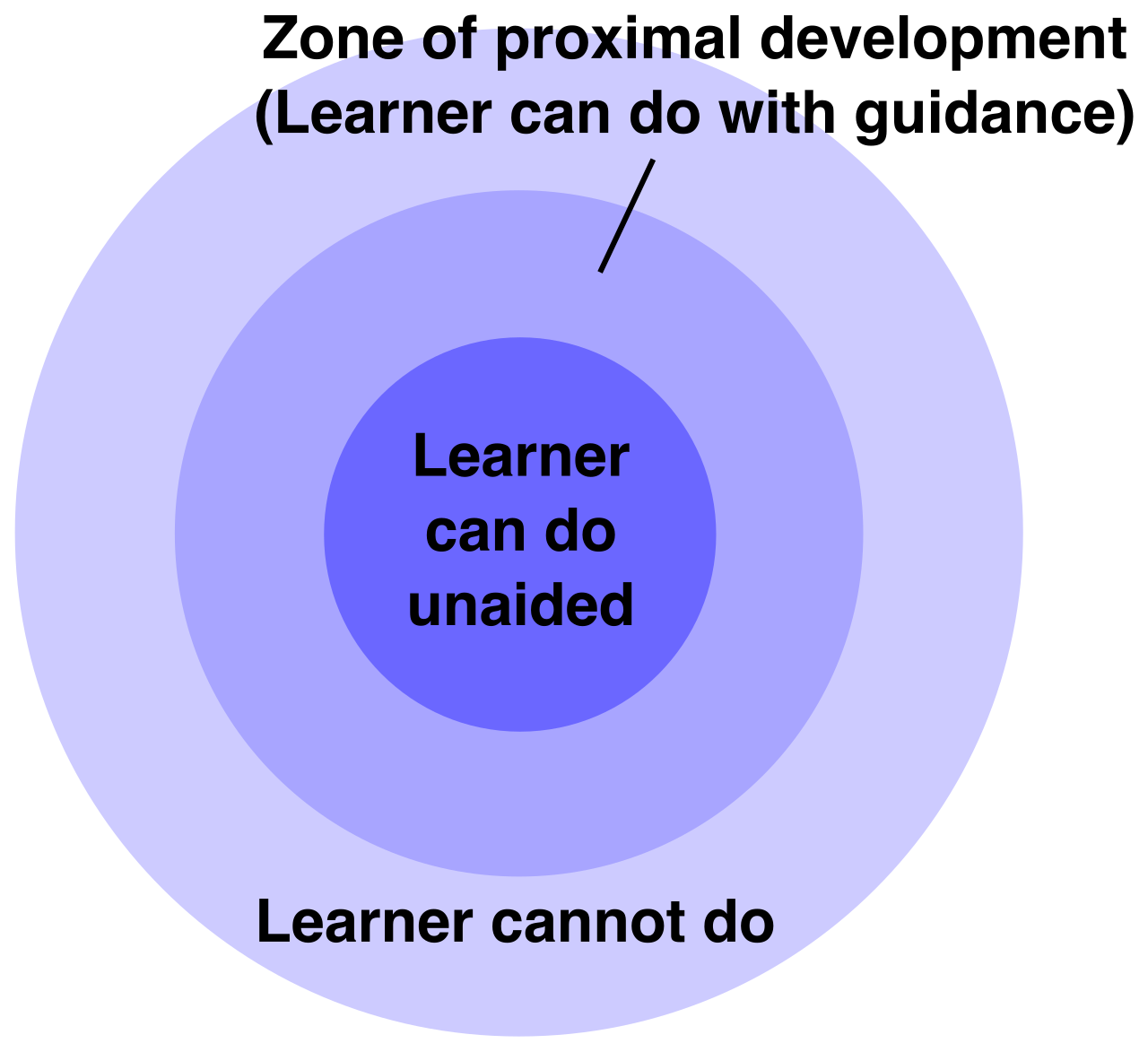
Standardized testing often reveals what a student cannot do independently, but it fails to capture their capacity to learn. Dynamic assessment is an interactive approach that measures a student's ability to learn new skills with scaffolding. It abandons the static "test-only" model and typically follows a test-teach-retest format. This Vygotskian approach reveals the student's zone of proximal development—telling the special educator exactly what type of prompt or support will unlock the student's understanding.
Contextual and Real-World Evaluation
- Ecological Assessment: A student's behavior and performance often fluctuate wildly depending on their surroundings. Ecological assessment involves evaluating a student's functioning within various environments like the classroom, home, or community. It acknowledges that the "problem" may not reside entirely within the student, but in the interaction between the student and the environmental variables.
- Authentic Assessment: When rote memorization falls short, authentic assessments require students to perform real-world tasks to demonstrate meaningful application of essential knowledge (e.g., calculating a budget for a theoretical grocery trip). Because these tasks are complex and multifaceted, authentic assessments are often evaluated using a scoring rubric rather than a standardized test score.
Accommodating Severe Needs: Alternative Assessments
The bedrock of federal education law requires all students to be included in state accountability systems. However, standard testing is entirely inappropriate for a small margin of learners. Alternative assessments are specifically designed for students with severe cognitive disabilities who cannot participate in standard state testing, even with extensive accommodations. To appropriately measure these students' progress, alternative assessments often utilize modified academic achievement standards aligned to core content but reduced in depth and complexity.
Assessment is never a one-size-fits-all endeavor. Selecting an assessment tool requires matching the assessment's primary purpose to the specific learning objective. If your objective is to measure reading fluency, a timed, one-minute curriculum-based measurement is appropriate; a multiple-choice formal assessment is completely useless for that objective.
Furthermore, a special educator's mandate is bound by federal law. Above all else, special education teachers must select assessment tools that align with a student's Individualized Education Program (IEP) accommodations. If a student's IEP mandates a text-to-speech accommodation, any assessment administered without that accommodation yields mathematically invalid and legally indefensible data.
To teach effectively is to hypothesize, test, observe, and adapt. Your mastery of these assessment tools ensures that your adaptations are driven not by guesswork, but by precise, actionable evidence.