Instruction and Assessment (Constructed-Response)
Not sure you’re ready?
Take the ~3-minute readiness diagnostic and see where you stand.
A physician does not prescribe a cast for a migraine, nor does an engineer reinforce a bridge's foundation when the suspension cables are fraying. In both disciplines, the intervention is inextricably bound to the diagnostic data. This same logical bridge forms the bedrock of special education. When we assess a student's learning profile, we are not merely collecting numbers for compliance; we are isolating the exact structural breakdown in their cognitive or behavioral processes so we can apply a precise, targeted solution.
For the educator preparing to demonstrate their pedagogical competence, this diagnostic mindset is paramount. The Praxis 5543 exam includes three integrated constructed-response questions, and mastering them requires shifting your perspective from that of a passive observer to an analytical architect.
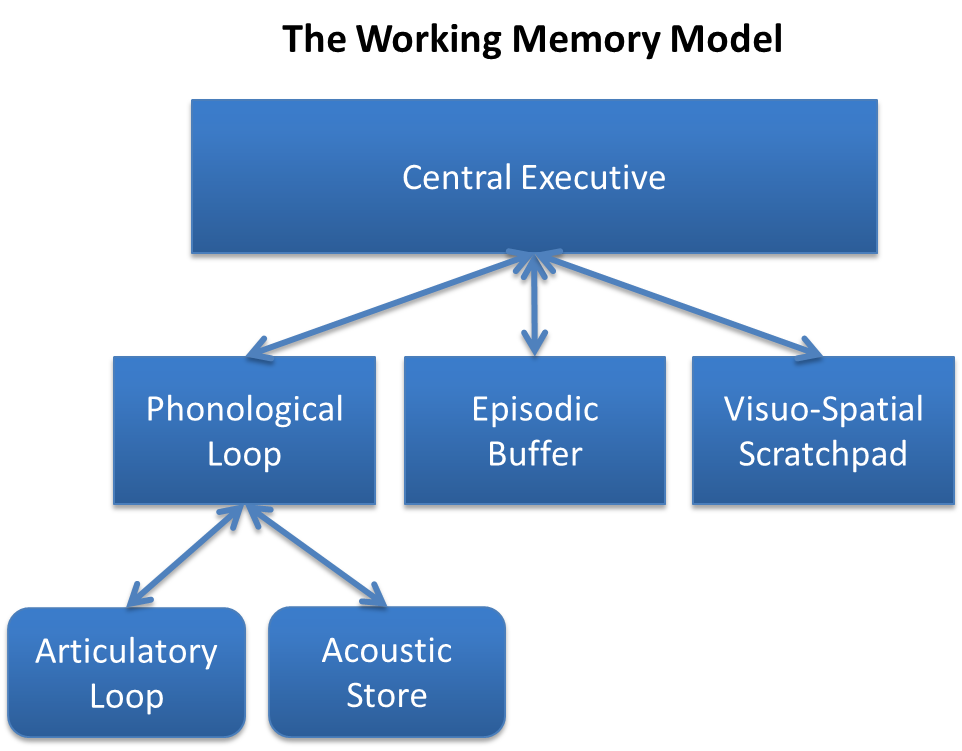
These constructed-response tasks require test-takers to explicitly link proposed instructional strategies to provided student assessment data. You cannot simply recommend an intervention because it is a "best practice." You must prove why it is the best practice for the specific friction point revealed in the student's data. Similarly, justifying an assessment tool involves explaining how the tool specifically measures the academic or behavioral deficit identified in a student scenario. If a student is struggling with working memory, a generalized reading test is insufficient; you must advocate for an instrument that isolates that exact cognitive load.
Before we can teach, we must measure. To do this legally and ethically, we rely on a mandated framework. The Individuals with Disabilities Education Act requires schools to use multiple assessment tools to evaluate a child for special education services. Human cognition is too complex to be mapped by a single coordinate. Consequently, the Individuals with Disabilities Education Act prohibits using a single measure or assessment as the sole criterion for determining a disability.
To capture a complete picture of a student, we deploy distinct categories of assessments, each with a specific function:
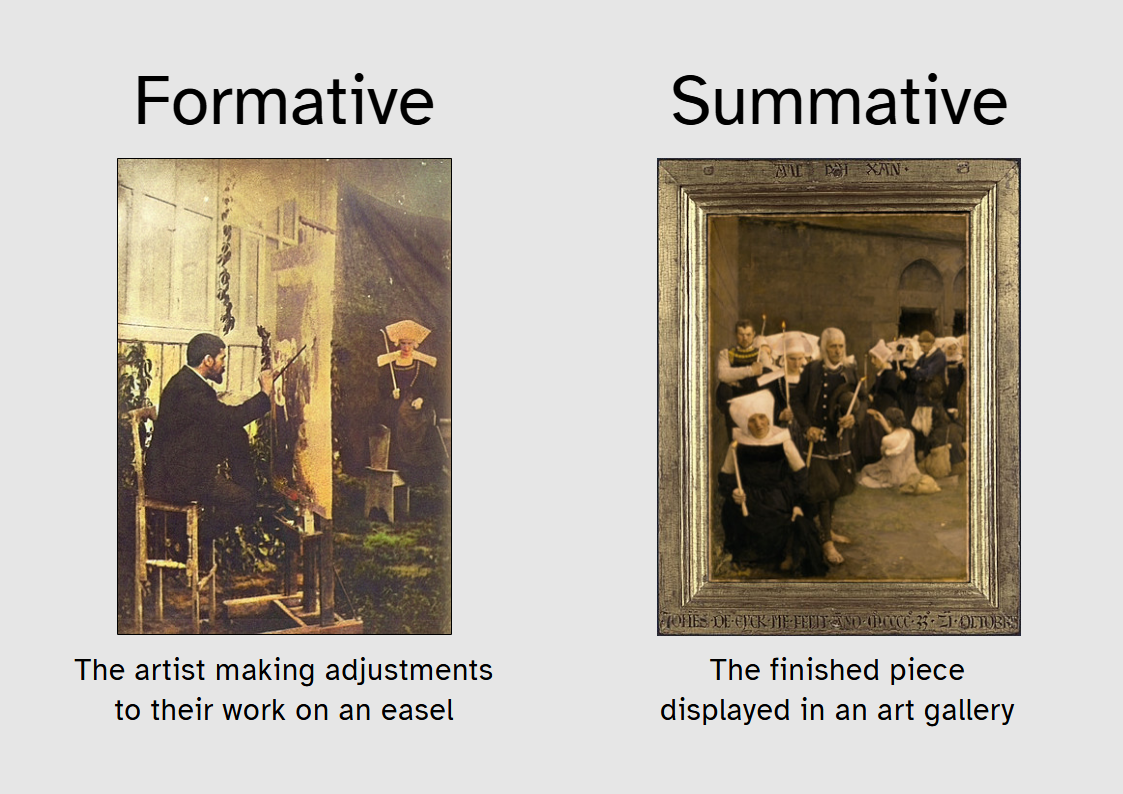
- Formative assessments provide ongoing feedback to educators to adjust instructional strategies in real time. Think of this as checking the temperature of a soup while it cooks, allowing you to add seasoning before it's finished.
- Summative assessments evaluate student learning at the conclusion of an instructional unit. This is the final taste test before the soup is served.
- Diagnostic assessments pinpoint specific areas of academic weakness to help teachers design targeted interventions. If a student fails a math summative, a diagnostic assessment tells you exactly where the failure occurred—was it the subtraction step, or the borrowing concept?
- Ecological assessments evaluate a student's behavior and academic performance within the student's natural environments. A student may thrive in a quiet resource room but exhibit severe deficits in a chaotic cafeteria or physical education class. The environment itself is a variable.
- Portfolio assessments collect multiple samples of student work over an extended period to demonstrate skill growth. This is essential for students whose progress is incremental and may not register on a standardized, timed test.
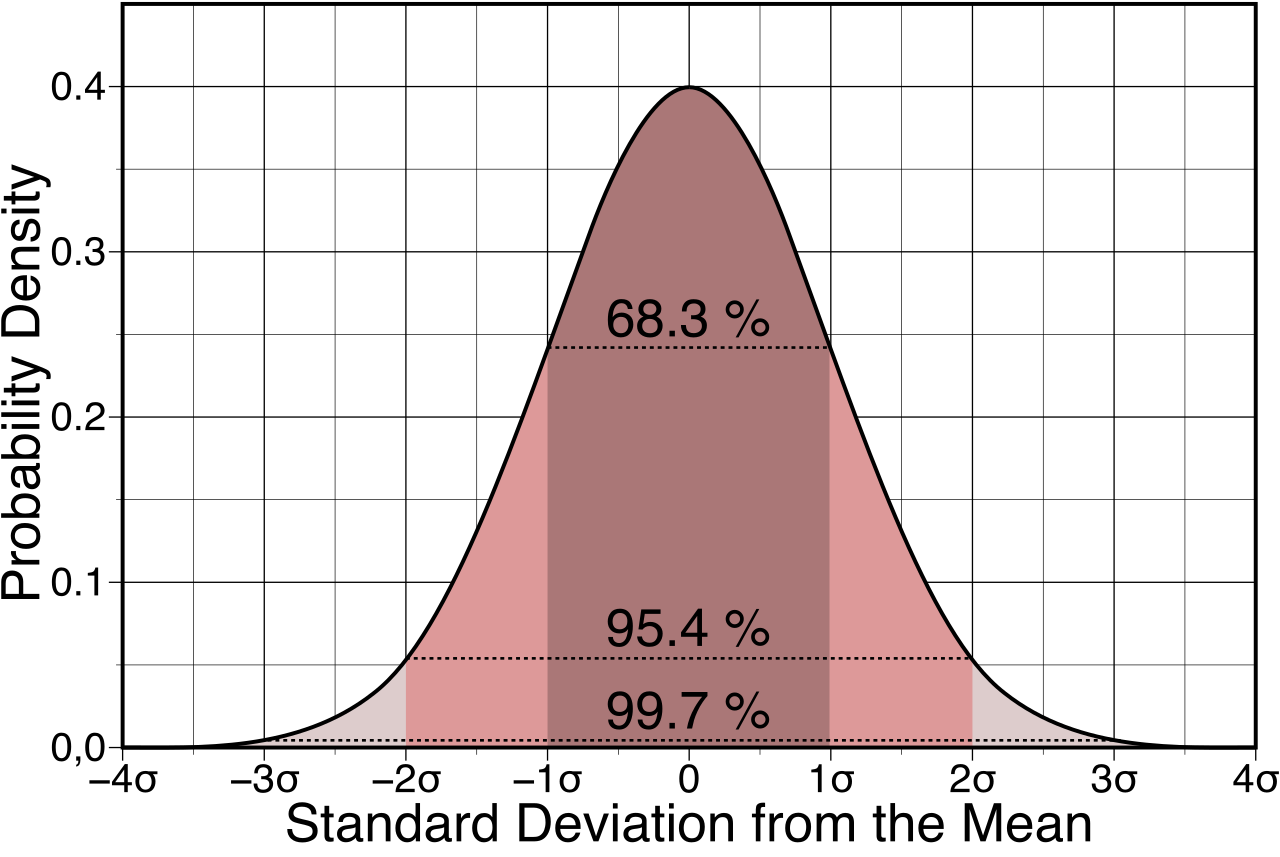
Comparing the Yardsticks: Norm vs. Criterion When looking at formal test data in a case study, you must understand the comparison being made. Norm-referenced tests compare an individual student's performance to a normative sample of peers of the exact same age or grade level. (e.g., "Where does this student rank among 1,000 other 4th graders?") Conversely, criterion-referenced tests measure student performance against a specific, predetermined academic standard. (e.g., "Can this student accurately multiply two-digit numbers, regardless of what other students can do?")
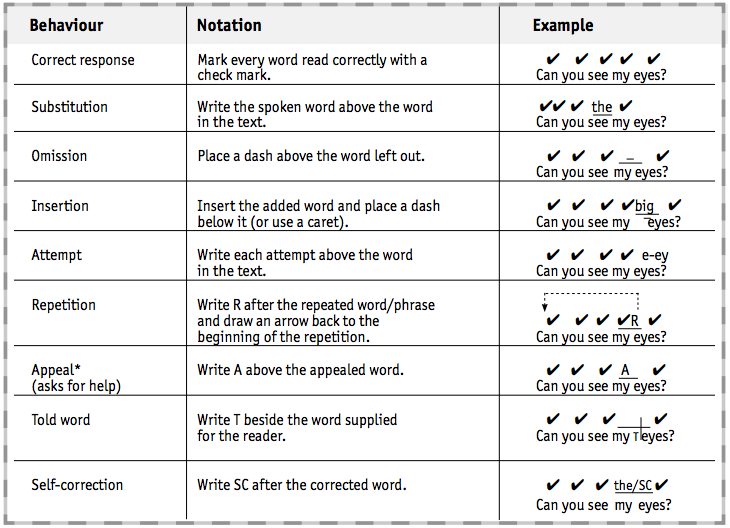
Once we have our tools, we must extract meaning from the data. In literacy case studies, you will frequently encounter informal reading inventories, which are used to determine a student's independent, instructional, and frustration reading levels. These levels dictate exactly which texts a teacher should hand a student.
| Reading Level | Accuracy Benchmark | Instructional Application |
|---|---|---|
| Independent | A student's independent reading level is the text difficulty level at which the student can read with 95 to 100 percent word accuracy. | Used for silent reading, fluency practice, and building confidence. No teacher support is needed. |
| Instructional | A student's instructional reading level is the text difficulty level at which the student can read with 90 to 94 percent word accuracy. | The "sweet spot" for teaching. The text presents enough challenge to prompt learning but not so much as to overwhelm. |
| Frustration | A student's frustration reading level is the text difficulty level at which the student reads with less than 90 percent word accuracy. | Texts at this level cause cognitive overload. Comprehension collapses. Avoid handing these to the student without heavy accommodations. |
How do we measure ongoing progress in these reading levels or in foundational math? We use Curriculum-Based Measurement (CBM). Curriculum-Based Measurement is a method teachers use to track student progress in basic academic areas over a specified time period. Critically, Curriculum-Based Measurement data allows special education teachers to determine whether a specific instructional intervention is effective. If you implement a new reading strategy and the CBM trendline stays flat for four weeks, the data is telling you to change your strategy.
But a low score only tells you that a student failed; it does not tell you why. To uncover the "why," we use two microscopic tools:
- Error analysis involves examining a student's incorrect answers to identify specific misconceptions or skill deficits. If a student consistently reads "was" as "saw," the error analysis reveals a directional tracking deficit, not a vocabulary deficit.
- Think-aloud protocols require students to verbalize their cognitive processes while solving an academic problem. By hearing the student say, "I see a 5 and a 2, so I will add them," during a multiplication problem, the teacher instantly diagnoses a misunderstanding of operational symbols.
Behavior is just another form of communication. When a student flips a desk, they are not simply being "bad"; they are transmitting a message about their environment or internal state.
To decode this, we utilize a Functional Behavior Assessment, which identifies the underlying purpose or function of a student's challenging behavior (usually to obtain something, like attention, or to escape something, like a difficult task). Conducting a Functional Behavior Assessment requires collecting data on the antecedents, the behaviors, and the consequences (the ABCs of behavior).
Once we know why the behavior occurs, we build a Behavior Intervention Plan, which utilizes Functional Behavior Assessment data to teach positive replacement behaviors. If a student's data shows they tear up their math worksheet (Behavior) when presented with double-digit division (Antecedent) to get sent to the hallway and avoid the work (Consequence), the BIP must teach them a replacement behavior—like raising a hand to ask for a five-minute break—that achieves the same function (escape) in a socially acceptable way.
With our diagnostic data in hand, we must construct the learning environment. The foundational blueprint is Universal Design for Learning, which is a framework providing multiple means of representation, action and expression, and engagement. UDL assumes that barriers to learning are in the design of the environment, not in the student.
When UDL isn't enough, we move to differentiated instruction, which modifies content, process, or product based on a student's readiness, interest, or learning profile.
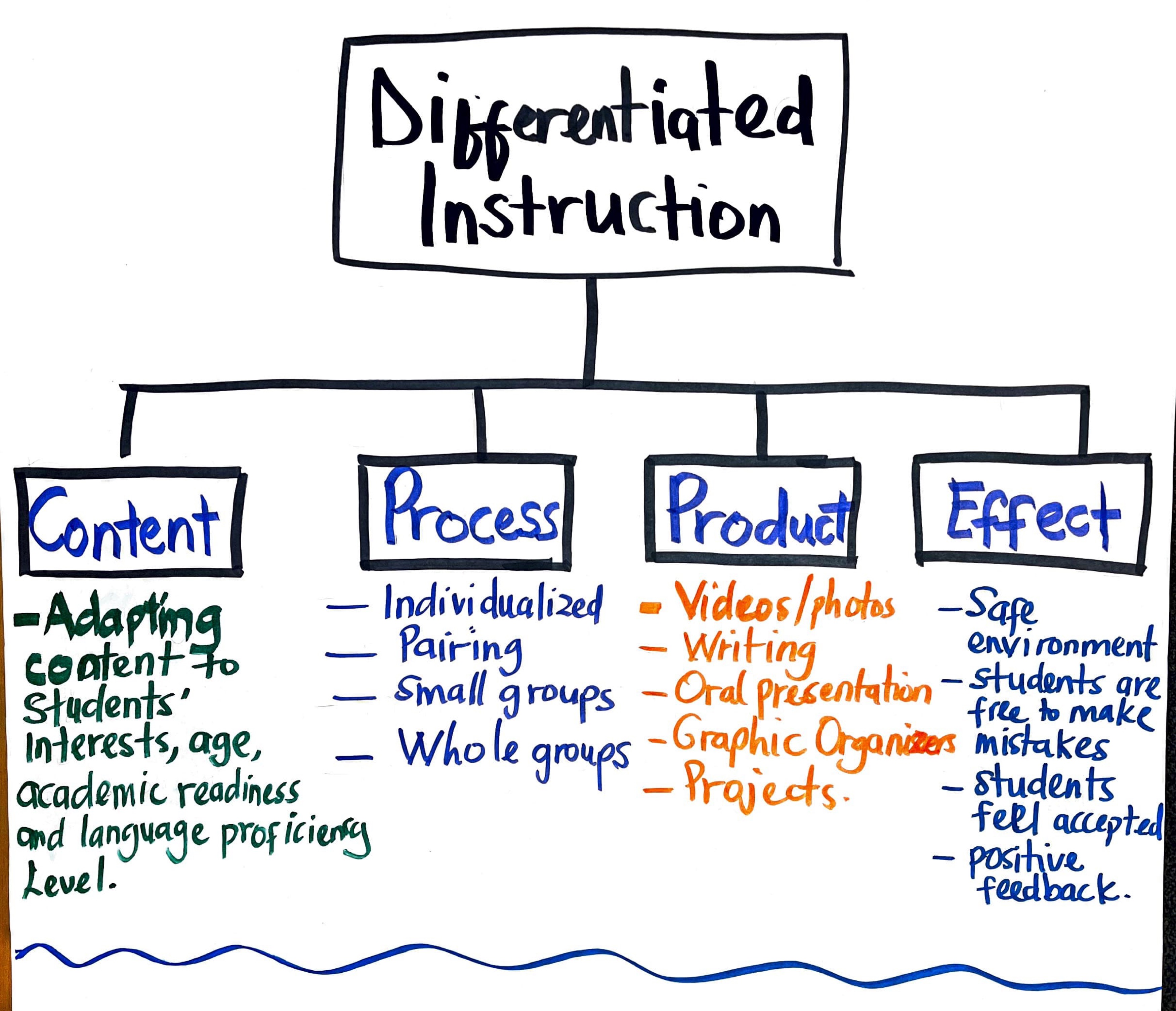
When constructing your written responses, you must use highly precise terminology to describe how you will teach. Do not conflate these three critical methodologies:
- Systematic instruction involves carefully sequencing academic skills from simple components to complex applications. It is the logical map of the curriculum. You must teach addition before multiplication.
- Direct instruction involves explicit, step-by-step teaching of a highly specific academic skill. It is highly scripted, teacher-directed, and leaves no room for ambiguity.
- Explicit instruction incorporates teacher modeling, guided student practice, and independent student practice. This is the classic "I do, we do, you do" cognitive apprenticeship model.
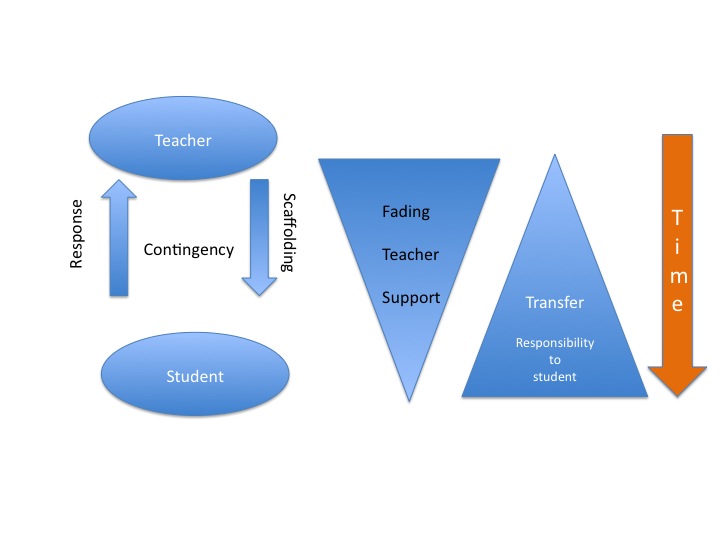
As students attempt these new skills, we must manage their cognitive load. Scaffolding provides temporary instructional support to help a student master a new or difficult skill. Like the physical scaffolding on a building, it is meant to be systematically removed as the structure becomes independent. A prime example of scaffolding is a task analysis, which breaks down a complex multistep skill into smaller, manageable instructional steps. Rather than asking a student with intellectual disabilities to "do laundry," a task analysis breaks it into 15 distinct, teachable micro-steps (e.g., step 1: open the lid; step 2: pour one cup of detergent).
When a case study presents a student with severe, persistent needs, standard interventions may fail. In these instances, you should propose Data-Based Individualization, which is a systematic process for adjusting academic interventions for students with severe learning needs. It relies on constant progress monitoring and iterative tweaks to the instructional delivery.
For specific processing deficits, you must prescribe the precise corresponding strategy:
- Working Memory Deficits: Students who cannot hold information in their short-term memory benefit from mnemonic devices, which assist students with working memory deficits in retaining and retrieving factual information. (e.g., HOMES for the Great Lakes).
- Information Organization Deficits: When a student struggles to see how concepts connect, graphic organizers are visual tools helping students structure and relate conceptual ideas during reading or writing tasks.
- Sensory/Processing Deficits: Multisensory instruction engages visual, auditory, kinesthetic, and tactile pathways simultaneously to reinforce learning. Having a dyslexic student trace letters in sand while saying the sound aloud creates multiple neural pathways to the same piece of information.
- Social/Generalization Deficits: To build social validity and increase instructional repetitions, employ peer-mediated instruction, which involves training classmates to provide academic or social support to a student with a disability.
One of the most critical distinctions you will be tested on is the difference between an accommodation and a modification. Mixing these up in a constructed response demonstrates a fundamental misunderstanding of special education law.
Instructional accommodations change how a student learns the material without altering the fundamental learning goal. The standard remains exactly the same; the pathway to get there simply changes. Conversely, instructional modifications fundamentally change the learning goal or alter what the student is expected to learn.
The Lens of the Goal: Imagine a state standard that requires a student to "Demonstrate comprehension of the themes in To Kill a Mockingbird."
- If a student has severe dyslexia, forcing them to physically read the book tests their decoding skills, not their comprehension. Therefore, a read-aloud accommodation allows a teacher to assess a student's reading comprehension independently of the student's decoding skills. The student still analyzes the same themes (accommodation).
- If a student with a severe intellectual disability is asked to identify the main character of a simplified, one-page summary of the book instead of analyzing the themes, the goal itself has been reduced (modification).
When analyzing literacy data to propose interventions, look at the exact nature of the reading breakdown. If a young student is struggling with the sounds of language before letters are even introduced, propose phonological awareness interventions, which focus on teaching students to recognize and manipulate the spoken parts of sentences and words.
If the student can sound out words but does so agonizingly slowly, thereby destroying their comprehension, propose reading fluency interventions, which utilize repeated reading of familiar texts to improve a student's reading speed and accuracy.
By connecting the exact granular point of failure in the assessment data to the specific mechanical function of the instructional strategy, you are doing more than passing a test. You are demonstrating the elite, analytical reasoning required to rewire a student's academic trajectory. You are no longer guessing; you are diagnosing, prescribing, and curing.