Understanding How to Manage Student Behavior
Not sure you’re ready?
Take the ~3-minute readiness diagnostic and see where you stand.
Human behavior in a classroom is not a spontaneous explosion of personality, but an observable, predictable physics of interactions. A student tearing an assignment, repeatedly leaving their seat, or refusing to speak is not acting in a vacuum; they are responding to environmental variables, communicating a specific need through the most efficient means they currently possess. For the special educator, understanding this dynamic fundamentally shifts behavior management from a stressful exercise in reactive discipline to a precise, intentional science of environmental design and skill-building. When we approach student behavior as a lawful, modifiable equation, we gain the tools to systematically transform our classrooms.
Before we ever analyze a misbehavior, we must look at the physical and procedural architecture of the room itself. The most powerful behavioral interventions happen before a student even arrives.
Proactive classroom management involves structuring the physical environment to minimize crowding and visual distractions. A room with clear walkways and organized, uncluttered walls naturally lowers anxiety and reduces the friction that causes conflict. But physical space is only half the equation; the dimension of time is just as critical.
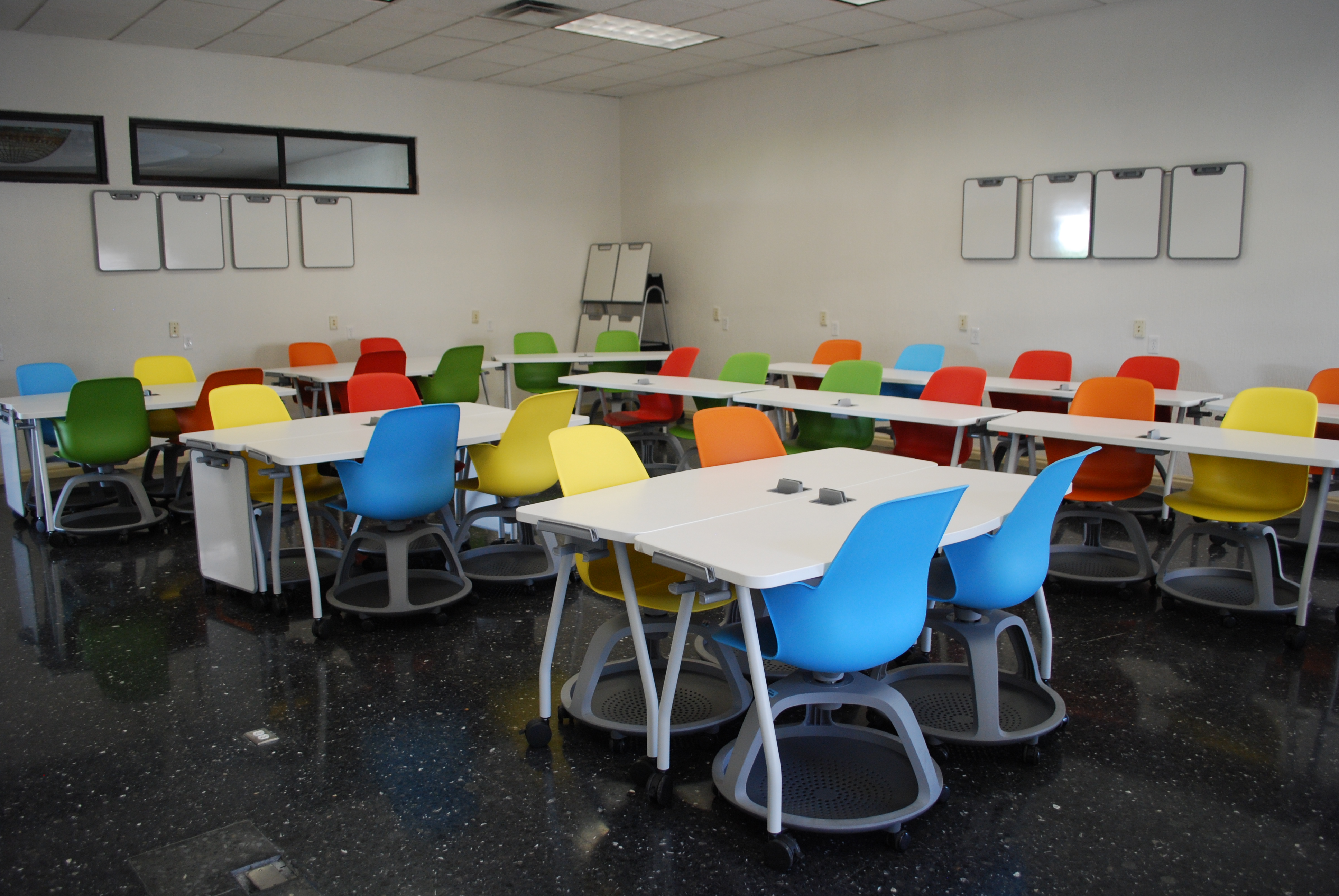
Chaos thrives in the empty spaces of a school day. Establishing clear classroom routines decreases unassigned time that often leads to disruptive behavior. Furthermore, establishing clear classroom routines reduces transition times between instructional activities, moving students smoothly from one cognitive task to the next without leaving a behavioral vacuum.
We must also teach our expectations with the same explicit clarity we use to teach mathematics. A common trap is to create a massive list of "Do Nots." However, teachers should establish a small number of broad classroom rules rather than an exhaustive list of specific behavioral prohibitions. How many? The IRIS Center recommends establishing between three and five positively stated classroom rules. Most crucially, teachers should state classroom rules in positive terms to explicitly instruct students on expected behaviors. We cannot assume a student knows what to do merely because we told them what not to do.
Once the environment is set, the teacher must become a dynamic element within it. Active supervision requires teachers to continuously move around the classroom and visually scan the environment. During instruction, increasing a student's opportunities to respond during instruction directly decreases off-task behavior. When a student is actively participating, the competing urge to act out diminishes.
When students do succeed, how we acknowledge it matters. "Good job" is well-intentioned but vague. Instead, we use behavior-specific praise, which identifies the exact desired behavior a student is demonstrating in the moment (e.g., "I appreciate how you raised your hand before sharing your answer"). The data is clear on this: behavior-specific praise is more effective at increasing desired behaviors than general verbal praise.
Finally, we anticipate friction. Precorrection involves anticipating a predictable behavior problem and providing a prompt about expected behavior before the problem occurs. If you know the transition to the lunchroom is historically chaotic, you pause the class one minute prior and remind them of the specific hallway expectations.
Zooming out from the single classroom, effective schools utilize a unified architecture to manage behavior across the entire campus. Positive Behavioral Interventions and Supports (PBIS) is a three-tiered framework for improving student behavior across a school.
Think of PBIS as a public health model applied to education:
- Tier 1 of Positive Behavioral Interventions and Supports involves universal behavior expectations applied to all students across all school settings. This is the foundation—the proactive rules, routines, and reinforcements everyone receives.
- Tier 2 of Positive Behavioral Interventions and Supports provides targeted group interventions for students who do not respond adequately to Tier 1 supports. This might include social skills groups or daily check-in/check-out systems.
- Tier 3 of Positive Behavioral Interventions and Supports involves individualized intensive interventions for students with significant behavioral challenges. Here, the focus shifts to highly specialized, one-on-one assessment and planning.
To function effectively at Tier 3, a special educator must understand the mechanics of why humans do what they do. Applied Behavior Analysis relies on the premise that behavior is learned and influenced by environmental consequences.
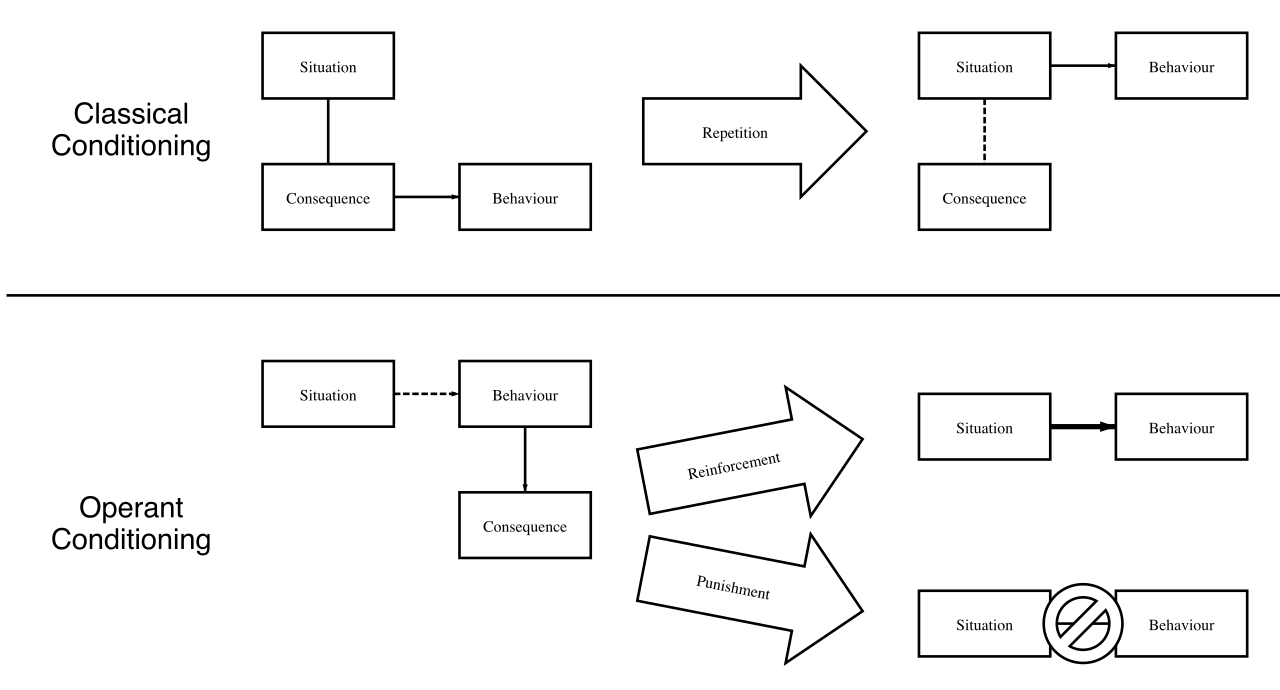
To decode this learning process, we use the Antecedent-Behavior-Consequence model, which is a direct observation tool used to analyze the environmental events surrounding a specific behavior.
The ABCs of Behavior:
- Antecedent: An antecedent is an event or stimulus that occurs immediately before a target behavior. It is the trigger.
- Behavior: The observable action the student takes.
- Consequence: A consequence is an environmental event or stimulus that occurs immediately after a target behavior.
Crucially, in the world of behavior analysis, the word "consequence" is neutral. It simply means the environmental reaction. Behavioral consequences determine the future probability of a specific behavior occurring again.
The Four Forces: Functions of Behavior
Why do students exhibit challenging behaviors? They are trying to achieve one of four outcomes. The four primary functions of behavior are sensory stimulation, escape, access to attention, and access to tangibles.
Special educators commonly use the acronym SEAT to remember the four primary functions of behavior:
- Sensory (automatic reinforcement, like rocking or humming)
- Escape (avoiding a difficult task or loud environment)
- Attention (seeking interaction from peers or adults)
- Tangibles (wanting a specific item or activity)
Influencing the Trajectory: Reinforcement and Punishment
When we apply consequences to behavior, we are either trying to increase its frequency or decrease it.
Reinforcement is a behavioral consequence that always increases the future frequency of a target behavior. Punishment is a behavioral consequence that always decreases the future frequency of a target behavior.
To achieve these increases or decreases, we can either add a stimulus (Positive) or remove a stimulus (Negative).
| Operation | Reinforcement (Increases Behavior) | Punishment (Decreases Behavior) |
|---|---|---|
| Positive (Add) | Positive reinforcement involves adding a desirable stimulus after a behavior to increase the future frequency of that behavior. (e.g., Giving a sticker for finishing math). | Positive punishment involves adding an aversive stimulus after a behavior to decrease the future frequency of that behavior. (e.g., Assigning extra chores for yelling). |
| Negative (Remove) | Negative reinforcement involves removing an aversive stimulus after a behavior to increase the future frequency of that behavior. (e.g., Removing the requirement to do homework because a student participated well in class). | Negative punishment involves removing a desirable stimulus after a behavior to decrease the future frequency of that behavior. (e.g., Taking away recess time due to hitting). |
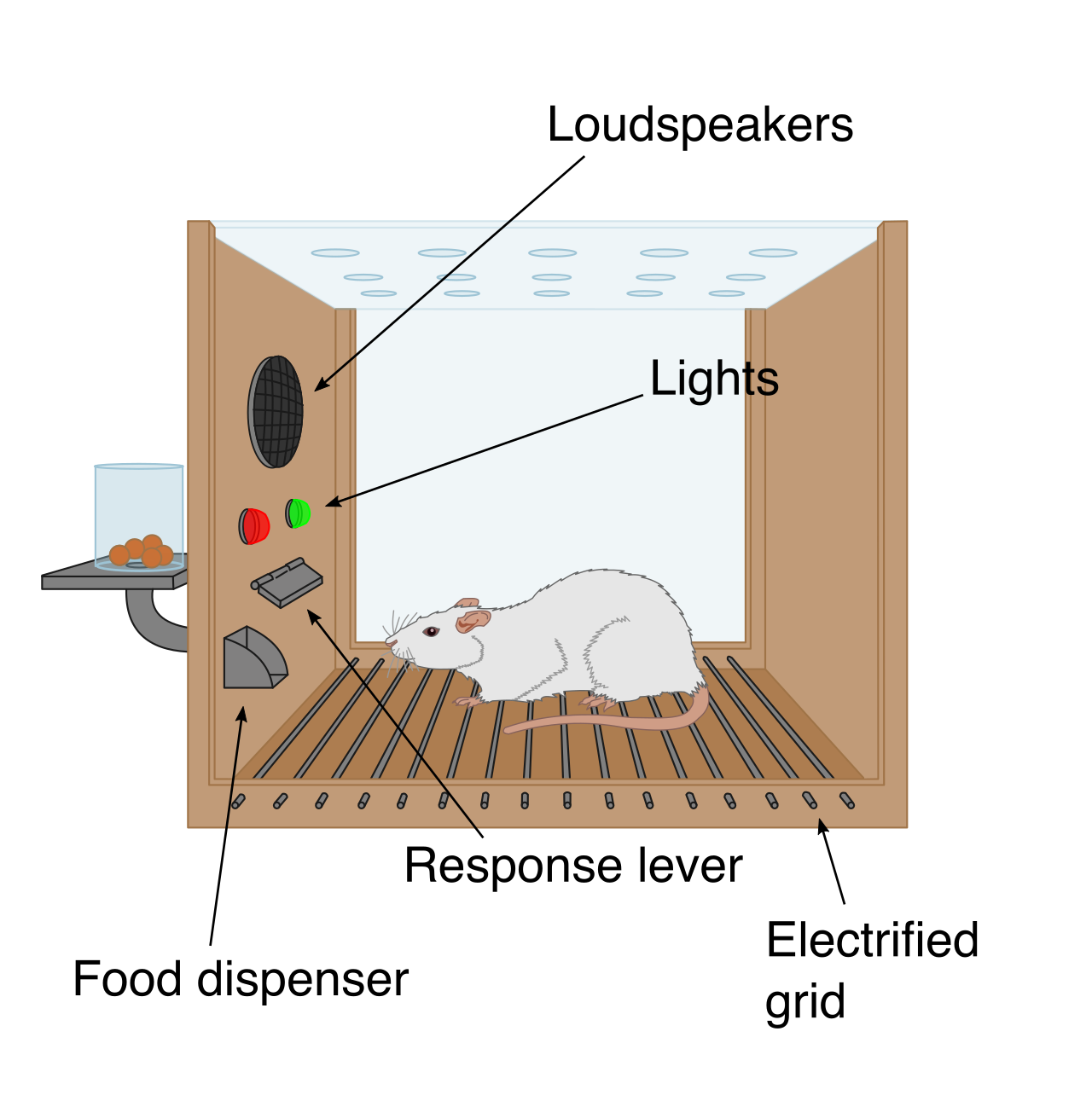
Sometimes we need to teach a completely new, complex behavior. Shaping involves reinforcing successive approximations of a desired target behavior until the final behavior is achieved. If a student is terrified of the cafeteria, you might first reinforce walking past the door, then standing inside the door, then sitting at a table for one minute.
For complex academic or life skills, we use task analysis, which is the process of identifying the specific sequence of discrete steps required to complete a complex skill. Once identified, we teach it through chaining, which involves breaking a complex multi-step skill into smaller sequential steps to be taught one at a time.
- Forward chaining teaches the first step of a behavioral sequence first while prompting the student through the remaining steps.
- Backward chaining teaches the last step of a behavioral sequence first while prompting the student through the preceding steps. This is highly effective because the student always experiences the natural reinforcement of completing the task.
To motivate students during these learning phases, educators often employ a token economy, which is a behavior management system where students earn symbolic rewards that can be exchanged for backup reinforcers (like trading in five stars for 10 minutes of computer time).
Conversely, if a behavior is entirely inappropriate, we might use extinction, which involves completely withholding the reinforcement that previously maintained a target behavior. If a student screams solely to get your attention, and you completely ignore the screaming, you are using extinction. However, be warned: things will get worse before they get better. An extinction burst is a temporary increase in the frequency or intensity of a behavior immediately after an extinction procedure is implemented. The student is essentially saying, "Wait, screaming usually works! I better scream louder!"
You cannot simply extinguish a behavior; you must replace it. Nature abhors a vacuum. Differential reinforcement strategies systematically reinforce good behaviors while withholding reinforcement for challenging ones.
- Differential Reinforcement of Alternative Behavior (DRA) involves reinforcing a specific acceptable behavior that serves the exact same function as the target problem behavior. If a student calls out to get attention, you reinforce them for raising their hand (alternative behavior, same function).
- Differential Reinforcement of Incompatible Behavior (DRI) involves reinforcing a specific behavior that physically cannot be performed at the exact same time as the target problem behavior. You cannot wander the room if you are sitting on an exercise ball; therefore, reinforcing sitting on the ball is a DRI for wandering.
- Differential Reinforcement of Other Behavior (DRO) involves providing reinforcement when a target problem behavior does not occur during a predetermined time interval. "You went 10 minutes without swearing; here is your token."
To implement any of these strategies effectively, we must first measure what is happening. We cannot rely on "gut feelings" about how often a student acts out.
- Frequency recording counts the exact number of times a specific behavior occurs within a defined observation period. (e.g., Tallying how many times a student hits their desk).
- Duration recording measures the total amount of time a student engages in a specific continuous behavior. (e.g., Timing how long a tantrum lasts).
- Latency recording measures the amount of time between the delivery of an instructional prompt and the initiation of the student's corresponding behavior. (e.g., Measuring the seconds between saying "Open your book" and the student actually opening it).
- Interval recording divides an observation period into smaller blocks of time to document whether a specific behavior occurred during each individual block. This is useful for high-frequency behaviors that are too difficult to tally individually.
When a behavior is complex or severely disruptive, we conduct a formal investigation. A Functional Behavior Assessment (FBA) is a systematic process used to identify the underlying purpose of a specific problem behavior.
Legally, this is not optional. The Individuals with Disabilities Education Act requires a Functional Behavior Assessment when a student's behavior significantly impedes the student's learning. Furthermore, the Individuals with Disabilities Education Act requires a Functional Behavior Assessment when a student faces a disciplinary change of placement for behavior related to the student's disability (such as suspensions exceeding 10 days).
The FBA tells us why the behavior is happening. The next step is the what.
A Behavior Intervention Plan (BIP) is a customized document outlining specific strategies to alter a student's environment. Furthermore, a Behavior Intervention Plan outlines specific instructional strategies to teach a student appropriate replacement behaviors.
A BIP is not a generic list of punishments. Educators must base a Behavior Intervention Plan directly on the findings of a comprehensive Functional Behavior Assessment. If the assessment says the student is acting out to escape difficult math work, the BIP cannot prescribe extra recess time as a reward—that addresses tangibles/activities, not the need for escape.
This brings us to the most critical rule of behavioral intervention: A replacement behavior taught in a Behavior Intervention Plan must serve the exact same function as the student's target problem behavior. If the student tears up paper to escape a difficult worksheet, we must teach them an appropriate way to request a break (escape). By honoring the function, we eliminate the need for the problem behavior entirely.