Federal Safeguards of the Rights of Stakeholders
Not sure you’re ready?
Take the ~3-minute readiness diagnostic and see where you stand.
In the architecture of public education, the institution inherently holds the balance of power. The school district possesses the specialized facilities, the legal counsel, the credentialed experts, and the funding. The family possesses the child. Left unchecked, this asymmetry would allow institutions to steamroller families in decisions regarding a child’s educational trajectory. The Individuals with Disabilities Education Act (IDEA) addresses this imbalance not through polite recommendations, but through an inflexible legal scaffolding. The Individuals with Disabilities Education Act mandates procedural safeguards to protect the rights of parents and their child with a disability.

These safeguards are the operating system of special education law. As a special educator, you will not simply memorize these rules to pass an exam; you will execute them daily to ensure that the monumental power of the state is wielded transparently, equitably, and with the explicit partnership of the family.
The procedural safeguards are codified in a formal notice—often a dense booklet—outlining the legal rights of the family under IDEA. Because rights are meaningless if stakeholders are unaware of them, the law dictates exactly when a school district must place this document into a parent’s hands.
You cannot simply hand the booklet to a parent once when they enter the district and consider the job done. The law requires targeted repetition. A school district must provide parents with a copy of the procedural safeguards notice at least once per school year. Beyond that annual requirement, the district must give parents a copy of the safeguards upon specific triggering events:
- Upon initial referral for a special education evaluation.
- Upon any parent request for a special education evaluation.
- Upon the first filing of a due process complaint in a school year.
- On the date a decision is made regarding a disciplinary action involving a change of placement.
In general education, a teacher can change a seating chart or administer a reading diagnostic without asking permission. Special education is fundamentally different. We are altering a child’s legally guaranteed educational environment. Therefore, before we act, we require informed consent.
Informed consent under the Individuals with Disabilities Education Act means a parent has been fully informed of all information relevant to the activity for which consent is sought.
The Three Pillars of Informed Consent
- Comprehension: Informed consent requires the relevant information to be provided in the parent's native language or other mode of communication.
- Agreement: Informed consent means a parent understands and agrees in writing to the carrying out of the proposed special education activity.
- Autonomy: Parental consent for special education services is entirely voluntary.
Because it is voluntary, a parent may revoke consent for special education services at any time before the activity takes place. However, the arrow of time only moves forward: a parent's revocation of consent for special education services is not retroactive. You cannot undo an evaluation or a semester of resource room instruction that has already occurred.
When is Consent Required?
A school district must obtain informed parental consent before three specific milestones:
- Before conducting an initial evaluation of a child.
- Before the initial provision of special education and related services to a child.
- Before conducting a reevaluation of a child.
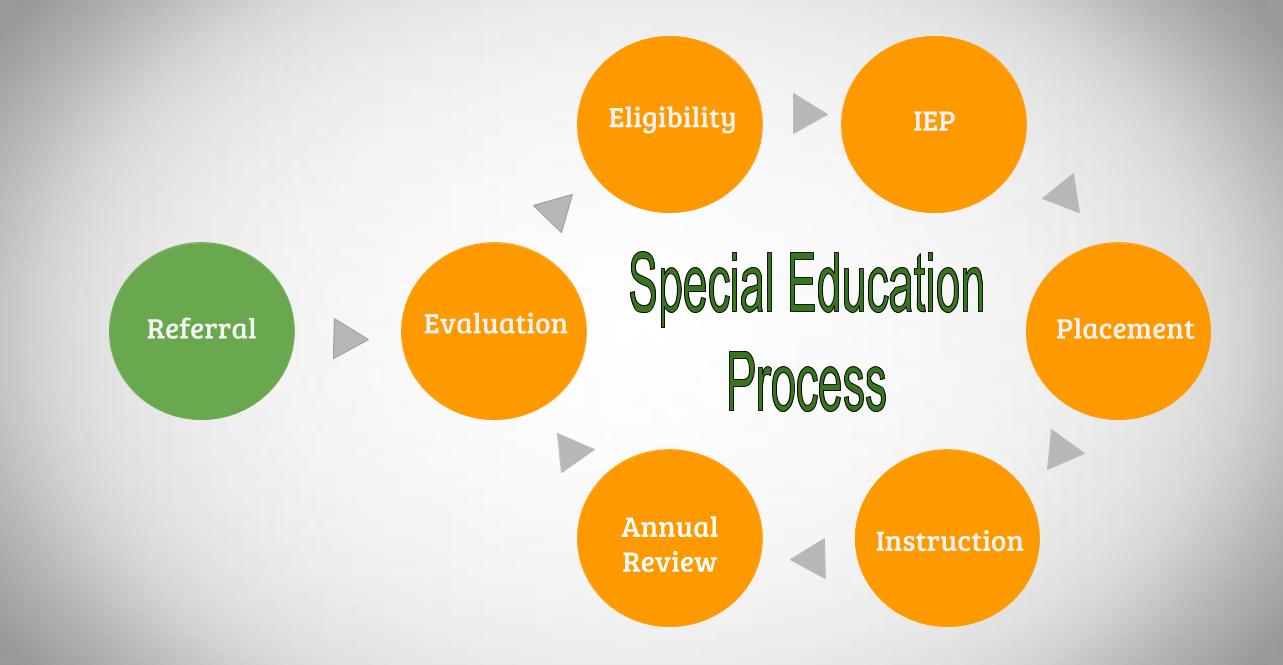
The Nuance of Refusal
What happens if a parent says no? The law draws a sharp, fascinating distinction between evaluating a child and servicing a child.
If a parent refuses consent for an initial evaluation, the school district may pursue the evaluation through mediation or due process procedures. The district can argue to a hearing officer that the child's unmet needs demand investigation.
However, if a parent refuses consent for the initial provision of services—meaning the school evaluated the child, found a disability, but the parent rejects the Individualized Education Program (IEP)—the district's hands are tied. A school district cannot use due process procedures to force the initial provision of special education services if a parent refuses consent. The parent retains the ultimate veto over whether their child takes on the label and services of special education.
If consent is the ignition key, Prior Written Notice (PWN) is the paper trail. Prior Written Notice is a formal document outlining decisions made by a school district regarding a student's special education program. It ensures that districts cannot make unilateral, undocumented choices.
A school district must provide Prior Written Notice before proposing to initiate or change:
- The identification of a child.
- The evaluation of a child.
- The educational placement of a child.
- The provision of a Free Appropriate Public Education (FAPE) to a child.
Equally important, a school district must provide Prior Written Notice before refusing to initiate or change the identification, evaluation, placement, or provision of a FAPE to a child. If a parent requests speech therapy and the IEP team decides it isn't warranted, you cannot simply say "no" at the table and move on. You must generate a PWN detailing the refusal.
To ensure transparency, Prior Written Notice must include:
- A description of the action proposed or refused by the school agency.
- An explanation of why the school agency proposes or refuses to take the action.
- A description of each evaluation procedure or record the school used as a basis for the proposed or refused action.
Like consent, Prior Written Notice must be written in language understandable to the general public, and it must be provided in the native language of the parent. We do not hide behind clinical jargon.
Suppose the school psychologist assesses a child and concludes there is no learning disability. The parents look at the data and vehemently disagree. Under IDEA, they are not forced to accept the district's findings as absolute truth.
Parents have the right to request an Independent Educational Evaluation (IEE) at public expense if the parents disagree with an evaluation obtained by the school district. An IEE is an evaluation conducted by a qualified examiner who is not employed by the public agency responsible for the education of the child.
When a parent makes this request, the school district faces a strict binary choice. The district must either provide the evaluation at public expense OR file a due process complaint. A school district filing a due process complaint against an IEE request must demonstrate to a hearing officer that the district's own evaluation is appropriate.
The district cannot stall. Furthermore, a school district may not impose conditions or timelines related to obtaining an IEE at public expense. Once the IEE is completed, the results of an Independent Educational Evaluation must be considered by the school district in any decision made with respect to the provision of a FAPE. The IEP team does not have to adopt every recommendation the independent evaluator makes, but they are legally bound to review and consider the findings.
Information asymmetry is the enemy of equity. Therefore, parents have the right to inspect and review all educational records relating to their child under the Individuals with Disabilities Education Act.
When a parent asks for these records, the clock starts ticking. A school district must comply with a parent's request to inspect educational records:
- Without unnecessary delay.
- Before any Individualized Education Program meeting or resolution session.
- In all cases, within 45 days of the request.
If a parent reviews the file and finds an error—perhaps a misattributed disciplinary report or an outdated medical diagnosis—parents have the right to request that a school district amend information in a child's educational records if the information is inaccurate or misleading.
Even with perfect communication, well-intentioned IEP teams and parents will sometimes reach an impasse. The Individuals with Disabilities Education Act provides three main dispute resolution mechanisms: state complaints, mediation, and due process complaints.
| Mechanism | Description & Timeline | Key Characteristics |
|---|---|---|
| State Complaint | A written and signed allegation submitted to the State Education Agency (SEA) stating that a public agency violated a requirement of IDEA. | Must be filed within one year of the alleged violation. The SEA investigates and issues a decision. |
| Mediation | A voluntary process where a qualified and impartial mediator helps parents and school districts resolve disagreements. | Discussions that occur during the mediation process must be confidential, and they cannot be used as evidence in any subsequent due process hearings or civil proceedings. The State Educational Agency must bear the cost of the mediation process. |
| Due Process Complaint | A formal legal request for a hearing to resolve a dispute regarding a child's identification, evaluation, placement, or provision of a FAPE. | Must be filed within two years of the date the parent or agency knew or should have known about the alleged action. |
The Resolution Meeting and Due Process Nuances
Due process hearings are expensive, adversarial, and emotionally draining for both families and educators. Consequently, IDEA forces the parties to attempt one last reconciliation before entering the courtroom.

Before a due process hearing can occur, the school district must convene a resolution meeting with the parents and relevant Individualized Education Program team members. This resolution meeting must occur within 15 days of receiving notice of the parent's due process complaint.
To prevent the district from intimidating the family, there is a strict rule regarding legal counsel: a school district may not include a school attorney at the resolution meeting unless the parent is accompanied by an attorney.
The "Stay-Put" Provision
What happens to the child while the adults are fighting? Do they go to the new placement the school wants, or stay in the old one the parents prefer?
IDEA answers this with the stay-put provision. This provision requires a child to remain in the child's current educational placement during the pendency of any due process proceedings. The stay-put provision applies strictly, unless the state agency or local educational agency and the parents agree otherwise. Think of it as a legal freeze-frame; it prevents schools from unilaterally altering a child's environment before a hearing officer has ruled.
When a student with a disability violates a code of student conduct, standard disciplinary procedures (like suspensions) can quickly collide with the student's right to a FAPE. Procedural safeguards apply to disciplinary actions involving changes in placement for students with disabilities (typically defined as a removal from the current setting for more than 10 consecutive school days).
Because the stakes of exclusion are so high, a school district must notify parents of a disciplinary change of placement and provide the procedural safeguards notice on the very date the placement decision is made.
Finally, we must address who actually holds these rights. Usually, it is the biological or adoptive parent. But what happens in edge cases?
Surrogate Parents When the biological parent is entirely absent, the state cannot simply usurp parental rights. Surrogate parents must be appointed to represent a child with a disability when:
- No parent can be identified.
- The public agency cannot locate a parent after reasonable efforts.
- The child is a ward of the state.
Crucially, to ensure unbiased advocacy, a surrogate parent cannot be an employee of the State Educational Agency, the Local Educational Agency, or any other agency involved in the education or care of the child. The surrogate's sole allegiance must be to the student.
Age of Majority Students do not remain children forever. Under the Individuals with Disabilities Education Act, parental rights transfer to the student when the student reaches the age of majority under state law (typically age 18).
Because this is a massive legal transition—meaning the 18-year-old student will now be the one signing consent forms and receiving Prior Written Notice—school districts must notify both the student and the parents of the transfer of rights at least one year before the student reaches the age of majority.
Procedural safeguards are not bureaucratic red tape; they are the physical manifestation of civil rights in the classroom. They ensure that data is shared, decisions are justified, disputes are resolved fairly, and the immense power of the public school system is continually balanced by the informed consent of the family. Mastering these mechanisms is how you move from being merely a well-intentioned teacher to becoming a true, legally grounded advocate for your students.