Understanding and Using Results of Assessments
Not sure you’re ready?
Take the ~3-minute readiness diagnostic and see where you stand.
A bridge engineer does not pour concrete and simply hope the structure bears the load; they calculate the exact tensile strength required, establish a baseline of the current soil integrity, and continuously monitor stress points during construction. In special education, translating assessment interpretations into actionable instructional adjustments operates on the exact same principles of precise measurement and continuous feedback. We are not in the business of guessing. The true craft of a special educator lies in taking the abstract—a student's cognitive or behavioral friction—and quantifying it into a concrete, observable trajectory.
To map a route, you must know your exact starting coordinates. Assessment is not a singular event; it is a funnel of increasingly precise discovery. We often begin with a wide lens. Standardized achievement test scores identify broad areas of academic need, alerting us, for example, that a fifth-grade student is performing at a second-grade level in reading. However, knowing that a student struggles with reading is entirely insufficient for designing a targeted intervention.

To build an effective instructional mechanism, we must zoom in. This is where diagnostic assessment results pinpoint specific academic skill deficits for targeted goal development. A diagnostic assessment moves beyond the broad "reading delay" label to reveal the precise mechanical failure—perhaps the student fundamentally lacks consonant digraph decoding skills.
Once this precise deficit is isolated, it must be documented formally. In special education, the foundation of a student's individualized plan is the Present Levels of Academic Achievement and Functional Performance (PLAAFP). By law and logic, Present Levels of Academic Achievement and Functional Performance statements must include baseline assessment data.
Why is baseline data so critical? Because assessment baseline data establishes a student's current performance level before an intervention begins. It is the control condition of our pedagogical experiment. If you do not know exactly how many words per minute a child reads on a Tuesday in October, you have no mathematical basis for claiming your intervention improved their fluency by May.
The legal framework of our profession leaves no room for ambiguity: The Individuals with Disabilities Education Act requires Individualized Education Program goals to be measurable. Furthermore, every measurable Individualized Education Program goal must directly address a specific deficit identified in the baseline assessment data. If the baseline data identifies a deficit in phonemic awareness, the resulting goal cannot be about general reading comprehension; it must be an exact structural match to the identified deficit.
To satisfy both the law and the principles of scientific measurement, every goal is built using four precise structural elements. Without all four, the goal is structurally unsound and legally vulnerable.
| Component | Definition & Scientific Rationale |
|---|---|
| Timeframe | A measurable Individualized Education Program goal contains a timeframe component. This provides the temporal boundary for the experiment, defining exactly when the mastery should be achieved (e.g., "By the end of the 36-week instructional period"). |
| Condition | A measurable Individualized Education Program goal contains a condition component. The condition component of an Individualized Education Program goal specifies the materials or setting required for the behavior observation. We must control the environment. "Given a 3rd-grade reading passage and no visual prompts..." ensures the behavior is tested under consistent, replicable parameters. |
| Target Behavior | A measurable Individualized Education Program goal contains a target behavior component. Crucially, the target behavior in an Individualized Education Program goal must be an observable action. You cannot peer inside a child's mind to verify "understanding." You can observe a child writing, pointing, sorting, or vocalizing. |
| Performance Criterion | A measurable Individualized Education Program goal contains a performance criterion component. The performance criterion in an Individualized Education Program goal defines the exact level of accuracy required for mastery. This removes subjective judgment. (e.g., "...with 90% accuracy over 3 consecutive trials.") |
Before we can correct an error, we must understand its nature. When a student fails a math worksheet, we do not simply score it a 60% and move to the next chapter. We interrogate the failure.
Error analysis of student assessments reveals specific academic misconceptions requiring targeted reteaching. Did the student fail the subtraction worksheet because they do not know basic math facts, or because they fundamentally misunderstand the rule for borrowing across zeros? Error analysis transforms a "bad grade" into a roadmap for cognitive reconstruction.
When a skill seems entirely out of reach, we break the mechanism apart. Task analysis assessment data breaks down complex skills to identify the exact step requiring instructional support. If a student is failing to write a paragraph, task analysis separates the process into brainstorming, outlining, drafting a topic sentence, and providing supporting details. The assessment data will pinpoint exactly where the cognitive load becomes too heavy.
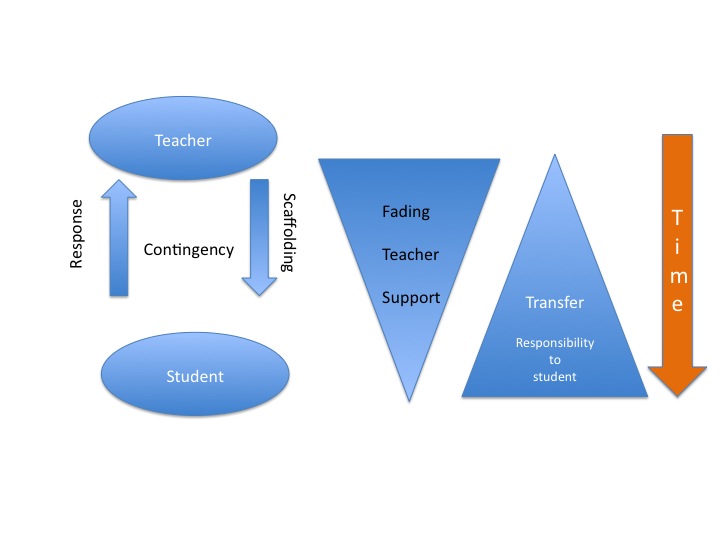
Finally, we must measure the student's capacity to absorb instruction in real-time. Dynamic assessment measures a student's ability to learn a new skill during a prompted teaching phase. Unlike traditional testing, which measures what a student can do independently, dynamic assessment involves the teacher providing graduated prompts. It tells us not just what the student knows, but exactly how much scaffolding they require to acquire new knowledge.
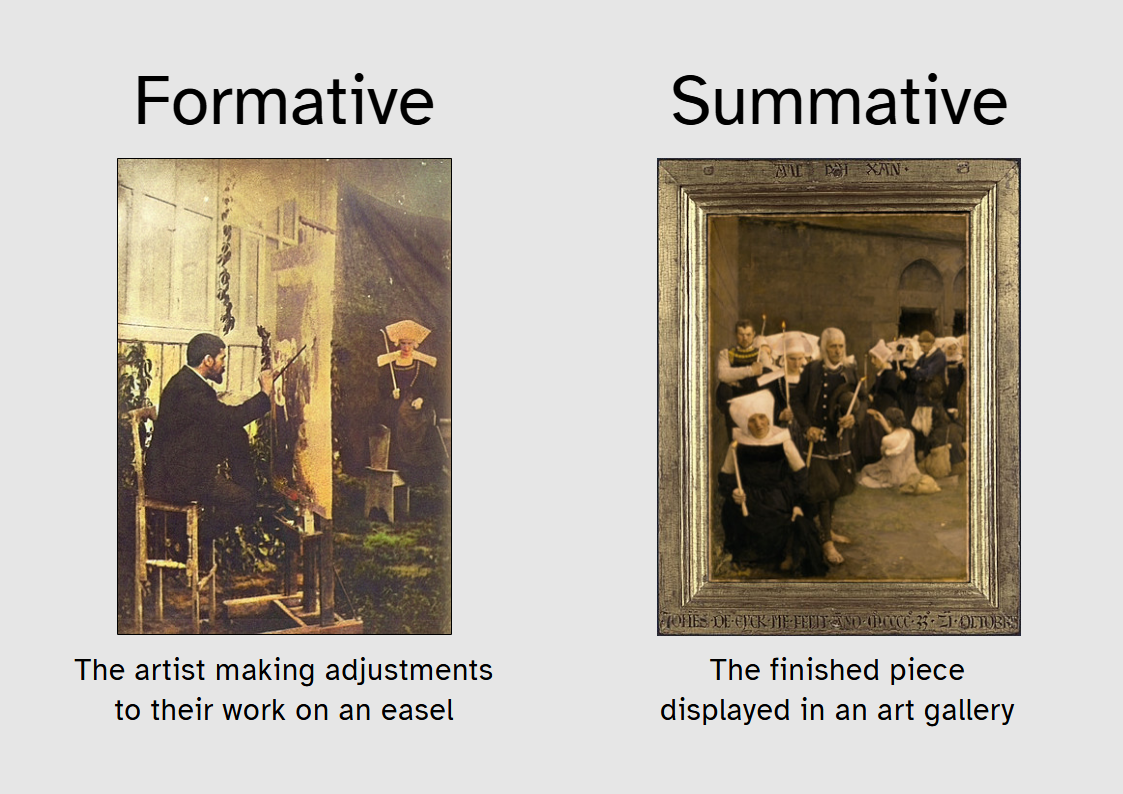
Instruction is a living, breathing process. While summative assessment results evaluate the overall effectiveness of an instructional unit or specialized intervention at the end of a term, relying solely on summative data is akin to driving a car blindfolded and only checking if you reached your destination after you've crashed into a wall.
Instead, we rely on continuous telemetry. Formative assessments measure student comprehension continuously during the instructional process. Through exit tickets, guided practice observations, and rapid checks for understanding, special education teachers use formative assessment data to make immediate adjustments to instructional strategies. If the formative data shows the class is lost, you do not press on; you pivot immediately.
For tracking fundamental academic skills over the long term, we utilize specific standardized probes. Curriculum-Based Measurement provides standardized tools for evaluating basic academic skills, such as reading fluency (words correct per minute) or math computation digits. Because these probes are consistent, brief, and highly reliable, Curriculum-Based Measurement data allows teachers to track student progress toward long-term academic goals over time.
The broader architecture of modern special education, specifically the Response to Intervention framework, requires frequent progress monitoring data to evaluate intervention effectiveness. We do not wait for the end of the year to determine if an intervention is working.
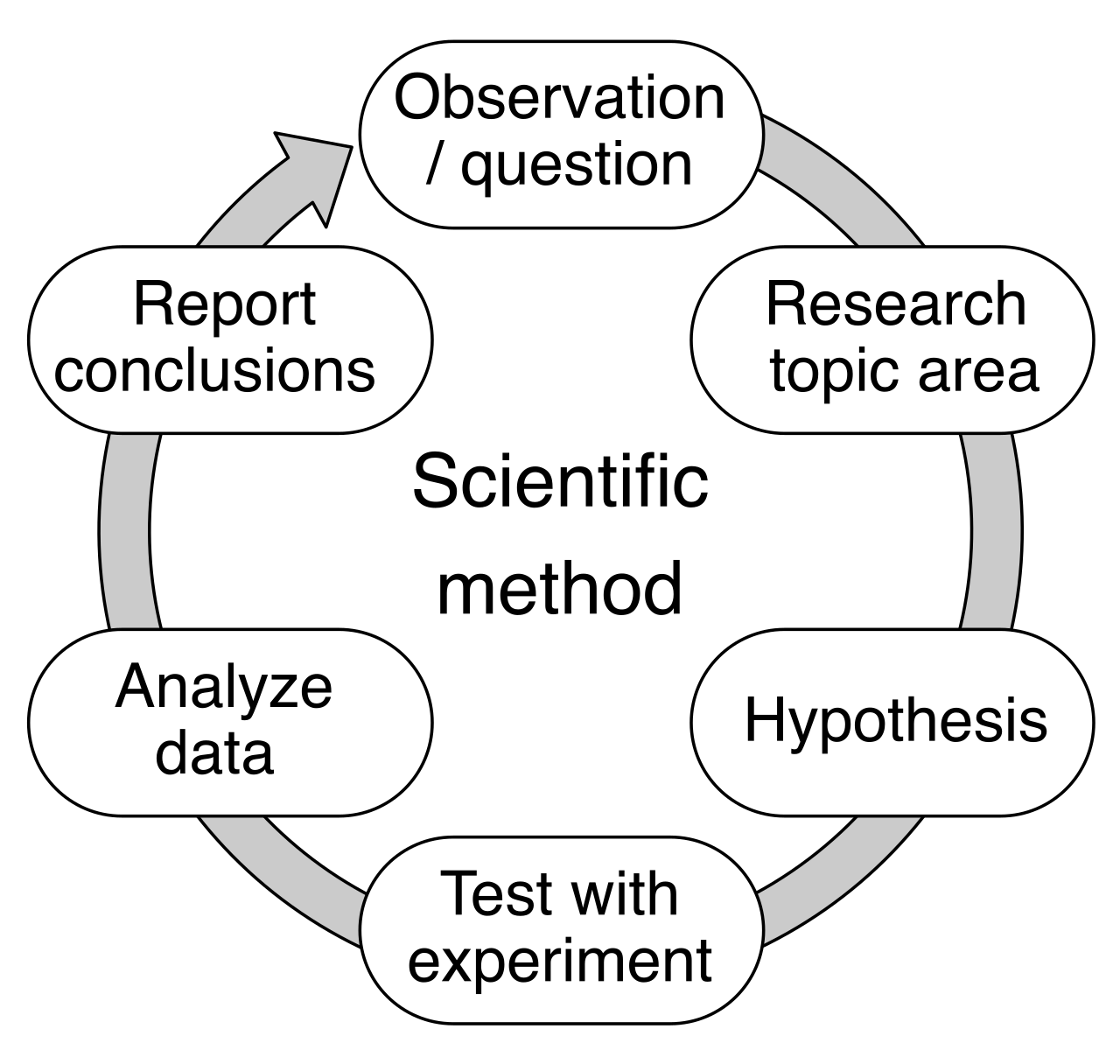
This brings us to the core mechanism of specialized instruction: Data-Based Individualization. Data-based individualization is a systematic process for intensifying interventions based on ongoing progress monitoring data. It is the rigorous application of the scientific method to daily teaching.
To execute this, we visualize the data. We plot the student's trajectory on a graph to compare expectation versus reality.
- First, we plot the expected velocity. An aimline on a progress monitoring graph connects a student's baseline score directly to the target goal score.
- Next, as we collect weekly data, we plot the reality. A trend line on a progress monitoring graph represents the student's actual observed rate of progress.
The relationship between the aimline and the trend line dictates our professional behavior. We do not alter instruction based on intuition; we alter it based on geometric reality.
Rule of Instructional Modification: A teacher must modify the instructional intervention when a student's progress monitoring trend line falls below the aimline.
However, because human performance fluctuates—a student might have a poor night's sleep or be distracted on a given Tuesday—we do not react to single data points. We rely on statistical reliability. The four-point data rule requires educators to change instruction if four consecutive progress monitoring data points fall below the aimline. Four points constitute a trend, proving mathematically that the current intervention is insufficient. You must change the scaffolding, increase the frequency of the intervention, or decrease the group size.
Conversely, our interventions are sometimes highly successful, causing a student to accelerate faster than anticipated. If this occurs, we do not let the student coast. A teacher must increase a student's performance goal if four consecutive progress monitoring data points fall above the aimline.
By treating assessment as continuous, actionable telemetry, we remove the guesswork from special education. We build measurable, structurally sound goals from baseline data, and we tirelessly monitor the trend line, ensuring that every student remains on a mathematically verified path toward mastery.