Chemical Reactions and Conservation of Matter
Not sure you’re ready?
Take the ~3-minute readiness diagnostic and see where you stand.
The universe operates under a strict cosmic accounting system where the currency is matter. When a log turns to ash or a puddle dries in the sun, it may appear that reality is deleting material from existence. In truth, nature is merely rearranging its fundamental building blocks. For an elementary educator, teaching chemistry is not about memorizing the periodic table; it is about guiding young minds to see past the illusion of disappearance. By understanding that every atom has mass and that physical transformations are simply reorganizations of these atoms, teachers can systematically dismantle the profound intuitive errors children make about the physical world.
To an elementary student, a melting popsicle and a burning piece of paper both look like things "going away." As a teacher, your first task is to give students the conceptual architecture to categorize these events. All transformations in matter fall into two distinct camps.
Physical Change: A physical change alters the form or appearance of matter without creating a new substance.
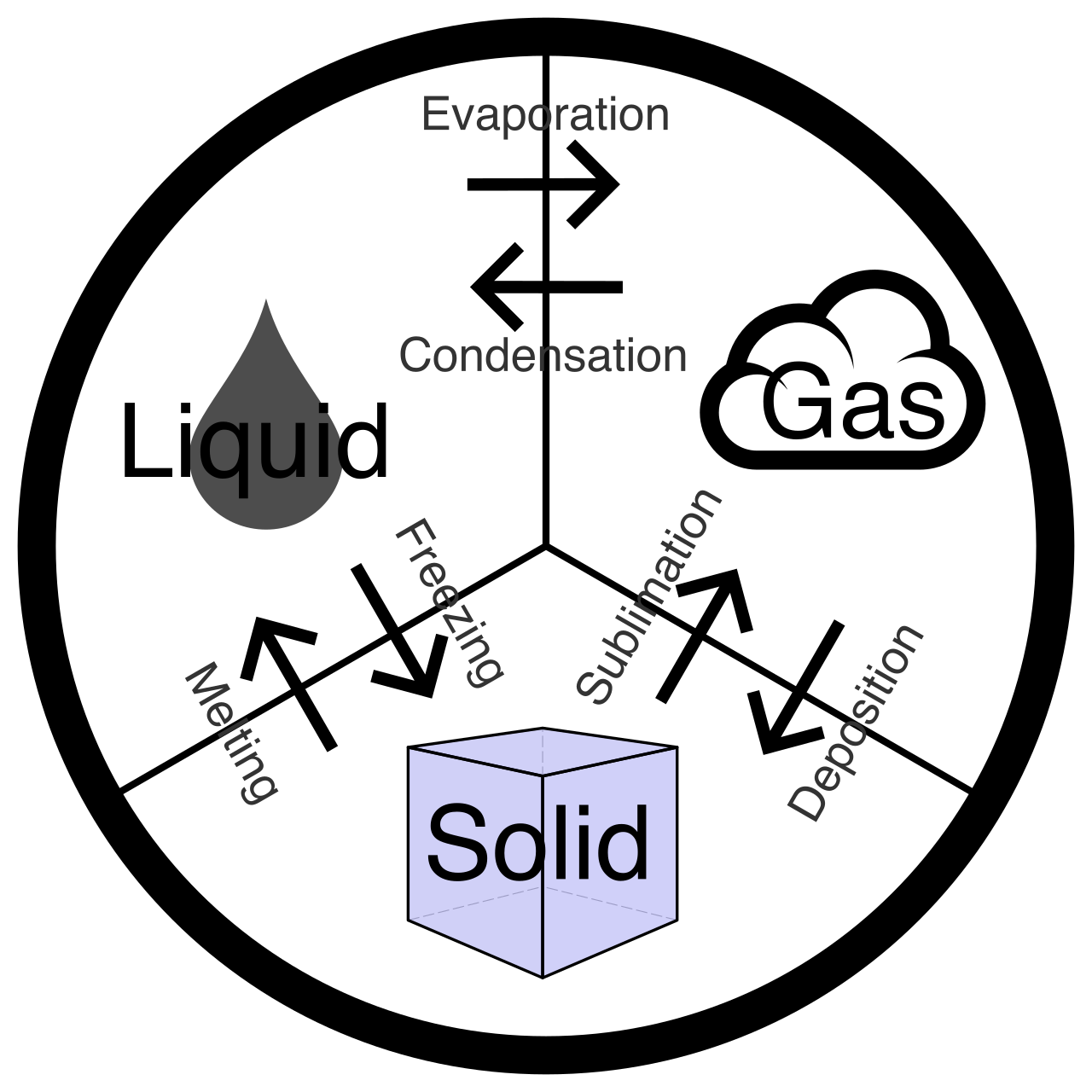
If you take a sheet of paper and rip it into a hundred tiny shreds, it looks entirely different, but its atomic identity remains exactly the same. The same rule applies to how matter interacts with heat and cold. Phase changes like melting or freezing are classified strictly as physical changes because the molecules are simply moving closer together or further apart.
Some changes caused by applying heat to matter can be fully reversed, and similarly, some changes caused by cooling matter can be fully reversed.
- Heating: Melting solid ice into liquid water is a reversible physical change. If we continue to add heat, boiling liquid water transforms the liquid phase into gaseous water vapor. Because the water molecules have not changed, boiling liquid water into vapor is a fully reversible physical change.
- Cooling: Freezing liquid water into solid ice is a reversible physical change. Removing heat simply slows the molecules down until they lock back into a solid lattice.
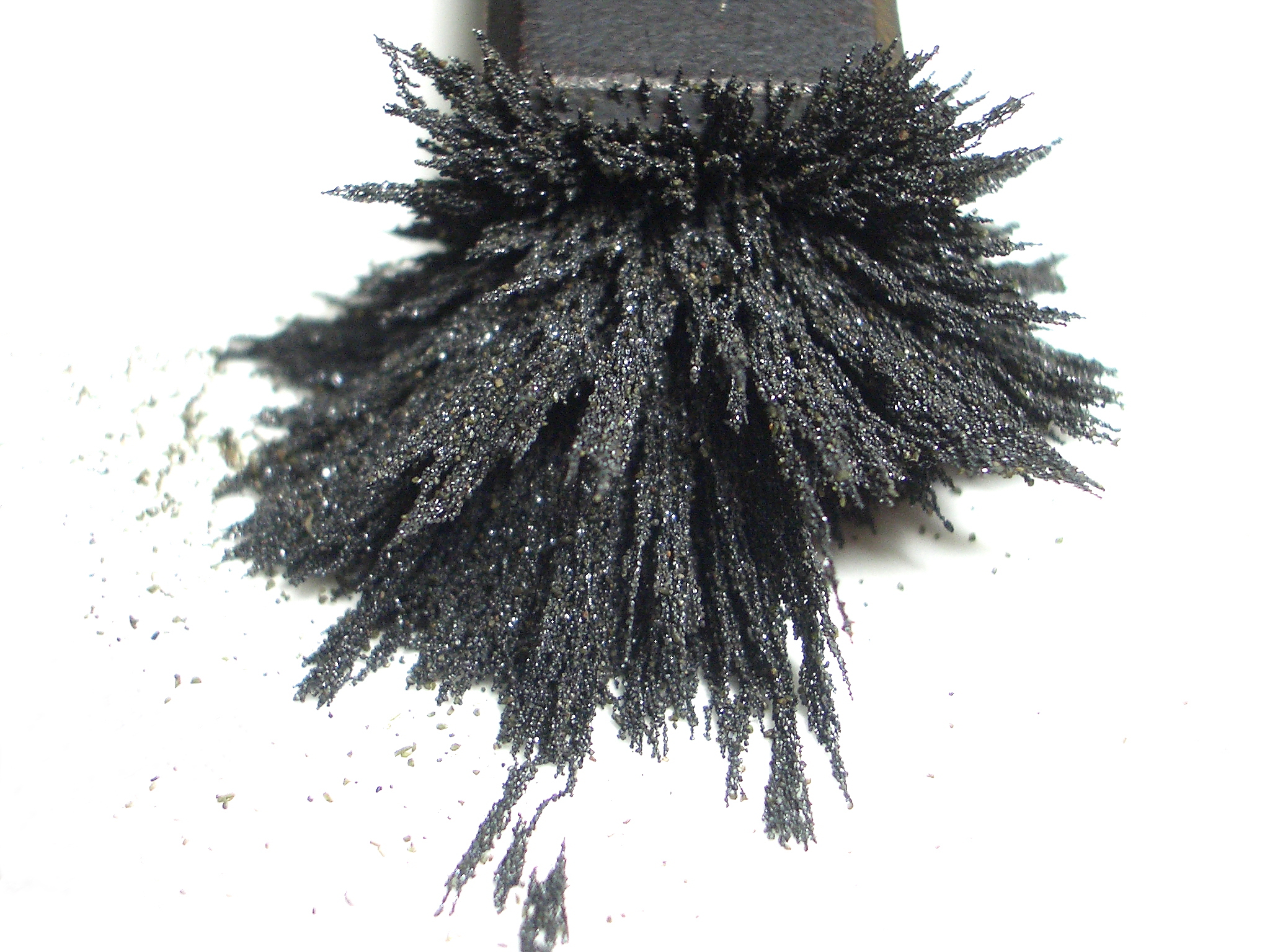
Physical transformations also include how different substances coexist. Mixing two or more substances without forming any new chemical bonds creates a physical mixture. If you mix sand and iron filings, the individual components of a physical mixture completely retain their original chemical properties. You could still pull the iron out with a magnet.
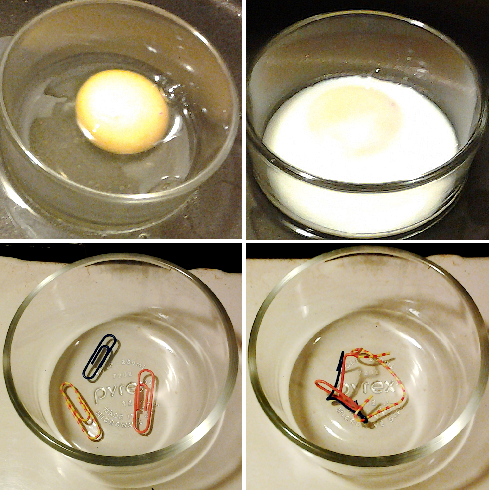
Chemical Change: A chemical change rearranges atoms to create at least one entirely new substance.
In a chemical change, the original materials are dismantled and reassembled into something completely different. Consequently, some changes caused by applying heat to matter cannot be reversed. For example, cooking a raw egg by applying heat is an irreversible chemical change; the heat permanently denatures the proteins. Likewise, burning a piece of wood is an irreversible chemical change—the cellulose and lignin in the wood have been permanently broken down and bonded with oxygen.
Elementary students often mistakenly confuse reversible phase changes with permanent chemical changes. It is critical to help them realize that melting butter is not the same class of phenomenon as burning toast.
Detecting the Invisible: Evidence of New Substances
How do we investigate whether mixing two or more substances results in new substances? Since we cannot see atoms rearranging with our naked eyes, we must train students to look for chemical "fingerprints."
There are four striking phenomena that provide strong evidence of a chemical change:
- Gas Formation: The production of gas bubbles upon mixing two substances at room temperature is strong evidence of a chemical change. (This is distinct from boiling, which requires an external heat source).
- Color Alteration: An unexpected color change upon mixing two substances is strong evidence of a chemical change.
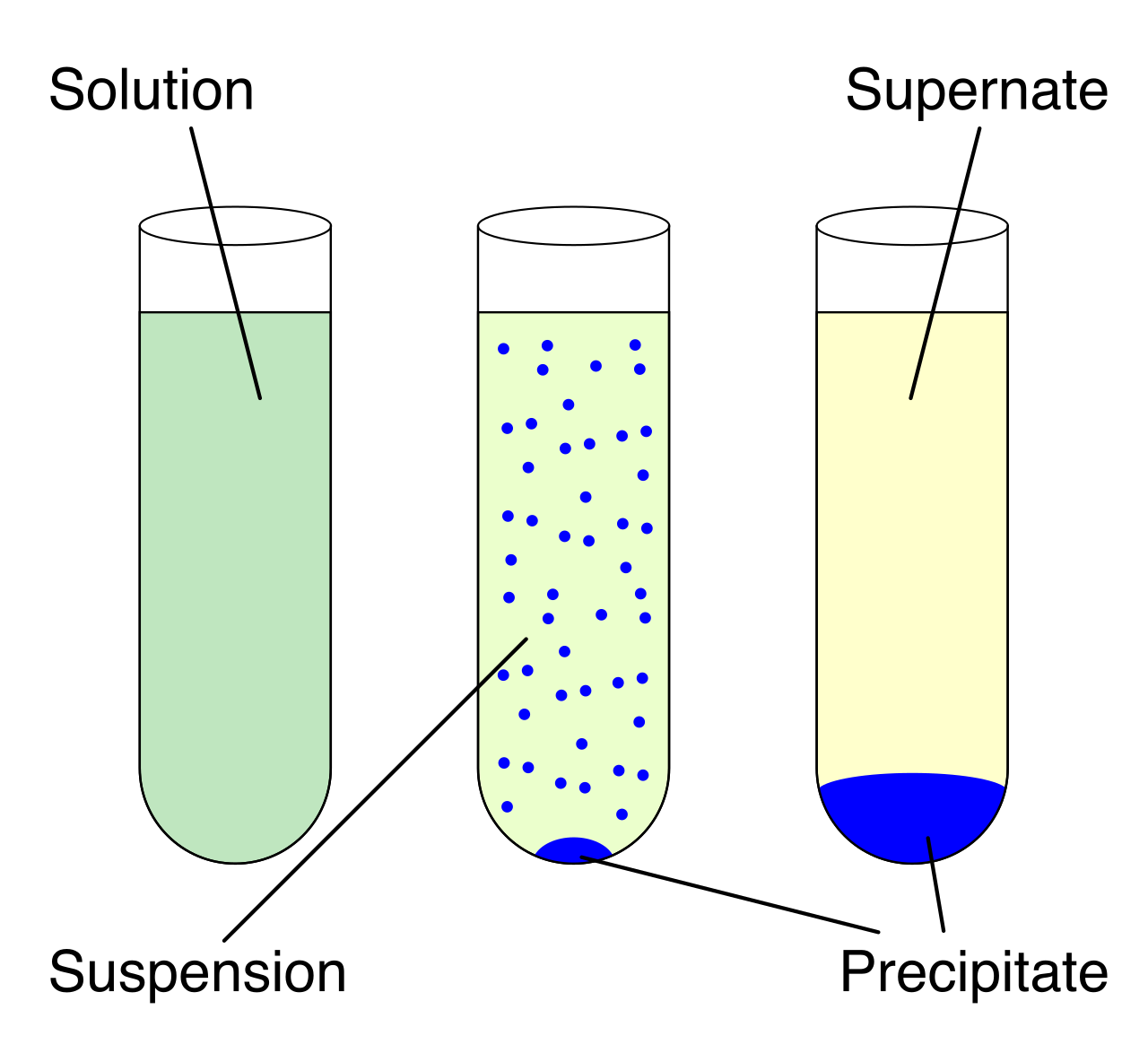
- Precipitate Formation: The formation of a solid precipitate from mixing two transparent liquid solutions is strong evidence of a chemical change.
- Temperature Shift: A sudden change in temperature upon mixing substances without an external heat source is strong evidence of a chemical change. This indicates bonds are actively breaking and reforming, releasing or absorbing energy.
Once students understand the types of changes, they must understand the rules governing those changes.
The Law of Conservation of Matter: Matter is never created out of nothing during a chemical reaction, and matter is never permanently destroyed during a chemical reaction.
This law means that the universe operates on a strict budget. As a result, the total weight of matter is always strictly conserved during any physical change, and the total weight of matter is always strictly conserved during any chemical change.
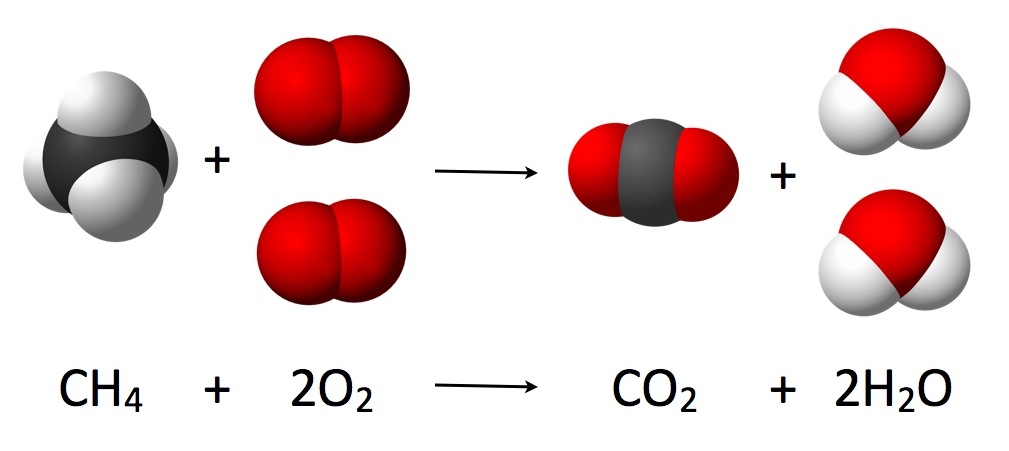
While this sounds straightforward to an adult, it aggressively violates a child’s intuition. Young students are perceptual thinkers; if they cannot see it, they assume it is gone.
Confronting Common Weight Misconceptions
To effectively teach this topic, you must anticipate and dismantle several pervasive scientific misconceptions:
| Student Misconception | The Scientific Reality |
|---|---|
| "Shape dictates weight." Elementary students often falsely assume that changing the physical shape of an object reduces its total weight. | Molding a spherical piece of clay into a flattened pancake shape perfectly conserves the original weight of the clay. |
| "Dissolving is disappearing." Elementary students often hold the scientific misconception that dissolved solid substances disappear completely. | The final weight of a saltwater solution exactly equals the combined initial weights of the dry salt and the pure water. |
| "Fire destroys everything." Elementary students often hold the scientific misconception that the burning process destroys matter completely. | The matter is simply converted into gas, soot, and ash. The total atoms before and after remain identical. |
| "Rust eats away metal." Elementary students often falsely believe that rusted metal is lighter than the original pristine metal. | The rusting process adds the weight of atmospheric oxygen to the original weight of the iron metal. A rusted nail is heavier than a clean one! |
| "Gas is just empty air." Elementary students often hold the scientific misconception that gases possess zero weight. | Gases are made of matter and have measurable mass. |
To prove that gases have weight and that matter is conserved, we must bring math into the science lab. We frequently do this by mixing solid baking soda with liquid vinegar, which produces carbon dioxide gas.
If you put a beaker of vinegar and a pile of baking soda on a scale, measure their total weight, and then mix them, the scale's reading will drop as the mixture fizzes. To a student, this looks like proof that matter was destroyed. Why? Because the carbon dioxide gas floated away.
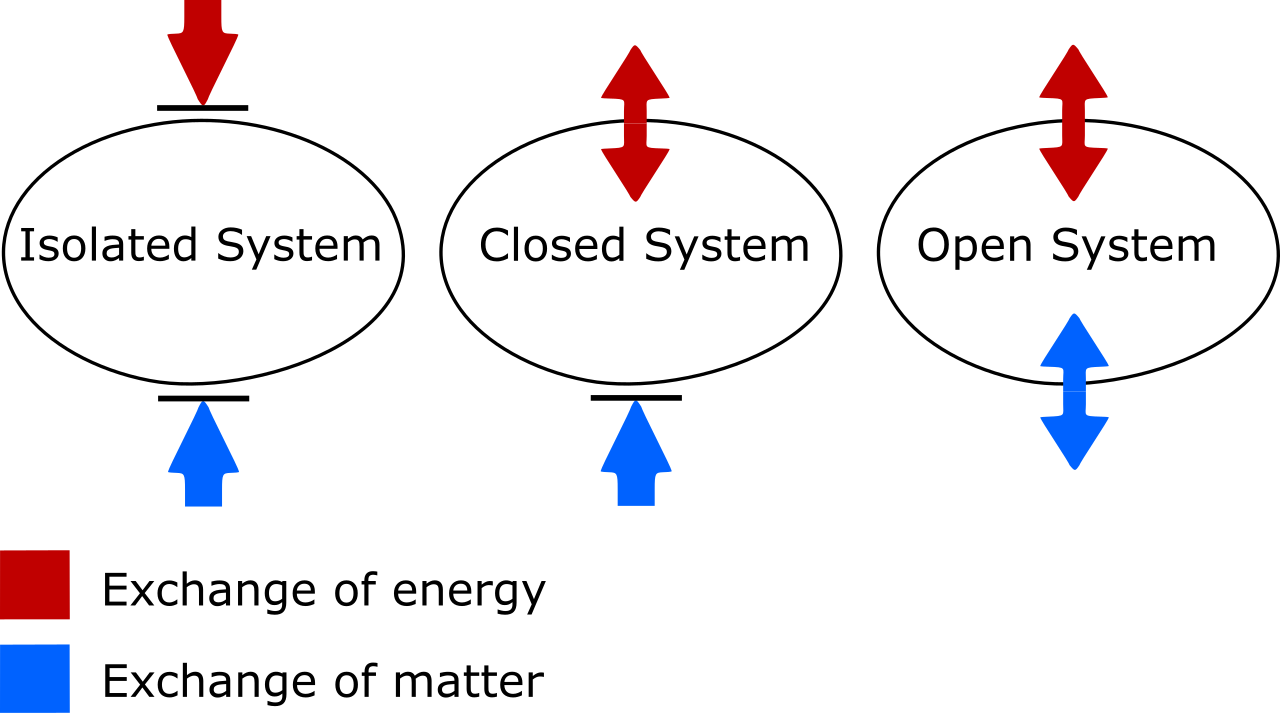
To overcome this, accurately measuring the conservation of weight during a gas-producing reaction requires an isolated closed system. A closed experimental system (like a sealed zip-top bag or a flask with a tight balloon stretched over the top) prevents newly formed gases from escaping into the surrounding room.
Visualizing Conservation with Graphs
Having students graph quantities to show that the total weight of matter is conserved is a powerful pedagogical tool.
Using Bar Graphs: If you measure a closed-system reaction before and after, a bar graph comparing the total weight of reactants to the total weight of products will display two bars of identical height. This visual perfectly reinforces the concept of conservation.
Using Line Graphs: Line graphs tracking weight over time allow us to compare open versus closed systems dynamically:
- Closed System: A line graph tracking the total weight of a closed system during a chemical reaction will display a perfectly flat horizontal line. The atoms rearrange, but none leave the system, so the weight remains completely constant.
- Open System: Conversely, a line graph tracking the total weight of an open system during a gas-producing reaction will display a downward slope over time. The downward slope on an open-system weight graph reflects the mass of the unmeasured escaping gas.
By having students compare the flat line of the closed bag with the downward slope of the open beaker, you make the invisible visible. You prove to them that the gas possesses weight, and that even when things seem to vanish into thin air, nature's ledger is always perfectly balanced.