Determining Assumptions in Arguments
Not sure you’re ready?
Take the ~3-minute readiness diagnostic and see where you stand.
Consider a school district’s proposal to increase standardized test scores by providing every student with a digital tablet. The explicit evidence is that tablets grant access to thousands of interactive educational applications. The conclusion is that academic performance will inevitably rise. Suspended between that evidence and that conclusion lies a silent, invisible architecture: the belief that students will actually use the tablets for studying rather than playing games, that the schools possess sufficient Wi-Fi infrastructure, and that teachers are trained to integrate this technology. If any one of these underlying beliefs crumbles, the entire argument collapses.
To evaluate an argument effectively, you must learn to see this invisible architecture. The Praxis 5713 Core Reading exam assesses the ability to identify unstated assumptions within the Integration of Knowledge and Ideas section. This is not merely an academic exercise; it is the very essence of critical reading. As a future educator, you will constantly evaluate arguments—from curriculum proposals to administrative policies to the reasoning your students present in their essays. Mastering this skill allows you to pinpoint exactly where an argument holds strong, and where it falls apart.
Every argument you encounter on the Praxis exam consists of two visible components and one invisible component. The visible components are the premises (the stated evidence) and the conclusion (the author's final claim).
However, a logical gap exists in an argument when the stated premises do not fully guarantee the truth of the conclusion. Authors leap over this gap using an assumption.
In logical reasoning, an assumption is an unstated premise that connects explicitly stated evidence to a conclusion.
Because this premise is unstated, an argument's conclusion relies entirely on the truth of its underlying unstated assumptions. Identifying an assumption requires finding the exact unstated information needed to fill an argument's logical gap. Praxis Reading exam assumption questions typically use phrases like "the author assumes" or "upon which the argument depends." When you see these prompts, your job is to play the role of a structural engineer: find the missing support beam that the entire building rests upon.
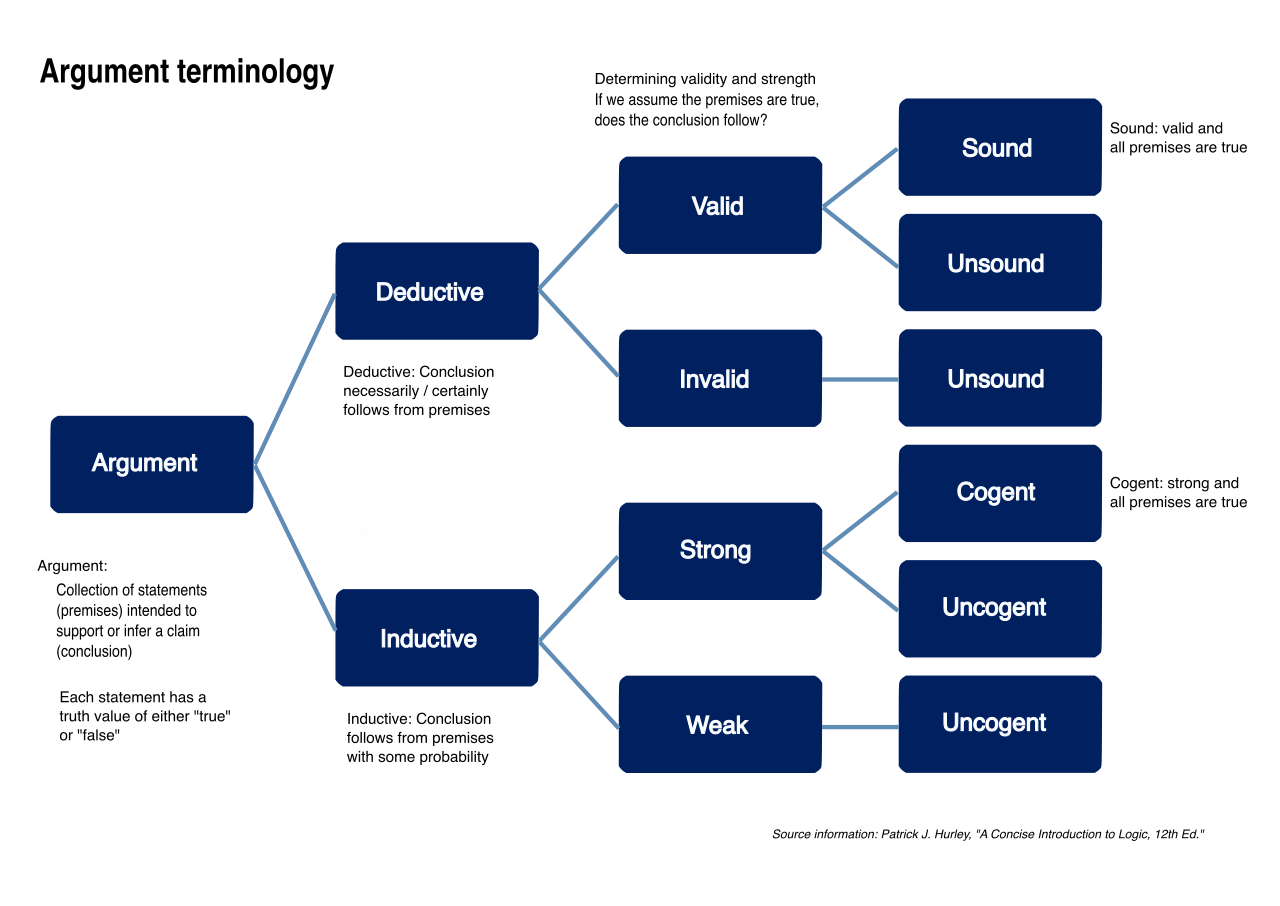
To evaluate arguments with precision, we must distinguish between two different types of assumptions.
The Necessary Assumption
A necessary assumption is a statement that absolutely must be true for the argument's conclusion to be possible. Think of it like oxygen for a fire. Oxygen alone doesn't cause a fire, but without it, the fire cannot exist.

The Sufficient Assumption
A sufficient assumption is a statement that completely guarantees the conclusion is true when added to the stated premises. Think of this like pouring gasoline on a spark.
| Assumption Type | Definition | Analogy in the Classroom |
|---|---|---|
| Necessary | Must be true for the conclusion to even be possible. | Argument: "We will hold the assembly in the gym."<br>Assumption: The gym's roof has not collapsed. |
| Sufficient | Completely guarantees the conclusion is true. | Argument: "We will hold the assembly in the gym."<br>Assumption: The principal mandated that all school events will forever be held in the gym. |
On the Praxis Core Reading exam, you are almost always hunting for necessary assumptions. You are looking for the absolute bare minimum that must be true to keep the argument alive.
How do you prove that an assumption is truly necessary? You take it away and see if the argument dies.
In logic, this is called the Negation Test. The Negation Test is a specific method used to verify an argument's necessary assumption by testing the assumption's exact opposite.
According to the Negation Test, an argument's conclusion becomes logically invalid if its necessary assumption is proven false. Conversely, if negating a proposed assumption does not completely destroy the argument's conclusion, the proposed assumption is not strictly necessary.
Let’s apply this to a classroom scenario: Premise: Mr. Harris assigned 30 minutes of daily reading homework. Conclusion: His students' reading fluency will improve.
Let's test an answer choice using the Negation Test:
- Proposed Assumption: The students have access to books at home.
- Negate it: The students do not have access to books at home.
- Result: If they have no books, they cannot do the reading homework. The conclusion (fluency will improve) is completely destroyed. Therefore, this is the correct necessary assumption.
Let's test an incorrect answer choice:
- Proposed Assumption: The students love reading.
- Negate it: The students do not love reading.
- Result: Even if they don't love reading, they might still begrudgingly do the homework and improve their fluency. The conclusion survives. Therefore, this assumption is not strictly necessary.
Arguments on standardized tests follow predictable blueprints. Once you recognize the archetype, you instantly know what invisible assumptions the author is relying on.
1. Causal Arguments
When an author claims that X caused Y, they are making a massive leap. Causal arguments inherently assume three distinct things:
- No alternative causes: They inherently assume that no alternative causes or hidden variables exist for an observed outcome. (If students in the front row get better grades, the author assumes it's the seating arrangement causing it, not that highly motivated students simply choose to sit in the front).
- Not a coincidence: They inherently assume that an observed correlation between two events is not merely a random coincidence.
- Proper chronology: They inherently assume that the proposed cause chronologically preceded the observed effect.
2. Statistical Samples
Whenever a passage uses a survey, study, or poll to draw a broad conclusion, look at who was surveyed. Arguments based on statistical samples assume that the selected sample accurately represents the broader target population. If a school surveys the Debate Team to determine if the student body wants a new football stadium, the assumption is that debate students represent the athletic interests of the entire school.
3. Analogies
Teachers use analogies constantly, comparing a new concept to a familiar one. However, in formal logic, arguments using analogies assume that the two compared subjects share all logically relevant characteristics. If a district argues that a strict dress code will reduce behavioral issues because it worked at a nearby military academy, the author assumes a public high school and a military academy share identical, relevant disciplinary conditions.
4. Plans of Action
Passages often propose a new policy to solve a problem. Arguments proposing a specific plan of action assume that the proposed plan is practically feasible to execute. If the proposed solution to cafeteria noise is to have a teacher sit at every single table, the underlying assumption is that the school actually employs enough teachers to do this.
5. Historical Evidence
"We tried this in 1998 and it worked beautifully, so we should do it again today." Arguments using historical evidence assume that future conditions will logically mirror past historical conditions. They assume the variables surrounding the situation haven't drastically shifted over time.
6. Evaluating Change
When a passage evaluates a shift in data—such as claiming a new phonics curriculum caused a drop in reading scores—it assumes a static environment. Specifically, an argument evaluating a change assumes that the baseline conditions for the comparison have not secretly changed. If the reading scores dropped, the author assumes the state didn't simultaneously introduce a vastly more difficult standardized test that year.
Understanding the logic of the passage is only half the battle; the other half is navigating the meticulously crafted answer choices designed to trick you. Test makers use predictable patterns for incorrect choices (distractors). Arm yourself with these absolute rules for the Praxis Reading exam:
Rule 1: The assumption is NEVER explicitly stated.
A valid assumption answer choice on a standardized reading exam is never explicitly written in the passage text. If you can point to the exact sentence in the passage where the claim is made, cross it out immediately. Consequently, an answer choice that simply restates a passage's explicitly stated premise acts as an incorrect distractor in assumption questions. Assumptions are the invisible glue; they are not the visible bricks.

Rule 2: Beware of extreme language.
Remember, we are looking for the absolute minimum necessary to make the argument work. Because of this, assumption answer choices containing extreme absolute words like 'always,' 'never,' or 'all' are usually logically incorrect. If an argument claims that a new math tutor helped Sarah pass algebra, the assumption is not that "tutors always help all students pass." The assumption is simply that "the tutor's methods were effective for Sarah."
Rule 3: Stay within the author's scope.
A valid assumption must remain strictly within the specific scope of the author's stated argument. If the passage is arguing about improving physical education for elementary school students, an answer choice that makes claims about high school athletes is out of scope. Do not help the author broaden their argument.
Rule 4: Do not confuse "strengthening" with "necessary."
This is the most dangerous trap on the exam. An answer choice that strengthens an argument without being logically required is an incorrect assumption answer. For example, if an author argues that paying teachers a higher salary will reduce staff turnover, an answer choice stating "Teachers who are paid more are also happier in their personal lives" certainly makes the proposal sound better—it strengthens the vibe of the argument. But is it logically necessary for the conclusion? No. Turnover could decrease purely for financial reasons, regardless of personal happiness. Use the Negation Test to strip away these appealing but ultimately unnecessary distractors.
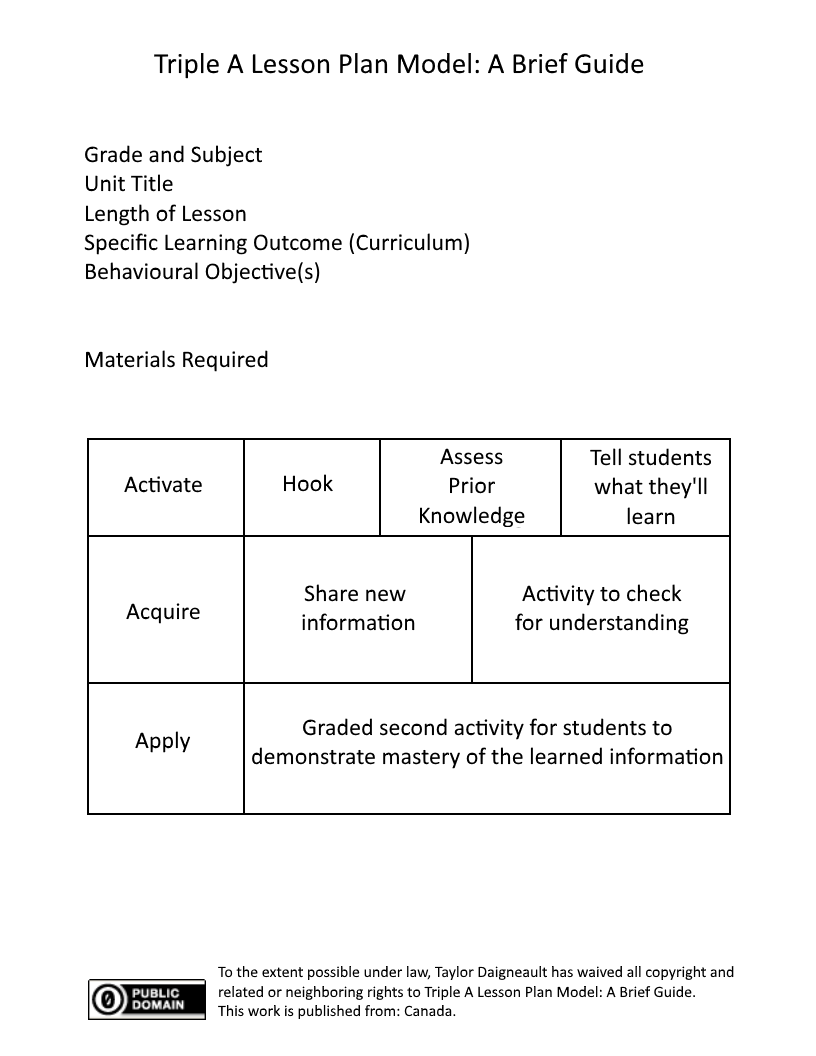
As you prepare for the Praxis 5713, recognize that determining assumptions is not just a hurdle for licensure; it is the bedrock of intellectual honesty. Every time you craft a lesson plan, you are building an argument. You are assuming your students have the prerequisite knowledge, that your instructions are unambiguous, and that your assessment actually measures what you taught.
By training yourself to spot the unstated premises, the logical gaps, and the historical assumptions on this exam, you are sharpening the exact analytical lens you will use to guide your future students toward profound, critical thought.