Identifying Author's Attitude and Tone
Not sure you’re ready?
Take the ~3-minute readiness diagnostic and see where you stand.
Imagine receiving a message from a student's parent that reads: "I noticed the recent grading policy update." Now, imagine the same message reads: "I was positively thrilled to discover the brilliant new grading policy." Finally, imagine it says: "I see we have yet another baffling grading policy." The core information—a policy change occurred—remains identical across all three messages. Yet, as an educator, you know exactly which parent is supportive, which is confrontational, and which is merely observant. You do not just read the words; you instinctively decode the psychological posture behind them. On the Praxis Core Reading exam, this intuitive survival skill is formalized into the rigorous analysis of an author's attitude and tone.
To pass the reading portion of the Praxis, you must learn to dissect the invisible architecture of a text. You must look past what the author is saying and evaluate how and why they are saying it.
When we talk about the voice of a text, we are examining a very specific transmission of intent. At its core, tone represents the author's underlying attitude toward the subject matter. But it is not a one-way street; tone represents the author's underlying attitude toward the reading audience as well. Are they speaking to you as a peer, lecturing you as a subordinate, or persuading you as a skeptic? Tone is the voice in the writer's head translated onto the page.
To succeed on the Praxis, you must draw a hard line between the author's output and your own input. Mood refers to the emotional response a reader experiences while reading a text. If you read a tragic historical account of a school defunding, your mood might be somber or frustrated, but the author's tone might be entirely detached and objective. Tone and mood are entirely distinct concepts in rhetorical analysis—one belongs exclusively to the writer, the other to the reader.
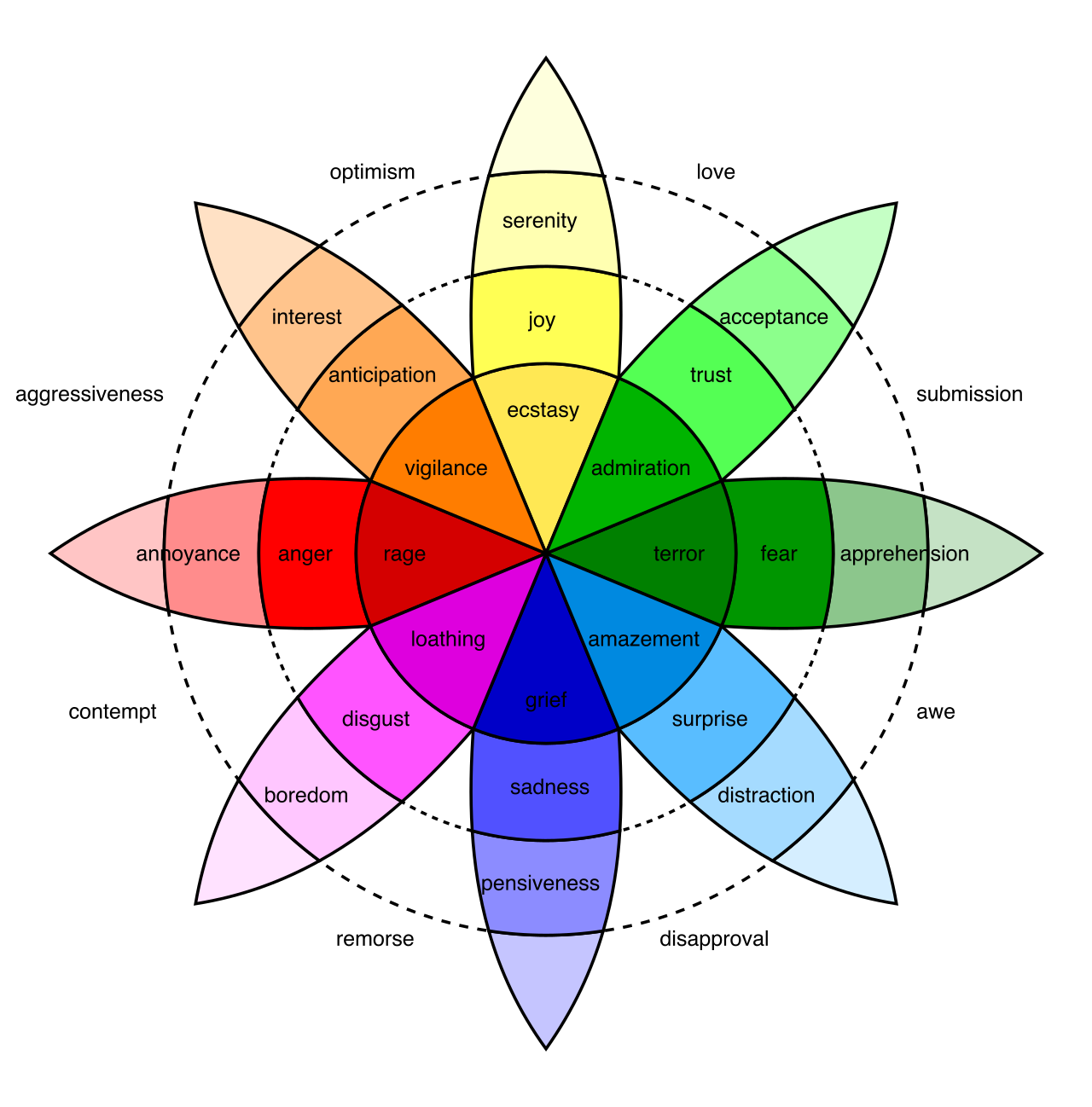
Underpinning the tone is the author's attitude, which is the underlying perspective an author takes on a specific topic. Think of attitude as the foundation (the author is against the new curriculum) and tone as the house built on top of it (the author writes a sarcastic, biting critique of the curriculum).
How does an attitude materialize from ink and paper? An author conveys tone through specific word choices. In literary and rhetorical analysis, we call this diction, which is simply the specific vocabulary an author selects to express ideas.
To master diction on a multiple-choice exam, you must differentiate between two distinct layers of meaning. Denotation is the literal dictionary definition of a word. Connotation encompasses the emotional or cultural associations attached to a word.
Consider a student who is "inquisitive" versus a student who is "nosy." The denotation is nearly identical—an active interest in acquiring information—but the connotations are vastly different. Consequently, authors utilize words with strong positive connotations to establish a supportive or enthusiastic tone, and conversely, authors utilize words with strong negative connotations to establish a critical or pessimistic tone.
When hunting for these loaded words in a dense passage, train your eyes to find the modifiers. Nouns and verbs build the house, but modifiers paint it.
- Adjectives frequently act as primary indicators of an author's subjective attitude. (e.g., "The draconian schedule" vs. "The structured schedule").
- Likewise, adverbs frequently act as primary indicators of an author's subjective attitude. (e.g., "The board voted hastily" vs. "The board voted decisively").
Authors also rely heavily on typographical cues to bypass standard vocabulary. Punctuation marks like exclamation points often emphasize words carrying the author's attitude, forcing the reader to apply a specific vocal inflection. Similarly, italics are frequently used by authors to emphasize words carrying the author's personal attitude, acting as a neon sign pointing directly to the author's underlying biases.
Beyond single words, the macro-level construction of a passage speaks volumes. Let's look at the spectrum of objectivity versus subjectivity.
The Objective/Subjective Divide
- An objective tone relies heavily on verifiable factual information and deliberately avoids the inclusion of personal feelings. It reads like a scientific report or a standard encyclopedia entry.
- A subjective tone explicitly incorporates the personal opinions of the author.
Even when a piece appears completely objective, you must look closer at how the information is built. An author conveys tone through the structural arrangement of ideas. Furthermore, an author's attitude is revealed through the selective emphasis of certain evidence over opposing evidence. If an educational researcher spends four paragraphs detailing the benefits of a new standardized test and only one sentence dismissing its flaws, the structural imbalance betrays a highly supportive attitude, despite the academic language.
We must also be vigilant for rhetorical reversals. Irony occurs when the author's intended meaning completely contradicts the literal definition of the written words. In turn, authors frequently employ irony to construct a sarcastic tone. If an author writes, "What a stroke of absolute genius to schedule the state fire drill during the AP Calculus exam," the positive denotation of "genius" is inverted by the context to express severe criticism.
Finally, remember that tones are not always static. A passage might begin with a detached historical overview before pivoting into a passionate call to action. Transitional phrases can explicitly signal a sudden shift in the author's tone within a single passage. Words like However, Conversely, Yet, or Despite this often act as hinges, pivoting a text from one emotional baseline to another.
The Praxis Core reading exam will often ask you to categorize the author's tone using specific, elevated vocabulary. Memorizing these exact definitions is non-negotiable for success.
| Tone Category | Definition for Praxis Context | Real-World Educator Example |
|---|---|---|
| Objective | Factual, impartial, and unbiased. | A textbook explaining the chronological stages of child cognitive development. |
| Cynical | A cynical tone expresses distinct doubt about human motives. | A commentary arguing that textbook publishers only update editions to maximize corporate profits, not to improve learning. |
| Nostalgic | A nostalgic tone expresses a sentimental longing for circumstances in the past. | An essay fondly recalling the simplicity of chalkboards and analog classrooms before the digital age. |
| Didactic | A didactic tone is specifically intended to teach a lesson to the reader. | A sternly worded syllabus outlining exactly how to succeed in a college seminar. |
| Indignant | An indignant tone expresses anger at something perceived as unfair. | An editorial raging against the unequal distribution of technology funding between wealthy and low-income school districts. |
| Apathetic | An apathetic tone demonstrates a complete lack of interest or emotion. | A student shrugging off a failing grade with a muttered, "Whatever, it doesn't matter anyway." |
| Pragmatic | A pragmatic tone focuses on practical considerations rather than theoretical ideals. | A principal ignoring abstract educational philosophies to focus solely on how to keep the school budget balanced this semester. |
| Satirical | A satirical tone employs humor to expose and criticize human vices. | A mock news article proposing that we replace all teachers with AI holograms to solve the coffee shortage in the breakroom. |
| Reverent | A reverent tone displays a deep respect for a particular subject. | A biographical passage honoring the lifelong sacrifices made by Maria Montessori. |
How do we turn this theoretical taxonomy into a test-day strategy? First, always look at the macro-level architecture of the passage before you dive into the specific questions. Identifying the primary purpose of a passage assists readers in accurately determining the author's tone.
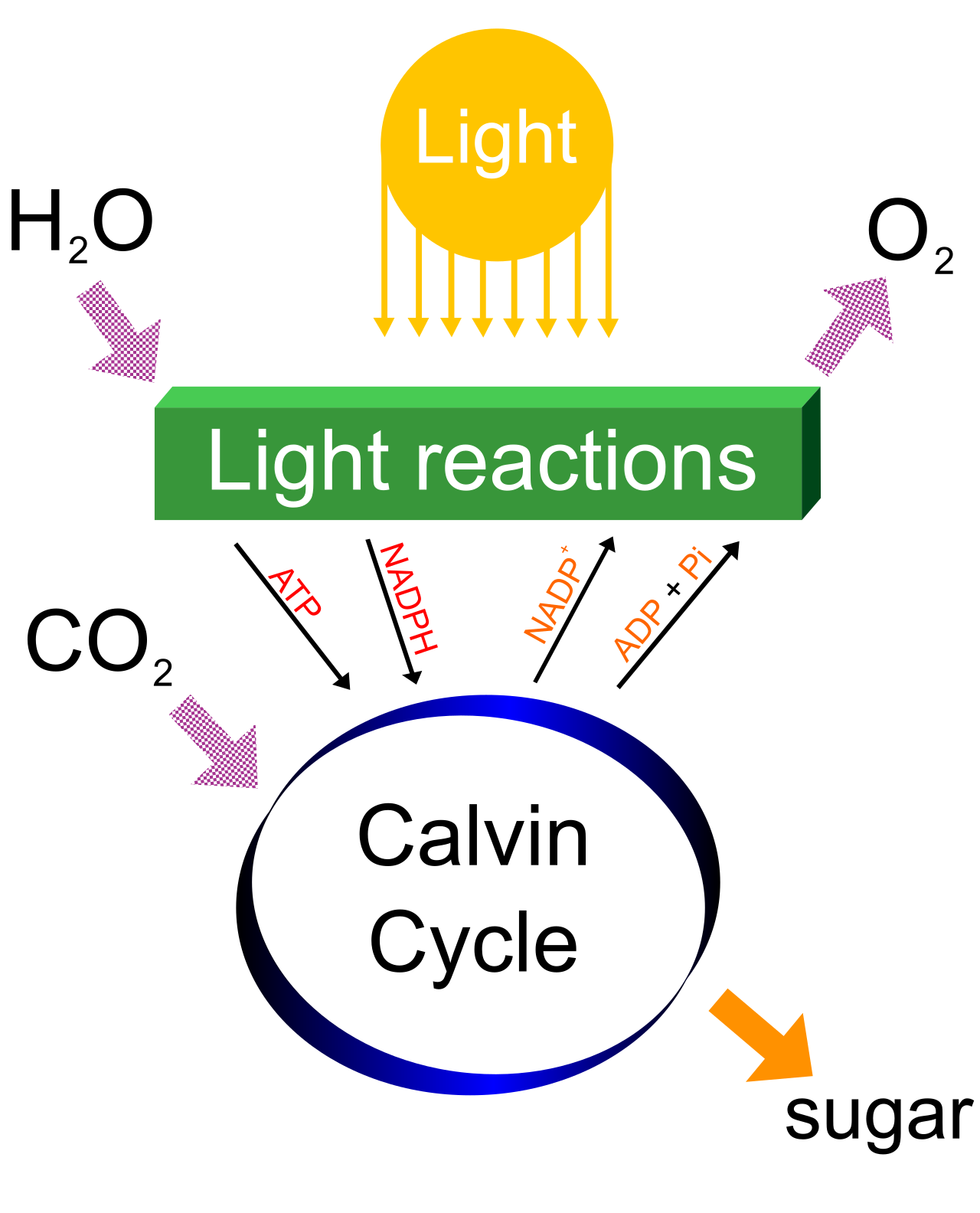
If the primary purpose is to explain the process of photosynthesis, the tone will naturally align with that goal. In fact, informational passages on standardized reading assessments frequently utilize a neutral tone. The author is there to inform, not to persuade or vent.
This leads us to one of the most powerful elimination strategies you can utilize on the Praxis Core Reading exam: Answer choices featuring extreme emotional states are rarely correct for purely informational reading passages.
If an article is explaining the migration patterns of monarch butterflies, an author is highly unlikely to be "indignant," "furious," or "ecstatic." Unless human-caused habitat destruction becomes the explicit, emphatically argued focus of the text, safe, moderate tones (objective, informative, analytical) are far more likely to be correct. Save the extreme tones for passages that utilize heavy connotations, heavily biased adjectives, and exclamation points.
Read the text not just for the data it provides, but for the human pulse beating beneath it. If you can identify the specific words, structures, and evidence an author uses to tip their hand, you will master the tone questions on the Praxis Core.