Imagine an architectural blueprint. A blueprint does not simply list the raw materials required to construct a building; it illustrates precisely how the steel beams intersect, where the weight-bearing walls stand, and how the hallways bridge one distinct wing to another. Written arguments function in exactly the same way. When a reader encounters a complex text, they are not merely absorbing a static list of independent facts. They are navigating a meticulously constructed environment of ideas.
An architectural blueprint illustrates the structural framework of a building, much like how transition words map the intellectual framework of a written argument.
The structural joints of this intellectual architecture are transition words and phrases. At a fundamental level, identifying transition words helps readers track the logical structure of a passage. For aspiring educators stepping into a classroom, mastering this structure is a dual imperative: it is required to deconstruct challenging texts on exams like the Praxis Core, and it is the very mechanism you will soon use to teach young minds how to trace an author's reasoning from premise to conclusion. Without an understanding of these linguistic joints, a paragraph is just a pile of loose bricks. With them, it becomes a load-bearing argument.
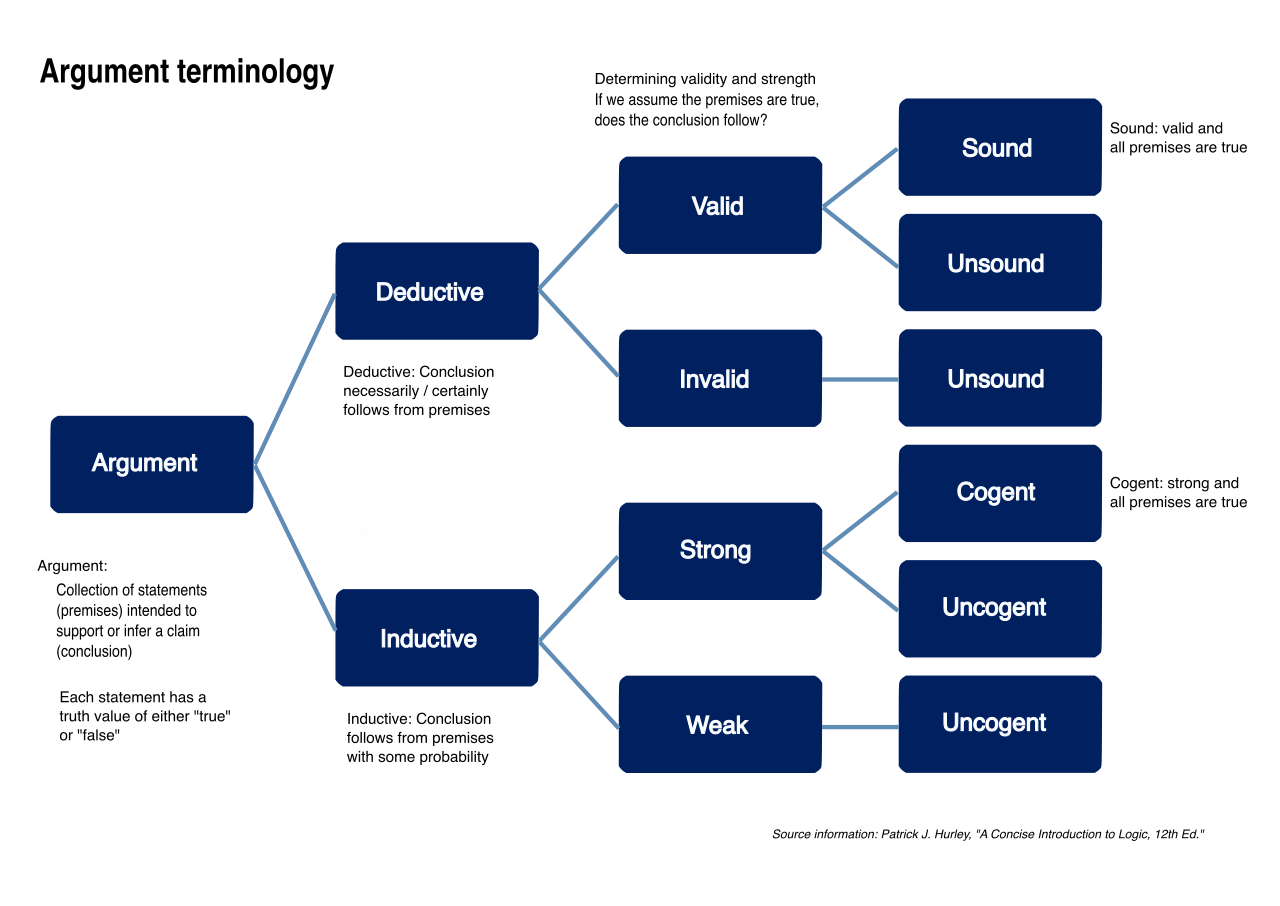
Transition words guide the reader through the formal logic of an argument, structurally linking foundational premises directly to their overarching conclusions.
Transitions operate like a zoom lens on a microscope, functioning across multiple scales of resolution within a text.
At the most granular level, transition words connect ideas within single sentences. They govern the immediate relationship between two clauses, dictating how a single thought evolves before the period is even reached. Zooming out slightly, transition words connect ideas between distinct sentences, ensuring that a concept does not simply terminate but rather flows with momentum into the next step of the argument. Finally, zooming out to the macro-level of the text, transition phrases bridge concepts across different paragraphs. They carry the reader's understanding across vast thematic blocks, ensuring the overarching argument remains intact from the introduction to the conclusion.
To succeed on the Praxis CoreReading exam, you must learn to read mechanically. You must stop looking only at what the author is saying and pay close attention to how they are directing traffic. Let us break down the specific categories of these directional signals and examine the precise function of each.
Contrast and Concession: The Intellectual Pivot
In academic reading, arguments are rarely one-sided. Authors constantly engage with counter-claims. Recognizing a contrast transition helps a reader identify an author's counterargument, signaling exactly where the text swerves away from its previous trajectory. When you spot these words, the author is applying the brakes or turning the steering wheel. Contrast transitions signal a logical shift in an argument and frequently introduce an opposing viewpoint to the main argument.
There are specific markers for these shifts. The word 'however' is a transition indicating a logical contrast in the text, usually pivoting away from the prior sentence. When an author wants to present a mutually exclusive idea, the word 'conversely' indicates a direct opposite to the preceding idea. The phrase 'on the other hand' is a transition introducing an alternative perspective, inviting the reader to look at the issue from a new vantage point. Finally, the word 'nevertheless' is a transition introducing an opposing point while simultaneously implying that the original premise still holds weight despite this new obstacle.
Praxis Strategy: A concession acknowledges a valid point from an opposing argument. It is a strategic retreat by the author to build credibility. The word 'although' is a transition introducing a concession, and similarly, the phrase 'even though' is a transition signaling a concession. When you see these, the author is saying, "I admit my opponent is right about X, but I am still right about Y."
Addition: Stacking the Evidence
When an author makes a bold claim, they cannot rely on a single pillar to hold it up. They must build a foundation. Identifying an addition transition helps a reader recognize multiple pieces of evidence supporting a single claim.
When you are tracking an author's support, watch for nuances in how they stack this evidence. The word 'furthermore' is a transition indicating the addition of new information, broadening the scope of the evidence. The word 'moreover' is a transition indicating the addition of a related point, deeply connected to what was just said. If the author simply wants to attach more data, the phrase 'in addition' is a transition signaling supplementary information. To bolster the strength of an existing argument, the word 'additionally' introduces a point reinforcing the previous statement.
Cause and Effect: The Engine of the Argument
If addition transitions are the building blocks, cause-and-effect transitions are the gears that make the argument move forward. In rigorous texts, cause-and-effect transitions help readers distinguish between an author's foundational premises and the final conclusion.
Just as intermeshing gears transfer mechanical power, cause-and-effect transitions transfer logical momentum from a foundational premise to its inevitable conclusion.
These words split neatly into two functions. First, cause-and-effect transitions clarify the specific reasons behind an action. For example, the word 'because' introduces the definitive cause for a specific outcome.
Second, cause-and-effect transitions clarify the ultimate results of an event. Once the cause is established, the author will drop the inevitable outcome. The word 'therefore' is a transition indicating a logical consequence. The word 'consequently' signals an effect resulting from a previously stated cause. When presenting empirical proof, the word 'thus' introduces a result based on prior evidence. The phrase 'as a result' indicates the outcome of a specific condition, and the word 'hence' denotes a logical consequence drawn from preceding statements.
Exemplification: The Magnifying Glass
Generalities win no debates. Authors must ground their abstract theories in concrete reality. Exemplification transitions introduce specific instances supporting a general point.
The phrase 'for example' introduces a specific illustration of a preceding general statement. Similarly, the phrase 'for instance' signals a specific case supporting a broader claim. When an author wants to drill down into the exact mechanics of a broader topic, the word 'specifically' introduces a precise detail clarifying a general category. And to remove all ambiguity about who or what is being discussed, the word 'namely' introduces a specific identification of a previously mentioned subject.
Emphasis: The Neon Highlighter
Sometimes, an author needs to grab you by the lapels and demand your attention. Emphasis transitions alert the reader to the author's primary thesis. They highlight the profound importance of a specific point within an argument. If you are struggling to find the main idea of a dense paragraph, look for these markers.
The word 'indeed' is a transition emphasizing the validity of a preceding statement, acting almost as an intellectual exclamation point. The phrase 'in fact' reinforces a previous point by introducing confirming reality. When sifting through data, the word 'notably' draws special attention to a significant detail that the reader must not ignore. Lastly, the word 'certainly' stresses the absolute truth of a specific claim, effectively daring the reader to disagree.
Chronology: Organizing Time
In historical passages, narratives, or procedural texts, the organization of time is paramount. Chronological transitions organize textual events in a specific order of occurrence. Without them, events would blur into an incomprehensible soup.
Chronology transitions impose a linear order on a text, ensuring the sequence of historical or procedural events remains clear and comprehensible.
The word 'previously' indicates an event occurring before a referenced point in time, setting the historical stage. Moving forward, the word 'subsequently' indicates an event occurring after a previous event in time. To establish concurrent action, the word 'meanwhile' indicates two distinct events occurring at the exact same time. And when all the dust has settled, the word 'ultimately' signals the final event in a chronological sequence.
Comparison: Finding the Mirror Image
While contrast focuses on differences, comparison transitions highlight fundamental similarities between two distinct subjects. These are crucial for analogies.
The word 'similarly' introduces a comparison showing how two things share characteristics. Taking it a step further into exactitude, the word 'likewise' indicates a second point sharing exact characteristics with the first point. If an author successfully explains a simple concept, they will use these transitions to map that understanding onto a more complex concept.
Summary: The Final Destination
As a reader—and especially as an exam-taker—you are always hunting for the author's ultimate takeaway. Summary transitions often signal the location of the main idea of a passage. They are the author's way of saying, "If you remember nothing else, remember this."
The phrase 'to summarize' indicates a brief restatement of the primary arguments. If the author wishes to distill a sprawling, multi-paragraph argument into a single, punchy sentence, the phrase 'in short' introduces a highly concise version of a previously elaborated argument. Finally, the phrase 'in conclusion' signals the final summary of a written passage, wrapping the intellectual architecture in a neat bow.
As you prepare for the Praxis Core, remember that these words are not merely vocabulary words to be memorized; they are the active machinery of thought. When you encounter a passage, map the "howevers," the "therefores," and the "furthermores." By tracking the transitions, the architecture of the argument reveals itself—and the correct answer on your exam becomes an inevitable conclusion.